Zu Chongzhi (祖衝之): Pi Calculation, Daming Calendar & Celestial Engineering
Encyclopedia/1. The Cosmos & The Natural World/1. Mathematics & Formal Systems/14. Mathematical Biographies • Curated by Admin Timeline.sg
Biographical timeline of 5th-century Chinese mathematician and astronomer Zu Chongzhi, known for calculating pi between 3.1415926 and 3.1415927, developing the Daming Calendar, and reconstructing the South-Pointing Chariot.
Chronological Storyline (37 Milestones)
429 CE
Zu Chongzhi Born in Jiankang
Zu Chongzhi was born in Jiankang (modern Nanjing) during the Liu Song dynasty. His family had a tradition of astronomical study, which influenced his later work. #mathematics #astronomy #China
Zu Chongzhi Born in Jiankang By 三猎 - Own work, CC BY-SA 4.0, https://commons.wikimedia.org/w/index.php?curid=54922069
445 CE
Appointed to Imperial Academy
Zu Chongzhi entered the Imperial Academy at a young age, studying mathematics, astronomy, and engineering. He quickly gained recognition for his talents. #education #China
450 CE
Early Astronomical Observations
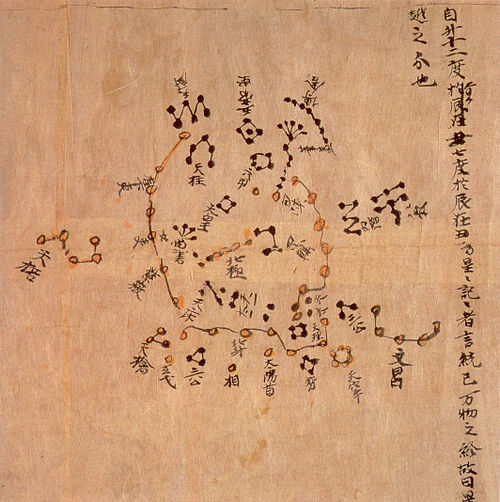
Zu began systematic astronomical observations, recording positions of celestial bodies. These observations laid the groundwork for his later calendar reform. #astronomy #observations
Early Astronomical Observations By Unknown author, Public domain, https://commons.wikimedia.org/w/index.php?curid=577062
455 CE
First Attempt at Calendar Reform
Zu proposed revisions to the existing Yuanjia calendar, but his suggestions were initially rejected by the imperial court due to conservative opposition. #calendar #reform
First Attempt at Calendar Reform By AHxiMO RPPLOU - Own work, CC BY-SA 4.0, https://commons.wikimedia.org/w/index.php?curid=107691997
458 CE
Pi Calculation Begins
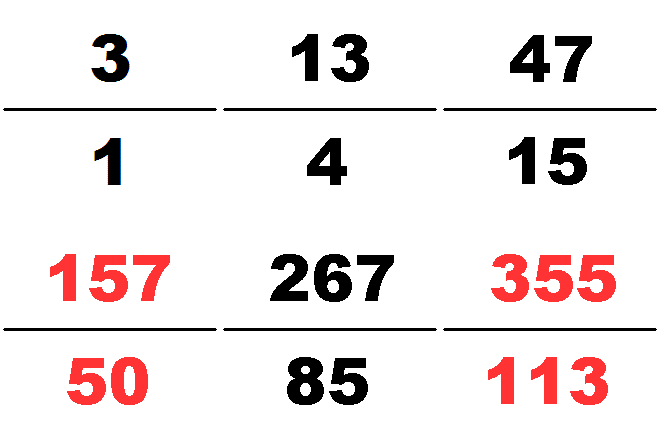
Zu began his famous calculation of pi using the method of inscribed polygons, eventually deriving the approximation 355/113 (Milü) and bounding pi between 3.1415926 and 3.1415927. #mathematics #pi
460 CE
Completion of Pi Bounds
Zu completed his pi calculation, achieving an accuracy unmatched for centuries. His result 355/113 is known as Milü (close ratio) and remained the most accurate pi approximation for over 900 years. #mathematics #pi #history
Completion of Pi Bounds By Gisling - Own work, CC BY 3.0, https://commons.wikimedia.org/w/index.php?curid=10361621
462 CE
Daming Calendar Presented to Emperor
Zu presented the Daming Calendar to Emperor Xiaowu of Liu Song, incorporating precise calculations of the tropical year and lunar month, and accounting for precession of equinoxes. #calendar #astronomy
463 CE
Calendar Rejected by Court
Despite its accuracy, the Daming Calendar was rejected due to political opposition from conservative astronomers. Zu defended his work in a famous debate. #calendar #controversy
465 CE
Appointed Governor of Lou County
Zu was appointed governor of Lou County (modern Suzhou, Anhui), where he continued his scientific work while administering local affairs. #government #China
468 CE
Construction of South-Pointing Chariot
Zu reconstructed the South-Pointing Chariot, a mechanical compass vehicle that uses differential gears to maintain a fixed direction. This demonstrated his engineering prowess. #engineering #invention
Construction of South-Pointing Chariot By Andy Dingley - Own work, CC BY 3.0, https://commons.wikimedia.org/w/index.php?curid=4944626
470 CE
Improvements to Water-Powered Armillary Sphere
Zu improved the design of the water-powered armillary sphere, enhancing its accuracy for astronomical observations. This device used hydraulic power to rotate celestial models. #astronomy #engineering
Improvements to Water-Powered Armillary Sphere By physical object: Jost Bürgi, Antonius EisenhoitPhotograph: Chris Bainbridge - Photograph: Own work, Public domain, https://commons.wikimedia.org/w/index.php?curid=6089012
472 CE
Mathematical Treatise on Pi
Zu wrote a mathematical treatise detailing his method for calculating pi, including the use of the Liu Hui's algorithm. The text is now lost but referenced in later works. #mathematics #pi #books
474 CE
Astronomical Observations for Calendar
Zu made precise observations of solstices and equinoxes to refine the Daming Calendar. He determined the length of the tropical year as 365.2428 days, very close to modern value. #astronomy #calendar
476 CE
Development of New Mathematical Methods
Zu developed new interpolation formulas for astronomical calculations, improving the accuracy of predicting planetary positions. These methods were later used in Chinese astronomy. #mathematics #astronomy
Development of New Mathematical Methods By NASA - http://history.msfc.nasa.gov/rocketry/03.html, Public domain, https://commons.wikimedia.org/w/index.php?curid=36912299
478 CE
Death of Emperor Xiaowu
Emperor Xiaowu died, leading to political instability. Zu's calendar reform lost imperial support, but he continued to advocate for its adoption. #history #China
Death of Emperor Xiaowu By 张居正 - https://new.shuge.org/view/di_jian_tu_shuo/#to-tab-1-4, Public domain, https://commons.wikimedia.org/w/index.php?curid=122863704
479 CE
Liu Song Dynasty Falls
The Liu Song dynasty was overthrown by the Southern Qi dynasty. Zu remained in service under the new regime, continuing his scientific work. #history #dynasty
Liu Song Dynasty Falls By S - Own work, CC BY-SA 4.0, https://commons.wikimedia.org/w/index.php?curid=60793172
480 CE
Continued Work on Daming Calendar
Zu revised the Daming Calendar, incorporating new data. He calculated the lunar month as 29.53059 days, accurate to within a few seconds. #calendar #astronomy
482 CE
Engineering of Mill Machinery
Zu designed and built water-powered mill machinery, showcasing his engineering skills. These mills improved grain processing efficiency. #engineering #invention
Engineering of Mill Machinery By Spike - Own work, CC BY-SA 4.0, https://commons.wikimedia.org/w/index.php?curid=92174848
484 CE
Appointment as Chief Astronomer
Zu was appointed chief astronomer at the imperial observatory, overseeing astronomical observations and calendar calculations for the Southern Qi court. #astronomy #government
486 CE
Publication of Astronomical Works
Zu compiled his astronomical observations and methods into several works, including the 'Zhui Shu' (Method of Interpolation), which later became part of the Ten Computational Canons. #mathematics #astronomy #books
488 CE
Refinement of South-Pointing Chariot
Zu improved the design of the South-Pointing Chariot, making it more reliable. The device used a differential gear system to keep a figure pointing south regardless of the vehicle's direction. #engineering #invention
490 CE
Daming Calendar Finally Adopted
After decades of advocacy, the Daming Calendar was officially adopted by the Southern Qi dynasty. It remained in use for about 80 years, influencing later calendars. #calendar #history
492 CE
Calculation of Planetary Periods
Zu calculated the orbital periods of Jupiter, Saturn, and Mars with remarkable accuracy, using his improved interpolation methods. #astronomy #mathematics
494 CE
Construction of New Armillary Sphere
Zu built a large, improved armillary sphere for the imperial observatory, featuring multiple rings to measure celestial coordinates more precisely. #astronomy #engineering
496 CE
Teaching and Mentoring
Zu taught mathematics and astronomy to a new generation of scholars, including his son Zu Geng, who later became a noted mathematician. #education #mathematics
498 CE
Final Revisions to Daming Calendar
Zu made final adjustments to the Daming Calendar, incorporating observations of solar and lunar eclipses to improve predictions. #calendar #astronomy
500 CE
Death of Zu Chongzhi
Zu Chongzhi died at the age of 71 in Jiankang. His contributions to mathematics, astronomy, and engineering left a lasting legacy in Chinese science. #history #mathematics #astronomy
501 CE
Posthumous Recognition
Zu's son Zu Geng compiled his father's works and continued his legacy. The Daming Calendar remained in use until 589 CE. #legacy #history
510 CE
Zu Geng's Volume Calculation
Zu Geng, inspired by his father, developed the principle for calculating the volume of a sphere, later known as Zu Geng's principle (Cavalieri's principle in the West). #mathematics #geometry
525 CE
Influence on Japanese Astronomy
Zu's astronomical methods, including the Daming Calendar, were transmitted to Japan and influenced Japanese calendar systems. #astronomy #Japan
Influence on Japanese Astronomy By Momotarou2012 - Own work, CC BY-SA 3.0, https://commons.wikimedia.org/w/index.php?curid=23311704
600 CE
Pi Approximation Used in Korea
Zu's pi approximation 355/113 was used in Korean mathematics and astronomy, demonstrating its spread across East Asia. #mathematics #Korea
656 CE
Inclusion in Ten Computational Canons
Zu's mathematical works, including the 'Zhui Shu', were included in the Tang dynasty's official mathematical textbook collection, the Ten Computational Canons. #mathematics #education
1000 CE
Pi Record Stands in China
Zu's pi calculation remained the most accurate in China until the 16th century, when improved methods emerged. #mathematics #history
1585 CE
European Recognition of Zu's Pi
European mathematicians learned of Zu's pi approximation through Jesuit missionaries, recognizing its accuracy centuries ahead of Western calculations. #mathematics #Europe
1964 CE
Crater on Moon Named After Zu
A crater on the far side of the Moon was named 'Zu Chongzhi' in honor of his contributions to astronomy. #astronomy #space
2000 CE
Asteroid Named 1888 Zu Chongzhi
An asteroid discovered in 1977 was named 1888 Zu Chongzhi, recognizing his legacy in mathematics and astronomy. #astronomy #space
2011 CE
Google Doodle for Zu Chongzhi
Google celebrated Zu Chongzhi's 1583rd birthday with a doodle highlighting his pi calculation and astronomical contributions. #Google #mathematics