Mukden Incident (九一八事变): Japanese military officers stage a bomb explosion near a Japanese-owned railway line in Manchuria (满洲), using it as a pretext to invade and occupy northeastern China, leading to the establishment of the puppet state Manchukuo (满洲国). #modern #military #japan #china
Dec 12, 1936 CE
Xi'an Incident
Xi'an Incident (西安事变): Nationalist leader Chiang Kai-shek (蒋介石) is kidnapped by his own generals, Zhang Xueliang (张学良) and Yang Hucheng (杨虎城), forcing a ceasefire with the Chinese Communist Party (中国共产党) to form the Second United Front (抗日民族统一战线) against Japanese expansion. #modern #military #japan #china
Jul 7, 1937 CE
Marco Polo Bridge Incident
Marco Polo Bridge Incident
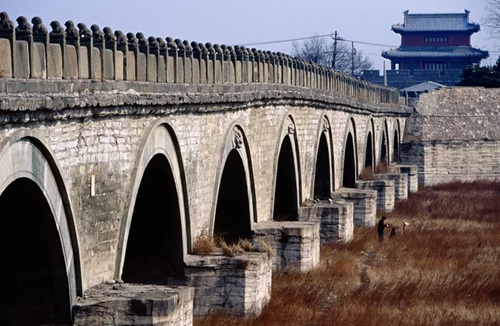
The Marco Polo Bridge Incident (also known as the Lugou Bridge Incident) was a decisive clash between the Chinese National Revolutionary Army and the Imperial Japanese Army from July 7–9, 1937, near Beijing. This initial skirmish served as the catalyst that officially sparked the Second Sino-Japanese War.
The CatalystT
he Skirmish: On the night of July 7, 1937, Japanese troops stationed near the historic Marco Polo Bridge (Lugou Bridge) demanded entry into the nearby walled town of Wanping. They claimed they were searching for a "missing" soldier who had temporarily left his ranks.
The Refusal & Fire: The Chinese garrison commander refused the Japanese entry. Shortly after, a shot was fired by an unknown party, which resulted in an exchange of gunfire between the two sides.
Escalation
Battle for the Bridge: Although the missing Japanese soldier returned to his lines, both sides had already been placed on high alert. Japanese troops surrounded Wanping and attacked, killing Chinese platoon leader Shen Zhongming. In response, Chinese defenders mounted a counterattack to hold the bridge.
Second Sino-Japanese War: While the initial three-day battle resulted in a ceasefire agreement on July 19, tensions were too high to be contained. The incident provided Japan with the exact pretext it needed to launch a full-scale invasion of China, which rapidly escalated into what is historically recognized as the Second Sino-Japanese War.
Historical Significance
Because this conflict quickly bled into Central China and eventually became inextricably linked with the broader global conflicts of World War II, many historians point to this July 1937 skirmish as the true beginning of the Pacific theater of WWII.
https://www.thoughtco.com/the-marco-polo-bridge-incident-195800
MarcoPoloBridge.jpg
Aug 13, 1937 CE
Battle of Shanghai
Battle of Shanghai (淞沪会战): One of the largest and bloodiest battles of the war begins, lasting for three months as Chinese forces fiercely resist Japanese onslaught before being forced to retreat. #modern #military #japan #china
Dec 13, 1937 CE
Nanjing Massacre
Nanjing Massacre (南京大屠杀): Japanese forces capture Nanjing (南京), the capital of the Republic of China (中华民国), followed by months of mass atrocities, executions, and looting against civilians and prisoners of war.
The Nanjing Massacre (南京大屠杀) (December 1937 – February 1938)
The Nanjing Massacre—historically known as the Rape of Nanking—stands as one of the darkest and most harrowing chapters of the Second Sino-Japanese War (中国抗日战争) and the broader Second World War era. Following the capture of Nanjing (南京), the capital of the Republic of China (中华民国), on December 13, 1937, forces of the Imperial Japanese Army (IJA / 日本陆军) embarked on a six-week campaign of systemic arson, mass execution, widespread rape, and near-total plunder.
To understand the sheer brutality that unfolded in Nanjing, it is essential to trace the immediate military escalations leading up to the city's fall, the psychological state of the invading forces, the mechanisms of the atrocities, and the unique, courageous efforts of a small group of foreign nationals who established a sanctuary amidst the slaughter.
The Prelude: From Shanghai to the Capital
The path to Nanjing was paved with the bitter, bloody stalemate of the Battle of Shanghai (淞沪会战) (August–November 1937). For three months, Chinese Nationalist forces fiercely resisted the Japanese military onslaught. The unexpectedly stubborn Chinese resistance infuriated the Japanese military command, which had predicted a swift, three-month conquest of the entire Chinese nation. The high casualty rates suffered by the IJA in Shanghai bred a deep-seated desire for vengeance among the frontline soldiers.
When Shanghai finally fell in November, Japanese leadership ordered a rapid, relentless pursuit of retreating Chinese forces toward Nanjing. As Japanese divisions marched inland, they outran their supply lines. Command issued orders allowing troops to "live off the land," which effectively authorized widespread looting, execution of villagers, and agricultural destruction across the Jiangsu (江苏) countryside. By the time the IJA reached the walls of Nanjing in early December, the invading troops were exhausted, deeply radicalized by wartime propaganda that stripped the Chinese people of their humanity, and primed for violence.
Recognizing the impending vulnerability of the capital, Nationalist leader Chiang Kai-shek (蒋介石) chose to move the official seat of government further inland to Chongqing (重庆). He left General Tang Shengzhi (唐生智) in charge of Nanjing’s defense with a force comprised largely of weary, untrained recruits and fractured units fresh from the Shanghai defeat. On December 9, Japanese forces launched a massive assault on the city walls. By December 12, realizing defense was futile, General Tang ordered a retreat. However, the evacuation was uncoordinated and chaotic. With only a few functional vessels available to cross the treacherous Yangtze River (扬子江 / 长江), thousands of fleeing Chinese soldiers and civilians became trapped against the riverbanks or crammed within the city gates.
The Capture of the City and Systemic Mass Executions
On the morning of December 13, 1937, the Japanese 6th and 16th Divisions entered Nanjing. What followed was not a standard military occupation, but a complete breakdown of civilized restraint, sanctioned from the top echelons of the Japanese military command, including Prince Asaka Yasuhiko (朝香宫鸠彦王), who had assumed temporary field command.
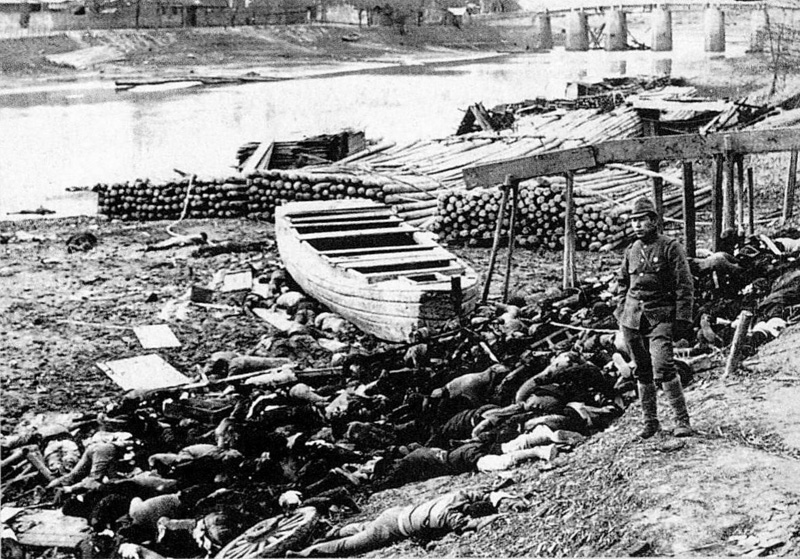
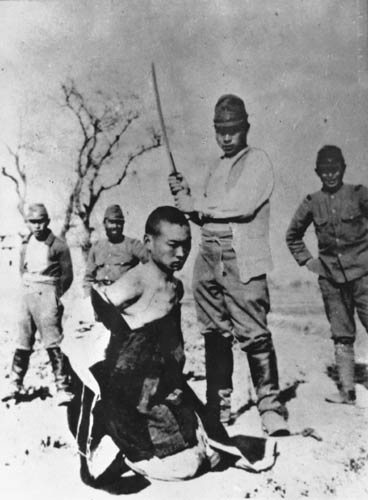
The first wave of systematic slaughter targeted young Chinese men suspected of being soldiers. Fearing a guerrilla insurgency, Japanese commanders issued orders to execute all prisoners of war. Because many Chinese soldiers had discarded their uniforms and mingled with the civilian population, the IJA rounded up any male of military age. Thousands were tied together in batches, marched to the banks of the Yangtze River or the outskirts of the city, and systematically mowed down with machine guns. To save ammunition, soldiers frequently used the victims for bayonet practice or tied them up, doused them in kerosene, and burned them alive.
The massacres were not hidden; they occurred across prominent locations such as the Xiaguan (下关) wharves and the Straw Rope Gorge (Caoxiexia / 草鞋峡), where an estimated 57,000 refugees and disarmed soldiers were slaughtered in a single multi-day operation.
Widespread Violence Against Civilians
Once the perceived military threat was eliminated, the violence turned entirely upon the civilian populace. The term "Rape of Nanking" reflects the horrifying scale of sexual violence utilized as a weapon of war during the occupation.
Historians estimate that between 20,000 and 80,000 Chinese women and girls—ranging from young children to the elderly—were systematically raped. IJA troops conducted house-to-house searches, dragging women from their families. These victims were frequently subjected to gang rape, forced into sexual slavery, and mutilated or murdered immediately afterward to eliminate witnesses. This unchecked depravity eventually forced the Japanese military to establish a formal system of military brothels (the "comfort women" / 慰安妇 system) in an attempt to curb the rampant venereal disease and negative international press resulting from the chaotic, public rapes in Nanjing.
Simultaneously, the city was subjected to total economic devastation. Japanese soldiers lit massive fires that consumed roughly one-third of the city’s architectural infrastructure, including vital government buildings and historic residential districts. Shops, warehouses, and homes were systematically looted of food, livestock, valuables, and everyday cultural treasures, which were shipped back to Japan or consumed by the occupying army.
The Nanking Safety Zone: An International Sanctuary
Amidst the horrors, a remarkable humanitarian effort emerged, led by an unlikely group of international expatriates. Approximately 20 Westerners—including American missionaries, doctors, and European businessmen—chose to remain in the falling capital. Recognizing the danger to civilians, they established the International Committee for the Nanking Safety Zone (南京安全区国际委员会), mapping out a 3.8-square-kilometer neutral territory in the western quarter of the city, which housed embassies and Nanjing University (南京大学).
The committee was chaired by John Rabe (约翰·拉贝), a German businessman and staunch member of the Nazi Party. Rabe utilized his political affiliation and Nazi armband as a shield to negotiate with Japanese military authorities. Alongside figures like American missionary Minnie Vautrin (魏特琳) and physician Robert Wilson (罗伯特·威尔逊), the committee successfully managed to shelter between 200,000 and 250,000 Chinese civilians within the Safety Zone.
While Japanese soldiers frequently breached the borders of the zone to drag away suspected soldiers or women, the foreigners physically stood in front of bayonets, filed hundreds of daily protest letters to the Japanese embassy, and documented the atrocities in private diaries and photographs. Their efforts saved a quarter of a million lives from certain death.
Historical Reckoning and Legacy
The primary violence began to subside in February 1938 as the IJA established the collaborationist Reformed Government of the Republic of China (中华民国维新政府) and attempted to restore a facade of civil order. However, the psychological and historical scars remained permanent.
Following the end of World War II, the International Military Tribunal for the Far East (IMTFE / 远东国际军事法庭) and the Nanjing War Crimes Tribunal (南京军事法庭) sought justice for the atrocities. General Iwane Matsui (松井石根), the overall commander of the Central China Expeditionary Army, and Lieut. General Hisao Tani (谷寿夫) were found guilty of war crimes and executed. The tribunals concluded that the death toll of civilians and non-combatants in Nanjing exceeded 200,000 to 300,000 victims, a figure officially maintained by historical memorials today.
The Nanjing Massacre remains a foundational pillar of modern Chinese historical memory and a recurring point of geopolitical tension. While extensive primary documentation exists—including the diaries of John Rabe, photographic evidence smuggled out by foreign journalists, and firsthand testimonies of Chinese survivors—the event continues to face revisionism and denial by certain nationalist factions within Japan. Today, the Memorial Hall of the Victims in Nanjing Massacre by Japanese Invaders (侵华日军南京大屠杀遇难同胞纪念馆) stands as a somber monument to the victims, ensuring that the tragedy remains etched into the global consciousness as a stark warning against the dehumanizing realities of unchecked wartime aggression. #modern #military #germany #japan #usa #china
Battle of Taierzhuang Victory (台儿庄战役): Chinese forces win their first major victory of the war against the Imperial Japanese Army in Shandong (山东), boosting Chinese morale and shattering the myth of Japanese military invincibility. #modern #military #japan #china
Jun 9, 1938 CE
Yellow River flood
1938 Yellow River Flood (花园口决堤): Nationalist forces intentionally breach the dykes of the Yellow River (黄河) at Huayuankou (花园口) to halt the rapid Japanese advance, stopping the invasion temporarily but causing catastrophic flooding and civilian casualties. #modern #military #japan
Jun 11, 1938 CE
Battle of Wuhan
Battle of Wuhan (武汉会战): A massive, four-month-long engagement involving over one million troops; while Japan captures Wuhan (武汉), Chinese forces successfully evacuate key industries and retreat inland to Chongqing (重庆), which becomes the wartime capital. #modern #military #japan #china
Aug 20, 1940 CE
Hundred Regiments Offensive
Hundred Regiments Offensive (百团大战): The Chinese Communist Party's Eighth Route Army (八路军), commanded by Peng Dehuai (彭德怀), launches a major, coordinated campaign against Japanese-controlled railways and infrastructure in northern China. #modern #military #japan #china
Jan 7, 1941 CE
New Fourth Army Incident
New Fourth Army Incident (皖南事变): Tensions between the Nationalists and Communists erupt into a major military clash in southern Anhui (皖南), effectively fracturing the Second United Front and weakening domestic anti-Japanese unity. #modern #military #japan
Dec 9, 1941 CE
China declares war on Axis
China's Formal Declaration of War (中国正式宣战): Following the attack on Pearl Harbor, the Republic of China (中华民国) formally declares war against Japan, Germany, and Italy, officially aligning itself with the Allied Powers. #modern #military #germany #japan #italy #china
Apr 16, 1942 CE
Battle of Yenangyaung
Battle of Yenangyaung (仁安羌之战): The Chinese Expeditionary Force (中国远征军) fights outside of China during the Burma Campaign (缅甸战役), successfully rescuing encircled British troops in Yenangyaung (仁安羌) and demonstrating China's vital contribution to the regional Allied war effort. #modern #military #britain #china
Nov 22, 1943 CE
Cairo Conference
Cairo Conference (开罗会议): Nationalist leader Chiang Kai-shek (蒋介石) meets with US President Roosevelt and British Prime Minister Churchill in Egypt, establishing China's status as one of the 'Four Policemen' (四大机构 / 四大国) Allies and planning the post-war return of stolen territories like Taiwan (台湾) and Manchuria (满洲) to China. #modern #military #britain #china
Apr 17, 1944 CE
Operation Ichi-Go
Operation Ichi-Go (豫湘桂会战 / 一号作战): Japan launches a massive, late-war offensive across mainland China spanning Henan (河南), Hunan (湖南), and Guangxi (广西) to open a land route to French Indochina and capture Allied airfields, inflicting severe losses on Nationalist forces. #modern #military #japan #france #china
Jul 22, 1944 CE
Dixie Mission
Dixie Mission (迪克西使团): The US Army Observer Group (美军观察组) arrives in Yan'an (延安), marking the first official diplomatic and military contact between the United States and the Chinese Communist Party leadership, including Mao Zedong (毛泽东) and Zhou Enlai (周恩来), during the war. #modern #military #usa #china
Jun 26, 1945 CE
Signing of UN Charter
Signing of the United Nations Charter (联合国宪章签字): China participates as a major power in the San Francisco Conference (旧金山会议) and is granted the honor of being the first nation to sign the UN Charter, securing its seat as a permanent member of the UN Security Council (联合国安全理事会常任理事国). #contemporary #military #china
Aug 28, 1945 CE
Chongqing Negotiations Begin
Chongqing Negotiations Begin (重庆谈判): Communist leader Mao Zedong (毛泽东) arrives in Chongqing (重庆) to meet with Nationalist leader Chiang Kai-shek (蒋介石) for peace talks mediated by US Ambassador Patrick Hurley, aiming to prevent a post-war civil war. #contemporary #military
Sep 9, 1945 CE
Japanese Surrender in China
Official Japanese Surrender in China (中国战区受降仪式): Imperial Japanese General Yasuji Okamura (冈村宁次) formally signs the surrender document to Chinese General He Yingqin (何应钦) at the Central Military Academy in Nanjing (南京), officially ending the Second Sino-Japanese War. #contemporary #military #japan #china
Oct 10, 1945 CE
Double Tenth Agreement
Double Tenth Agreement (双十协定): The Nationalists and Communists sign a peace agreement in Chongqing (重庆) outlining a framework for a democratic coalition government, though implementation fails shortly thereafter. #contemporary #military
Dec 20, 1945 CE
Marshall Mission
Marshall Mission (马歇尔调停): US General George C. Marshall (乔治·马歇尔) arrives in China to mediate peace between the Nationalists and Communists, attempting to broker a lasting ceasefire as post-war tensions escalate toward full-scale Chinese Civil War (国共内战). #contemporary #military #china