Topology & Spatial Geometry: From Seven Bridges to Poincaré Conjecture
Encyclopedia/1. The Cosmos & The Natural World/1. Mathematics & Formal Systems/13. Topology & Manifolds • Curated by Admin Timeline.sg
Topology, the study of properties preserved under continuous deformations, traces its roots from Euler's 1736 solution of the Königsberg bridge problem to Perelman's 2003 proof of the Poincaré conjecture. This timeline highlights key milestones in the development of topological concepts.
Chronological Storyline (37 Milestones)
1736 CE
Euler Solves Königsberg Bridge Problem
Leonhard Euler proves that it is impossible to traverse all seven bridges of Königsberg exactly once, laying the foundation for graph theory and topology. #mathematics #topology #history
Euler Solves Königsberg Bridge Problem By Twotwos - Own work based on: Konigsberg bridges.png. This file was derived from: Image-Koenigsberg, Map by Merian-Erben 1652.jpg, CC BY-SA 4.0, https://commons.wikimedia.org/w/index.php?curid=175193733
1847 CE
Listing Coins Term 'Topology'
Johann Benedict Listing introduces the term 'topology' in his book 'Vorstudien zur Topologie', marking the birth of the field. #mathematics #topology
Listing Coins Term 'Topology' By Unknown author - Unknown source, Public domain, https://commons.wikimedia.org/w/index.php?curid=1410190
1858 CE
Möbius Discovers the Möbius Strip
August Ferdinand Möbius and Johann Benedict Listing independently describe the Möbius strip, a non-orientable surface with only one side. #topology #mathematics
Möbius Discovers the Möbius Strip By David Benbennick - Möbius strip.jpg, CC BY-SA 2.0, https://commons.wikimedia.org/w/index.php?curid=142071794
1871 CE
Betti Defines Betti Numbers
Enrico Betti extends Riemann's ideas to define Betti numbers, invariants that count the number of holes in a topological space. #topology #mathematics
1895 CE
Poincaré Publishes 'Analysis situs'
Henri Poincaré establishes algebraic topology with his paper 'Analysis situs', introducing homology and the fundamental group. #topology #mathematics )
1904 CE
Poincaré Conjectures the Characterization of the 3-Sphere
Henri Poincaré proposes that every simply connected, closed 3-manifold is homeomorphic to a 3-sphere, the famous Poincaré conjecture. #topology #mathematics
1910 CE
Dehn Invents Surgery Theory
Max Dehn introduces Dehn surgery, a method for constructing 3-manifolds by cutting and gluing solid tori. #topology #mathematics
1911 CE
Brouwer Proves Fixed Point Theorem
L.E.J. Brouwer proves the Brouwer fixed point theorem, stating that any continuous function from a closed ball to itself has a fixed point. #topology #mathematics
1914 CE
Tietze Extends Continuous Functions
Heinrich Tietze proves the Tietze extension theorem, which allows continuous functions on closed subsets to be extended to the whole space. #topology #mathematics
Tietze Extends Continuous Functions By Unknown – Historical photo - Unknown – Historical photo; Taken from [1] (origina photo from [2]), Public domain, https://commons.wikimedia.org/w/index.php?curid=6090189
1924 CE
Alexander Constructs Horned Sphere
J. W. Alexander constructs the Alexander horned sphere, an exotic embedding of a sphere in 3-space that is not simply connected on the outside. #topology #mathematics
Alexander Constructs Horned Sphere By No machine-readable author provided. BernardH~commonswiki assumed (based on copyright claims). - No machine-readable source provided. Own work assumed (based on copyright claims)., Public domain, https://commons.wikimedia.org/w/index.php?curid=1299278
1926 CE
Reidemeister Develops Knot Moves
Kurt Reidemeister introduces the Reidemeister moves, a set of local moves that relate any two diagrams of the same knot. #topology #knottheory
Reidemeister Develops Knot Moves By Parcly Taxel - Own work, FAL, https://commons.wikimedia.org/w/index.php?curid=68523335
1931 CE
Hopf Discovers the Hopf Fibration
Heinz Hopf discovers the Hopf fibration, a continuous map from the 3-sphere onto the 2-sphere with circles as fibers. #topology #mathematics
Hopf Discovers the Hopf Fibration By Niles Johnson - Own work, CC BY 4.0, https://commons.wikimedia.org/w/index.php?curid=22485543
1935 CE
Whitney Proves Embedding Theorem
Hassler Whitney proves that any smooth n-manifold can be embedded in Euclidean 2n-space. #topology #mathematics
1939 CE
Whitehead Introduces Torsion
J. H. C. Whitehead introduces Whitehead torsion, an invariant for homotopy equivalences between finite CW complexes. #topology #mathematics
1942 CE
Lefschetz Develops Fixed Point Theory
Solomon Lefschetz develops the Lefschetz fixed-point theorem, relating the number of fixed points to topological invariants. #topology #mathematics
1945 CE
Eilenberg and Steenrod Axiomatize Homology
Samuel Eilenberg and Norman Steenrod define homology theory via a set of axioms, unifying different homology theories. #topology #mathematics
1950 CE
Kodaira Classifies Complex Surfaces
Kunihiko Kodaira classifies compact complex surfaces into seven classes, a milestone in complex algebraic geometry. #topology #mathematics
1951 CE
Serre Computes Homotopy Groups of Spheres
Jean-Pierre Serre develops spectral sequences to compute homotopy groups of spheres, advancing algebraic topology. #topology #mathematics
1956 CE
Milnor Discovers Exotic Spheres
John Milnor constructs the first exotic 7-sphere, a manifold homeomorphic but not diffeomorphic to the standard 7-sphere. #topology #mathematics
1957 CE
Papakyriakopoulos Proves Sphere Theorem
Christos Papakyriakopoulos proves the Dehn lemma and sphere theorem in 3-manifold topology. #topology #mathematics )
1960 CE
Smale Proves h-Cobordism Theorem
Stephen Smale proves the h-cobordism theorem, which classifies simply connected smooth manifolds of dimension at least five. #topology #mathematics
1961 CE
Novikov Proves Topological Invariance of Pontryagin Classes
Sergei Novikov proves that rational Pontryagin classes are topological invariants, a key result in differential topology. #topology #mathematics
1963 CE
Atiyah–Singer Index Theorem Proved
Michael Atiyah and Isadore Singer prove the index theorem, connecting analysis, topology, and geometry. #topology #mathematics
1969 CE
Kirby Invents the Torus Trick
Robion Kirby develops the torus trick, a key technique in understanding triangulations of manifolds. #topology #mathematics
1975 CE
Thurston Begins Work on Hyperbolic Manifolds
William Thurston develops the theory of hyperbolic 3-manifolds, revolutionizing low-dimensional topology. #topology #mathematics
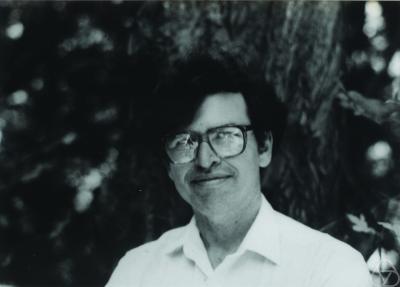
Thurston Begins Work on Hyperbolic Manifolds By George Bergman - https://opc.mfo.de/detail?photo_id=6119, GFDL 1.2, https://commons.wikimedia.org/w/index.php?curid=6090942
1982 CE
Thurston's Geometrization Conjecture
William Thurston proposes the geometrization conjecture, claiming every closed 3-manifold can be decomposed into pieces with uniform geometries. #topology #mathematics
1983 CE
Donaldson Applies Gauge Theory to 4-Manifolds
Simon Donaldson uses Yang-Mills theory to prove that R^4 has exotic smooth structures, revolutionizing 4-manifold topology. #topology #mathematics
1984 CE
Jones Invariant Discovered for Knots
Vaughan Jones discovers the Jones polynomial, a powerful knot invariant that led to new connections with statistical mechanics. #topology #knottheory
1988 CE
Floer Invents Floer Homology
Andreas Floer introduces Floer homology, an invariant for 3-manifolds leading to the proof of the Arnold conjecture. #topology #mathematics
Floer Invents Floer Homology By Unknown author, Public domain, https://commons.wikimedia.org/w/index.php?curid=2131697
1990 CE
Witten's Topological Quantum Field Theory
Edward Witten introduces topological quantum field theory, giving physical interpretations for the Jones polynomial and Donaldson invariants. #topology #physics
1994 CE
Seiberg–Witten Theory Emerges
Nathan Seiberg and Edward Witten develop Seiberg–Witten invariants, simplifying the study of smooth 4-manifolds. #topology #mathematics
1999 CE
Thurston's Proof of the Haken Manifold Conjecture
William Thurston proves that all Haken manifolds are hyperbolic, a major step toward the geometrization conjecture. #topology #mathematics
2000 CE
Ozsváth–Szabó Define Heegaard Floer Homology
Peter Ozsváth and Zoltán Szabó introduce Heegaard Floer homology, a powerful invariant for 3-manifolds. #topology #mathematics
Nov 11, 2002 CE
Perelman Posts First Proof of Poincaré Conjecture
Grigori Perelman posts a paper on arXiv claiming to prove the Thurston geometrization conjecture, which implies the Poincaré conjecture. #topology #mathematics
Perelman Posts First Proof of Poincaré Conjecture By George Bergman - Scanned via Epson Perfection V370; see also https://opc.mfo.de/detail?photo_id=12890, CC BY-SA 4.0, https://commons.wikimedia.org/w/index.php?curid=126338668
Mar 10, 2003 CE
Perelman Posts Second Paper on Ricci Flow
Perelman posts a second paper detailing the surgery procedure for Ricci flow, completing the proof of the geometrization conjecture. #topology #mathematics
Perelman Posts Second Paper on Ricci Flow By CBM - Own work, Public domain, https://commons.wikimedia.org/w/index.php?curid=8867273
Aug 22, 2006 CE
Perelman Awarded Fields Medal but Declines
Grigori Perelman is awarded the Fields Medal for his proof of the Poincaré conjecture, but he refuses the award. #topology #mathematics
Perelman Awarded Fields Medal but Declines By Stefan Zachow for the International Mathematical Union; retouched by King of Hearts - File [1], Public domain, https://commons.wikimedia.org/w/index.php?curid=2277414
Mar 18, 2010 CE
Clay Institute Awards Millennium Prize to Perelman
The Clay Mathematics Institute awards Perelman the $1 million Millennium Prize for proving the Poincaré conjecture, which he also declines. #topology #mathematics