Thomas Edison: Electric Light, Phonograph & Menlo Park Laboratory
Encyclopedia/2. Technology & The Built World/2. Engineering & Applied Sciences/03. Engineering Biographies • Curated by Admin Timeline.sg
Biographical timeline of Thomas Alva Edison, holder of 1,093 US patents and pioneer of industrial R&D laboratories, covering his life from birth in 1847 to death in 1931.
Chronological Storyline (44 Milestones)
Feb 11, 1847 CE
Thomas Edison Born in Milan, Ohio
Thomas Alva Edison is born to Samuel Ogden Edison Jr. and Nancy Matthews Elliott. He was the seventh and last child of the family. #history #inventors
Thomas Edison Born in Milan, Ohio By Louis Bachrach, Bachrach Studios, restored by Michel Vuijlsteke - This image is available from the United States Library of Congress's Prints and Photographs division under the digital ID cph.3c05139.This tag does not indicate the copyright status of the attached work. A normal copyright tag is still required. See Commons:Licensing., Public domain, https://commons.wikimedia.org/w/index.php?curid=6582301
1854 CE
Edison Family Moves to Port Huron, Michigan
The Edison family moves to Port Huron, Michigan, where young Thomas attends school briefly before being homeschooled by his mother. #history
1859 CE
Edison Begins Work on Grand Trunk Railroad
At age 12, Edison takes a job selling newspapers and candy on the Grand Trunk Railroad, using the opportunity to set up a chemistry lab in a boxcar. #history #entrepreneurship
Aug 1, 1862 CE
Edison Saves a Boy from Being Run Over by a Train
Edison rescues a three-year-old boy on train tracks; the grateful father, station agent J.U. MacKenzie, teaches Edison railroad telegraphy. #humaninterest
1863 CE
Edison Becomes a Telegrapher
Edison works as a night telegraph operator in Port Huron and later in various cities, allowing him to experiment with electrical devices. #technology
1868 CE
Edison Moves to Boston and Works on Telegraph Improvements
Edison moves to Boston and becomes a full-time inventor, filing his first patent for an electric vote recorder. The device is not commercially successful. #invention
1869 CE
Edison Moves to New York City and Invents Stock Ticker
Edison moves to New York City, where he improves the stock ticker and receives a large payment for his invention, allowing him to establish his first workshop. #finance #technology
Dec 25, 1871 CE
Edison Marries Mary Stilwell
Thomas Edison marries Mary Stilwell, a 16-year-old employee at his Newark factory. They will have three children. #personal
1873 CE
Edison Develops the Quadruplex Telegraph
Edison invents the quadruplex telegraph, capable of transmitting four messages simultaneously over a single wire, a breakthrough in communication. #technology
Edison Develops the Quadruplex Telegraph By Edison, Thomas A. (Thomas Alva), 1847-1931; Peters, N. (Norris), lithographer; Hammer, William Joseph, 1858-1934, former owner. DSI; Edison, Thomas A. (Thomas Alva), 1847-1931, inscriber. DSI; United States. Patent Office - https://www.flickr.com/photos/internetarchivebookimages/14569979420/ Source book page: https://archive.org/stream/CollectionUnitev1Edis/CollectionUnitev1Edis#page/n689/mode/1up, No restrictions, https://commons.wikimedia.org/w/index.php?curid=44311090
Mar 7, 1876 CE
Edison Establishes Menlo Park Research Laboratory
Edison builds the Menlo Park laboratory in New Jersey, the first industrial research lab dedicated to invention and development. #innovation #history
Dec 6, 1877 CE
Edison Invents the Phonograph
Edison creates the first phonograph, a device that records and reproduces sound using a tinfoil cylinder. The 'Mary Had a Little Lamb' recording is famous. #invention #music
Edison Invents the Phonograph By Levin C. Handy (per http://hdl.loc.gov/loc.pnp/cwpbh.04326) - This image is available from the United States Library of Congress's Prints and Photographs division under the digital ID cwpbh.04044.This tag does not indicate the copyright status of the attached work. A normal copyright tag is still required. See Commons:Licensing., Public domain, https://commons.wikimedia.org/w/index.php?curid=2118716
1877 CE
Edison Invents the Carbon Microphone
Edison develops a carbon microphone that improves telephone technology, used in Bell's telephone and for broadcasting. #technology #invention
Edison Invents the Carbon Microphone By No machine-readable author provided. Gerry Ashton assumed (based on copyright claims). - No machine-readable source provided. Own work assumed (based on copyright claims)., CC BY-SA 3.0, https://commons.wikimedia.org/w/index.php?curid=1074986
Jul 1, 1878 CE
Edison Begins Work on Electric Lighting
After visiting William Wallace’s arc light factory, Edison begins experiments on incandescent lighting, aiming to create a practical and affordable electric light. #technology
Oct 21, 1879 CE
Edison Demonstrates First Practical Incandescent Light Bulb
At Menlo Park, Edison tests a carbon-filament bulb that lasts 13.5 hours, leading to the first practical incandescent light bulb. #invention #lighting
Edison Demonstrates First Practical Incandescent Light Bulb By KMJ, alpha masking by Edokter - de.wikipedia, original upload 26. Jun 2004 by, CC BY-SA 3.0, https://commons.wikimedia.org/w/index.php?curid=2954889
Jan 27, 1880 CE
Edison Receives Patent for the Incandescent Light Bulb
Edison is granted U.S. Patent No. 223,898 for his electric lamp, a key milestone in commercializing electric lighting. #patent #technology
May 1, 1880 CE
Edison Installs First Electric Lighting System on Steamship
The first installation of Edison’s lighting system is on the steamship 'Jeannette', followed by the 'Columbia' and commercial applications. #transportation
1881 CE
Edison Established the Edison Electric Light Company
Edison incorporates the Edison Electric Light Company in New York to commercialize electric lighting. #business
Edison Established the Edison Electric Light Company By General Electric Company - General Electric logo.svg, Public domain, https://commons.wikimedia.org/w/index.php?curid=27500759
Sep 4, 1882 CE
Pearl Street Station Powers First Customers
Edison’s Pearl Street Station in lower Manhattan begins supplying DC electricity to 85 customers, powering lights in offices and homes. #energy
Pearl Street Station Powers First Customers By Earl Morter - IEEE Global History Network and Consolidated Edison Company of New York, Public domain, https://commons.wikimedia.org/w/index.php?curid=8016148
1883 CE
Edison Discovers the Edison Effect
Edison observes a current flow between a heated filament and a metal plate, later known as thermionic emission, leading to vacuum tube development. #physics
Edison Discovers the Edison Effect By Created by Deglr6328, uploaded by Superclemente - en.wikipedia.org, CC BY-SA 3.0, https://commons.wikimedia.org/w/index.php?curid=4543448
Aug 9, 1884 CE
Mary Stilwell Edison Dies
Thomas Edison’s first wife, Mary Stilwell, dies at age 29 of unknown causes. Edison remarries two years later. #personal
Feb 24, 1886 CE
Edison Marries Mina Miller
Edison marries Mina Miller, daughter of inventor Lewis Miller. They will have three children and reside in West Orange, New Jersey. #personal
Edison Marries Mina Miller By Pach Bros. - This image is available from the United States Library of Congress's Prints and Photographs division under the digital ID cph.3b26076.This tag does not indicate the copyright status of the attached work. A normal copyright tag is still required. See Commons:Licensing., Public domain, https://commons.wikimedia.org/w/index.php?curid=6137799
1887 CE
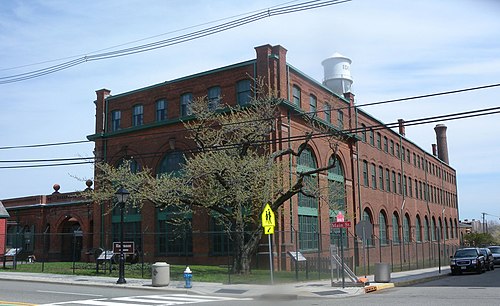
Edison Opens West Orange Laboratory
Edison builds a larger research laboratory in West Orange, New Jersey, which becomes his primary workplace for the rest of his career. #innovation
Edison Opens West Orange Laboratory By Jim.henderson - Own work, CC0, https://commons.wikimedia.org/w/index.php?curid=15455497
1888 CE
Edison Begins Work on Motion Pictures
Edison starts experiments to create a device for recording and playing motion pictures, inspired by Eadweard Muybridge’s work. #cinema
Aug 24, 1891 CE
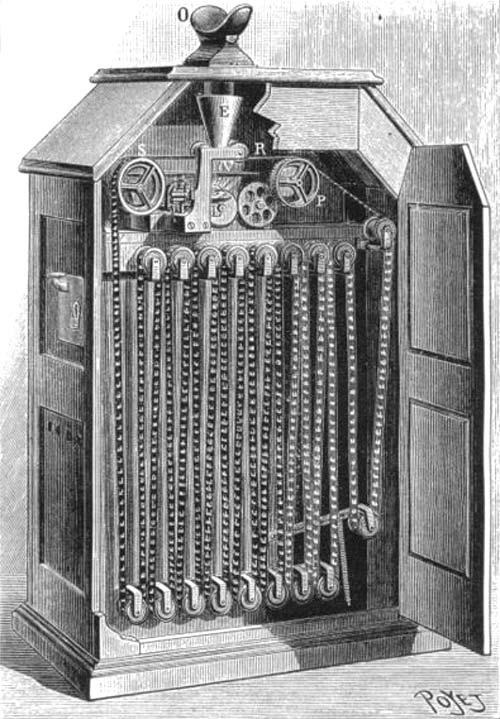
Edison Receives Patent for Kinetoscope
Edison receives a patent for the Kinetoscope, an early motion picture viewing device using rolls of film. #cinema #invention
Edison Receives Patent for Kinetoscope By Albert Tissandier - Originally published as an illustration to "Le Kinétoscope d'Edison" by Gaston Tissandier in La Nature: Revue des sciences et de leurs applications aux arts et à l'industrie, October 1894: Vingt-deuxième année, deuxième semestre : n. 1096 à 1121, pp. 325–326. Republished with "Mechanism of the Kineto-Phonograph" by Arthur E. Bostwick (Science editor) in The Literary Digest. v.X No.4 (24 November 1894), p. 15 (105). Image file uploaded from [1]., Public domain, https://commons.wikimedia.org/w/index.php?curid=602117
1892 CE
General Electric Formed from Edison Company
The Edison General Electric Company merges with Thomson-Houston Electric Company to form General Electric. Edison loses control but remains involved. #business
1893 CE
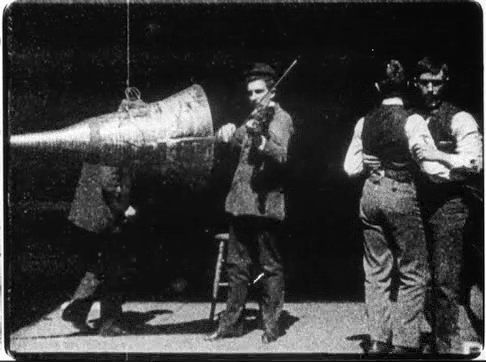
Edison Demonstrates the Kinetophonograph
Edison creates the Kinetophonograph, combining a Kinetoscope with a phonograph for sound-synchronized motion pictures, though not fully commercialized. #cinema
Edison Demonstrates the Kinetophonograph By William Dickson of Edison Laboratories - A still shot from the en:Dickson Experimental Sound Film (1894/95), produced by the Edison Manufacturing Company. This image is a shot taken from https://archive.org/download/dicksonfilmtwo/DicksonFilm_High.mov . The file has been crushed with en:pngcrush. 1890s motion picture film, Public domain, https://commons.wikimedia.org/w/index.php?curid=1850719
Apr 14, 1894 CE
First Public Kinetoscope Parlor Opens in New York
The first Kinetoscope parlor opens at 1155 Broadway, New York City, allowing viewers to see short films for a nickel. #cinema #entertainment
1896 CE
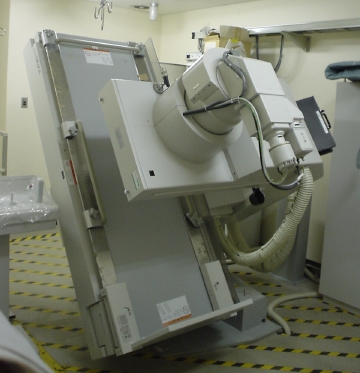
Edison Improves the Fluoroscope for X-rays
Edison develops a practical fluoroscope using calcium tungstate screens, reducing radiation exposure for medical imaging. #medicine
Edison Improves the Fluoroscope for X-rays By Unknown author, Public domain, https://commons.wikimedia.org/w/index.php?curid=2530717
1900 CE
Edison Develops the Nickel-Iron Battery
Edison invents a nickel-iron battery for electric vehicles, which proves durable but is overtaken by lead-acid batteries. #transportation #energy
Edison Develops the Nickel-Iron Battery By User:z22 - Own work, CC BY-SA 3.0, https://commons.wikimedia.org/w/index.php?curid=29533891
Dec 1, 1903 CE
Edison’s Company Releases 'The Great Train Robbery'
Although produced by Edison Manufacturing Company and directed by Edwin S. Porter, 'The Great Train Robbery' becomes a landmark film. #cinema )
Edison’s Company Releases 'The Great Train Robbery' By Unknown author - IMDb.com, Public domain, https://commons.wikimedia.org/w/index.php?curid=83900551
1904 CE
Edison Patents the Alkaline Storage Battery
Edison receives a patent for his improved nickel-iron alkaline battery, which sees use in mining and railway signals. #invention
1910 CE
Edison Introduces the Diamond Disc Phonograph
Edison introduces the Diamond Disc phonograph using a diamond stylus, offering better sound quality and longer record life. #music #technology
Edison Introduces the Diamond Disc Phonograph By Unknown author, Public domain, https://commons.wikimedia.org/w/index.php?curid=887624
1911 CE
Edison Patents an Electrolytic Process for Cement
Edison develops the Edison Portland Cement Company, using cement from a process to create lightweight concrete for construction. #construction
1912 CE
Edison Invents the Telescribe
Edison invents the telescribe, a device combining telephone and phonograph to record conversations, a precursor to answering machines. #communication
Dec 9, 1914 CE
Fire Destroys Edison’s West Orange Laboratory
A massive fire destroys much of Edison’s West Orange laboratory. Edison, age 67, rebuilds within weeks, demonstrating resilience. #resilience
1915 CE
Edison Serves on Naval Consulting Board During WWI
Edison chairs the Naval Consulting Board, applying his inventive skills to develop submarine detection and other wartime technologies. #war #technology
Edison Serves on Naval Consulting Board During WWI By Bain - Library of Congress, Public domain, https://commons.wikimedia.org/w/index.php?curid=39072925
1916 CE
Edison Publishes 'The Diary and Sundry Observations'
Edison pens a series of philosophical and practical essays, offering insights into his creative process and views on science. #literature
1917 CE
Edison Develops Submarine Detection Devices
Working with the Navy, Edison develops hydrophones and underwater listening devices to detect submarines, contributing to anti-submarine warfare. #military
1920 CE
Edison Receives Grand Cross of the Legion of Honor
Edison is awarded the Grand Cross of the Legion of Honour from France, recognizing his contributions to science and industry. #honors
1922 CE
Edison's Last Major Invention: the Edison Fuel Cell
Edison patents a fuel cell that converts chemical energy directly into electricity, though it never becomes commercially viable. #energy #innovation
1928 CE
Edison Receives Congressional Gold Medal
The U.S. Congress awards Edison a special gold medal for his contributions to the nation’s prosperity. #honors
Oct 21, 1929 CE
Light's Golden Jubilee Celebrates 50 Years of Edison's Light Bulb
On the 50th anniversary of his incandescent light bulb, Edison recreates the breakthrough at a banquet hosted by Henry Ford and Herbert Hoover. #celebration
Light's Golden Jubilee Celebrates 50 Years of Edison's Light Bulb By U.S. Bureau of Engraving and Printing; Imaging by Gwillhickers - U.S. Post Office; Smithsonian National Postal Museum, Public domain, https://commons.wikimedia.org/w/index.php?curid=33732722
Oct 18, 1931 CE
Thomas Edison Dies at West Orange
Thomas Alva Edison dies at the age of 84 at his home, Glenmont, in West Orange, New Jersey. His death marks the end of an era of prolific invention. #history #obituary
Oct 24, 1931 CE
Nation Dims Lights in Memory of Edison
In tribute, U.S. President Herbert Hoover asks the nation to dim lights for one minute on the evening of October 21, but many turn off lights briefly at 9 PM on October 24. #memorial