The Fengshen Yanyi Cosmos (Investiture of the Gods)
Alternate Universes/1. Chinese Wuxia, Xianxia & Xuanhuan Lore • Curated by Admin Timeline.sg
The Fengshen Yanyi (Investiture of the Gods) is a Ming dynasty Chinese mythological novel set during the Shang-Zhou transition, depicting a cosmic war between the Chan and Jie Daoist sects, featuring heroes like Ne Zha and Yang Jian, and culminating in the divine investiture of 365 gods.
Chronological Storyline (43 Milestones)
1046 BCE
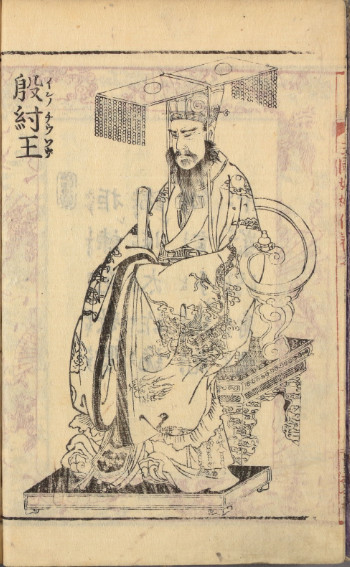
King Zhou Defiles the Temple of Nuwa
King Zhou of Shang writes a lewd poem on the temple walls of the goddess Nuwa, angering her and setting the stage for the fall of the Shang dynasty. #mythology #chineseliterature
King Zhou Defiles the Temple of Nuwa By see below - https://iiif.lib.harvard.edu/manifests/view/drs:53978271, Public domain, https://commons.wikimedia.org/w/index.php?curid=119054926
1045 BCE
Nuwa Sends the Fox Spirit to Seduce King Zhou
Nuwa dispatches the thousand-year-old fox spirit Daji to corrupt King Zhou, leading to tyranny and chaos in the Shang court. #mythology #chineseliterature
Nuwa Sends the Fox Spirit to Seduce King Zhou By Photo Dharma from Penang, Malaysia - 026 Daji, CC BY 2.0, https://commons.wikimedia.org/w/index.php?curid=40218024
1044 BCE
Jiang Ziya Begins Fishing at Wei River
Jiang Ziya, a disciple of the Chan sect, fishes with a straight hook at Wei River, waiting for a worthy ruler. #mythology #chineseliterature
Jiang Ziya Begins Fishing at Wei River By Unknown author - 《歷代名臣像解》, Public domain, https://commons.wikimedia.org/w/index.php?curid=117213735
1043 BCE
King Wen of Zhou Meets Jiang Ziya
King Wen of Zhou, impressed by Jiang Ziya's wisdom, appoints him as prime minister, marking the beginning of the Zhou rebellion against Shang. #mythology #chineseliterature
King Wen of Zhou Meets Jiang Ziya By Unknown author - 中国历史博物馆保管部, ed. (2003) 中国历代名人画像谱 1, 福州: 海峡文艺出版社, p. 17 ISBN: 7806407855. http://www.wanshengwang.org/show.aspx?id=8840&cid=111, Public domain, https://commons.wikimedia.org/w/index.php?curid=153875145
1042 BCE
Ne Zha's Birth and Conflict with the Dragon King
Ne Zha is born from a ball of flesh, later kills the Dragon King's son, and battles the Dragon King of the East Sea. #mythology #chineseliterature
1041 BCE
Ne Zha's Lotus Rebirth
After committing suicide to save his family, Ne Zha is resurrected by his master Taiyi Zhenren using lotus roots, gaining new powers. #mythology #chineseliterature
1040 BCE
Yang Jian Obtains the Heaven-Opening Axe
Yang Jian, nephew of the Jade Emperor, acquires the magical Heaven-Opening Axe and develops his 72 transformations. #mythology #chineseliterature
1039 BCE
Chan Sect Convenes at Mount Kunlun
Yuanshi Tianzun, leader of the Chan sect, gathers his disciples to discuss the coming war and the Fengshen List. #mythology #chineseliterature
Chan Sect Convenes at Mount Kunlun By Lawrencekhoo - http://www.eng.taoism.org.hk/daoist-beliefs/immortals&immortalism/, Public domain, https://commons.wikimedia.org/w/index.php?curid=3991798
1038 BCE
Jie Sect Leader Tongtian Jiaozhu Declares Support for Shang
Tongtian Jiaozhu, leader of the Jie sect, sides with the Shang dynasty, escalating the conflict into a full-scale divine war. #mythology #chineseliterature
Jie Sect Leader Tongtian Jiaozhu Declares Support for Shang By Photo Dharma from Penang, Malaysia - 053 Tongtian Jiao Zhu, CC BY 2.0, https://commons.wikimedia.org/w/index.php?curid=40218054
1037 BCE
First Battle of the Divine War: Zhang Gui vs. Huang Tianhua
The first major battle between Chan and Jie disciples occurs, with Huang Tianhua using the Falling Soul Bell to defeat Zhang Gui. #mythology #chineseliterature
1036 BCE
Jiang Ziya Receives the Fengshen List
Yuanshi Tianzun entrusts Jiang Ziya with the Fengshen List, a scroll that will determine which mortals and immortals become gods after death. #mythology #chineseliterature
1035 BCE
Ne Zha Battles Li Jing
Ne Zha confronts his father Li Jing, leading to a duel that ends with the intervention of the pagoda-wielding deity. #mythology #chineseliterature )
Ne Zha Battles Li Jing By Photo Dharma from Penang, Malaysia - 005 Li Jing (deity), CC BY 2.0, https://commons.wikimedia.org/w/index.php?curid=40218003
1034 BCE
Yang Jian Uses 72 Transformations to Infiltrate Shang Camp
Yang Jian transforms into various forms to spy on the Shang forces, gathering intelligence for the Zhou army. #mythology #chineseliterature
1033 BCE
Lei Zhenzi Joins the Zhou Forces
Lei Zhenzi, a thunder spirit born from a thunderbolt, becomes a general under Jiang Ziya. #mythology #chineseliterature
Lei Zhenzi Joins the Zhou Forces By Photo Dharma from Penang, Malaysia - 044 Le izhen zi, CC BY 2.0, https://commons.wikimedia.org/w/index.php?curid=40218046
1032 BCE
Jie Sect Uses Ten Thousand Immortal Formation
Tongtian Jiaozhu deploys the Ten Thousand Immortal Formation, a deadly array that traps many Chan disciples. #mythology #chineseliterature
1031 BCE
Chan Sect Breaks the Ten Thousand Immortal Formation
With the help of the Three Pure Ones, the Chan sect shatters the Ten Thousand Immortal Formation, killing many Jie disciples. #mythology #chineseliterature
Chan Sect Breaks the Ten Thousand Immortal Formation By lienyuan lee - https://web.archive.org/web/20161031153726/http://www.panoramio.com/photo/129193873, CC BY 3.0, https://commons.wikimedia.org/w/index.php?curid=60591398
1030 BCE
Daji's Torture of Loyal Ministers
Daji devises cruel punishments for loyal Shang ministers who oppose King Zhou's tyranny, including the infamous 'Pao Luo' (burning pillar). #mythology #chineseliterature
1029 BCE
Huang Feihu Defects to Zhou
General Huang Feihu, disgusted by King Zhou's atrocities, defects to the Zhou side with his family and troops. #mythology #chineseliterature
Huang Feihu Defects to Zhou By Photo Dharma from Penang, Malaysia - 004 Huang Feihu, CC BY 2.0, https://commons.wikimedia.org/w/index.php?curid=40218001
1028 BCE
Jiang Ziya Uses the Divine Whip
Jiang Ziya wields the Divine Whip, a weapon that can strike immortals and demons, to defeat Jie sect disciples. #mythology #chineseliterature
1027 BCE
Battle of Muye: Zhou Army Advances
The Zhou army, led by King Wu and Jiang Ziya, marches toward the Shang capital at Muye, facing fierce resistance from Jie sect forces. #mythology #chineseliterature
Battle of Muye: Zhou Army Advances By SY - Own work, CC BY-SA 4.0, https://commons.wikimedia.org/w/index.php?curid=62649514
1026 BCE
Ne Zha Kills the Dragon King's Son
Ne Zha slays the third son of the Dragon King of the East Sea, leading to a confrontation with the Dragon King. #mythology #chineseliterature
1025 BCE
Yang Jian Captures the Water God
Yang Jian uses his transformations to capture the Jie sect water god, weakening the Shang defenses. #mythology #chineseliterature
1024 BCE
Jie Sect Summons the Four Heavenly Kings
Tongtian Jiaozhu summons the Four Heavenly Kings to defend the Shang capital, but they are eventually defeated by Chan disciples. #mythology #chineseliterature
https://baike.baidu.com/en/item/Four%20Demon%20Generals/15889
1023 BCE
Jiang Ziya's Siege of Zhaoge
The Zhou army lays siege to the Shang capital Zhaoge, with Jiang Ziya using magical tactics to breach the city walls. #mythology #chineseliterature
https://baike.baidu.com/en/item/Four%20Demon%20Generals/15889
1022 BCE
King Zhou Burns Himself in the Deer Terrace Pavilion
As the Zhou army enters the capital, King Zhou sets fire to the Deer Terrace Pavilion and dies in the flames. #mythology #chineseliterature
King Zhou Burns Himself in the Deer Terrace Pavilion By 高井 伴寛、蹄斎 北馬 (Hiroshi Takai, Hossai Hokuma) - 絵本三国妖婦伝. 上,中,下編 / 高井伴寛 作; 蹄斎北馬 画 (Picture book 3 Kingdoms Youfuden. Part 1, 2, 2 / Written by: Tomohiro Takai; Painted by: Hokuma Teisai), Public domain, https://commons.wikimedia.org/w/index.php?curid=52609256
1021 BCE
Daji and the Fox Spirits Are Captured
Daji and her fox spirit sisters are captured by Jiang Ziya and executed, ending their influence. #mythology #chineseliterature
1020 BCE
Jiang Ziya Ascends the Fengshen Platform
Jiang Ziya builds the Fengshen Platform and begins the process of investing the souls of fallen warriors and immortals as gods. #mythology #chineseliterature
1019 BCE
First Investiture: Huang Tianhua Becomes God of the Five Paths
Huang Tianhua is the first to be invested as a god, becoming the God of the Five Paths. #mythology #chineseliterature
1018 BCE
Ne Zha Invested as Marshal of the Central Altar
Ne Zha is appointed as the Marshal of the Central Altar, a high-ranking deity in the celestial bureaucracy. #mythology #chineseliterature
1017 BCE
Yang Jian Invested as Erlang Shen
Yang Jian becomes Erlang Shen, the god with the third eye, and is given charge of the celestial army. #mythology #chineseliterature
Yang Jian Invested as Erlang Shen By Photo Dharma from Penang, Malaysia - 011 Yang Jian (Erlang Shen), CC BY 2.0, https://commons.wikimedia.org/w/index.php?curid=40218008
1016 BCE
Lei Zhenzi Invested as Thunder God
Lei Zhenzi is appointed as the Thunder God, controlling storms and lightning. #mythology #chineseliterature
1015 BCE
Li Jing Invested as Pagoda-Bearing Heavenly King
Li Jing, Ne Zha's father, is made a Heavenly King, wielding a magical pagoda. #mythology #chineseliterature )
1014 BCE
Huang Feihu Invested as God of the Eastern Peak
Huang Feihu becomes the God of the Eastern Peak, ruling over Mount Tai. #mythology #chineseliterature
1013 BCE
Jie Sect Disciples Invested as Gods of Plagues and Disasters
Many Jie sect disciples, including Lu Yue and Yu Yuan, are invested as gods of plagues, disasters, and other calamities. #mythology #chineseliterature
1012 BCE
Jiang Ziya Invests the 365 Gods
Jiang Ziya completes the investiture of 365 gods, filling the celestial bureaucracy with deities from both Chan and Jie sects. #mythology #chineseliterature
1011 BCE
Jiang Ziya Declines Godhood
Jiang Ziya, having fulfilled his mission, declines a position among the gods and becomes a mortal ruler, enfeoffed in the State of Qi. #mythology #chineseliterature
1010 BCE
King Wu of Zhou Establishes the Zhou Dynasty
King Wu formally establishes the Zhou dynasty, ushering in a new era of Chinese civilization. #mythology #chineseliterature
King Wu of Zhou Establishes the Zhou Dynasty By Ma Lin - Digitized by NPM; image is directly from Shuge, Public domain, https://commons.wikimedia.org/w/index.php?curid=7102798
1009 BCE
The Fengshen List Becomes a Celestial Artifact
The Fengshen List is sealed and stored in the heavenly realm, serving as a record of all invested gods. #mythology #chineseliterature
1008 BCE
Ne Zha and Yang Jian Patrol the Heavens
Ne Zha and Yang Jian are tasked with patrolling the heavens and maintaining order among the gods. #mythology #chineseliterature
1007 BCE
The Jade Emperor Consolidates Divine Authority
With the new gods in place, the Jade Emperor solidifies his rule over the celestial hierarchy. #mythology #chineseliterature
The Jade Emperor Consolidates Divine Authority By Unknow (Ming Dynasty) - [1], Public domain, https://commons.wikimedia.org/w/index.php?curid=117207414
1006 BCE
Chan and Jie Sects Cease Hostilities
The Chan and Jie sects agree to a truce, ending the divine war and allowing both to coexist in the celestial realm. #mythology #chineseliterature
1005 BCE
Jiang Ziya's Death and Ascension
Jiang Ziya dies as a mortal but is posthumously honored as a sage, with his spirit occasionally visiting the heavens. #mythology #chineseliterature
1004 BCE
The Investiture of the Gods Becomes a Classic
The story of the Fengshen Yanyi is compiled and becomes a foundational text of Chinese mythology. #mythology #chineseliterature