1934 CE
Enrico Fermi's Transuranium Claim
Enrico Fermi bombards uranium with neutrons, claiming discovery of elements 93 and 94, later found to be fission products. #chemistry #nuclear
The synthesis of transuranium elements, from neptunium (1940) to oganesson (2002), expands the periodic table into superheavy realms, driven by advances in nuclear physics and particle acceleration. This journey includes the discovery of plutonium, the concept of the island of stability, and the naming of elements honoring scientists and institutions worldwide.
Enrico Fermi bombards uranium with neutrons, claiming discovery of elements 93 and 94, later found to be fission products. #chemistry #nuclear
Edwin McMillan and Philip H. Abelson produce neptunium-239 at UC Berkeley, the first synthetic transuranium element beyond uranium. #chemistry #elements

Glenn T. Seaborg, Arthur C. Wahl, and Joseph W. Kennedy synthesize plutonium-238 via deuteron bombardment of uranium. #chemistry #nuclear

Glenn T. Seaborg's team at UC Berkeley discovers curium (96) and americium (95) during the Manhattan Project. #chemistry #elements
Seaborg's group synthesizes berkelium (97) and californium (98) using cyclotron bombardment. #chemistry #elements
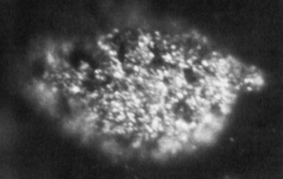
Albert Ghiorso and colleagues identify einsteinium (99) and fermium (100) in debris from the Ivy Mike hydrogen bomb test. #chemistry #nuclear
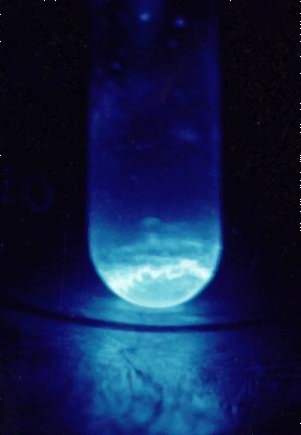
First full-scale thermonuclear weapon test; yields new elements einsteinium and fermium, confirming neutron capture processes. #nuclear #history

Albert Ghiorso and team synthesize mendelevium-256 at UC Berkeley's cyclotron, using alpha particle bombardment. #chemistry #elements
A team at the Nobel Institute in Sweden claims element 102, but later work at JINR (USSR) and Berkeley clarifies its synthesis. #chemistry #history
Albert Ghiorso et al. synthesize lawrencium (103) at UC Berkeley using heavy-ion fusion. #chemistry #elements
JINR (Dubna) and UC Berkeley independently produce element 104; naming controversy resolved later as rutherfordium. #chemistry #elements
JINR (Dubna) synthesizes element 105 via heavy-ion bombardment; later named dubnium. #chemistry #elements
JINR and Lawrence Berkeley Lab independently produce element 106; named after Glenn T. Seaborg. #chemistry #elements
A team at JINR (Dubna) synthesizes element 107 via lead-chromium fusion; later named bohrium. #chemistry #elements
GSI Helmholtz Centre (Germany) synthesizes element 108 via iron-lead fusion; named after the German state of Hesse. #chemistry #elements
GSI synthesizes element 109, named after physicist Lise Meitner. #chemistry #elements
GSI syntheizes element 110 via nickel-lead fusion; named after Darmstadt, Germany. #chemistry #elements
GSI produces element 111, named after Wilhelm Röntgen, discoverer of X-rays. #chemistry #elements
GSI synthesizes element 112, later named after Nicolaus Copernicus. #chemistry #elements
JINR (Dubna) and Livermore collaborate to synthesize element 114, named after Flerov Laboratory of Nuclear Reactions. #chemistry #elements
RIKEN (Japan) synthesizes element 113, the first discovered in Asia; named from Japanese 'Nihon'. #chemistry #elements
JINR (Dubna) and Lawrence Livermore produce element 118 via californium-calcium fusion; named after Yuri Oganessian. #chemistry #elements
JINR-Livermore collaboration synthesizes element 116, named after Lawrence Livermore National Laboratory. #chemistry #elements
JINR (Dubna) and Livermore synthesize element 115, named after Moscow region. #chemistry #elements
JINR, LLNL, and ORNL collaborate to produce element 117; named after Tennessee. #chemistry #elements
Swedish and German teams confirm JINR's discovery of element 115 (moscovium). #chemistry #elements
GSI (Germany) independently confirms element 117 synthesis. #chemistry #elements
International Union of Pure and Applied Chemistry (IUPAC) officially accepts flerovium and livermorium. #chemistry #science
Formal recognition of darmstadtium with final naming. #chemistry #science
Experiment at JAEA measures ionization potential of fermium, a key step for superheavy element chemistry. #chemistry #experiment
IUPAC officially recognizes nihonium, moscovium, tennessine, and oganesson, completing period 7 of the periodic table. #chemistry #science

IUPAC approves the name nihonium (Nh), proposed by RIKEN, the first element discovered in Asia. #chemistry #japan
IUPAC names element 118 after Yuri Oganessian, recognizing his contributions to superheavy element research. #chemistry #elements
Theoretical and experimental group at GSI attempts to study oganesson's chemistry, predicted to be a noble gas but with relativistic effects. #chemistry #superheavy
Multiple labs (RIKEN, JINR, GSI) attempt to synthesize element 119 (ununennium), but no confirmed results yet. #chemistry #future
Simulations predict oganesson's electron configuration is influenced by strong relativistic effects, altering chemical properties. #chemistry #physics
RIKEN launches experiment to reproduce tennessine and search for new isotopes. #chemistry #japan
JINR announces detection of oganesson-294 with a half-life of about 0.69 ms, confirming earlier results. #chemistry #nuclear
Researchers at PSI (Switzerland) synthesize seaborgium boride, a compound of element 106. #chemistry #experiment
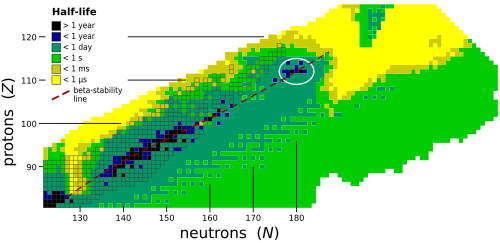
Experiments at JINR and GSI target element 120, with predictions of a possible magic number at 184 neutrons. #chemistry #physics
Nuclear theorists propose that oganesson-294 lies near the predicted island of stability, with enhanced half-lives for neighboring nuclei. #physics #theory
Quantum chemical calculations show oganesson can form bonds with hydrogen, despite being a noble gas, due to relativistic effects. #chemistry #simulation