700 BCE
Ancient Chinese Burning Mirrors
Ancient Chinese texts describe the use of polished bronze mirrors to concentrate sunlight for starting fires, an early application of solar thermal energy. #solar #history
This timeline traces the development of solar photovoltaics and wind power from ancient solar mirrors and Persian windmills to modern grid-scale solar farms and offshore wind turbines, highlighting key discoveries, technological breakthroughs, and global adoption milestones.
Ancient Chinese texts describe the use of polished bronze mirrors to concentrate sunlight for starting fires, an early application of solar thermal energy. #solar #history
Legend holds that Archimedes used mirrors to focus sunlight and set Roman ships ablaze during the Siege of Syracuse, one of the earliest alleged uses of concentrated solar power. #solar #history
The earliest known windmills were built in Persia (modern-day Iran) for grinding grain, using vertical-axis designs. These were among the first machines to harness wind energy. #wind #history

Horizontal-axis windmills appeared in Europe, particularly in the Netherlands and England, used for drainage and grain milling. They became iconic symbols of Dutch landscape. #wind #history
French physicist Edmond Becquerel observed that certain materials produce an electric current when exposed to light, laying the foundation for solar photovoltaics. #solar #science

French mathematician Augustin Mouchot built a solar-powered steam engine using parabolic troughs, one of the first practical solar thermal devices. #solar #technology
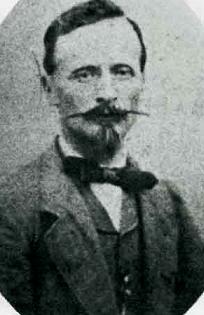
Willoughby Smith discovered that selenium changes electrical resistance when exposed to light, a key step toward photovoltaic cells. #solar #science

Charles Fritts built the first working solar cell using selenium coated with a thin layer of gold, achieving about 1% efficiency. #solar #invention

Heinrich Hertz observed that ultraviolet light changes the conductivity of metals, later explained by Einstein, crucial for understanding the photovoltaic mechanism. #science #physics

Charles F. Brush built the first automatically operated wind turbine for electricity generation in Cleveland, Ohio, with a 12 kW capacity. #wind #technology

Albert Einstein published a paper explaining the photoelectric effect, proposing light quanta (photons), which later earned him the Nobel Prize and deepened understanding of solar energy conversion. #science #physics
Jan Czochralski developed a method for growing single crystals, later crucial for producing high-purity silicon wafers used in solar cells. #materials #science
The first megawatt-scale wind turbine, the Smith-Putnam turbine, was installed in Vermont, USA, with a 1.25 MW capacity. It operated for about four years before a blade failure. #wind #energy
Bell Labs scientists Daryl Chapin, Calvin Fuller, and Gerald Pearson created the first practical silicon solar cell with about 6% efficiency, marking the birth of modern photovoltaics. #solar #invention
Hoffman Electronics introduced the first commercial silicon solar cells with 2% efficiency, used in satellite power and remote applications. #solar #commercial
Vanguard 1, the first satellite powered partly by solar cells, demonstrated the viability of photovoltaics in space, leading to widespread use in satellites. #solar #space

Sharp Corporation began mass-producing silicon solar cell modules for lighthouses and other applications, marking Japan's early leadership in solar manufacturing. #solar #manufacturing
The 1973 oil embargo led to increased research funding and public interest in solar and wind energy as alternatives to fossil fuels. #solar #wind #energy

Danish grassroots cooperatives began installing small wind turbines, fostering a community-driven wind power model that later influenced modern wind farms. #wind #community
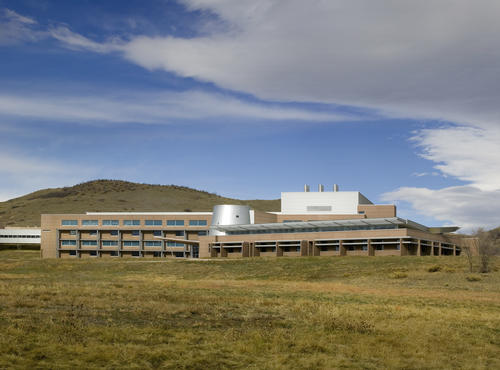
The U.S. Department of Energy established the Solar Energy Research Institute (later NREL) to advance solar and renewable energy technologies. #solar #research
ARCO Solar installed a 1 MW photovoltaic power plant in California, the first utility-scale solar farm, demonstrating grid-connected PV viability. #solar #energy

The Solar Challenger, a solar-powered aircraft, crossed the English Channel, showcasing the potential of solar energy for aviation. #solar #aviation

The Growian wind turbine, a 3 MW prototype, was connected to the German grid, though it faced operational challenges, it spurred further wind development. #wind #grid

Researchers at Boeing developed a copper indium diselenide (CIS) solar cell achieving over 14% efficiency, pioneering thin-film photovoltaic technology. #solar #technology

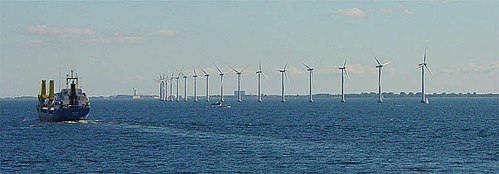
The Vindeby offshore wind farm in Denmark, with 11 turbines totaling 4.95 MW, became the world's first offshore wind farm, proving the concept. #wind #offshore
Michael Grätzel and Brian O'Regan invented the dye-sensitized solar cell, offering a low-cost alternative to silicon cells, igniting research in third-generation photovoltaics. #solar #innovation
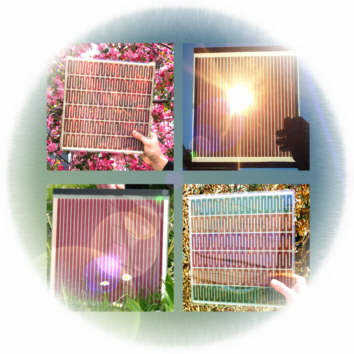
First Solar began commercial shipments of cadmium telluride (CdTe) thin-film modules, achieving lower costs than silicon and driving utility-scale solar growth. #solar #commercial
Germany enacted the Renewable Energy Sources Act (EEG), providing feed-in tariffs that stimulated massive solar and wind deployment, influencing global renewable policy. #policy #solar #wind

Kaneka Corporation achieved 10% efficiency for a thin-film silicon solar cell, a milestone for cost-effective photovoltaics. #solar #technology

Worldwide installed wind power capacity surpassed 120 gigawatts, led by Germany, the U.S., Spain, and India, confirming wind as a mainstream energy source. #wind #energy

Japanese researchers reported the first solid-state perovskite solar cell with 3.8% efficiency, sparking rapid research into this high-potential technology. #solar #innovation

First Solar's CdTe modules achieved manufacturing costs below $1 per watt, reaching grid parity in sunny regions and driving large-scale solar installations. #solar #economics
Worldwide cumulative solar PV capacity surpassed 100 GW, led by Germany, China, and Japan, marking a significant scale-up in deployment. #solar #energy

In 2015, solar photovoltaic installations accounted for nearly 30% of all new electricity generation capacity in the United States, ahead of natural gas. #solar #renewable

Construction began on Hornsea Project One off the UK coast, with a capacity of 1.2 GW, becoming the world's largest offshore wind farm when completed in 2020. #wind #offshore

In several countries, unsubsidized solar PV power purchase agreements dropped below $30/MWh, cheaper than coal or natural gas, signaling a tipping point for renewables. #solar #economics

Renewable energy capacity worldwide reached over 2,500 GW, with solar and wind contributing more than half of new additions, driven by rapid cost declines. #solar #wind #renewable

In a landmark year, solar and wind combined represented about 90% of new electricity generation capacity added in the United States, highlighting their dominance. #solar #wind #energy
World solar PV installations surpassed 1 terawatt (1000 GW) of cumulative capacity, a milestone achieved approximately 70 years after the first modern solar cell. #solar #milestone

Research teams achieved over 33% efficiency for perovskite-silicon tandem solar cells in laboratory conditions, promising even cheaper and more efficient solar power. #solar #innovation
The Gansu Wind Farm in China, with a planned capacity of 20 GW, continues expansion, underscoring China's leadership in wind energy deployment. #wind #china
