1833 CE
Marcus Samuel Opens Antiques Shop
Marcus Samuel, a Jewish merchant, opens a small antiques shop in London, which later evolves into a trading company dealing in seashells and eventually oil. #business #history )
Royal Dutch Shell, one of the world's largest oil and gas companies, was founded in 1907 through a merger of Royal Dutch Petroleum and Shell Transport and Trading. Its corporate history spans over a century, marked by technological innovations, global expansion, strategic mergers, and adaptations to market and regulatory changes.
Marcus Samuel, a Jewish merchant, opens a small antiques shop in London, which later evolves into a trading company dealing in seashells and eventually oil. #business #history )
Royal Dutch Petroleum Company is founded in The Hague, Netherlands, to exploit oil fields in Sumatra, Dutch East Indies. #oil #history

Marcus Samuel & Samuel & Company establish Shell Transport and Trading Company to market kerosene from the Russian Black Sea region. #oil #history
Royal Dutch Petroleum and Shell Transport and Trading merge to form Royal Dutch Shell Group, with 60% ownership by Royal Dutch and 40% by Shell. #business #merger
Shell enters the United States oil market, establishing Shell Oil Company in California. #expansion #oil

Shell forms Shell Chemical Company to produce chemicals from petroleum, diversifying beyond fuels. #chemicals #innovation
Shell D'Arcy (later Shell Nigeria) begins exploration in Nigeria, leading to major oil discoveries in the Niger Delta. #oil #africa

Shell drills the first commercial offshore oil well out of sight of land in the Gulf of Mexico, pioneering offshore technology. #offshore #technology

Shell's refinery in Wesseling, Germany, begins operations, becoming one of the largest in Europe. #refinery #europe
A massive explosion at Shell's Pernis refinery in the Netherlands kills 30 people and causes extensive damage, leading to safety improvements. #accident #safety
Shell and Exxon's joint venture discovers the Groningen gas field in the Netherlands, one of the largest natural gas fields in the world. #gas #discovery

Shell designs a slotting machine to cut and stack peat, demonstrating early diversification and engineering innovation. #innovation #engineering
Shell discovers the Brent oil field in the North Sea, a major milestone in North Sea oil production. #oil #northsea

The Arab oil embargo causes oil prices to spike, profoundly affecting Shell's operations and strategies, leading to increased investment in non-OPEC sources. #crisis #oil

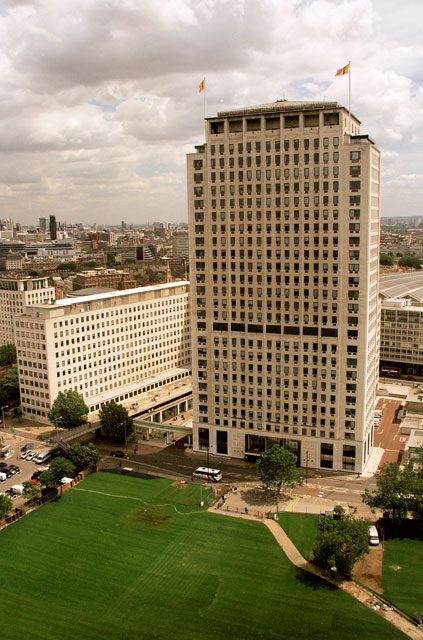
The Shell Centre in London, a major office building, is completed, symbolizing Shell's presence in the UK. #architecture #corporate
Shell faces pressure from anti-apartheid activists for its operations in South Africa, leading to partial divestment in 1987. #ethics #activism
Greenpeace protests Shell's plan to dump the Brent Spar oil platform in the North Atlantic, leading Shell to abandon the plan and adopt better decommissioning practices. #environment #protest
Shell faces lawsuits over alleged complicity in human rights abuses in Nigeria, particularly related to the execution of Ken Saro-Wiwa and others. #humanrights #nigeria
Shell forms a joint venture with DaimlerChrysler and others to develop hydrogen fuel cells, signaling early investment in alternative energy. #hydrogen #cleanenergy
Shell acquires Pennzoil-Quaker State, expanding its lubricants portfolio. #acquisition #lubricants

Shell updates its iconic pecten logo, reflecting modernization while retaining the heritage. #branding #logo
Shell announces it had overbooked oil and gas reserves by 20%, leading to CEO Philip Watts' resignation and a $150 million SEC fine. #scandal #corporate
Royal Dutch Shell remodels from a dual-listed structure into a single company, simplifying governance. #reorganization #governance
Shell comes under pressure from the Russian government over the Sakhalin II oil and gas project, eventually selling a majority stake to Gazprom. #russia #energy
The company formally changes its name to Royal Dutch Shell plc and moves its headquarters to The Hague. #corporate #rename
Shell begins development of the Perdido platform in the deepwater Gulf of Mexico, one of the deepest offshore platforms. #offshore #deepwater )
Shell assists in cleanup efforts after BP's Deepwater Horizon oil spill, leading to increased scrutiny of deepwater drilling practices. #spill #environment

Shell acquires East Resources, a natural gas company in the Marcellus Shale, for $4.7 billion, expanding its US shale gas portfolio. #shale #acquisition
Shell abandons the $12.5 billion Carmel liquefied natural gas (LNG) terminal in Ireland due to legal and political opposition. #lng #ireland

Shell announces the acquisition of BG Group for about $70 billion, strengthening its LNG and deepwater positions. #acquisition #lng

Shell completes the BG Group acquisition, becoming the world's largest trader of LNG. #merger #energy
Shell acquires NewMotion, a leading European electric vehicle charging provider, signaling a shift toward clean energy. #ev #cleantech
Shell sets a net carbon footprint ambition to reduce its carbon intensity by 20% by 2035 and 50% by 2050 compared to 2016 levels. #climate #sustainability
Shell sells its interests in the San Juan Basin coalbed methane assets in New Mexico, part of a portfolio rationalization. #divestment #gas

Due to the COVID-19 pandemic and oil price crash, Shell cuts its dividend by two-thirds for the first time since 1945. #dividend #crisis
Shell announces target to become a net-zero emissions energy business by 2050, aligning with the Paris Agreement. #climate #netzero
Shell drops 'Royal Dutch' from its name and becomes Shell plc, moving its headquarters from the Netherlands to the UK. #governance #rename
Shell reports record annual profits of $42.3 billion in 2022, driven by high oil and gas prices following the Russian invasion of Ukraine. #profits #energycrisis
Shell agrees to sell its onshore oil assets in Nigeria to a consortium of local companies for up to $2.4 billion, exiting long-standing operations. #nigeria #divestment
Shell starts operations at its 10 MW renewable hydrogen plant in Germany, part of its low-carbon strategy. #hydrogen #renewable