← Open Interactive Timeline Board

Ring Theory & Fields: Major Case Studies & Paradigm Shifts

Encyclopedia/1. The Cosmos & The Natural World/1. Mathematics & Formal Systems/02. Algebra & Symbolic Systems  •  Curated by Admin Timeline.sg

This timeline traces the historical development of ring theory and field theory, from ancient algebraic methods to modern abstract algebra. It features key contributions from mathematicians across cultures, including the Islamic Golden Age, India, and Europe, and covers paradigm shifts such as the introduction of ideals, the concept of fields, and the rise of commutative algebra.

Chronological Storyline (34 Milestones)

628 CE

Brahmagupta's Brāhmasphuṭasiddhānta

Indian mathematician Brahmagupta formalizes rules for zero and negative numbers, laying early groundwork for algebraic structures. #algebra #mathematics #history

820 CE

Al-Khwarizmi's Al-Jabr

Persian mathematician Al-Khwarizmi publishes Al-Jabr, systematically solving linear and quadratic equations, coining the term 'algebra' and influencing later ring theory. #algebra #mathematics #history

Al-Khwarizmi's Al-Jabr
By Zarateman - Own work, CC0, https://commons.wikimedia.org/w/index.php?curid=162213187
1070 CE

Omar Khayyam Classifies Cubic Equations

Persian mathematician Omar Khayyam classifies cubic equations and provides geometric solutions, advancing algebraic methods. #algebra #mathematics #history

Omar Khayyam Classifies Cubic Equations
By Alireza Javaheri - https://web.archive.org/web/20161024154356/http://www.panoramio.com/photo/85093358, CC BY 3.0, https://commons.wikimedia.org/w/index.php?curid=55909539
1202 CE

Fibonacci's Liber Abaci

Italian mathematician Fibonacci introduces Hindu-Arabic numerals to Europe, promoting algebraic calculation. #algebra #mathematics #history

Fibonacci's Liber Abaci
By Unknown author, Public domain, https://commons.wikimedia.org/w/index.php?curid=720501
1545 CE

Cardano's Ars Magna

Gerolamo Cardano publishes Ars Magna, including solutions to cubic and quartic equations, advancing the theory of equations. #algebra #mathematics #history )

1637 CE

Descartes' La Géométrie

René Descartes introduces coordinate geometry and modern algebraic notation, linking algebra and geometry. #algebra #mathematics #history

Descartes' La Géométrie
By Original uploader was User:Caton at [1] - Originally from fr.wikipedia; description page is/was here., Public domain, https://commons.wikimedia.org/w/index.php?curid=1379032
1748 CE

Euler's Introductio in analysin infinitorum

Leonhard Euler formalizes complex numbers and algebraic functions, influencing later field theory. #algebra #mathematics #history

Euler's Introductio in analysin infinitorum
By Cronholm144 at English Wikipedia - Transferred from en.wikipedia to Commons., CC BY-SA 3.0, https://commons.wikimedia.org/w/index.php?curid=3128774
1799 CE

Gauss Proves Fundamental Theorem of Algebra

Carl Friedrich Gauss proves that every non-constant polynomial with complex coefficients has a complex root, establishing the algebraic closure of complex numbers. #algebra #mathematics #history

1801 CE

Gauss's Disquisitiones Arithmeticae

Gauss publishes foundational work on number theory, including quadratic reciprocity and modular arithmetic, influencing ring theory. #algebra #numbertheory #history

Gauss's Disquisitiones Arithmeticae
By Unknown author, Public domain, https://commons.wikimedia.org/w/index.php?curid=641724
1824 CE

Abel Proves Impossibility of Quintic by Radicals

Niels Henrik Abel proves that general quintic equations cannot be solved by radicals, motivating the development of group theory and field extensions. #algebra #mathematics #history

1830 CE

Galois Develops Theory of Equations

Évariste Galois develops group theory and field extensions to characterize solvability of polynomials, founding Galois theory. #algebra #mathematics #history

Galois Develops Theory of Equations
By Self - Created in LaTeX by the following code: \documentclass[12pt]{article} \thispagestyle{empty} \usepackage{tikz} \usepackage{amsfonts} \begin{document} \begin{tikzpicture}[node distance=2cm] \node (Q) {$\mathbb{Q}$}; \node (Q6) [above of=Q] {$\mathbb{Q}(\sqrt{6})$}; \node (Q2) [right of=Q6] {$\mathbb{Q}(\sqrt{2})$}; \node (Q3) [left of=Q6] {$\mathbb{Q}(\sqrt{3})$}; \node (Q23) [above of=Q6] {$\mathbb{Q}(\sqrt{2}, \sqrt{3})$}; \node (1f) [right of=Q2] {$\{1, f\}$}; \node (1fg) [right of=1f] {$\{1, fg\}$}; \node (1g) [right of=1fg] {$\{1, g\}$}; \node (G) [below of=1fg] {$\{1, f, g, fg\}$}; \node (1) [above of=1fg] {$\{1\}$}; \draw (Q) -- (Q2); \draw (Q) -- (Q3); \draw (Q) -- (Q6); \draw (Q2) -- (Q23); \draw (Q3) -- (Q23); \draw (Q6) -- (Q23); \draw (G) -- (1f); \draw (G) -- (1fg); \draw (G) -- (1g); \draw (1f) -- (1); \draw (1fg) -- (1); \draw (1g) -- (1); \end{tikzpicture} \end{document}, CC BY-SA 3.0, https://commons.wikimedia.org/w/index.php?curid=14535355
Oct 16, 1843 CE

Hamilton Discovers Quaternions

William Rowan Hamilton discovers quaternions, the first non-commutative division algebra, expanding the concept of number systems. #algebra #mathematics #history

Hamilton Discovers Quaternions
By Cmglee - Own work, CC BY-SA 4.0, https://commons.wikimedia.org/w/index.php?curid=145997978
1858 CE

Cayley Introduces Matrix Algebra

Arthur Cayley defines matrix multiplication and algebra, providing a concrete example of non-commutative rings. #algebra #mathematics #history

Cayley Introduces Matrix Algebra
By Herbert Beraud (1845–1896) - http://www-groups.dcs.st-and.ac.uk/~history/PictDisplay/Cayley.html, Public domain, https://commons.wikimedia.org/w/index.php?curid=904674
1871 CE

Dedekint Introduces Field Concept

Richard Dedekind formally defines the concept of a field (Körper) in his work on algebraic number theory. #algebra #mathematics #history )

Dedekint Introduces Field Concept
By Phlsph7 - Own work, CC BY 4.0, https://commons.wikimedia.org/w/index.php?curid=141382296
1882 CE

Dedekind and Weber on Algebraic Functions

Dedekind and Heinrich Weber develop the theory of algebraic functions using ideal theory, linking number theory and geometry. #algebra #mathematics #history

Dedekind and Weber on Algebraic Functions
By Unknown (Mondadori Publishers) - https://www.gettyimages.co.uk/detail/news-photo/portrait-of-the-german-mathematician-richard-dedekind-1900s-news-photo/141551154, Public domain, https://commons.wikimedia.org/w/index.php?curid=41284791
1893 CE

Hurwitz' Theorem on Composition Algebras

Adolf Hurwitz proves that the only normed division algebras over the reals are R, C, H, and O, classifying finite-dimensional composition algebras. #algebra #mathematics #history )

1905 CE

Wedderburn's Little Theorem

Joseph Wedderburn proves that every finite division ring is a field, a key result in ring theory. #algebra #mathematics #history

1910 CE

Ernst Steinitz's Field Theory

Ernst Steinitz publishes a comprehensive paper on the algebraic theory of fields, classifying fields by characteristic and transcendence degree. #algebra #mathematics #history

Ernst Steinitz's Field Theory
By Ar2r4alll - Own work, CC BY 3.0, https://commons.wikimedia.org/w/index.php?curid=8545862
1921 CE

Noether's Idealtheorie in Ringbereichen

Emmy Noether publishes her seminal work on ideal theory in rings, laying the foundation for commutative algebra and formalizing the ascending chain condition. #algebra #mathematics #history

Noether's Idealtheorie in Ringbereichen
By Unknown authorUnknown author Publisher: Mathematical Association of America [3], Brooklyn Museum [4], Agnes Scott College [5], [6] - Emmy Noether (1882-1935), Archived, Public domain, https://commons.wikimedia.org/w/index.php?curid=158126186
1927 CE

Artin's Reciprocity Law

Emil Artin proves the reciprocity law for class field theory, a deep result linking number fields and Galois theory. #algebra #numbertheory #history

1929 CE

Van der Waerden's Moderne Algebra

Bartel Leendert van der Waerden publishes modern algebra textbook, systematizing ring and field theory for a generation. #algebra #mathematics #history

Van der Waerden's Moderne Algebra
By Bartel Leendert van der Waerden - https://archive.org/details/modernalgebra02waer/page/n5/mode/2up, Public domain, https://commons.wikimedia.org/w/index.php?curid=151846892
1933 CE

Jacobson Radical Introduced

Nathan Jacobson defines the Jacobson radical of a ring, a key concept in ring theory and structure theory. #algebra #mathematics #history

Jacobson Radical Introduced
By Konrad Jacobs, Erlangen - https://opc.mfo.de/detail?photo_id=1941, CC BY-SA 2.0 de, https://commons.wikimedia.org/w/index.php?curid=11192158
1935 CE

Zariski's Work on Algebraic Geometry

Oscar Zariski uses ring theory and valuations to develop new foundations for algebraic geometry. #algebra #geometry #history
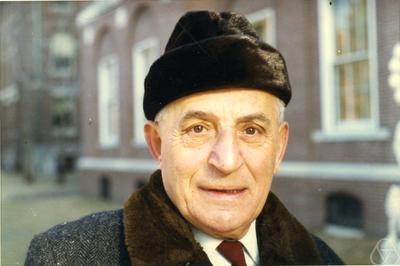
Zariski's Work on Algebraic Geometry
By George Bergman - https://opc.mfo.de/detail?photo_id=6262, GFDL 1.2, https://commons.wikimedia.org/w/index.php?curid=6090840
1945 CE

Chevalley's Algebraic Groups

Claude Chevalley lays the foundations for the theory of algebraic groups, linking group theory, ring theory, and geometry. #algebra #mathematics #history

Chevalley's Algebraic Groups
By Konrad Jacobs - MFO, CC BY-SA 2.0 de, https://commons.wikimedia.org/w/index.php?curid=8046334
1950 CE

Bourbaki's Éléments de Mathématique, Algebra

Nicolas Bourbaki publishes the Algebra volume, providing a rigorous axiomatic treatment of rings and fields. #algebra #mathematics #history

1955 CE

Cartan and Eilenberg's Homological Algebra

Henri Cartan and Samuel Eilenberg publish Homological Algebra, applying category theory to rings and modules. #algebra #mathematics #history )

1958 CE

Serre's GAGA

Jean-Pierre Serre's GAGA paper establishes deep analogies between algebraic geometry and complex geometry, relying on ring theory. #algebra #geometry #history

1960 CE

Grothendieck's Schemes

Alexander Grothendieck revolutionizes algebraic geometry by introducing schemes, making commutative ring theory central. #algebra #geometry #history )

1964 CE

Quillen's Algebraic K-Theory

Daniel Quillen develops algebraic K-theory, connecting ring theory and topology. #algebra #mathematics #history

1970 CE

Deligne Proves Weil Conjectures

Pierre Deligne proves the Weil conjectures, deep results connecting number theory and algebraic geometry via étale cohomology and ring theory. #algebra #numbertheory #history

1983 CE

Faltings Proves Mordell Conjecture

Gerd Faltings proves the Mordell conjecture, a fundamental result in arithmetic geometry using Arakelov theory and ring-theoretic methods. #algebra #numbertheory #history

Faltings Proves Mordell Conjecture
By Renate Schmid - https://opc.mfo.de/detail?photoID=7513, CC BY-SA 2.0 de, https://commons.wikimedia.org/w/index.php?curid=5427105
Sep 19, 1994 CE

Wiles Proves Fermat's Last Theorem

Andrew Wiles proves Fermat's Last Theorem, using modular forms, Galois representations, and ring-theoretic techniques. #algebra #numbertheory #history
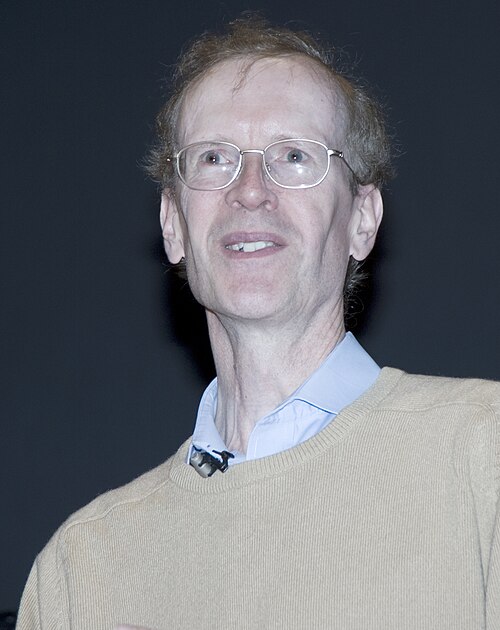
Wiles Proves Fermat's Last Theorem
By "copyright C. J. Mozzochi, Princeton N.J" - http://www.mozzochi.org/deligne60/Deligne1/_DSC0024.jpg, Attribution, https://commons.wikimedia.org/w/index.php?curid=2635913
2002 CE

Perelman Proves Poincaré Conjecture

Grigori Perelman proves the Poincaré conjecture using Ricci flow, but geometric methods also involve algebraic structures; notable for impact. #geometry #topology #history

2003 CE

Hodge Conjecture Remains Open

The Hodge conjecture, linking algebraic topology and algebraic geometry, remains one of the Millennium Problems; ring theory is central. #algebra #geometry #openproblem

Hodge Conjecture Remains Open
By Tazerenix - Own work, CC BY-SA 4.0, https://commons.wikimedia.org/w/index.php?curid=124560301