Ring Theory & Fields: Global Cross-Cultural Perspectives
Encyclopedia/1. The Cosmos & The Natural World/1. Mathematics & Formal Systems/02. Algebra & Symbolic Systems • Curated by Admin Timeline.sg
This timeline traces the global development of ring theory and fields, highlighting contributions from diverse civilizations including Chinese, Indian, Islamic, European, and others from ancient times to the modern era.
Chronological Storyline (29 Milestones)
300 CE
Chinese Remainder Theorem in Sunzi Suanjing
The Chinese mathematical text Sunzi Suanjing formulates the Chinese remainder theorem, a foundational result in modular arithmetic and ring theory. #mathematics #history
Chinese Remainder Theorem in Sunzi Suanjing By AnonymousUnknown author - Own work (my book), Public domain, https://commons.wikimedia.org/w/index.php?curid=12568381
628 CE
Brahmagupta's Brāhmasphuṭasiddhānta
Indian mathematician Brahmagupta writes Brāhmasphuṭasiddhānta, discussing zero, negative numbers, and quadratic equations, laying early groundwork for algebraic structures. #math #history
820 CE
Al-Khwarizmi's The Compendious Book on Calculation by Completion and Balancing
Persian scholar Al-Khwarizmi publishes a key text on algebra, introducing systematic methods for solving linear and quadratic equations. The term 'algebra' derives from his work. #algebra #islamicgoldenage
Al-Khwarizmi's The Compendious Book on Calculation by Completion and Balancing By Zarateman - Own work, CC0, https://commons.wikimedia.org/w/index.php?curid=162213187
1150 CE
Bhaskara II's Bījagaṇita
Indian mathematician Bhaskara II writes Bījagaṇita, an advanced treatise on algebra covering indeterminate equations and cyclic methods. #math #history
Bhaskara II's Bījagaṇita By Unknown author - Own work, Public domain, https://commons.wikimedia.org/w/index.php?curid=150275955
1202 CE
Fibonacci's Liber Abaci
Italian mathematician Fibonacci publishes Liber Abaci, introducing Arabic numerals and algebraic methods to Europe. #math #history
Fibonacci's Liber Abaci By Unknown author, Public domain, https://commons.wikimedia.org/w/index.php?curid=720501
1247 CE
Qin Jiushao's Mathematical Treatise in Nine Sections
Chinese mathematician Qin Jiushao develops methods for solving polynomial equations, including a numerical approach now known as Horner's method. #math #china
Qin Jiushao's Mathematical Treatise in Nine Sections By Qin Jiushao 秦九韶 - 1842 printing Shu Shu Jiu Zhang, Public domain, https://commons.wikimedia.org/w/index.php?curid=3414657
1545 CE
Cardano's Ars Magna
Italian mathematician Gerolamo Cardano publishes Ars Magna, presenting solutions to cubic and quartic equations, a milestone in algebraic theory. #algebra #history )
Cardano's Ars Magna By JCSantos - Own work, Public domain, https://commons.wikimedia.org/w/index.php?curid=3810175
1591 CE
Vieta's Introduction to the Analytic Art
French mathematician François Viète publishes In artem analyticem isagoge, using symbolic notation and advancing algebra. #algebra #history
Vieta's Introduction to the Analytic Art By Unknown author, Public domain, https://commons.wikimedia.org/w/index.php?curid=81021
1637 CE
Descartes' La Géométrie
René Descartes links algebra and geometry, introducing Cartesian coordinates and analytic geometry. #math #history
Descartes' La Géométrie By Original uploader was User:Caton at [1] - Originally from fr.wikipedia; description page is/was here., Public domain, https://commons.wikimedia.org/w/index.php?curid=1379032
1683 CE
Seki Takakazu's Work on Determinants
Japanese mathematician Seki Takakazu develops the concept of determinants, independent of Western discoveries, contributing to linear algebra. #math #japan
Seki Takakazu's Work on Determinants By upload by AMorozov - Gakken, Public domain, https://commons.wikimedia.org/w/index.php?curid=710154
1770 CE
Euler's Elements of Algebra
Leonhard Euler publishes Vollständige Anleitung zur Algebra, a comprehensive textbook systematizing algebraic knowledge. #algebra #history
Euler's Elements of Algebra By Euler, Leonhard, 1707-1783 Hewlett, John, 1762-1844 Horner, Francis, 1778-1817 Bernoulli, Jean, 1744-1807 Lagrange, J. L. (Joseph Louis), 1736-1813 - Internet Archive identifier: elementsofalgebr00eule https://archive.org/download/elementsofalgebr00eule/elementsofalgebr00eule.pdf, Public domain, https://commons.wikimedia.org/w/index.php?curid=95114769
1801 CE
Gauss's Disquisitiones Arithmeticae
Carl Friedrich Gauss publishes Disquisitiones Arithmeticae, establishing modular arithmetic and quadratic reciprocity, foundational to ring theory. #math #numbertheory
Gauss's Disquisitiones Arithmeticae By Unknown author, Public domain, https://commons.wikimedia.org/w/index.php?curid=641724
1832 CE
Galois Theory Developed
Évariste Galois develops the theory of algebraic equations and field theory, introducing Galois groups and linking groups to fields. #algebra #history
Galois Theory Developed By Unknown author - Iyanaga, Shokichi, "ガロアの時代 ガロアの数学 第一部 時代篇" , Springer-Verlag Tokyo, 1999 http://www.win.tue.nl/~aeb/at/GaloisCorrespondence.html, Public domain, https://commons.wikimedia.org/w/index.php?curid=103351
Oct 16, 1843 CE
Hamilton Discovers Quaternions
William Rowan Hamilton discovers quaternions, a non-commutative division algebra, expanding the concept of number systems. #math #algebra
Hamilton Discovers Quaternions By Cmglee - Own work, CC BY-SA 4.0, https://commons.wikimedia.org/w/index.php?curid=145997978
1858 CE
Cayley Introduces Matrices
Arthur Cayley introduces matrix algebra, a foundational structure in ring theory and linear algebra. #math #algebra
Cayley Introduces Matrices By Herbert Beraud (1845–1896) - http://www-groups.dcs.st-and.ac.uk/~history/PictDisplay/Cayley.html, Public domain, https://commons.wikimedia.org/w/index.php?curid=904674
1876 CE
Dedekind Introduces Ideals
Richard Dedekind introduces the concept of ideals in algebraic number theory, a pivotal notion in commutative ring theory. #math #algebra )
1888 CE
Hilbert's Basis Theorem
David Hilbert proves the basis theorem for polynomial rings, establishing that every ideal in a polynomial ring over a field is finitely generated. #math #algebra
1905 CE
Wedderburn's Little Theorem
Joseph Wedderburn proves that every finite division ring is a field, a fundamental result in ring theory. #math #algebra
1920 CE
Emmy Noether's Ideal Theory
Emmy Noether publishes groundbreaking work on commutative rings and ideals, shaping modern abstract algebra. #math #womeninstem
Emmy Noether's Ideal Theory By Unknown authorUnknown author Publisher: Mathematical Association of America [3], Brooklyn Museum [4], Agnes Scott College [5], [6] - Emmy Noether (1882-1935), Archived, Public domain, https://commons.wikimedia.org/w/index.php?curid=158126186
1927 CE
Artin's Work on Rings
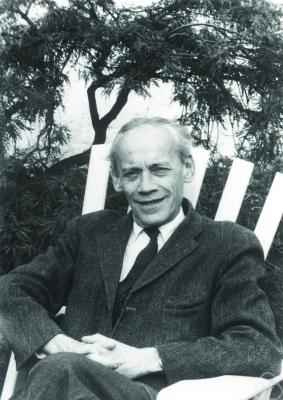
Emil Artin develops Artin rings and the Artin–Wedderburn theorem, classifying semisimple rings. #math #algebra
Artin's Work on Rings By Konrad Jacobs, Erlangen - Mathematisches Forschungsinstitut Oberwolfach, https://opc.mfo.de/detail?photoID=116, CC BY-SA 2.0 de, https://commons.wikimedia.org/w/index.php?curid=3898471
1930 CE
Krull Dimension Defined
Wolfgang Krull introduces the concept of dimension for commutative rings, now called Krull dimension. #math #algebra
1940 CE
Hua Luogeng's Work on Matrix Theory
Chinese mathematician Hua Luogeng makes significant contributions to matrix theory and ring theory, advancing algebra in China. #math #china
Hua Luogeng's Work on Matrix Theory By 牛畏予 - http://baike.baidu.com/albums/6351/6351.html#0$e78c65898b37b4d30e244463, Public domain, https://commons.wikimedia.org/w/index.php?curid=17315495
1945 CE
Mac Lane's Categories
Samuel Eilenberg and Saunders Mac Lane introduce category theory, providing a unifying framework for algebraic structures including rings. #math #algebra
Mac Lane's Categories By User:Cepheus - Own work, based on en:Image:MorphismComposition-01.png, Public domain, https://commons.wikimedia.org/w/index.php?curid=1425613
1950 CE
Grothendieck's Algebraic Geometry Begins
Alexander Grothendieck revolutionizes algebraic geometry with schemes, deeply linking commutative ring theory to geometry. #math #algebra
Grothendieck's Algebraic Geometry Begins By Konrad Jacobs, Erlangen, Copyright by MFO / Original uploader was AEDP at it.wikipedia - Cutted from File:Alexander_Grothendieck.jpg, CC BY-SA 4.0, https://commons.wikimedia.org/w/index.php?curid=154118951
1958 CE
Serre's Algebraic Geometry
Jean-Pierre Serre introduces sheaf theory and coherent sheaves, advancing the use of ring theory in algebraic geometry. #math #algebra
Serre's Algebraic Geometry By Mediterranean Institute for the Mathematical Sciences - Extracted from https://www.youtube.com/watch?v=wXCo54RuP1s&t=1502s, CC BY 3.0, https://commons.wikimedia.org/w/index.php?curid=110894720
1964 CE
Hironaka's Resolution of Singularities
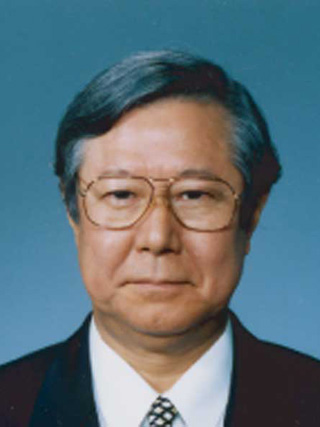
Heisuke Hironaka proves resolution of singularities for algebraic varieties in characteristic zero, using commutative algebra. #math #japan
Hironaka's Resolution of Singularities By 日本学士院 - https://www.japan-acad.go.jp/japanese/members/4/hironaka_heisuke.html, CC BY 4.0, https://commons.wikimedia.org/w/index.php?curid=143448854
1973 CE
Deligne's Proof of Weil Conjectures
Pierre Deligne completes the proof of the Weil conjectures, deep results connecting algebraic geometry to number theory via étale cohomology. #math #algebra
1994 CE
Wiles Proves Fermat's Last Theorem
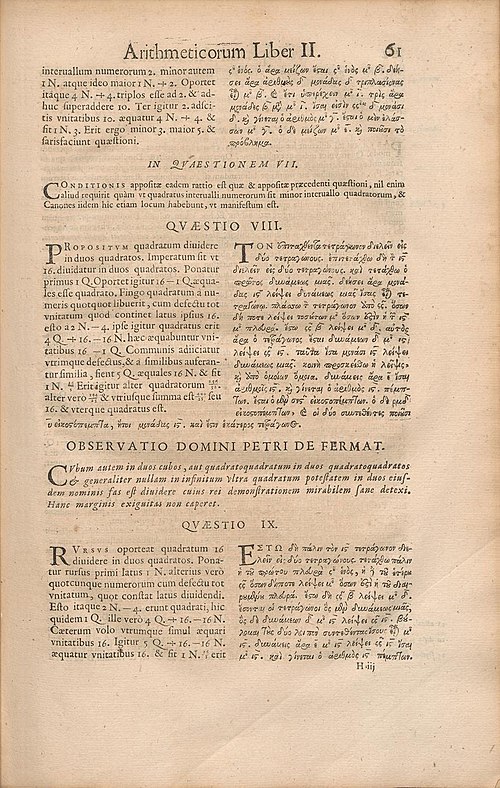
Andrew Wiles proves Fermat's Last Theorem using advanced ring theory from algebraic number theory and modular forms. #math #history
Wiles Proves Fermat's Last Theorem By Unknown author, Public domain, https://commons.wikimedia.org/w/index.php?curid=533640
2002 CE
AKS Primality Test
Manindra Agrawal, Neeraj Kayal, and Nitin Saxena devise an unconditional deterministic polynomial-time primality test using ring theory. #math #india