250 BCE
Archimedes' Exhaustion Method
Archimedes uses the method of exhaustion to compute areas and volumes, anticipating integral calculus. #analysis #history
This timeline traces the development of real analysis and measure theory from ancient approximations to modern rigorous foundations, highlighting contributions from diverse global traditions including Indian, Islamic, and European mathematicians.
Archimedes uses the method of exhaustion to compute areas and volumes, anticipating integral calculus. #analysis #history
Indian mathematician Aryabhata systematically treats trigonometric series, influencing later calculus. #india #math

Brahmagupta presents interpolation formulas and the sum of squares, foundational for numerical analysis. #india #analysis
Al-Kindi applies discrete analysis to cryptography, early statistical and analytic thinking. #islamic #math

Ibn al-Haytham (Alhazen) computes the volume of a paraboloid via summation, an early integral calculus technique. #islamic #analysis

Bhāskara II discusses the differential of sine and uses the concept of instantaneous motion. #india #calculus

Madhava of Sangamagrama discovers infinite series for sine, cosine, and arctangent, a major precursor to calculus. #india #analysis
The Kerala school continues developing series expansions and calculus-like techniques independently of Europe. #india #math

Cavalieri introduces geometry of indivisibles, an early integration method influencing real analysis. #analysis #history

Isaac Newton develops fluxional calculus based on infinitesimals, founding classical analysis. #calculus #analysis

Gottfried Wilhelm Leibniz publishes Nova Methodus, introducing differential notation and laying foundations for real analysis. #calculus #history
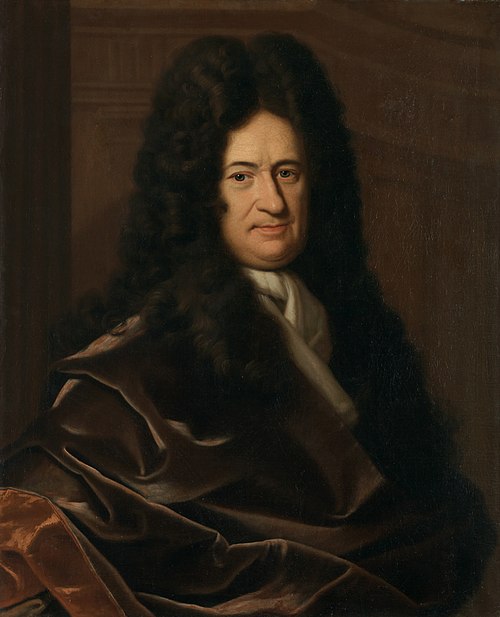
Leonhard Euler systematizes real analysis, introducing functions and series expansions. #analysis #euler

Bolzano provides a rigorous proof of the intermediate value theorem using the least upper bound property, anticipating arithmetization of analysis. #analysis #rigor

Augustin-Louis Cauchy publishes a rigorous treatment of limits, continuity, and convergence, redefining real analysis. #analysis #rigor

Niels Henrik Abel proves that the binomial series converges for certain conditions, highlighting the need for rigorous convergence criteria. #analysis #series
Bernhard Riemann formalizes the Riemann integral in his habilitation thesis, a cornerstone of real analysis. #analysis #integration

Riemann integrates discontinuous functions and develops conditions for Fourier series convergence, influencing measure theory. #analysis #fourier

Karl Weierstrass constructs a function that is continuous but nowhere differentiable, shocking the mathematical community and spurring rigor. #analysis #counterexample

Richard Dedekind defines real numbers via cuts, providing a rigorous arithmetical foundation for analysis. #analysis #numbers

Georg Cantor proves that real numbers are uncountable, launching set theory and its impact on measure theory. #settheory #analysis

Giuseppe Peano constructs a continuous curve that fills a square, challenging intuitive notions of dimension and continuity. #analysis #topology
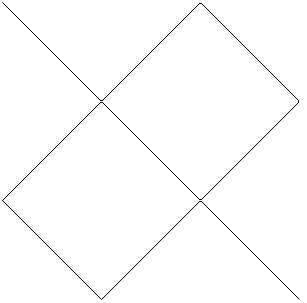
René-Louis Baire formulates the Baire category theorem, a fundamental tool in functional analysis and real analysis. #analysis #topology
Henri Lebesgue defines measure and the Lebesgue integral, revolutionizing real analysis and measure theory. #measuretheory #integration

Lebesgue's doctoral dissertation fully develops measure theory and the Lebesgue integral, becoming a classic. #measuretheory #analysis
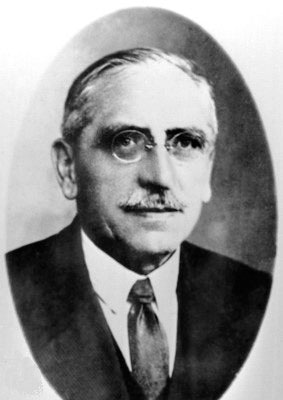
Ernst Zermelo introduces the axiom of choice, which later proves essential in analysis and measure theory (non-measurable sets). #settheory #analysis

Giuseppe Vitali constructs a set of real numbers that is not Lebesgue measurable, using the axiom of choice. #measuretheory #counterexample
Pierre Fatou publishes his lemma on the integral of a limit of functions, a key tool in measure theory. #measuretheory #analysis
Felix Hausdorff defines metric dimension and fractional measures, extending measure theory to fractals. #measuretheory #dimension
Stefan Banach proves the fixed-point theorem, a cornerstone of functional analysis and real analysis. #analysis #fixedpoint
Norbert Wiener constructs a rigorous measure on continuous paths, defining stochastic analysis. #measuretheory #stochastic

Andrey Kolmogorov axiomatizes probability using measure theory, creating modern probability theory. #measuretheory #probability

Kolmogorov's monograph establishes measure-theoretic probability as a branch of analysis. #measuretheory #probability
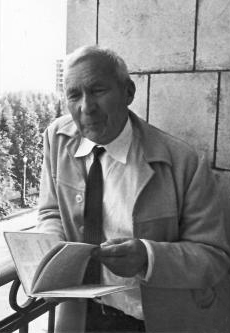
Paul Halmos publishes 'Measure Theory', a classic textbook that systematizes the field. #measuretheory #education

Laurent Schwartz develops distribution theory, generalizing functions and connecting to measure theory. #analysis #distributions )
Hörmander uses measure theory and functional analysis to solve PDEs, influencing modern analysis. #analysis #pde

Abraham Robinson introduces nonstandard analysis using hyperreal numbers, providing a new foundation for calculus. #analysis #nonstandard

Mumford applies measure theory to algebraic geometry, integrating real and complex aspects. #measuretheory #algebraic

Walter Rudin publishes 'Fourier Analysis on Groups', connecting measure theory with harmonic analysis. #analysis #fourier
Ennio De Giorgi, Herbert Federer, and colleagues develop geometric measure theory, refining minimal surfaces and rectifiable sets. #measuretheory #geometry
Benoit Mandelbrot popularizes fractals, highlighting Hausdorff measure and non-integer dimensions. #measuretheory #fractal

Michel Talagrand develops concentration of measure phenomena, crucial in functional analysis and probability. #measuretheory #probability
Terence Tao publishes 'Analysis I & II', modernizing the teaching of real analysis and integrating measure theory. #analysis #education

Cédric Villani uses measure theory to solve the optimal transport problem, revolutionizing the field. #measuretheory #transport
