Real Analysis & Measure Theory: Modern Frontiers & Breakthrough Innovations
Encyclopedia/1. The Cosmos & The Natural World/1. Mathematics & Formal Systems/03. Calculus & Mathematical Analysis • Curated by Admin Timeline.sg
This timeline traces the evolution of real analysis and measure theory from ancient foundations in exhaustion methods and early calculus to modern breakthroughs in measure theory, integration, fractal geometry, and applications in probability and data science. It highlights key figures and concepts that shaped rigorous analysis and its contemporary frontiers.
Chronological Storyline (43 Milestones)
300 BCE
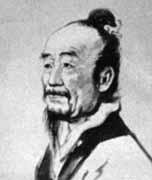
Liu Hui's Method of Exhaustion
Chinese mathematician Liu Hui approximates π using inscribed polygons, akin to the method of exhaustion. #mathematics #history
Liu Hui's Method of Exhaustion By Unknown - "Liu Hui (220 - 280) - Biography - MacTutor History of Mathematics" https://mathshistory.st-andrews.ac.uk/Biographies/Liu_Hui/, CC BY-SA 4.0, https://commons.wikimedia.org/w/index.php?curid=130481910
250 BCE
Archimedes' Method of Exhaustion
Archimedes uses the method of exhaustion to compute areas and volumes, a precursor to integral calculus. #mathematics #analysis
1400 CE
Madhava's Series for π
Madhava of Sangamagrama discovers power series expansions for trigonometric functions, precursors to calculus in India. #mathematics #analysis
1635 CE
Cavalieri's Principle
Bonaventura Cavalieri develops the principle of indivisibles, a geometric precursor to integration. #mathematics #calculus
Cavalieri's Principle By Christopher Grattoni - demonstrations.wolfram.com, CC BY 4.0, https://commons.wikimedia.org/w/index.php?curid=145384849
1650 CE
Seki Takakazu's Calculus
Japanese mathematician Seki Takakazu independently develops calculus-like methods, including a form of the extended mean value theorem. #mathematics #history
Seki Takakazu's Calculus By upload by AMorozov - Gakken, Public domain, https://commons.wikimedia.org/w/index.php?curid=710154
Oct 1, 1684 CE
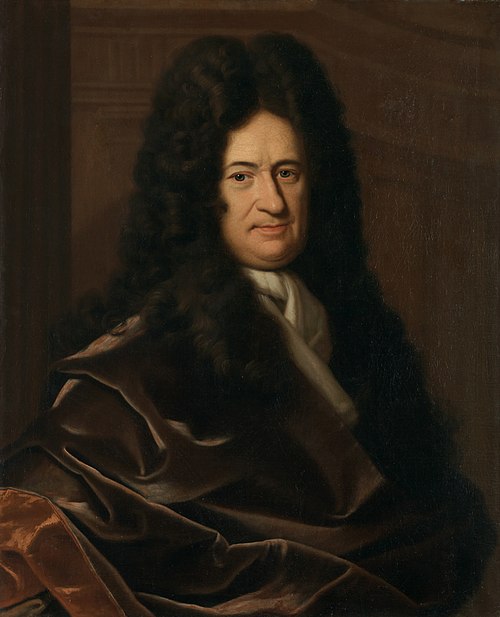
Leibniz Publishes Calculus
Gottfried Wilhelm Leibniz publishes his first paper on differential calculus, introducing notation still used today. #mathematics #calculus
Leibniz Publishes Calculus By Christoph Bernhard Francke - Herzog Anton Ulrich-Museum, online, Public domain, https://commons.wikimedia.org/w/index.php?curid=53159699
Jul 5, 1687 CE
Newton's Principia Mathematica
Isaac Newton publishes Philosophiæ Naturalis Principia Mathematica, laying foundations for calculus and analysis. #mathematics #physics
Newton's Principia Mathematica By The original uploader was Zhaladshar at English Wikisource. - Transferred from en.wikisource to Commons. (previous image from another copy) Internet Archive (current image from the Bern Dibner copy), Public domain, https://commons.wikimedia.org/w/index.php?curid=2681838
1725 CE
Euler's Introductio in Analysin Infinitorum
Leonhard Euler publishes Introductio in Analysin Infinitorum, formalizing functions and infinite series. #mathematics #analysis
Euler's Introductio in Analysin Infinitorum By Cronholm144 at English Wikipedia - Transferred from en.wikipedia to Commons., CC BY-SA 3.0, https://commons.wikimedia.org/w/index.php?curid=3128774
1821 CE
Cauchy's Cours d'Analyse
Augustin-Louis Cauchy publishes Cours d'Analyse, providing rigorous definitions of limits, continuity, and derivatives. #mathematics #analysis
Cauchy's Cours d'Analyse By Augustin Louis Cauchy - screenshot of https://archive.org/details/bub_gb_OlxT3B6EjykC/page/n5/mode/2up, CC0, https://commons.wikimedia.org/w/index.php?curid=94855343
1854 CE
Riemann Integral Defined
Bernhard Riemann formalizes the Riemann integral, a fundamental concept in real analysis. #mathematics #analysis
Riemann Integral Defined By Brad219 - Own work created using Inkscape 1.3. Redrawn from original PNG source authored by KSmrq, CC0, https://commons.wikimedia.org/w/index.php?curid=150414772
1872 CE
Weierstrass's Epsilon-Delta Definitions
Karl Weierstrass establishes epsilon-delta definitions for limits and continuity, putting calculus on a solid logical foundation. #mathematics #analysis )-definition_of_limit
1881 CE
Volterra's Function
Vito Volterra constructs a function with a bounded derivative that is not Riemann integrable, highlighting pathologies. #mathematics #analysis
Volterra's Function By Rocchini - Own work, CC BY 3.0, https://commons.wikimedia.org/w/index.php?curid=19554046
1887 CE
Cantor's Set and Continuum Hypothesis
Georg Cantor introduces the Cantor set, a fundamental fractal, and proposes the continuum hypothesis. #mathematics #settheory
Cantor's Set and Continuum Hypothesis By Thefrettinghand at English Wikibooks - Transferred from en.wikibooks to Commons., CC BY-SA 3.0, https://commons.wikimedia.org/w/index.php?curid=61785435
1898 CE
Borel's Measure Theory Beginnings
Émile Borel introduces the concept of measure and Borel sets, laying groundwork for measure theory. #mathematics #measuretheory
Borel's Measure Theory Beginnings By Agence de presse Mondial Photo-Presse - Bibliothèque nationale de France, Public domain, https://commons.wikimedia.org/w/index.php?curid=15265004
1902 CE
Lebesgue's Measure and Integral
Henri Lebesgue develops the Lebesgue integral and measure in his doctoral thesis, revolutionizing analysis. #mathematics #measuretheory
Lebesgue's Measure and Integral By ~~helix84 15:43, 27 November 2006 (UTC) - own work, based on en:Image:Integral-area-under-curve.png, Public domain, https://commons.wikimedia.org/w/index.php?curid=1409775
1904 CE
Henri Lebesgue's Leçons sur l'intégration
Lebesgue publishes his lecture notes on integration, systematizing measure and integral theory. #mathematics #measuretheory
1914 CE
Hausdorff Measure and Dimension
Felix Hausdorff extends measure theory to non-integer dimensions, introducing Hausdorff dimension. #mathematics #fractals
1915 CE
Carathéodory's Extension Theorem
Constantin Carathéodory proves the extension theorem for measures, a fundamental tool in measure theory. #mathematics #measuretheory
1918 CE
Radon–Riesz Theorems
Johann Radon and Frigyes Riesz establish representation theorems for linear functionals on function spaces. #mathematics #functionalanalysis
1920 CE
Riesz–Fischer Theorem
Frigyes Riesz and Ernst Fischer prove the completeness of L^p spaces, a cornerstone of functional analysis. #mathematics #functionalanalysis
1923 CE
Wiener Measure and Brownian Motion
Norbert Wiener constructs a rigorous measure on the space of continuous paths, modeling Brownian motion. #mathematics #probability
Wiener Measure and Brownian Motion By Unknown author, CC BY-SA 4.0, https://commons.wikimedia.org/w/index.php?curid=146079160
1928 CE
Haar Measure on Locally Compact Groups
Alfréd Haar introduces a translation-invariant measure on locally compact groups, crucial for harmonic analysis. #mathematics #grouptheory
1931 CE
Banach–Tarski Paradox
Stefan Banach and Alfred Tarski prove the paradoxical decomposition of a sphere, relying on the Axiom of Choice and non-measurable sets. #mathematics #paradox
1933 CE
Kolmogorov's Probability Axioms
Andrey Kolmogorov publishes Grundbegriffe der Wahrscheinlichkeitsrechnung, axiomatizing probability using measure theory. #mathematics #probability
Kolmogorov's Probability Axioms By Ainali - Own work, CC BY-SA 3.0, https://commons.wikimedia.org/w/index.php?curid=3141713
1935 CE
Sobolev Spaces Introduced
Sergei Sobolev introduces Sobolev spaces, blending function spaces and distribution theory for PDEs. #mathematics #analysis
1936 CE
Schwartz Distributions
Laurent Schwartz develops the theory of distributions, generalizing functions for analysis of PDEs. #mathematics #analysis )
1944 CE
Itô Calculus
Kiyoshi Itô develops stochastic calculus with Itô's lemma, integrating functions of Brownian motion. #mathematics #stochastic
Itô Calculus By Shiyu Ji - Own work, CC BY-SA 4.0, https://commons.wikimedia.org/w/index.php?curid=53067749
1950 CE
Gelfand–Naimark Theorem
Israel Gelfand and Mark Naimark establish the representation of C*-algebras, linking measure theory to operator algebras. #mathematics #functionalanalysis
1950 CE
Abstract Integration via Measures
Nicolas Bourbaki publishes Éléments de mathématique, abstracting integration theory based on measures. #mathematics #measuretheory
1960 CE
Non-Standard Analysis
Abraham Robinson introduces non-standard analysis, extending real numbers with infinitesimals via model theory. #mathematics #analysis
Non-Standard Analysis By Christoph Bernhard Francke - Herzog Anton Ulrich-Museum Braunschweig, Public domain, https://commons.wikimedia.org/w/index.php?curid=57268659
1966 CE
Malliavin Calculus
Paul Malliavin develops stochastic calculus of variations, extending Itô calculus to smooth functions on Wiener space. #mathematics #stochastic
1970 CE
De Rham–Weil Theory
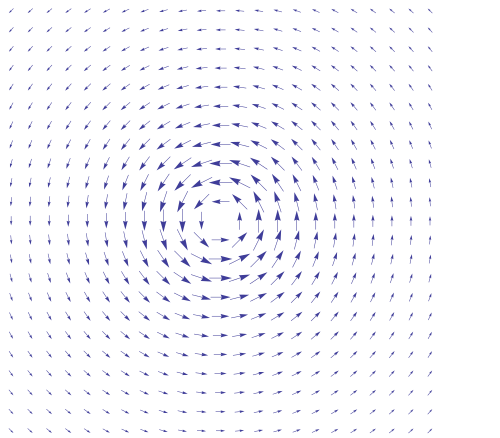
André Weil and Georges de Rham develop sheaf cohomology and currents, extending distributions to geometric measure theory. #mathematics #geometry
De Rham–Weil Theory By AllenMcC. - Own work, CC BY-SA 3.0, https://commons.wikimedia.org/w/index.php?curid=5491827
1974 CE
Geometric Measure Theory
Herbert Federer publishes Geometric Measure Theory, unifying measure theory, geometry, and calculus of variations. #mathematics #geometry
1982 CE
Fractal Geometry Popularized
Benoit Mandelbrot publishes The Fractal Geometry of Nature, showcasing fractals and their measurement. #mathematics #fractals
1985 CE
Jones' Polynomial and von Neumann Algebras
Vaughan Jones discovers the Jones polynomial using von Neumann algebras, which rely on measure theory and functional analysis. #mathematics #algebra
1991 CE
Rough Paths Theory
Terry Lyons introduces rough paths theory, providing a pathwise approach to stochastic differential equations. #mathematics #stochastic
1995 CE
Kontsevich's Deformation Quantization
Maxim Kontsevich uses formal geometry and integrals to solve deformation quantization, linking analysis to physics. #mathematics #physics
2000 CE
Optimal Transport and Wasserstein Distance
Cédric Villani and colleagues advance optimal transport theory, linking measure theory with geometry and machine learning. #mathematics #optimaltransport
2007 CE
Non-Local Equations and Fractional Calculus
Luis Caffarelli, Xavier Cabré, and others develop regularity theory for fractional Laplacians and non-local operators, extending classical analysis. #mathematics #analysis
2010 CE
Regularity of Elliptic PDEs
Luis Caffarelli and Alessio Figalli work on regularity theory for Monge–Ampère and other PDEs using measure ideas. #mathematics #analysis
2014 CE
Malliavin Calculus in Finance
Malliavin calculus applied to sensitivity analysis (Greeks) in mathematical finance, enabling computational methods. #mathematics #finance
2020 CE
Measure Theory in Machine Learning
Wasserstein GANs and optimal transport become central in generative modeling, using measure-theoretic concepts for training. #mathematics #machinelearning
2021 CE
Wasserstein Gradient Flows
Developments in Wasserstein gradient flows connect measure theory with optimization and machine learning algorithms. #mathematics #optimization