370 BCE
Eudoxus' Theory of Proportions
Eudoxus of Cnidus develops a theory of proportions that deals with incommensurable magnitudes, laying the groundwork for the concept of real numbers. #mathematics #history
This timeline traces the development of real analysis and measure theory from ancient foundations to modern applications, highlighting key breakthroughs and paradigm shifts.
Eudoxus of Cnidus develops a theory of proportions that deals with incommensurable magnitudes, laying the groundwork for the concept of real numbers. #mathematics #history
Archimedes uses the method of exhaustion to compute areas and volumes, a precursor to integral calculus. #mathematics #history
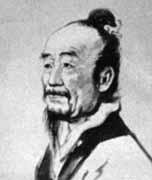
Chinese mathematician Liu Hui computes π using inscribed polygons, achieving an accuracy of 3.1416. #mathematics #history
Indian mathematician Aryabhata approximates π as 62832/20000 ≈ 3.1416, and provides sine tables. #mathematics #history

Alhazen (Ibn al-Haytham) uses integration-like methods to find the volume of a paraboloid. #mathematics #history

Bonaventura Cavalieri introduces the principle that areas and volumes can be compared via cross-sections, a precursor to integral calculus. #mathematics #history

Isaac Newton develops his method of fluxions, laying the foundation for differential and integral calculus. #mathematics #history

Gottfried Wilhelm Leibniz publishes his first paper on differential calculus, introducing the notation still used today. #mathematics #history
Augustin-Louis Cauchy provides rigorous definitions of limits, continuity, and derivatives using epsilon-delta, founding modern analysis. #mathematics #analysis

Bernhard Riemann defines the Riemann integral, formalizing integration of functions on intervals. #mathematics #analysis

Karl Weierstrass provides a rigorous construction of real numbers using bounded monotone sequences, solidifying analysis foundations. #mathematics #analysis
Georg Cantor introduces set theory and proves the uncountability of real numbers, leading to the continuum hypothesis. #mathematics #settheory

Camille Jordan introduces the Jordan measure, a precursor to the Lebesgue measure for subsets of Euclidean space. #mathematics #measuretheory
Thomas Joannes Stieltjes generalizes the Riemann integral to the Riemann–Stieltjes integral, integrating with respect to a function. #mathematics #analysis
Émile Borel introduces Borel sets and the concept of measure, laying groundwork for measure theory. #mathematics #measuretheory

Henri Lebesgue defines the Lebesgue measure and integral, revolutionizing integration theory and enabling integration of more functions. #mathematics #measuretheory

Maurice Fréchet introduces metric spaces, providing a general framework for analysis and topology. #mathematics #analysis

Guido Fubini proves that the double integral of a measurable function can be computed as iterated integrals. #mathematics #analysis
Giuseppe Vitali proves a covering lemma essential for measure theory and differentiation. #mathematics #measuretheory
Johann Radon and Otto Nikodym prove the Radon-Nikodym theorem, characterizing absolutely continuous measures. #mathematics #measuretheory
Oskar Perron introduces the Perron integral, a generalization of the Riemann integral. #mathematics #analysis
Constantin Carathéodory proves a theorem extending pre-measures to measures, a cornerstone of measure theory. #mathematics #measuretheory
Nikolai Luzin proves that every measurable function is nearly continuous, linking measure and topology. #mathematics #analysis
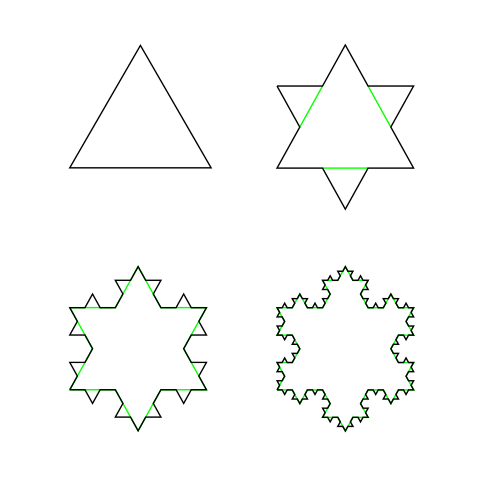
Felix Hausdorff introduces the Hausdorff dimension, a concept for measuring fractal sets. #mathematics #geometry
John Edensor Littlewood formulates three heuristic principles linking measure and topology. #mathematics #analysis
Norbert Wiener constructs a measure on the space of continuous paths, essential for stochastic analysis. #mathematics #probability

Stefan Banach and Alfred Tarski prove the paradoxical decomposition of a ball using the axiom of choice, challenging notions of measure. #mathematics #paradox
Godfrey Harold Hardy and John Edensor Littlewood introduce the maximal function, a tool in harmonic analysis. #mathematics #analysis
Andrey Kolmogorov axiomatizes probability theory using measure theory, unifying the field. #mathematics #probability

Kiyoshi Itô develops stochastic calculus, introducing the Itô integral for stochastic processes. #mathematics #stochastic

Alberto Calderón and Antoni Zygmund develop singular integral operator theory, fundamental for PDEs. #mathematics #analysis
Ennio de Giorgi proves regularity of minimal surfaces, a landmark in geometric measure theory. #mathematics #geometry
Ralph Henstock and Jaroslav Kurzweil independently develop the gauge integral, a generalization of the Riemann and Lebesgue integrals. #mathematics #analysis
Herbert Federer and Wendell Fleming lay foundations of geometric measure theory, generalizing integration on manifolds. #mathematics #geometry
Abraham Robinson develops non-standard analysis, introducing infinitesimals rigorously. #mathematics #analysis

Peter Loeb constructs a measure space from nonstandard inner models, linking nonstandard analysis to measure theory. #mathematics #measuretheory
Paul Malliavin introduces stochastic calculus of variations, extending Itô calculus. #mathematics #stochastic
David Mumford and Jayant Shah propose a variational model for image segmentation, applied in geometric measure theory. #mathematics #applied
Terence Tao (with others) resolves Hilbert's fifth problem concerning Lie groups, using analysis and measure theory. #mathematics #history