250 BCE
Archimedes' Method of Exhaustion
Archimedes uses method of exhaustion to compute areas and volumes, anticipating integral calculus. #mathematics #history
A global historical timeline of real analysis and measure theory, covering key breakthroughs from Archimedes to modern stochastic calculus. It emphasizes contributions from multiple civilizations and the evolution of rigorous mathematical foundations for limits, continuity, integration, and measure.
Archimedes uses method of exhaustion to compute areas and volumes, anticipating integral calculus. #mathematics #history
Liu Hui uses method of exhaustion to compute π and volume of solids, anticipating integral calculus. #mathematics #China
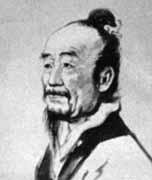
Chinese mathematician Zu Chongzhi computes π between 3.1415926 and 3.1415927 using Liu Hui's algorithm. #mathematics #China

Alhazen (Ibn al-Haytham) derives formula for sum of fourth powers, using a method akin to integration. #mathematics #Islam

Bhaskara II gives early ideas of differential calculus and mean value theorem. #mathematics #India

Madhava of Sangamagrama discovers infinite series for sine and arctangent, anticipating calculus. #mathematics #India
Simon Stevin publishes De Thiende, introducing decimal fractions and facilitating real number representation. #mathematics #Netherlands

John Napier publishes Mirifici Logarithmorum Canonis Descriptio, introducing logarithms to simplify calculations. #mathematics #Scotland

Bonaventura Cavalieri develops method of indivisibles, a precursor to integral calculus. #mathematics #Italy

Isaac Newton develops his method of fluxions, the foundation of differential calculus. #mathematics #England

James Gregory discovers infinite series for arctan and other functions. #mathematics #Scotland )

Gottfried Wilhelm Leibniz publishes Nova Methodus, first paper on differential calculus. #mathematics #Germany
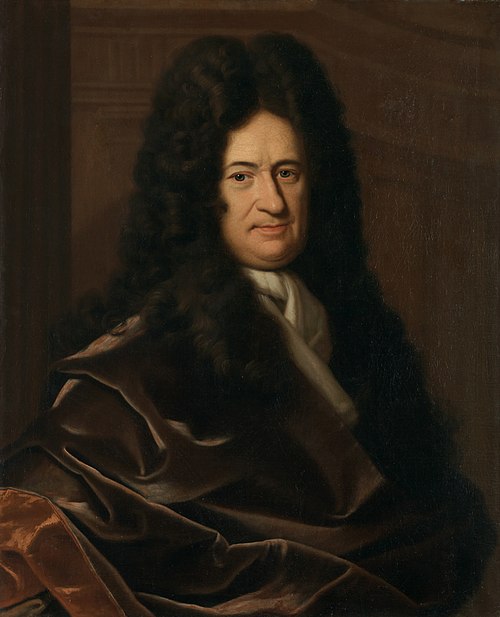
Jacob Bernoulli publishes Ars Conjectandi, containing law of large numbers, foundational for measure theory. #mathematics #Switzerland
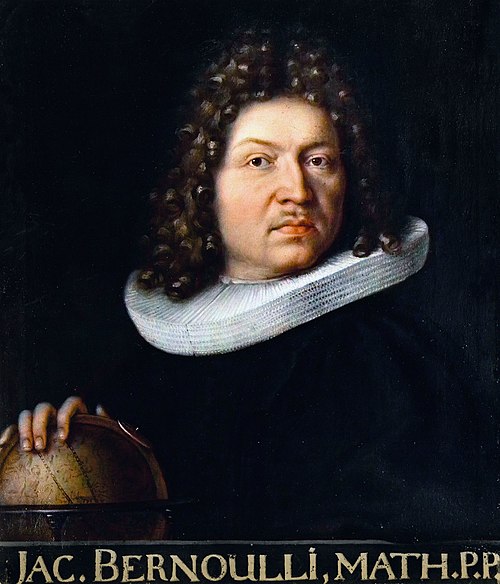
Leonhard Euler publishes Introductio in analysin infinitorum, systematizing real analysis. #mathematics #Switzerland

Joseph-Louis Lagrange contributes to calculus of variations and foundations of analysis. #mathematics #France

Bernard Bolzano proves intermediate value theorem with rigorous analysis foundations. #mathematics #CzechRepublic

Augustin-Louis Cauchy introduces rigorous epsilon-delta definitions in Cours d'Analyse. #mathematics #France

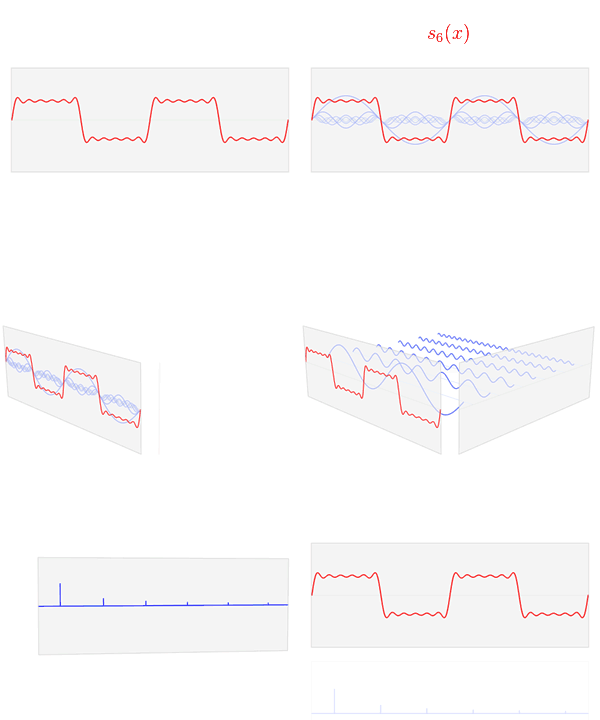
Joseph Fourier publishes Théorie analytique de la chaleur, expanding functions in trigonometric series. #mathematics #France
Niels Henrik Abel generalizes binomial theorem and works on convergence of series. #mathematics #Norway

Peter Gustav Lejeune Dirichlet defines the Dirichlet function, a pathological example in real analysis. #mathematics #Germany
Bernhard Riemann formalizes the Riemann integral in his Habilitation thesis. #mathematics #Germany

Richard Dedekind publishes Stetigkeit und irrationale Zahlen, defining real numbers via Dedekind cuts. #mathematics #Germany

Karl Weierstrass presents a continuous but nowhere differentiable function, challenging intuition. #mathematics #Germany

Georg Cantor proves the uncountability of reals and develops set theory. #mathematics #Germany

Émile Borel introduces Borel sets and measure theory in Leçons sur la théorie des fonctions. #mathematics #France

Henri Lebesgue publishes his theory of integration and measure in Intégrale, longueur, aire. #mathematics #France
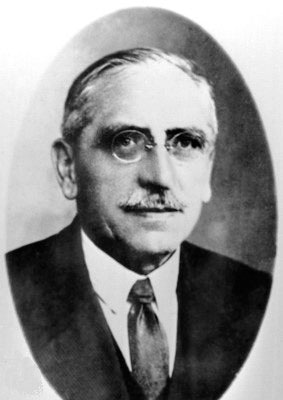
Pierre Fatou proves Fatou's lemma in the context of Lebesgue integration. #mathematics #France
Dmitri Egorov proves Egorov's theorem on uniform convergence almost everywhere. #mathematics #Russia
Guido Fubini proves Fubini's theorem for iterated integrals. #mathematics #Italy
Frigyes Riesz proves representation theorem for linear functionals on continuous functions. #mathematics #Hungary
Johann Radon publishes the Radon-Nikodym theorem generalizing derivatives of measures. #mathematics #Austria
Constantin Carathéodory develops Carathéodory's extension theorem for measures. #mathematics #Greece
Nikolai Luzin proves Luzin's theorem on measurability of functions. #mathematics #Russia
Felix Hausdorff introduces Hausdorff measure and dimension for fractal sets. #mathematics #Germany
Hans Hahn and Stefan Banach establish the Hahn-Banach theorem in functional analysis. #mathematics #Poland
Stefan Banach publishes Théorie des opérations linéaires, founding functional analysis. #mathematics #Poland

Andrey Kolmogorov axiomatizes probability theory using measure theory. #mathematics #Russia
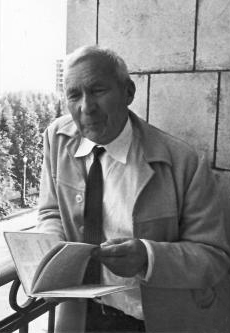
Alfréd Haar introduces Haar measure on locally compact groups. #mathematics #Hungary
Marshall Stone generalizes Weierstrass approximation theorem. #mathematics #USA
Kiyoshi Itô develops stochastic integral and calculus. #mathematics #Japan

Andrey Kolmogorov extends measure theory to stochastic processes. #mathematics #Russia
Abraham Robinson develops non-standard analysis using hyperreal numbers. #mathematics #USA

Paul Malliavin introduces stochastic calculus of variations. #mathematics #France
Ennio De Giorgi and others develop geometric measure theory. #mathematics #Italy
Jean Bourgain makes breakthroughs in harmonic analysis and PDEs. #mathematics #Belgium
