← Open Interactive Timeline Board

Real Analysis & Measure Theory: Foundational Epochs & Key Milestones

Encyclopedia/1. The Cosmos & The Natural World/1. Mathematics & Formal Systems/03. Calculus & Mathematical Analysis  •  Curated by Admin Timeline.sg

This timeline traces the evolution of real analysis and measure theory from ancient Greek exhaustion methods to 20th-century formalizations and modern advances, highlighting key figures, definitions, and theorems that shaped rigorous mathematical analysis.

Chronological Storyline (40 Milestones)

370 BCE

Eudoxus Develops Method of Exhaustion

Eudoxus of Cnidus formalizes the method of exhaustion, a precursor to integral calculus used to compute areas and volumes. #math #history

250 BCE

Archimedes Computes Area Under Parabola

Archimedes uses the method of exhaustion to find the area bounded by a parabola and a line, an early example of integration. #math #history

Archimedes Computes Area Under Parabola
By Domenico Fetti - http://archimedes2.mpiwg-berlin.mpg.de/archimedes_templates/popup.htm, Public domain, https://commons.wikimedia.org/w/index.php?curid=146592
1400 CE

Madhava Discovers Infinite Series for π

Madhava of Sangamagrama, of the Kerala school, develops infinite series expansions for trigonometric functions, anticipating calculus. #math #india

1635 CE

Cavalieri Introduces Method of Indivisibles

Bonaventura Cavalieri publishes Geometria Indivisibilibus, a geometric method for calculating integrals that influences later calculus. #math #history

Cavalieri Introduces Method of Indivisibles
By Christopher Grattoni - demonstrations.wolfram.com, CC BY 4.0, https://commons.wikimedia.org/w/index.php?curid=145384849
1665 CE

Newton Develops Calculus

Isaac Newton creates his method of fluxions and infinite series, laying foundations for differential and integral calculus. #math #calculus

Newton Develops Calculus
By Godfrey Kneller - File:Portrait of Sir Isaac Newton, 1689.jpg from https://exhibitions.lib.cam.ac.uk/linesofthought/artifacts, Public domain, https://commons.wikimedia.org/w/index.php?curid=132521185
1684 CE

Leibniz Publishes Calculus Notation

Gottfried Wilhelm Leibniz publishes his differential calculus, introducing the d-notation and integral sign that remain in use. #math #calculus
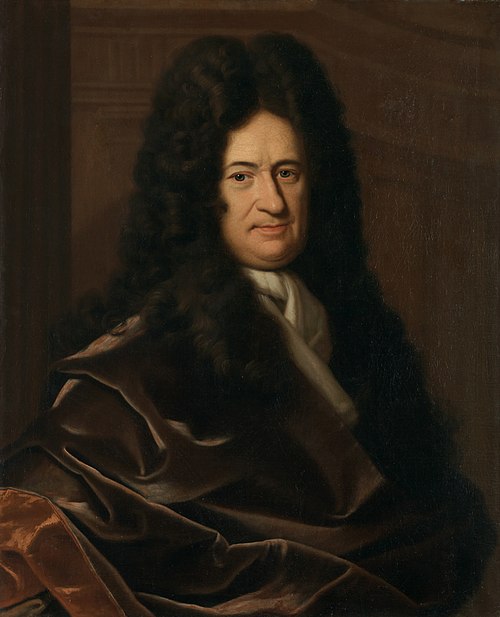
Leibniz Publishes Calculus Notation
By Christoph Bernhard Francke - Herzog Anton Ulrich-Museum, online, Public domain, https://commons.wikimedia.org/w/index.php?curid=53159699
1817 CE

Bolzano Provides Rigorous Proof of Intermediate Value Theorem

Bernard Bolzano gives a purely analytic proof of the intermediate value theorem without geometric intuition, advancing rigorous analysis. #math #analysis

Bolzano Provides Rigorous Proof of Intermediate Value Theorem
By Unknown author, Public domain, https://commons.wikimedia.org/w/index.php?curid=73300
1821 CE

Cauchy Formalizes Limits and Continuity

Augustin-Louis Cauchy in Cours d'Analyse defines limits, continuity, and convergence, providing a rigorous foundation for calculus. #math #analysis

Cauchy Formalizes Limits and Continuity
By Public domain - Library of Congress Prints and Photographs Division. From an illustration in: Das neunzehnte Jahrhundert in Bildnissen / Karl Werckmeister, ed. Berlin : Kunstverlag der photographische gesellschaft, 1840, vol. V, no. 581., Public domain, https://commons.wikimedia.org/w/index.php?curid=7059486
1826 CE

Abel Proves Insolvability of Quintic and Studies Convergence

Niels Henrik Abel proves the impossibility of solving general quintic equations by radicals and contributes to convergence of series. #math #algebra

Abel Proves Insolvability of Quintic and Studies Convergence
By Johan Gørbitz - Originally uploaded to English wikipedia by en:User:Pladask, http://www.math.uio.no/div/abelkonkurransen/, Public domain, https://commons.wikimedia.org/w/index.php?curid=90392
1829 CE

Dirichlet Gives Conditions for Fourier Series Convergence

Johann Peter Gustav Lejeune Dirichlet formulates sufficient conditions for pointwise convergence of Fourier series, advancing analysis. #math #analysis

1854 CE

Riemann Defines the Riemann Integral

Bernhard Riemann presents a rigorous definition of the definite integral, now called the Riemann integral, in his habilitation thesis. #math #analysis

Riemann Defines the Riemann Integral
By Brad219 - Own work created using Inkscape 1.3. Redrawn from original PNG source authored by KSmrq, CC0, https://commons.wikimedia.org/w/index.php?curid=150414772
1860 CE

Weierstrass Provides Epsilon-Delta Definition of Limit

Karl Weierstrass formalizes the rigorous (ε, δ)-definition of limits and continuous functions, standardizing real analysis. #math #analysis

Weierstrass Provides Epsilon-Delta Definition of Limit
By Eeyore22 - Own work, Public domain, https://commons.wikimedia.org/w/index.php?curid=5075959
1874 CE

Cantor Establishes Set Theory and Uncountability

Georg Cantor publishes his work on infinite sets, proving that the real numbers are uncountable and founding set theory. #math #settheory

Cantor Establishes Set Theory and Uncountability
By Unknown author - https://www.math.cmu.edu/~rcristof/pdf/Cantor_pubblicato.pdf and they had it from https://photos.aip.org/history-programs/niels-bohr-library/photos/cantor-georg-a1, Public domain, https://commons.wikimedia.org/w/index.php?curid=74820875
1878 CE

Dini Defines Uniform Convergence

Ulisse Dini publishes his theory of uniform convergence of functions, a critical concept in real analysis. #math #analysis

Dini Defines Uniform Convergence
By Unknown author - http://biblio.unipi.it/content/image/ulisse-dini-1, Public domain, https://commons.wikimedia.org/w/index.php?curid=16036877
1881 CE

Volterra Introduces Functions of Bounded Variation

Vito Volterra defines functions of bounded variation and studies their differentiability properties, influencing integration theory. #math #analysis
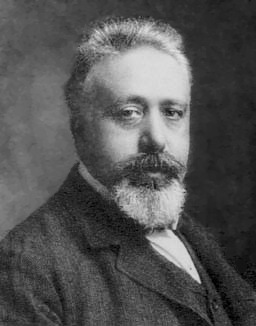
Volterra Introduces Functions of Bounded Variation
By Unknown author - http://www.phys.uniroma1.it/DipWeb/dottorato/SCUO_VOLTERRA/scuola_volterra.html, Public domain, https://commons.wikimedia.org/w/index.php?curid=16117839
1898 CE

Borel Publishes First Measure Theory

Émile Borel publishes his work on measure theory, introducing Borel sets and the concept of measure of a set. #math #measuretheory

Borel Publishes First Measure Theory
By Agence de presse Mondial Photo-Presse - Bibliothèque nationale de France, Public domain, https://commons.wikimedia.org/w/index.php?curid=15265004
1899 CE

Baire Formulates Baire Category Theorem

René-Louis Baire proves the Baire category theorem, a fundamental result in general topology and functional analysis. #math #topology

1902 CE

Lebesgue Introduces Lebesgue Measure and Integral

Henri Lebesgue defines the Lebesgue measure and integral, revolutionizing integration theory with a more general approach. #math #measuretheory
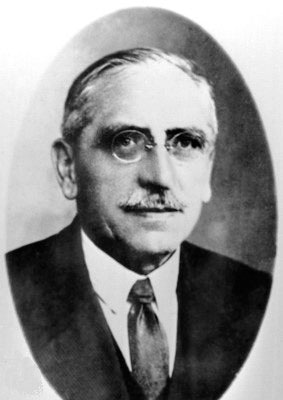
Lebesgue Introduces Lebesgue Measure and Integral
By Unknown author, Public domain, https://commons.wikimedia.org/w/index.php?curid=336482
1906 CE

Fréchet Defines Metric Spaces

Maurice Fréchet introduces the concept of metric spaces, abstracting notions of distance and convergence. #math #topology

Fréchet Defines Metric Spaces
By Unknown author - MacTutor, Public domain, https://commons.wikimedia.org/w/index.php?curid=1980574
1907 CE

Riesz Representation Theorem

Frigyes Riesz proves the Riesz representation theorem linking linear functionals on continuous functions to measures. #math #analysis

1907 CE

Fubini's Theorem on Interchanging Integrals

Guido Fubini proves the theorem allowing double integrals to be computed as iterated integrals, a key tool in measure theory. #math #analysis

1910 CE

Vitali Convergence Theorem

Giuseppe Vitali proves the Vitali convergence theorem, giving conditions for interchange of limit and integral. #math #analysis

1914 CE

Carathéodory Develops Measure Extension

Constantin Carathéodory provides a general method for extending pre-measures to measures, now a standard construction. #math #measuretheory

1923 CE

Steinhaus on Almost Everywhere Convergence

Hugo Steinhaus studies almost everywhere convergence and related measure-theoretic concepts. #math #analysis

Steinhaus on Almost Everywhere Convergence
By Unknown author - Księga Pamiątkowa. Stulecie Gimnazjum i Liceum im. Króla Stanisława Leszczyńskiego w Jaśle 1868-1968, Public domain, https://commons.wikimedia.org/w/index.php?curid=2904128
1930 CE

Radon–Nikodym Theorem

Otto Nikodym and Johann Radon prove the Radon–Nikodym theorem concerning derivatives of measures. #math #measuretheory

1932 CE

von Neumann Formulates Spectral Theorem

John von Neumann proves the spectral theorem for unbounded self-adjoint operators, deepening operator theory. #math #analysis

1932 CE

Banach Publishes Théorie des Opérations Linéaires

Stefan Banach's monograph establishes normed vector spaces and uniform boundedness principle, founding functional analysis. #math #analysis

Banach Publishes Théorie des Opérations Linéaires
By nieznany/unknown - Warszawski Kalendarz Ilustrowany 1967, Wydawnictwo Warszawskiego Tygodnika "Stolica", Warszawa 1966, p. 152, Public domain, https://commons.wikimedia.org/w/index.php?curid=19058077
1933 CE

Bochner Integral Defined

Salomon Bochner introduces the Bochner integral for functions with values in Banach spaces, extending Lebesgue integration. #math #analysis

1933 CE

Kolmogorov Axiomatizes Probability Theory

Andrey Kolmogorov publishes Foundations of the Theory of Probability, basing probability on measure theory. #math #probability

Kolmogorov Axiomatizes Probability Theory
By Ainali - Own work, CC BY-SA 3.0, https://commons.wikimedia.org/w/index.php?curid=3141713
1950 CE

Halmos Publishes Measure Theory

Paul Halmos writes Measure Theory, a classic textbook that standardizes exposition of the subject. #math #books

Halmos Publishes Measure Theory
By George Bergman - https://commons.wikimedia.org/wiki/File:Paul_Halmos_1986.jpg, CC BY-SA 4.0, https://commons.wikimedia.org/w/index.php?curid=180276883
1951 CE

Schwartz Develops Distribution Theory

Laurent Schwartz formalizes distributions (generalized functions), enabling rigorous treatment of singular phenomena in analysis. #math #analysis )

1953 CE

Rudin Publishes Principles of Mathematical Analysis

Walter Rudin's textbook becomes a standard introduction to real analysis for generations of students. #math #books

1960 CE

Nonstandard Analysis Introduced by Robinson

Abraham Robinson develops nonstandard analysis using hyperreal numbers to provide an alternative foundation for calculus. #math #logic

Nonstandard Analysis Introduced by Robinson
By Christoph Bernhard Francke - Herzog Anton Ulrich-Museum Braunschweig, Public domain, https://commons.wikimedia.org/w/index.php?curid=57268659
1963 CE

Hörmander Publishes on Linear Partial Differential Operators

Lars Hörmander's work on hypoellipticity and Fourier integral operators deepens analysis of PDEs. #math #analysis

Hörmander Publishes on Linear Partial Differential Operators
By Konrad Jacobs - MFO: https://opc.mfo.de/detail?photoID=1777, CC BY-SA 2.0 de, https://commons.wikimedia.org/w/index.php?curid=3902616
1969 CE

Federer's Geometric Measure Theory

Herbert Federer publishes Geometric Measure Theory, developing area and coarea formulas for Lipschitz functions. #math #geometry

1971 CE

Fefferman Proves Pointwise Convergence of Fourier Series

Charles Fefferman resolves the problem of almost everywhere convergence of Fourier series for L² functions. #math #analysis

Fefferman Proves Pointwise Convergence of Fourier Series
By Gert-Martin Greuel - MFO: https://opc.mfo.de/detail?photoID=8486, CC BY-SA 2.0 de, https://commons.wikimedia.org/w/index.php?curid=3917841
1977 CE

Nelson Formulates Internal Set Theory

Edward Nelson provides an axiomatic approach to nonstandard analysis called internal set theory, simplifying its usage. #math #logic

1982 CE

Freedman Solves the Four-Dimensional Poincaré Conjecture

Michael Freedman proves the topological Poincaré conjecture in dimension 4, using geometric and analytic techniques. #math #topology

Freedman Solves the Four-Dimensional Poincaré Conjecture
By Søren Fuglede Jørgensen - Own work, CC BY-SA 3.0, https://commons.wikimedia.org/w/index.php?curid=196091768
1993 CE

Bourgain's Work on Harmonic Analysis

Jean Bourgain makes fundamental contributions to harmonic analysis, including restriction theorems and nonlinear PDEs. #math #analysis

Bourgain's Work on Harmonic Analysis
By George Bergman - This image has been extracted from another file, CC BY-SA 4.0, https://commons.wikimedia.org/w/index.php?curid=74881233
2000 CE

Tao Receives Fields Medal for Real Analysis

Terence Tao wins the Fields Medal for contributions to harmonic analysis, partial differential equations, and combinatorial number theory. #math #award

Tao Receives Fields Medal for Real Analysis
By Institute for Pure & Applied Mathematics - https://www.youtube.com/watch?v=ddTvK9nlquM, CC BY 4.0, https://commons.wikimedia.org/w/index.php?curid=191601047