Encyclopedia/1. The Cosmos & The Natural World/2. Physics & Chemistry/01. Quantum Physics & Atomic Theory • Curated by Admin Timeline.sg
This timeline traces the foundational epochs and key milestones in quantum optics and laser coherence, from ancient theories of light to modern quantum experiments. It covers the evolution from geometric optics through wave optics to the quantum nature of light and the development of lasers, culminating in groundbreaking advances such as quantum teleportation and optical frequency combs.
Chronological Storyline (39 Milestones)
400 BCE
Mozi describes pinhole camera
The Chinese philosopher Mozi and his followers describe the camera obscura principle and rectilinear propagation of light in the Mo Jing. #optics #history
Mozi describes pinhole camera By Vjacheslav Rublevskiy - https://www.flickr.com/photos/193162016@N04/51221161306/, CC0, https://commons.wikimedia.org/w/index.php?curid=106219380
300 BCE
Euclid's Optics
Euclid writes "Optics," one of the earliest works on geometric optics, discussing vision, reflection, and the geometry of light. #optics #antiquity
Euclid's Optics By Jusepe de Ribera (Spanish / Italian, 1591 - 1652) (1591 - 1652) – artist (Spanish / Italian) Details on Google Art Project - wAGVeSb2M1HfDA at Google Cultural Institute maximum zoom level, Public domain, https://commons.wikimedia.org/w/index.php?curid=21993409
1011 CE
Alhazen's Book of Optics
Ibn al-Haytham (Alhazen) completes his seminal work "Book of Optics," which introduces the scientific method in optics, explains vision, and describes experiments on light refraction and reflection. #optics #islamicgoldenage
Alhazen's Book of Optics By Ibn al-Haytham, Vitello, Friedrich Risner - University of Oklahoma History of Science Collections et BnF Gallica : http://gallica.bnf.fr/ark:/12148/bpt6k312873d.r=Haytham?rk=407727;2, Public domain, https://commons.wikimedia.org/w/index.php?curid=48189707
1666 CE
Newton's prism experiment
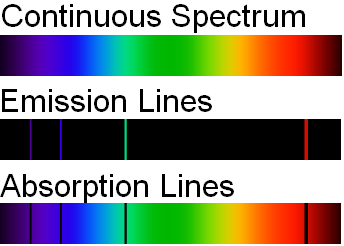
Isaac Newton demonstrates that white light is composed of a spectrum of colors by passing sunlight through a prism. This experiment lays the foundation for spectroscopy. #optics #spectrum
1678 CE
Huygens' wave theory of light
Christiaan Huygens proposes the wave theory of light, explaining reflection and refraction using the concept of wavefronts. This is a precursor to wave optics. #optics #wavetheory
1801 CE
Young's double-slit experiment
Thomas Young performs the double-slit experiment, demonstrating the interference of light and providing strong evidence for the wave nature of light. #optics #waveparticleduality
Young's double-slit experiment By Original: NekoJaNekoJa Vector: Johannes Kalliauer - Own work based on: Double-slit.PNG:, CC BY-SA 4.0, https://commons.wikimedia.org/w/index.php?curid=61496401
1818 CE
Fresnel's wave optics theory
Augustin-Jean Fresnel develops a comprehensive mathematical theory of diffraction and interference, establishing wave optics on a firm foundation. #optics #diffraction
Fresnel's wave optics theory By E Rosette after a painting by A Tardieu - Plate II, Light and Colour, by RA Houstoun, 1903, Public domain, https://commons.wikimedia.org/w/index.php?curid=304190
1845 CE
Faraday magneto-optical effect
Michael Faraday discovers the rotation of the plane of polarization of light in a magnetic field, the first experimental evidence of the interaction between light and electromagnetism. #optics #electromagnetism
1865 CE
Maxwell's electromagnetic theory of light
James Clerk Maxwell unifies electricity, magnetism, and optics, predicting that light is an electromagnetic wave. This theory is fundamental to all modern optics. #physics #maxwell
Maxwell's electromagnetic theory of light By Unknown author - https://www.researchgate.net/figure/James-Clerk-Maxwell-1831-1879_fig1_360164096, Public domain, https://commons.wikimedia.org/w/index.php?curid=129476608
1887 CE
Michelson-Morley experiment
Albert Michelson and Edward Morley conduct an experiment that fails to detect the luminiferous ether, leading to the development of special relativity and a deeper understanding of light. #physics #relativity
Michelson-Morley experiment By Case Western Reserve University - http://www.cellularuniverse.org/AA2MM_Aether.htm, Public domain, https://commons.wikimedia.org/w/index.php?curid=48697725
1900 CE
Planck's quantum hypothesis
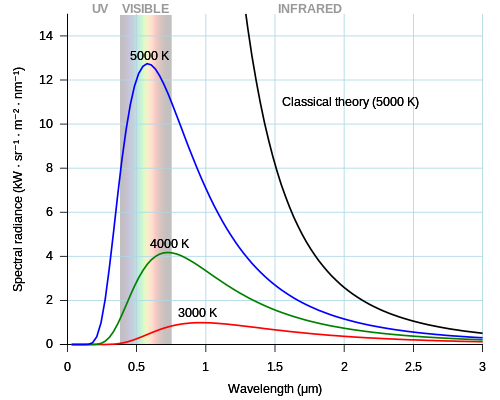
Max Planck introduces the concept of energy quanta to explain blackbody radiation, marking the birth of quantum physics and the quantization of light. #quantumphysics #planck
Planck's quantum hypothesis By Darth Kule - Own work, Public domain, https://commons.wikimedia.org/w/index.php?curid=10555337
1905 CE
Einstein's photoelectric effect
Albert Einstein explains the photoelectric effect by proposing that light consists of discrete quanta (photons), providing strong evidence for the particle nature of light. #quantumphysics #photons
Einstein's photoelectric effect By Ponor - Own work, CC BY-SA 4.0, https://commons.wikimedia.org/w/index.php?curid=92684859
1917 CE
Einstein's A and B coefficients
Einstein introduces the concepts of spontaneous and stimulated emission of radiation, laying the theoretical foundation for the laser. #laser #quantumoptics
Einstein's A and B coefficients By User:Jhausauer - Author, Public domain, https://commons.wikimedia.org/w/index.php?curid=13358404
1928 CE
Discovery of Raman scattering
C. V. Raman discovers the inelastic scattering of light, now known as Raman scattering, which provides insights into molecular vibrations. #optics #spectroscopy
Discovery of Raman scattering By KCVelaga - File:Electron-scattering.png by JabberWok, CC BY-SA 4.0, https://commons.wikimedia.org/w/index.php?curid=79274364
1947 CE
Lamb shift discovered
Willis Lamb and Robert Retherford discover the Lamb shift, a small energy difference in hydrogen that stimulates the development of quantum electrodynamics (QED). #quantumphysics #QED
Lamb shift discovered By Joel Holdsworth (Joelholdsworth) - Non-Derived SVG of Radiate gluon.png, originally the work of SilverStar at Feynmann-diagram-gluon-radiation.svg, updated by joelholdsworth., Public domain, https://commons.wikimedia.org/w/index.php?curid=1764161
1953 CE
First maser built
Charles Townes, James Gordon, and Herbert Zeiger build the first maser, a device that amplifies microwaves using stimulated emission, the predecessor to the laser. #maser #quantumoptics
First maser built By Dan Rubin - Retrieved February 18, 2015 from Shunaman, Fred "Revolutionary new oscillator-amplifier" in Radio-Electronic Engineering magazine, Ziff-Davis Publishing Co., New York, Vol. 26, No. 6, June 1955, cover on http://www.americanradiohistory.com, Public domain, https://commons.wikimedia.org/w/index.php?curid=38461589
1958 CE
Schawlow and Townes propose the laser
Arthur Schawlow and Charles Townes publish a paper describing the optical maser, later called the laser, outlining the principles of laser operation. #laser #invention
Schawlow and Townes propose the laser By ESO/A. Ghizzi Panizza (www.albertoghizzipanizza.com) - This media was produced by the European Southern Observatory (ESO), under the identifier potw2222a This tag does not indicate the copyright status of the attached work. A normal copyright tag is still required. See Commons:Licensing., CC BY 4.0, https://commons.wikimedia.org/w/index.php?curid=135742267
May 16, 1960 CE
First laser: ruby laser
Theodore Maiman demonstrates the first working laser, a ruby laser, emitting pulsed coherent light at 694 nm. This marks the birth of laser technology. #laser #first
First laser: ruby laser By US Gov - https://en.wikipedia.org/wiki/File:Ruby_laser.jpg A modified version of this Wikipedia photo. Originally drawn by the US Gov. Dept. of Energy, from here: https://www.osti.gov/biblio/16710, Public domain, https://commons.wikimedia.org/w/index.php?curid=140068448
1961 CE
First continuous-wave laser
Ali Javan, William Bennett, and Donald Herriott invent the first continuous-wave laser, the helium-neon laser, which operates at 632.8 nm. #laser #cwl
First continuous-wave laser By Tommy Markstein - Own work (Original text: Tommy Markstein), CC BY-SA 3.0, https://commons.wikimedia.org/w/index.php?curid=24295060
1962 CE
First semiconductor laser
Robert Hall, Marshall Nathan, and others independently demonstrate the first semiconductor (diode) laser, a compact laser source critical for modern technology. #laser #semiconductor
First semiconductor laser By Unknown author - Jet Propulsion Laboratory website: http://technology.jpl.nasa.gov/gallery/index.cfm?page=imageDetail&ItemID=120&catId=8 (archive), Public domain, https://commons.wikimedia.org/w/index.php?curid=2359148
1964 CE
Nobel Prize for maser and laser
Charles Townes, Nikolay Basov, and Alexander Prokhorov are awarded the Nobel Prize in Physics for fundamental work in the field of quantum electronics leading to the maser and laser. #nobel #laser
Nobel Prize for maser and laser By Design of the medal: The Nobel Foundation. Sculptor and engraver: Erik Lindberg (1902). - Source of this work Photographer: David Monniaux (2005, 2006, 2007) Edited by: hidro 21:17, 28 July 2008 (UTC) Design of the medal: The Nobel Foundation. Sculptor and engraver: Erik Lindberg (1902)., Cc-by-sa-3.0, https://en.wikipedia.org/w/index.php?curid=18622921
1970 CE
Low-loss optical fibers
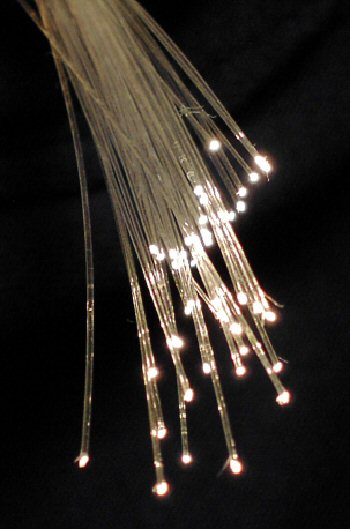
Corning Glass Works produces optical fibers with losses below 20 dB/km, enabling long-distance fiber-optic communication. #fiberoptics #telecom
Low-loss optical fibers By BigRiz - First upload: (Sep 25 2004) en:Wikipedia, CC BY-SA 3.0, https://commons.wikimedia.org/w/index.php?curid=46561
1974 CE
Hanbury Brown and Twiss effect
Robert Hanbury Brown and Richard Twiss demonstrate intensity interferometry and photon bunching, early experiments in quantum optics measuring photon correlations. #quantumoptics #photonbunching
1977 CE
Squeezed states of light predicted
Horace Yuen and John Caves theoretically predict squeezed states of light, in which quantum noise is reduced in one quadrature at the expense of increased noise in the other. #quantumoptics #squeezing
Squeezed states of light predicted By Geek3 - Own work, CC BY-SA 4.0, https://commons.wikimedia.org/w/index.php?curid=79089581
1981 CE
Nobel Prize for laser spectroscopy
Arthur Schawlow and Nicolaas Bloembergen are awarded the Nobel Prize in Physics for their contributions to the development of laser spectroscopy. #laser #spectroscopy
Nobel Prize for laser spectroscopy By D-Kuru - Own work, CC BY-SA 3.0 at, https://commons.wikimedia.org/w/index.php?curid=7082370
1985 CE
Ti:sapphire laser invented
Peter Moulton develops the titanium-sapphire laser, which is broadly tunable and can generate ultrashort pulses (femtoseconds), revolutionizing ultrafast optics. #laser #ultrafast
Ti:sapphire laser invented By No machine-readable author provided. Hankwang assumed (based on copyright claims). - No machine-readable source provided. Own work assumed (based on copyright claims)., CC BY 2.5, https://commons.wikimedia.org/w/index.php?curid=913373
1987 CE
Observation of photon antibunching
Jeff Kimble, M. Dagenais, and Leonard Mandel observe photon antibunching from a single atom, demonstrating non-classical light behavior. #quantumoptics #nonclassicallight
1993 CE
Cavity QED experiments
Serge Haroche and colleagues perform landmark cavity quantum electrodynamics (cavity QED) experiments, controlling the interaction between single atoms and photons. #quantumoptics #cavityQED
1995 CE
Bose-Einstein condensation achieved
Eric Cornell, Carl Wieman, and Wolfgang Ketterle create the first Bose-Einstein condensate (BEC) using laser cooling and trapping of atoms. This opens new studies in quantum gases. #quantumphysics #BEC
Bose-Einstein condensation achieved By Vectorized version by AG Caesar, original by DG85 - Inspired by a work from Wikipedia User DG85 https://commons.wikimedia.org/wiki/File:QuantumPhaseTransition.png, Public domain, https://commons.wikimedia.org/w/index.php?curid=67110336
1997 CE
Nobel Prize for laser cooling
Steven Chu, Claude Cohen-Tannoudji, and William Phillips are awarded the Nobel Prize in Physics for development of methods to cool and trap atoms with laser light. #lasercooling #nobel
Nobel Prize for laser cooling By Darth luigi - Own work, CC BY-SA 4.0, https://commons.wikimedia.org/w/index.php?curid=153687990
1999 CE
Quantum cryptography demonstrated
Researchers implement quantum key distribution using single photons, demonstrating the feasibility of secure communication based on quantum principles. #quantumcryptography #quantumoptics
2001 CE
Nobel Prize for Bose-Einstein condensation
Eric Cornell, Carl Wieman, and Wolfgang Ketterle receive the Nobel Prize in Physics for the achievement of Bose-Einstein condensation in dilute gases. #BEC #nobel
2002 CE
Quantum teleportation with photons
Anton Zeilinger’s group demonstrates quantum teleportation of photon states, a milestone in quantum information science. #quantumteleportation #quantumoptics
Quantum teleportation with photons By JozumBjada - Own work, CC BY-SA 4.0, https://commons.wikimedia.org/w/index.php?curid=128460435
2005 CE
Nobel Prize for optical frequency comb
John Hall and Theodor Hänsch are awarded the Nobel Prize in Physics for their contributions to developing laser-based precision spectroscopy, including the optical frequency comb technique. #frequencycomb #spectroscopy
Nobel Prize for optical frequency comb By Rubber Duck (☮ • ✍) - Own work, Public domain, https://commons.wikimedia.org/w/index.php?curid=39652854
2007 CE
Attosecond pulse generation
Researchers generate attosecond light pulses, enabling real-time observation of electron dynamics in atoms and molecules. #atto physics #ultrafast
Attosecond pulse generation By FedericoVis - Own work, CC BY-SA 4.0, https://commons.wikimedia.org/w/index.php?curid=106611728
2012 CE
Nobel Prize for cavity QED and ion traps
Serge Haroche and David Wineland share the Nobel Prize in Physics for ground-breaking experimental methods that enable measuring and manipulation of individual quantum systems. #cavityQED #iontrap
Nobel Prize for cavity QED and ion traps By Bengt Nyman - Flickr: IMG_4704, CC BY 2.0, https://commons.wikimedia.org/w/index.php?curid=23083045
2014 CE
Nobel Prize for super-resolution microscopy
Eric Betzig, Stefan Hell, and William Moerner are awarded the Nobel Prize in Chemistry for developing super-resolved fluorescence microscopy, breaking the diffraction limit. #microscopy #nobel
2015 CE
Optical lattice clocks achieve precision
Optical lattice clocks reach fractional uncertainties below 10^-18, becoming the most precise timekeepers and enabling tests of fundamental physics. #atomicclocks #precision
Optical lattice clocks achieve precision By Jpagett - Own work, CC BY-SA 4.0, https://commons.wikimedia.org/w/index.php?curid=97679108
2022 CE
Nobel Prize for quantum entanglement with photons
Alain Aspect, John Clauser, and Anton Zeilinger receive the Nobel Prize in Physics for experiments with entangled photons, establishing violation of Bell inequalities and pioneering quantum information science. #entanglement #nobel