400 BCE
Democritus Proposes Atomism
Ancient Greek philosopher Democritus proposes that matter is composed of indivisible atoms. This early atomic theory laid conceptual groundwork for later quantum ideas. #philosophy #physics
This timeline traces the evolution of quantum mechanics and wave functions, from early atomic theories to modern quantum computing, highlighting key experimental breakthroughs and paradigm shifts.
Ancient Greek philosopher Democritus proposes that matter is composed of indivisible atoms. This early atomic theory laid conceptual groundwork for later quantum ideas. #philosophy #physics
William Herschel discovers infrared radiation, leading to the study of blackbody radiation. This phenomenon later becomes central to quantum theory. #physics #discovery
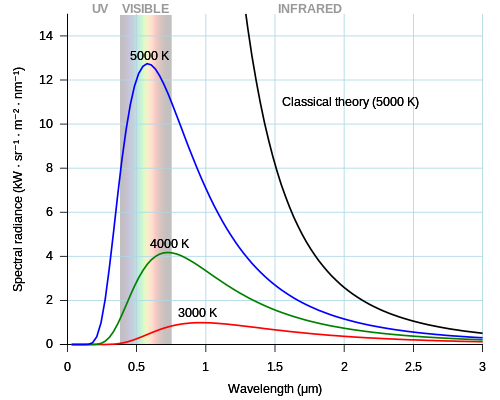
Max Planck introduces the concept of energy quanta to explain blackbody radiation, founding quantum theory. #physics #quantum
Albert Einstein explains the photoelectric effect using light quanta (photons), providing early evidence for particle-like behavior of light. #physics #quantum

Ernest Rutherford discovers the atomic nucleus through gold foil experiments, leading to the planetary model of the atom. #physics #experiment
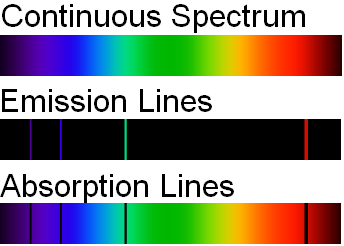
Niels Bohr proposes a model of the hydrogen atom with quantized electron orbits, explaining spectral lines. #physics #quantum

Einstein introduces the concept of stimulated emission and probabilities for atomic transitions, laying groundwork for lasers. #physics #quantum
Arthur Compton demonstrates that X-rays scattered by electrons lose energy, confirming the particle nature of light. #physics #experiment

Louis de Broglie proposes that particles have wave-like properties, introducing matter waves and wave-particle duality. #physics #quantum
Werner Heisenberg develops matrix mechanics, the first complete formulation of quantum mechanics. #physics #mathematics
Erwin Schrödinger formulates his wave equation, providing a wave-based description of quantum systems. #physics #wavefunction
Niels Bohr and Heisenberg articulate the Copenhagen interpretation, emphasizing complementarity and wavefunction collapse. #physics #philosophy
Heisenberg states the uncertainty principle, placing fundamental limits on simultaneous measurements of position and momentum. #physics #quantum

Paul Dirac derives the Dirac equation, describing relativistic electrons and predicting antimatter. #physics #relativity
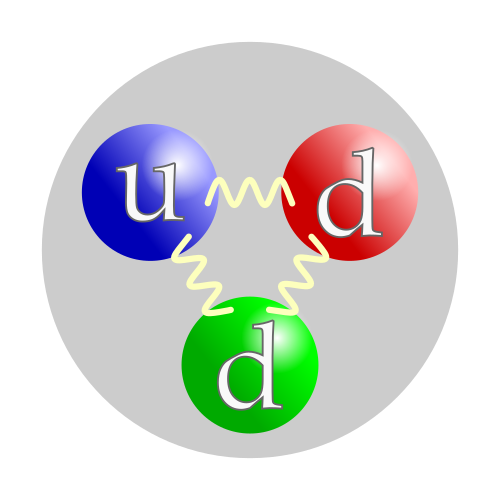
James Chadwick discovers the neutron, completing the basic atomic structure and enabling nuclear physics. #physics #discovery
Einstein, Podolsky, and Rosen publish the EPR paradox, arguing that quantum mechanics is incomplete and highlighting entanglement. #physics #quantum

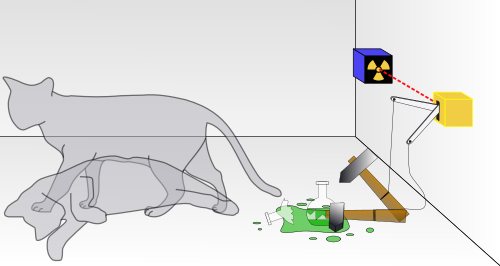
Erwin Schrödinger proposes his cat paradox to illustrate the problem of quantum superposition and measurement. #physics #philosophy
Otto Hahn and Fritz Strassmann discover nuclear fission, later explained by Lise Meitner and Otto Frisch, with quantum tunneling involved. #physics #discovery

Richard Feynman develops the path integral formulation of quantum mechanics, providing a new perspective on quantum amplitudes. #physics #mathematics
ENIAC, the first general-purpose electronic computer, is completed, later enabling quantum computing concepts. #technology #computing

John Bardeen, Walter Brattain, and William Shockley invent the transistor at Bell Labs, relying on quantum mechanics of semiconductors. #physics #technology

Willis Lamb discovers the Lamb shift, leading to the development of quantum electrodynamics (QED) by Feynman, Schwinger, and Tomonaga. #physics #quantum

The US tests the first hydrogen bomb, using nuclear fusion based on quantum tunneling, marking a significant military application. #physics #history

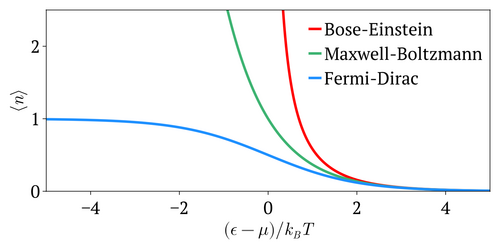
Satyendra Nath Bose's work on quantum statistics is fully recognized; Bose-Einstein condensate predicted. #physics #indiascience
Hugh Everett III proposes the many-worlds interpretation of quantum mechanics, challenging the Copenhagen interpretation. #physics #philosophy

The first high-temperature superconductor is discovered, later understood via quantum mechanics, though mechanism remains debated. #physics #discovery
John Bell publishes his theorem showing that local hidden variable theories are incompatible with quantum mechanics. #physics #quantum
Stephen Wiesner proposes quantum conjugate coding, the foundation for quantum cryptography and quantum key distribution. #physics #cryptography
Peter Higgs and others predict the Higgs boson, a quantum field theory mechanism for particle mass. #physics #particle

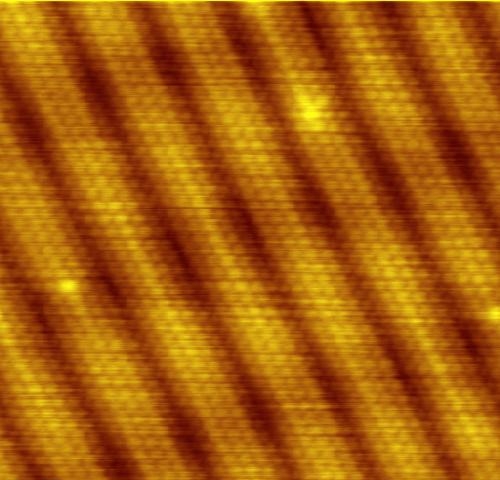
Gerd Binnig and Heinrich Rohrer invent the scanning tunneling microscope, imaging surfaces at the atomic level using quantum tunneling. #physics #technology
Alain Aspect performs experiments testing Bell inequalities, confirming quantum entanglement and nonlocality. #physics #experiment

David Deutsch describes a universal quantum computer and proposes a simple algorithm, launching quantum computing theory. #physics #computing

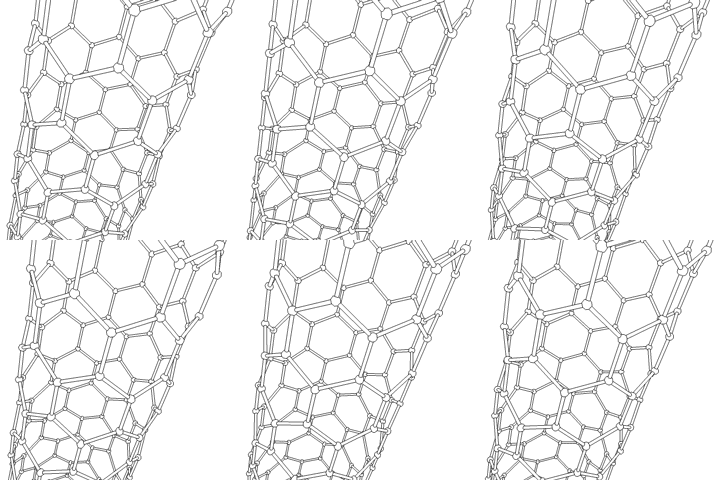
Sumio Iijima discovers carbon nanotubes, whose properties are described by quantum mechanics. #physics #nanotechnology
Charles Bennett et al. propose quantum teleportation using entanglement, later experimentally realized. #physics #quantum

Eric Cornell and Carl Wieman create the first Bose-Einstein condensate in rubidium atoms, confirming a quantum prediction. #physics #experiment

Peter Shor develops a quantum algorithm for integer factorization, demonstrating potential to break RSA encryption. #physics #computing
Peter Shor and others develop quantum error correction, crucial for building reliable quantum computers. #physics #computing
Discovery of a new family of high-temperature superconductors, iron pnictides, expanding quantum materials research. #physics #discovery

The ATLAS and CMS experiments at the Large Hadron Collider announce the discovery of the Higgs boson, confirming the Standard Model. #physics #particle
LIGO detects gravitational waves, confirming a prediction of general relativity and opening new era of multimessenger astronomy. #physics #astronomy

Google's Sycamore processor performs a task in 200 seconds that would take a classical supercomputer thousands of years. #physics #computing
Alain Aspect, John Clauser, and Anton Zeilinger win the Nobel Prize in Physics for experiments with entangled photons. #physics #award
Researchers demonstrate a high-fidelity quantum memory that can store and retrieve quantum information, advancing quantum networks. #physics #quantum
China's Micius satellite achieves long-distance entanglement distribution, enabling quantum communication networks. #physics #space