600 BCE
Kanada's Atomic Theory in Ancient India
The Indian philosopher Kanada proposes an atomic theory suggesting that particles are interconnected through unseen forces, presaging later ideas of non-locality. #philosophy #history
This timeline traces the global development of quantum entanglement and information theory, from early philosophical speculations on interconnectedness in ancient traditions to modern experimental breakthroughs and quantum technologies. It highlights key theoretical and experimental milestones from diverse cultures, emphasizing the collaborative and cross-cultural nature of this field.
The Indian philosopher Kanada proposes an atomic theory suggesting that particles are interconnected through unseen forces, presaging later ideas of non-locality. #philosophy #history
Democritus and Leucippus develop atomism, positing that all matter is composed of indivisible atoms moving in a void, laying groundwork for later quantum concepts. #philosophy #science
Indian physicist Satyendra Nath Bose sends a paper to Einstein on quantum statistics, leading to the foundation of Bose-Einstein statistics and the concept of bosons, crucial for quantum field theory. #physics #science

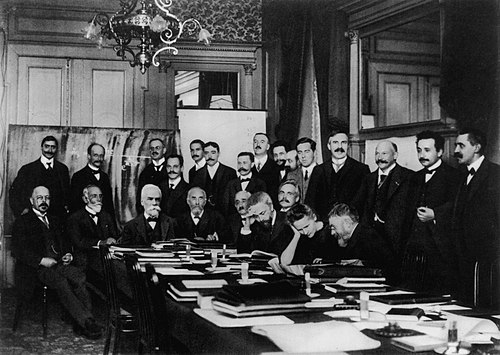
The fifth Solvay Conference features intense debates between Einstein and Bohr on quantum mechanics, setting the stage for later discussions on entanglement. #physics #history
Albert Einstein, Boris Podolsky, and Nathan Rosen publish the EPR paper, arguing that quantum mechanics is incomplete and introducing the idea of 'spooky action at a distance'. #physics #quantum

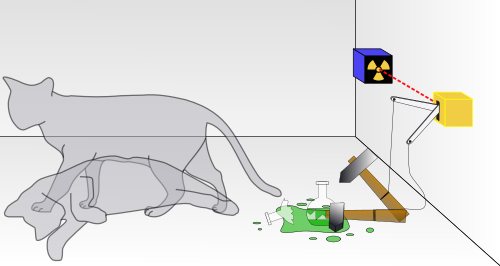
Erwin Schrödinger introduces the cat paradox and coins the term 'entanglement' (Verschränkung) to describe quantum correlations. #physics #quantum
Claude Shannon publishes 'A Mathematical Theory of Communication', providing the foundation for classical information theory later adapted to quantum information. #informationtheory #computing

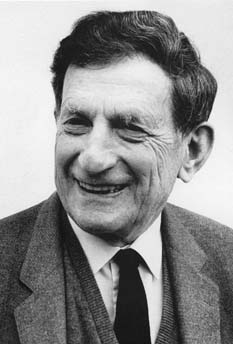
David Bohm develops a deterministic hidden variable interpretation of quantum mechanics, reviving interest in non-locality and the EPR problem. #physics #quantum
John Bell proves that any local hidden variable theory cannot reproduce all quantum predictions, establishing a testable criterion for entanglement. #physics #quantum
Clauser, Horne, Shimony, and Holt derive the CHSH inequality, enabling experimental tests of Bell's theorem. #physics #experiment
Stuart Freedman and John Clauser perform the first experimental test of Bell's inequality, providing initial evidence against local realism. #physics #experiment
Alain Aspect and colleagues perform more sophisticated tests of Bell's inequalities, convincingly showing quantum mechanics violates local realism. #physics #experiment

Wootters, Zurek, and Dieks independently prove that quantum states cannot be cloned, a key principle for quantum cryptography and computing. #quantum #information
Charles Bennett and Gilles Brassard propose the BB84 protocol, the first quantum cryptography scheme based on single photons. #quantum #cryptography
Artur Ekert invents a quantum key distribution protocol based on entanglement and Bell's theorem. #quantum #cryptography
Bennett, Brassard, Crépeau, Jozsa, Peres, and Wootters publish a theoretical scheme for quantum teleportation using entanglement. #quantum #teleportation

Zeilinger's group in Innsbruck demonstrates quantum teleportation of a photon state using entangled pairs. #quantum #experiment
Bennett and Wiesner propose and later experiments show that entanglement allows sending two bits of information by transmitting one qubit. #quantum #communication

Anton Zeilinger's team distributes entangled photons over 10 km in Geneva, validating entanglement for quantum networks. #quantum #network

Furusawa et al. achieve teleportation of a coherent light beam, extending teleportation to continuous variables. #quantum #optics
Peter Shor's quantum algorithm for integer factorization is experimentally implemented on a small scale, highlighting entanglement's computational power. #quantum #computing
Two groups build the first quantum processors with trapped ions, demonstrating entanglement-based logic gates. #quantum #computing

Duan, Lukin, Cirac, and Zoller propose a quantum repeater scheme to overcome distance limitations in quantum communication. #quantum #communication
Entanglement is demonstrated with massive particles (atoms), extending Bell tests beyond photons. #quantum #experiment
Researchers entangle superconducting qubits for the first time, paving the way for scalable quantum computers. #quantum #solidstate

Experiments demonstrate entanglement swapping, a key element for quantum repeaters and networks. #quantum #network
Entanglement-based quantum key distribution is demonstrated over 200 km of optical fiber, extending secure communication distance. #quantum #cryptography
Hensen et al. perform a loophole-free Bell test using electron spins in diamond, closing detection and locality loopholes simultaneously. #quantum #experiment
Chinese team demonstrates teleportation over 100 km of optical fiber, a milestone for quantum networks. #quantum #teleportation
Three independent experiments (Delft, Vienna, NIST) close all major loopholes in Bell tests, confirming quantum non-locality. #quantum #experiment
China launches the Micius satellite, the first space-based platform for quantum entanglement distribution and QKD. #quantum #space
Micius satellite demonstrates entanglement distribution between two ground stations separated by 1200 km, setting a record. #quantum #space
Using Micius, researchers achieve quantum teleportation from a ground station to the satellite, spanning over 1400 km. #quantum #teleportation
Google's Sycamore quantum processor performs a calculation in 200 seconds that would take a classical supercomputer thousands of years, using entanglement as a resource. #quantum #computing
Researchers demonstrate entanglement of multiple superconducting qubits with high fidelity, advancing quantum error correction. #quantum #computing
The Nobel Prize in Physics is awarded to Alain Aspect, John Clauser, and Anton Zeilinger for their pioneering experiments on entangled quantum states. #quantum #physics
A three-node quantum network using entanglement is demonstrated in a real-world city environment, a step toward the quantum internet. #quantum #network