300 BCE
Euclid Proves Infinitude of Primes
Euclid's *Elements* presents the first known proof that there are infinitely many prime numbers, a foundational result in number theory. #math #history
This timeline traces the key contributions and legacies of pioneers in prime number theory, from ancient Greek proofs to modern computational breakthroughs, highlighting the global and interdisciplinary evolution of the field.
Euclid's *Elements* presents the first known proof that there are infinitely many prime numbers, a foundational result in number theory. #math #history
Eratosthenes of Cyrene invents the Sieve of Eratosthenes, an efficient algorithm for finding all primes up to a given limit, still used today. #math #algorithms

The *Sunzi Suanjing* contains an early form of the Chinese remainder theorem, which underlies modular arithmetic and prime-related computations. #math #chinesemath

Aryabhata, an Indian mathematician, develops methods for solving linear Diophantine equations and hints at primality testing, influencing later number theory. #math #indianmath

Al-Kindi's *Risalah fi Istikhraj al-Mu'amma* uses frequency analysis and modular arithmetic, linking primes to early cryptographic thought. #math #cryptography

Fibonacci's *Liber Abaci* popularizes Hindu-Arabic numerals and includes problems requiring modular arithmetic, foundational for later prime studies. #math #history

Pietro Cataldi correctly identifies the Mersenne primes 2^17-1 and 2^19-1, early examples of a class of primes now central to computational number theory. #math #primes

Marin Mersenne publishes *Cogitata Physico-Mathematica*, proposing that primes of the form 2^p-1 follow a specific pattern, sparking centuries of search. #math #primes
Leonhard Euler proves the Euler product formula, connecting the infinite series of primes to the zeta function, a key step toward analytic number theory. #math #analysis
Christian Goldbach proposes in a letter to Euler that every even integer greater than 2 is the sum of two primes, one of the oldest unsolved problems. #math #conjecture

Joseph-Louis Lagrange proves that every natural number is a sum of four squares, intertwining with prime factorization and additive number theory. #math #theorem

Adrien-Marie Legendre publishes *Essai sur la théorie des nombres*, conjecturing that π(x) ~ x/(log x - 1.08366), a precursor to the Prime Number Theorem. #math #history
Carl Friedrich Gauss's magnum opus lays rigorous foundations for number theory, including modular arithmetic and prime factorization, defining modern number theory. #math #gauss

Peter Gustav Lejeune Dirichlet uses L-functions to prove that there are infinitely many primes in any arithmetic progression a + nd with gcd(a,d)=1, a milestone in analytic number theory. #math #numbertheory

Pafnuty Chebyshev proves that π(x) is between 0.921x/log x and 1.105x/log x for large x, the first rigorous bounds for the prime counting function. #math #primes

Ernst Kummer develops ideal theory, studying prime factorization in cyclotomic fields, which later influences algebraic number theory and Fermat's Last Theorem. #math #algebra

Bernhard Riemann publishes *On the Number of Primes Less Than a Given Magnitude*, introducing the Riemann hypothesis and revolutionizing prime distribution. #math #riemann

Independently, Jacques Hadamard and Charles de la Vallée-Poussin prove the Prime Number Theorem, establishing π(x) ~ x/log x using complex analysis. #math #theorem
Franz Mertens publishes three theorems on prime sums and products, including Mertens' theorem on the sum of reciprocals of primes, deepening understanding of distribution. #math #analysis
Pafnuty Chebyshev originally proved Bertrand's postulate that there is always a prime between n and 2n for n>1, key in elementary prime distribution. #math #theorem

Srinivasa Ramanujan contributes deep results on prime distribution, including his own approximations, and collaborates with Hardy on the circle method. #math #ramanujan

Viggo Brun introduces Brun's sieve, showing that the sum of reciprocals of twin primes converges, and advances combinatorial sieve theory. #math #sieve

G. H. Hardy and John Edensor Littlewood develop the circle method and formulate the Hardy-Littlewood prime tuple conjectures, influencing additive prime problems. #math #conjectures

Atle Selberg and Paul Erdős independently produce an elementary (analysis-free) proof of the Prime Number Theorem, a major breakthrough in number theory. #math #proof
Alan Turing's work on the Enigma and early computers includes theoretical considerations for primality testing, foreshadowing modern computational number theory. #math #crypto

Though developed later, the Miller-Rabin primality test builds on earlier work by Gary Miller and Michael Rabin, providing a probabilistic polynomial-time test widely used in cryptography. #math #crypto
A. O. L. Atkin and Daniel Bernstein create the Sieve of Atkin, an optimized algorithm for generating primes up to a given limit, used in modern computing. #math #algorithms
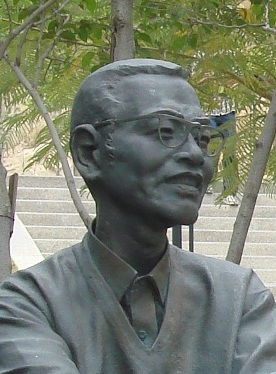
Chen Jingrun proves that every sufficiently large even integer is the sum of a prime and a product of at most two primes, a major result toward Goldbach's conjecture. #math #conjecture
Gary Miller publishes a deterministic primality test that runs in polynomial time assuming the extended Riemann hypothesis, a step toward unconditional tests. #math #cs
Ron Rivest, Adi Shamir, and Leonard Adleman propose the RSA cryptosystem, which relies on the difficulty of factoring large primes, revolutionizing secure communication. #crypto #primes )
Carl Pomerance develops the Quadratic Sieve factoring algorithm, which efficiently factors large composites and helps find large primes via factorization records. #math #algorithms
A. O. L. Atkin and François Morain develop a practical primality proving method using elliptic curves, producing certificates of primality for large numbers. #math #cryptography
The Akiyama–Tanigawa algorithm efficiently computes Bernoulli numbers connected to prime zeta values and Kummer congruences. #math #algorithms
Manindra Agrawal, Neeraj Kayal, and Nitin Saxena devise the first deterministic polynomial-time primality test (AKS algorithm), a landmark in computational number theory. #math #algorithm
Ben Green and Terence Tao prove that the primes contain arbitrarily long arithmetic progressions, a stunning result in additive combinatorics. #math #theorem
GIMPS optimizes prime testing using graphics processing units (GPUs), dramatically accelerating the search for new Mersenne primes and pushing computational boundaries. #math #tech
Yitang Zhang announces a proof that there are infinitely many prime pairs with gap less than 70 million, initiating a cascade of improvements in prime gap theory. #math #breakthrough

Harald Helfgott proves that every odd integer greater than 5 is the sum of three primes, refining Vinogradov's theorem and using extensive computation. #math #goldbach
James Maynard independently shows that there are infinitely many primes with gap ≤ 600, and later improves the bound to 246 via the Polymath project. #math #primes )

A new deterministic primality test in logarithmic space is discovered, advancing computational complexity understanding of prime detection. #math #cs
The collaborative Polymath8 project, led by Terence Tao, reduces the proven bound for prime gaps to 6 (assuming a generalized Elliott–Halberstam conjecture), showcasing crowd-sourced mathematics. #math #collaboration
A team at MIT refines algorithms for prime counting, achieving π(10^27) via analytic methods, extending known prime distribution values. #math #computation

The Great Internet Mersenne Prime Search (GIMPS) finds M82589933, a 24,862,048-digit prime, the largest known prime as of 2018, demonstrating global distributed computing. #math #primes
GIMPS discovers another massive prime, M99414227, but later verification refines; ongoing searches reflect the continuing legacy of prime number exploration. #math #discovery
