300 BCE
Euclid Proves Infinitude of Primes
Euclid's Elements includes a proof that there are infinitely many prime numbers, a foundational result in number theory. #mathematics #history
Historical events timeline.
Euclid's Elements includes a proof that there are infinitely many prime numbers, a foundational result in number theory. #mathematics #history
Eratosthenes of Cyrene invents the Sieve of Eratosthenes, an algorithm for finding all primes up to a given limit. #mathematics #algorithm

Nicomachus of Gerasa compiles Introduction to Arithmetic, which includes discussions on prime, composite, and perfect numbers, influencing medieval mathematics. #mathematics #history

Sunzi Suanjing formulates the Chinese remainder theorem, a key tool in number theory allowing solving systems of congruences. #mathematics #chinese

Brahmagupta's Brāhmasphuṭasiddhānta includes early work on quadratic Diophantine equations and arithmetic, influencing later prime number theory. #mathematics #indian
Al-Khwarizmi writes on Hindu-Arabic numerals and arithmetic, foundational for later number theory developments in the Islamic world. #mathematics #islamic

Fibonacci introduces the Fibonacci sequence and discusses prime factorization, stimulating European interest in number theory. #mathematics #history

Simon Stevin publishes De Thiende, promoting decimal fractions which simplify calculations, including prime-related computations. #mathematics #history

Pierre de Fermat states his Little Theorem, a foundational result in modular arithmetic and primality testing. #mathematics #history
Leonhard Euler presents the Euler product formula linking primes and the zeta function, laying groundwork for analytic number theory. #mathematics #history
Christian Goldbach conjectures that every even integer greater than 2 can be expressed as the sum of two primes, a still unsolved problem. #mathematics #conjecture

Joseph-Louis Lagrange proves Lagrange's four-square theorem, linking primes and quadratic forms, a milestone in additive number theory. #mathematics #history

Carl Friedrich Gauss makes a seminal contribution to number theory with his work on quadratic reciprocity and prime distribution. #mathematics #history

Adrien-Marie Legendre conjectures the prime number theorem, approximating π(x) roughly as x/(log x - 1.08366). #mathematics #conjecture
Bernhard Riemann publishes his memoir on the zeta function, hypothesizing that all nontrivial zeros lie on the critical line, deeply linked to prime distribution. #mathematics #hypothesis

Jacques Hadamard and Charles de la Vallée-Poussin independently prove the prime number theorem using complex analysis. #mathematics #history
Srinivasa Ramanujan and G. H. Hardy publish joint work on the distribution of primes and highly composite numbers. #mathematics #history

G. H. Hardy and John Littlewood create the circle method, a powerful technique for additive number theory problems like Waring's problem and prime sums. #mathematics #method
Ivan Vinogradov proves that every sufficiently large odd integer can be expressed as the sum of three primes, a major advance. #mathematics #theorem
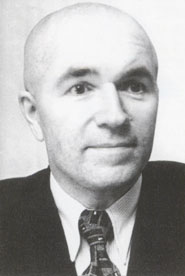
Atle Selberg and Paul Erdős independently produce an elementary proof of the prime number theorem, avoiding complex analysis. #mathematics #proof
Atle Selberg introduces the Selberg sieve, a versatile combinatorial tool for prime number problems. #mathematics #sieve
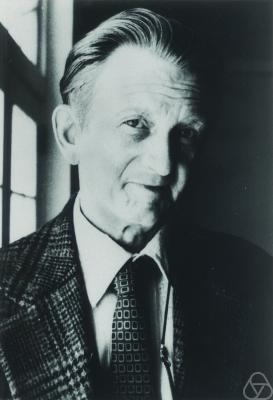
Chen Jingrun shows that every sufficiently large even integer is the sum of a prime and a product of at most two primes, a near-twin prime result. #mathematics #theorem
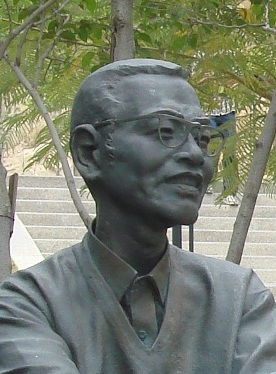
Hugh Montgomery's pair correlation conjecture relates zeros of the zeta function to eigenvalue distributions, linking primes and physics. #mathematics #conjecture

Gary Miller and Michael Rabin devise a probabilistic primality test based on Fermat's little theorem, widely used in cryptography. #cryptography #algorithm
Manindra Agrawal, Neeraj Kayal, and Nitin Saxena discover the first deterministic polynomial-time primality test (published 2004). #mathematics #algorithm
Andrew Wiles proves Fermat's Last Theorem, a landmark in number theory linking elliptic curves and modular forms, indirectly impacting prime research. #mathematics #theorem
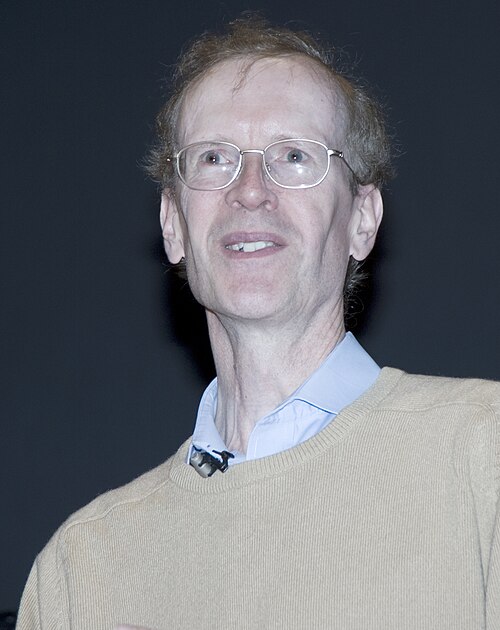
The Great Internet Mersenne Prime Search (GIMPS) begins using distributed computing to find large Mersenne primes, discovering many record primes. #computing #primes

Ben Green and Terence Tao prove that the primes contain arbitrarily long arithmetic progressions, a stunning result in additive combinatorics. #mathematics #theorem
Timothy Gowers launches the Polymath Project, a collaborative online effort, addressing problems like the Hales-Jewett theorem and later prime gaps. #mathematics #collaboration
The Polymath4 project works on the Erdős discrepancy problem and later contributes to bounded gaps between primes. #mathematics #polymath
Zhang Yitang proves that there are infinitely many pairs of primes with gap less than 70 million, a breakthrough on the twin prime conjecture. #mathematics #breakthrough

James Maynard reduces the bound on prime gaps to 600, and later to 246 through the Polymath8 project, advancing toward twin primes. #mathematics #theorem )

The collaborative Polymath8 project, led by Terence Tao, reduces the proven bound for prime gaps to 246. #mathematics #collaboration
Harald Helfgott completes a proof of the ternary Goldbach conjecture: every odd integer greater than 5 is the sum of three primes. #mathematics #proof

GIMPS discovers M82589933, a Mersenne prime with 24,862,048 digits, the largest known prime at the time. #computing #primes
Polymath16 focuses on the chromatic number of the plane, indirectly involving prime-related graph theory. #mathematics #collaboration
James Maynard receives the Fields Medal for contributions to analytic number theory, particularly on prime gaps and distribution. #mathematics #award

The Polymath project extends techniques to improve unconditional bounds on gaps between primes, refining the work of Zhang and Maynard. #mathematics #collaboration
The Riemann hypothesis remains unproven, but new computational and theoretical approaches continue to test its implications for prime distribution. #mathematics #openproblem