300 BCE
Euclid Proves Infinite Primes
Euclid includes a proof that there are infinitely many prime numbers in his Elements, laying the foundation for number theory. #math #history
Prime numbers have fascinated mathematicians across cultures for millennia. This timeline traces key discoveries and theorems from ancient Greece, China, India, the Islamic world, and modern Europe and America.
Euclid includes a proof that there are infinitely many prime numbers in his Elements, laying the foundation for number theory. #math #history
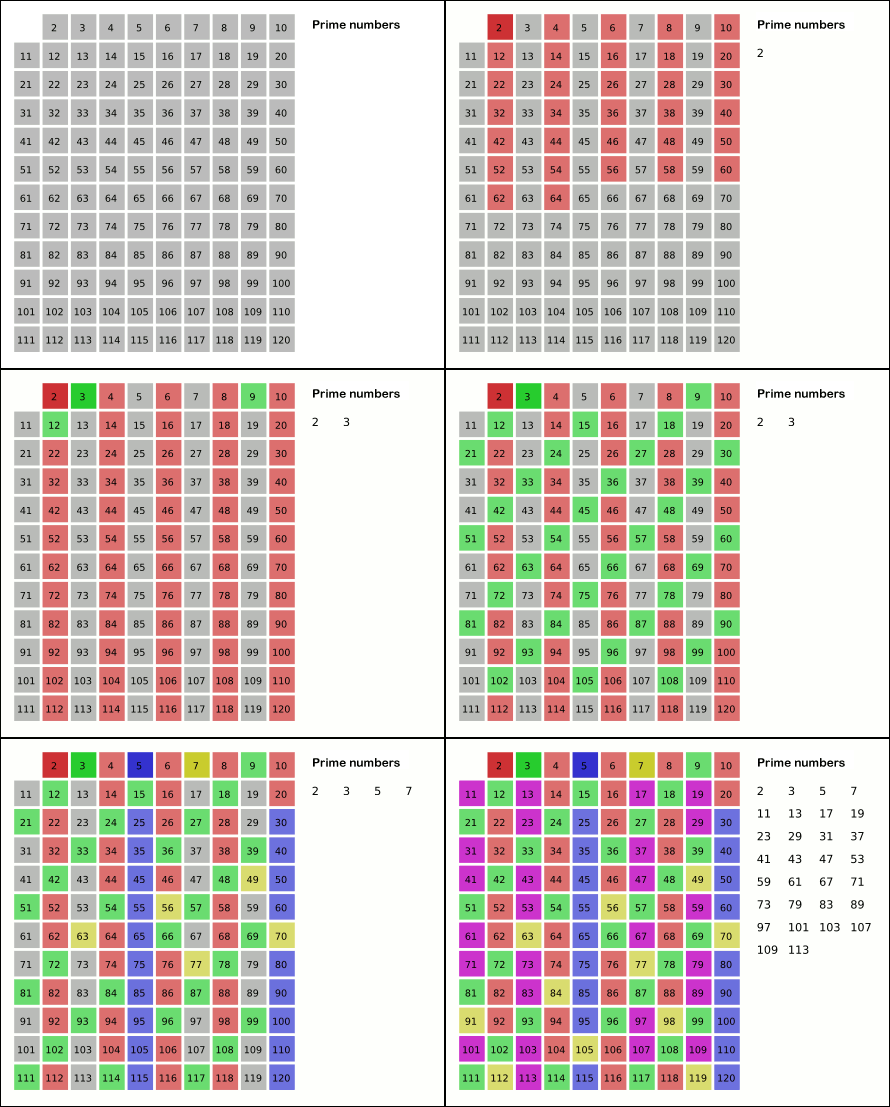
Eratosthenes develops the Sieve of Eratosthenes, a simple algorithm for finding all prime numbers up to a given limit. #math #algorithm
The Sunzi Suanjing presents the Chinese remainder theorem, which uses coprime moduli (related to primes) for solving simultaneous congruences. #math #china

Aryabhata's Aryabhatiya describes the Kuṭṭaka algorithm for solving linear Diophantine equations, intimately linked to prime number theory. #math #india

Ibn al-Haytham (Alhazen) formulates a precursor to Wilson's theorem, linking prime numbers to factorial congruences. #math #islamicgoldenage

Fibonacci's Liber Abaci introduces methods for testing primality, including the idea of dividing by smaller primes. #math #europe

Pietro Cataldi finds the 19th and 23rd perfect numbers, corresponding to Mersenne primes, advancing the study of prime numbers. #math #history

Pierre de Fermat announces Fermat's Little Theorem, a fundamental result in prime number theory and cryptography. #math #cryptography
Leonhard Euler introduces the Euler product formula, connecting prime numbers with the Riemann zeta function. #math #analysis
Adrien-Marie Legendre conjectures a formula for the distribution of primes, later refined into the prime number theorem. #math #history
Carl Friedrich Gauss's Disquisitiones Arithmeticae establishes the foundation of modern number theory, including work on prime numbers. #math #books

Peter Gustav Lejeune Dirichlet proves there are infinitely many primes in any arithmetic progression with coprime first term and difference. #math #history

Pafnuty Chebyshev proves Bertrand's postulate: for any integer n>1, there is at least one prime number between n and 2n. #math #analysis

Chebyshev provides sharp inequalities on the distribution of primes, a crucial step toward the prime number theorem. #math #history

Bernhard Riemann publishes a groundbreaking paper on the zeta function, conjecturing that all non-trivial zeros lie on the critical line, deeply linked to prime distribution. #math #hypothesis

Jacques Hadamard and Charles de la Vallée Poussin independently prove the prime number theorem, showing the asymptotic distribution of primes. #math #history
Srinivasa Ramanujan publishes influential results on the distribution of primes and highly composite numbers. #math #india

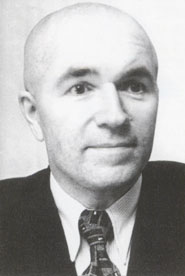
Viggo Brun develops Brun's sieve to show the sum of reciprocals of twin primes converges, implying they are rare. #math #sieve
Lev Schnirelmann introduces natural density and proves every integer >1 can be expressed as sum of at most C primes, a breakthrough on the Goldbach conjecture. #math #russia
Ivan Vinogradov proves that every sufficiently large odd integer is the sum of three primes, using the Hardy-Littlewood circle method. #math #russia
Atle Selberg and Paul Erdős give an elementary proof of the prime number theorem, avoiding complex analysis. #math #history
Alan Turing outlines a mechanical procedure for eliminating non-prime numbers, contributing to computational number theory. #math #computing

Wang Yuan proves that every sufficiently even integer can be expressed as sum of a prime and a product of at most two primes (1+2). #math #china )
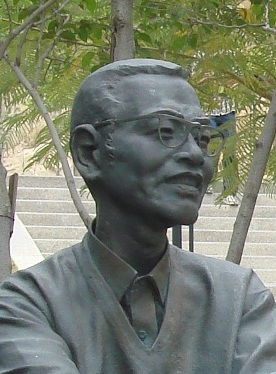
Chen Jingrun proves that every sufficiently large even integer is the sum of a prime and a product of at most two primes (1+2), a major milestone in Goldbach studies. #math #china
Gary Miller and Michael Rabin develop a probabilistic primality test based on Fermat's little theorem, widely used in cryptography. #math #cryptography
Shafi Goldwasser and Joe Killian introduce an elliptic curve primality test, providing a practical method for proving primality. #math #cryptography
Leonard Adleman and Ming-Deh Huang develop a deterministic primality test using elliptic curves. #math #cryptography
Manindra Agrawal, Neeraj Kayal, and Nitin Saxena devise the AKS primality test, the first deterministic polynomial-time algorithm for primality. #math #algorithm
Ben Green and Terence Tao prove that there exist arbitrarily long arithmetic progressions of primes. #math #breakthrough
Yitang Zhang proves that there are infinitely many pairs of primes with gap less than 70 million, a landmark result on prime gaps. #math #china

James Maynard shows that for any integer m, there are infinitely many intervals of length C(m) containing at least m primes, refining Zhang's approach. #math #breakthrough )

The Great Internet Mersenne Prime Search (GIMPS) discovers the 49th Mersenne prime, 2^74207281-1, with over 22 million digits. #math #computing
