300 BCE
Euclid Proves Infinitude of Primes
In his Elements, Euclid provides the first known proof that there are infinitely many prime numbers, using a classic reductio ad absurdum argument. #mathematics #history
This timeline traces the history of prime numbers and their distribution, from ancient Greek insights to modern computational discoveries, highlighting key theorems, conjectures, and proofs that shaped number theory.
In his Elements, Euclid provides the first known proof that there are infinitely many prime numbers, using a classic reductio ad absurdum argument. #mathematics #history
Eratosthenes of Cyrene devises an efficient algorithm to find all prime numbers up to a given limit, known as the Sieve of Eratosthenes. #mathematics #ancient

The Chinese mathematical text Sunzi Suanjing includes early work on modular arithmetic and primality testing, influencing later developments. #mathematics #china

In his book Liber Abaci, Fibonacci introduces the concept of prime numbers to Europe and presents methods for testing primality. #mathematics #medieval

Chinese mathematician Zhu Shijie discusses prime numbers and polynomial equations, advancing number theory in East Asia. #mathematics #china

Simon Stevin publishes La Thiende, promoting decimal fractions, which indirectly aids prime number computation. #mathematics #renaissance

Pierre de Fermat announces his Little Theorem, stating that for prime p, a^p ≡ a (mod p), a foundational result in primality testing. #mathematics #numbertheory
Leonhard Euler introduces the product formula over primes for the zeta function, establishing the deep connection between prime distribution and analysis. #mathematics #euler
Christian Goldbach conjectures that every even integer greater than 2 is the sum of two primes, an unsolved problem inspiring millennia of research. #mathematics #conjecture

Edward Waring conjectures that every integer is a sum of at most 9 positive cubes, inspiring later work on prime gaps and additive number theory. #mathematics
Gauss publishes his seminal work, laying foundations for modern number theory and conjecturing the Prime Number Theorem regarding prime distribution. #mathematics #gauss

At age 15, Gauss conjectures that the number of primes up to x is approximately x/ln(x), later known as the Prime Number Theorem. #mathematics #conjecture
Dirichlet proves there are infinitely many primes in any arithmetic progression a, a+d, a+2d,... with coprime a and d, using L-functions. #mathematics #dirichlet

Pafnuty Chebyshev proves Bertand's postulate and obtains the first explicit bounds for the prime-counting function, advancing toward the Prime Number Theorem. #mathematics #chebyshev

Bernhard Riemann publishes his memoir on the zeta function, hypothesizing that all non-trivial zeros lie on the line Re(s)=1/2, deeply linked to prime distribution. #mathematics #riemann

Hadamard and de la Vallée-Poussin independently prove the Prime Number Theorem using complex analysis, confirming Gauss's conjecture. #mathematics #history
Hardy and Littlewood develop the circle method and propose numerous conjectures on prime distribution, including the first Hardy-Littlewood conjecture. #mathematics #conjecture

Viggo Brun introduces the Brun sieve, proving the sum of reciprocals of twin primes converges, and defines the Brun constant. #mathematics #sieve

Atle Selberg and Paul Erdős independently develop an elementary proof of the Prime Number Theorem, avoiding complex analysis. #mathematics #erdős
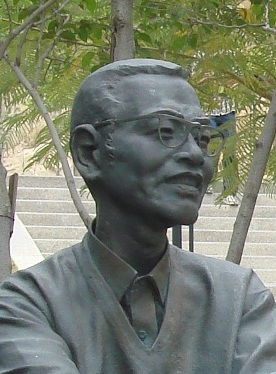
Chen Jingrun proves that every sufficiently large even number is the sum of a prime and a semiprime, the strongest result towards Goldbach's conjecture. #mathematics #chen
The discovery of the prime 2^11213-1 (the 23rd Mersenne prime) using an IBM 7094 marks the beginning of computer-assisted prime hunting. #mathematics #computing
Gary Miller and Michael Rabin develop a probabilistic primality test based on Fermat's little theorem, widely used in cryptography. #mathematics #cryptography
Rivest, Shamir, and Adleman create the RSA public-key cryptosystem, whose security relies on the difficulty of factoring large primes. #mathematics #cryptography )
Manindra Agrawal, Neeraj Kayal, and Nitin Saxena devise the first deterministic polynomial-time primality test (AKS), a landmark in computational number theory. #mathematics #algorithms
Shafi Goldwasser and Joe Kilian develop a method using elliptic curves for primality proving, later refined by Atkin and Morain. #mathematics #ellipticcurves
The Great Internet Mersenne Prime Search (GIMPS) discovers M(756839), the first of many record primes found via distributed computing. #mathematics #computing

Ben Green and Terence Tao prove that the primes contain arbitrarily long arithmetic progressions, a stunning result in additive number theory. #mathematics #primes
Yitang Zhang proves there are infinitely many prime pairs with gap less than 70 million, igniting rapid progress toward twin prime conjecture. #mathematics #breakthrough

A massive collaborative effort (Polymath8) reduces the bound on prime gaps to 246, demonstrating crowd-sourced mathematical research. #mathematics #collaboration
James Maynard independently improves bounds on prime gaps and proves that there are infinitely many primes with no digit 7 in base 10. #mathematics #maynard )

GIMPS discovers M82589933, the 51st known Mersenne prime, with over 24 million digits, continuing the quest for ever-larger primes. #mathematics #record
Extensive computational verification of the Riemann hypothesis up to the 12 trillionth zero reinforces the conjecture, though still unproven. #mathematics #computation
A claimed proof of the non-existence of Landau–Siegel zeros (a critical step toward prime distribution) circulates, but remains unverified. #mathematics #conjecture
GIMPS reports a possible new largest prime, pending verification, showing the ongoing excitement in prime records. #mathematics #primes