Physical Chemistry & Chemical Kinetics: Pioneer Biographies & Lasting Legacies
Encyclopedia/1. The Cosmos & The Natural World/2. Physics & Chemistry/03. Chemistry & Periodic Table of Elements • Curated by Admin Timeline.sg
This timeline tracks the seminal contributions, inventions, and lasting legacies of leading figures in physical chemistry and chemical kinetics, from ancient atomic theories to modern quantum chemistry and femtochemistry.
Chronological Storyline (45 Milestones)
350 BCE
Kanada proposes atomic theory
The Indian philosopher Kanada outlines a comprehensive atomic theory in the Vaisheshika school, positing that all matter is composed of indestructible atoms. This early framework influences later scientific thought. #physicalchemistry #india #history )
Kanada proposes atomic theory By Xaetherion - Own work, CC BY-SA 4.0, https://commons.wikimedia.org/w/index.php?curid=185658968
750 CE
Jabir ibn Hayyan pioneers alchemical methods
The Islamic alchemist Jabir ibn Hayyan (Geber) develops distillation, crystallization, and sublimation techniques, laying foundations for experimental chemistry. His work introduces systematic classification of substances. #alchemy #islamicgoldenage #chemistry
Jabir ibn Hayyan pioneers alchemical methods By Unknown author - https://cdn.britannica.com/10/132710-050-CECF006B/illustration-manuscript-Abu-Musa-Jabir-ibn-Hayyan.jpg, Public domain, https://commons.wikimedia.org/w/index.php?curid=166835469
1025 CE
Al-Biruni measures specific weights
The Persian scholar Al-Biruni accurately measures the densities of several metals and gemstones using hydrostatic balance, contributing to early physical chemistry. His methods anticipate later work on specific gravity. #physicalchemistry #islamicscience #history
Al-Biruni measures specific weights By The original uploader was Romanm at Slovenian Wikipedia. - Originally from sl.wikipedia; description page is/was here., Public domain, https://commons.wikimedia.org/w/index.php?curid=2590841
1662 CE
Boyle's law defines gas pressure-volume relationship
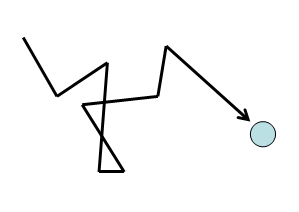
Robert Boyle publishes experiments establishing the inverse relationship between pressure and volume of a gas at constant temperature, a cornerstone of physical chemistry. His work marks the beginning of modern experimental chemistry. #physicalchemistry #gases #history
Boyle's law defines gas pressure-volume relationship By NASA's Glenn Research Center - http://www.grc.nasa.gov/WWW/K-12/airplane/aboyle.html, Public domain, https://commons.wikimedia.org/w/index.php?curid=4448761
1738 CE
Bernoulli publishes kinetic theory of gases
Daniel Bernoulli in his work Hydrodynamica proposes that gas pressure results from molecular impacts, laying the foundation for kinetic theory. This concept later underpins statistical mechanics. #physicalchemistry #kinetictheory #history
Bernoulli publishes kinetic theory of gases By UnknownEdited by Bammesk - Basel Historical Museum Link: https://www.hmb.ch/en/museums/objects-in-the-collection/details/s/portraet-des-daniel-bernoulli/, CC BY-SA 4.0, https://commons.wikimedia.org/w/index.php?curid=114825929
1761 CE
Joseph Black discovers latent heat
Scottish chemist Joseph Black identifies latent heat and specific heat capacities, concepts essential for thermochemistry. His work influences later development of calorimetry and thermodynamics. #physicalchemistry #thermochemistry #history
Joseph Black discovers latent heat By Rogers, J - http://ihm.nlm.nih.gov/images/B02979, Public domain, https://commons.wikimedia.org/w/index.php?curid=19132802
1777 CE
Lavoisier pioneers calorimetry
Antoine Lavoisier uses an ice calorimeter to measure heat released by chemical reactions, establishing quantitative thermochemistry. He also disproves phlogiston theory, revolutionizing chemistry. #physicalchemistry #thermochemistry #revolution
Lavoisier pioneers calorimetry By Jacques-Louis David - Metropolitan Museum of Art: entry 436106 (accession number: 1977.10), Public domain, https://commons.wikimedia.org/w/index.php?curid=141652400
1808 CE
Dalton proposes atomic theory
John Dalton publishes A New System of Chemical Philosophy, reviving atomic theory based on mass ratios. His work provides a foundation for understanding chemical reactions and physical properties. #physicalchemistry #atomictheory #history
Dalton proposes atomic theory By Thomas Phillips - National Portrait Gallery, London, Public domain, https://commons.wikimedia.org/w/index.php?curid=11727058
1811 CE
Avogadro's hypothesis links volume to particles
Amedeo Avogadro proposes that equal volumes of gases at the same temperature and pressure contain equal numbers of molecules. This hypothesis is crucial for molecular mass determination. #physicalchemistry #gases #avogadro
1833 CE
Faraday states laws of electrolysis
Michael Faraday formulates the laws of electrolysis, relating electric charge to chemical change. His work pioneers electrochemistry and quantifies ion behavior. #physicalchemistry #electrochemistry #faraday
Faraday states laws of electrolysis By Thomas Phillips - Thomas Phillips, 1842, Public domain, https://commons.wikimedia.org/w/index.php?curid=463384
1850 CE
Clausius introduces mean free path
Rudolf Clausius introduces the concept of mean free path in kinetic theory, explaining gas transport phenomena. His work advances statistical mechanics. #physicalchemistry #kinetictheory #clausius
Clausius introduces mean free path By Daisy - Own work, Public domain, https://commons.wikimedia.org/w/index.php?curid=1655174
1859 CE
Kirchhoff and Bunsen develop spectroscopy
Gustav Kirchhoff and Robert Bunsen invent the spectroscope, enabling element identification via emission spectra. This tool becomes essential for physical chemistry and atomic theory. #physicalchemistry #spectroscopy #discovery
Kirchhoff and Bunsen develop spectroscopy By Unknown author - Portrait of Gustav Kirchhoff, Smithsonian libraries (SIL-SIL14-k002-03) (image), Public domain, https://commons.wikimedia.org/w/index.php?curid=1774907
1865 CE
Loschmidt calculates Avogadro constant
Joseph Loschmidt uses kinetic theory to estimate the number of molecules in a cubic centimeter of gas, approximating the Avogadro constant. This work bridges theory and measurement. #physicalchemistry #avogadro #kinetictheory
Loschmidt calculates Avogadro constant By The original uploader was Obersachse at Russian Wikipedia. - Transferred from ru.wikipedia to Commons., Public domain, https://commons.wikimedia.org/w/index.php?curid=4718352
1873 CE
Van der Waals proposes equation of state
Johannes Diderik van der Waals introduces an equation of state accounting for molecular volume and attraction, earning the Nobel Prize in 1910. His work explains real gas behavior and phase transitions. #physicalchemistry #gases #vanderwaals
1877 CE
Boltzmann defines entropy statistically
Ludwig Boltzmann formulates the statistical definition of entropy (S = k log W), laying the foundation for statistical mechanics. His work explains irreversibility and thermodynamic equilibrium. #physicalchemistry #thermodynamics #statisticalmechanics
Boltzmann defines entropy statistically By Unknown author - A version is at Uni Frankfurt. The new source is not linked, but note I did clean up some water damage at the edges., Public domain, https://commons.wikimedia.org/w/index.php?curid=865671
1884 CE
Van 't Hoff publishes chemical dynamics
Jacobus Henricus van 't Hoff publishes Études de dynamique chimique, founding chemical kinetics. He introduces the concept of reaction rate and the van 't Hoff equation for equilibrium. #physicalchemistry #kinetics #vantHoff
Van 't Hoff publishes chemical dynamics By Nicola Perscheid - one or more third parties have made copyright claims against Wikimedia Commons in relation to the work from which this is sourced or a purely mechanical reproduction thereof. This may be due to recognition of the "sweat of the brow" doctrine, allowing works to be eligible for protection through skill and labour, and not purely by originality as is the case in the United States (where this website is hosted). These claims may or may not be valid in all jurisdictions. As such, use of this image in the jurisdiction of the claimant or other countries may be regarded as copyright infringement. Please see Commons:When to use the PD-Art tag for more information., Public domain, https://commons.wikimedia.org/w/index.php?curid=44101635
1887 CE
Arrhenius theory of electrolytic dissociation
Svante Arrhenius proposes that electrolytes dissociate into ions in solution, explaining conductivity and colligative properties. He later receives the 1903 Nobel Prize. #physicalchemistry #electrochemistry #arrhenius
Arrhenius theory of electrolytic dissociation By Photogravure Meisenbach Riffarth & Co. Leipzig. - Zeitschrift für Physikalische Chemie, Band 69, 1909., Public domain, https://commons.wikimedia.org/w/index.php?curid=96273
1889 CE
Arrhenius equation describes temperature dependence
Svante Arrhenius formulates the Arrhenius equation, relating reaction rate to activation energy and temperature. This becomes a cornerstone of chemical kinetics. #physicalchemistry #kinetics #arrhenius
1893 CE
Ostwald defines catalysis
Wilhelm Ostwald provides a modern definition of a catalyst as a substance that accelerates a reaction without being consumed. His work earns the 1909 Nobel Prize and underpins industrial chemistry. #physicalchemistry #catalysis #ostwald
Ostwald defines catalysis By Nicola Perscheid - one or more third parties have made copyright claims against Wikimedia Commons in relation to the work from which this is sourced or a purely mechanical reproduction thereof. This may be due to recognition of the "sweat of the brow" doctrine, allowing works to be eligible for protection through skill and labour, and not purely by originality as is the case in the United States (where this website is hosted). These claims may or may not be valid in all jurisdictions. As such, use of this image in the jurisdiction of the claimant or other countries may be regarded as copyright infringement. Please see Commons:When to use the PD-Art tag for more information., Public domain, https://commons.wikimedia.org/w/index.php?curid=44052385
1896 CE
Nernst equation links potential to concentration
Walther Nernst develops the Nernst equation, relating electrochemical cell potential to electrolyte concentration. This is fundamental to electrochemistry and battery technology. #physicalchemistry #electrochemistry #nernst
1900 CE
Planck introduces quantum theory
Max Planck postulates quantized energy levels to explain blackbody radiation, ushering in quantum mechanics. This revolutionizes physical chemistry by describing atomic and molecular behavior. #physicalchemistry #quantumtheory #planck
Planck introduces quantum theory By Hugo Erfurth - This file was derived from: Max Planck by Hugo Erfurth 1938cr.jpg Original source: https://www.dhm.de/lemo/bestand/objekt/max-planck, Public domain, https://commons.wikimedia.org/w/index.php?curid=153625300
1903 CE
Svedberg invents ultracentrifuge
Theodor Svedberg develops the ultracentrifuge to study colloidal particles and macromolecules. He wins the 1926 Nobel Prize for his work on disperse systems. #physicalchemistry #colloids #ultracentrifuge
Svedberg invents ultracentrifuge By Unknown author - http://www.nobelprize.org/nobel_prizes/chemistry/laureates/1926/svedberg.html, Public domain, https://commons.wikimedia.org/w/index.php?curid=550336
1906 CE
Nernst states the third law of thermodynamics
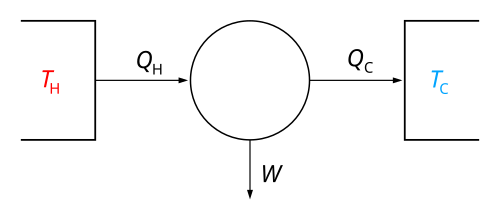
Walther Nernst proposes that entropy approaches a constant (zero) as temperature approaches absolute zero, providing a reference point for thermodynamic calculations. He wins the 1920 Nobel Prize. #physicalchemistry #thermodynamics #nernst
Nernst states the third law of thermodynamics By Eric Gaba (Sting - fr:Sting) - Own workBased upon Image:Carnot-engine.png, Public domain, https://commons.wikimedia.org/w/index.php?curid=1382360
1913 CE
Bohr model of the atom
Niels Bohr proposes a planetary atomic model with quantized electron orbits, explaining atomic spectra. This model becomes a foundation for quantum chemistry. #physicalchemistry #atomicmodel #bohr
Bohr model of the atom By JabberWok at English Wikipedia - Transferred from en.wikipedia to Commons., CC BY-SA 3.0, https://commons.wikimedia.org/w/index.php?curid=2639910
1916 CE
Lewis proposes chemical bonding theory
Gilbert N. Lewis develops the Lewis dot structure and theory of covalent bonding, introducing the electron-pair bond. His work shapes modern chemical bonding concepts. #physicalchemistry #chemicalbonding #lewis
1922 CE
Saha devises ionization equation
Indian physicist Meghnad Saha derives the Saha equation, describing ionization of atoms in gases at high temperatures. It is critical for astrophysics and plasma chemistry. #physicalchemistry #ionization #saha
1924 CE
De Broglie proposes wave-particle duality
Louis de Broglie hypothesizes that particles have wave properties (λ = h/p), paving the way for quantum mechanics and wave function descriptions of molecules. #physicalchemistry #quantummechanics #debroglie
1925 CE
Heisenberg develops matrix mechanics
Werner Heisenberg formulates matrix mechanics, a complete quantum theory using matrices and observable quantities. This approach is crucial for quantum chemistry calculations. #physicalchemistry #quantummechanics #heisenberg
1926 CE
Schrödinger introduces wave equation
Erwin Schrödinger publishes the wave equation for quantum systems, enabling wavefunction calculations for atoms and molecules. This becomes the central tool for quantum chemistry. #physicalchemistry #quantummechanics #schrodinger
1927 CE
Born-Oppenheimer approximation separates motion
Max Born and J. Robert Oppenheimer approximate that nuclear and electronic motions can be separated, simplifying quantum chemical calculations for molecules. #physicalchemistry #quantumchemistry #bornoppenheimer
1931 CE
Pauling introduces resonance theory
Linus Pauling develops the resonance theory of chemical bonding, explaining molecular structures and stability. His work earns the 1954 Nobel Prize in Chemistry. #physicalchemistry #chemicalbonding #paulig )
1935 CE
Transition state theory formulated
Henry Eyring, Michael Polanyi, and others develop transition state theory, describing reaction rates via an activated complex. This theory becomes central to chemical kinetics. #physicalchemistry #kinetics #transitionstate
Transition state theory formulated By Chem540grp1f08 - Own work, CC BY-SA 3.0, https://commons.wikimedia.org/w/index.php?curid=5318731
1945 CE
Libby develops radiocarbon dating
Willard Libby invents radiocarbon dating using carbon-14 decay, winning the 1960 Nobel Prize. This technique is applied in chemistry, archaeology, and geology. #physicalchemistry #isotopes #radiocarbon
Libby develops radiocarbon dating By Unknown author - egE3f_wDueWd4A at Google Cultural Institute maximum zoom level, Public domain, https://commons.wikimedia.org/w/index.php?curid=22723252
1952 CE
Fukui publishes frontier molecular orbital theory
Japanese chemist Kenichi Fukui introduces frontier orbital theory, focusing on HOMO and LUMO to explain reaction mechanisms. He shares the 1981 Nobel Prize. #physicalchemistry #frontierorbitals #fukui
1956 CE
Marcus theory of electron transfer
Rudolf A. Marcus publishes the Marcus theory for electron transfer reactions, explaining reaction rates and energy surfaces. He receives the 1992 Nobel Prize. #physicalchemistry #electrontransfer #marcus
1960 CE
Bernstein pioneers molecular beam experiments
Richard B. Bernstein advances molecular beam techniques to study chemical reaction dynamics at the molecular level, enabling detailed understanding of collision processes. #physicalchemistry #reactiondynamics #molecularbeams
1965 CE
Pople develops CNDO/2 method
John A. Pople introduces the CNDO/2 semi-empirical quantum chemistry method, allowing calculations on larger molecules. He later earns the 1998 Nobel Prize for computational chemistry. #physicalchemistry #computationalchemistry #pople
1970 CE
Kohn proposes density functional theory
Walter Kohn develops density functional theory (DFT), which uses electron density rather than wavefunctions. He shares the 1998 Nobel Prize. #physicalchemistry #dft #kohn
1977 CE
Shirakawa discovers conducting polymers
Hideki Shirakawa, Alan MacDiarmid, and Alan Heeger discover that polyacetylene can be doped to become highly conductive. They share the 2000 Nobel Prize for this breakthrough. #physicalchemistry #polymers #conductivity
Shirakawa discovers conducting polymers By 日本学士院 - https://www.japan-acad.go.jp/common/images/members/5/shirakawa_hideki.jpg, CC BY 4.0, https://commons.wikimedia.org/w/index.php?curid=112580746
1981 CE
Fukui and Hoffmann share Nobel Prize
Kenichi Fukui and Roald Hoffmann are awarded the Nobel Prize in Chemistry for their theories concerning chemical reactions (frontier orbitals and Woodward-Hoffmann rules). #physicalchemistry #nobel #reactionmechanisms
Fukui and Hoffmann share Nobel Prize By Nobel Foundation - Description page, Public domain, https://commons.wikimedia.org/w/index.php?curid=129527995
1986 CE
Zewail pioneers femtochemistry
Ahmed Zewail develops femtosecond spectroscopy to observe reaction intermediates in real time, founding femtochemistry. He wins the 1999 Nobel Prize. #physicalchemistry #femtochemistry #zewail
Zewail pioneers femtochemistry By Douglas A. Lockard - Science History Institute, Douglas A. Lockard., CC BY-SA 3.0, https://commons.wikimedia.org/w/index.php?curid=33429523
1996 CE
Fullerene discovery wins Nobel Prize
Harold Kroto, Robert Curl, and Richard Smalley are awarded the Nobel Prize for discovering C60 and other fullerenes, new carbon allotropes with unique properties. #physicalchemistry #fullerenes #nobel
Fullerene discovery wins Nobel Prize By 痛 - Own work, CC BY-SA 4.0, https://commons.wikimedia.org/w/index.php?curid=118428240
1998 CE
Nobel for computational chemistry
John Pople and Walter Kohn receive the Nobel Prize in Chemistry for computational methods (Pople for Gaussian, Kohn for DFT), revolutionizing molecular modeling. #physicalchemistry #computationalchemistry #nobel
Nobel for computational chemistry By Itamblyn - Own work, CC BY-SA 4.0, https://commons.wikimedia.org/w/index.php?curid=3592839
2000 CE
Nobel for conductive polymers
Alan Heeger, Alan MacDiarmid, and Hideki Shirakawa win the Nobel Prize for the discovery and development of conductive polymers, leading to organic electronics. #physicalchemistry #polymers #nobel
Nobel for conductive polymers By Smokefoot - Own work, Public domain, https://commons.wikimedia.org/w/index.php?curid=6893639
2016 CE
Nobel for molecular machines
Jean-Pierre Sauvage, J. Fraser Stoddart, and Ben Feringa win the Nobel Prize for designing and synthesizing molecular machines—tiny molecular actuators. #physicalchemistry #nanotechnology #molecularmachines
Nobel for molecular machines By PKS615 - Own work, CC BY 4.0, https://commons.wikimedia.org/w/index.php?curid=147658142