PGS ASA (Petroleum Geo-Services) is a Norwegian geophysical company founded in 1991, providing seismic data acquisition, processing, and reservoir services. The timeline traces its founding, technological innovations, global expansion, mergers and acquisitions, leadership changes, and financial milestones on Oslo Børs.
Chronological Storyline (34 Milestones)
1991 CE
PGS Founded by Jan M. Wennesland and Reidar Michaelsen
Petroleum Geo-Services (PGS) is established in Norway, focusing on seismic data acquisition and processing. The founders combine expertise in geophysics and entrepreneurship to serve the oil and gas industry. #corporate #history
1992 CE
First Seismic Survey Contract
PGS secures its first major contract for marine seismic acquisition in the North Sea, establishing a foothold in the European market. The project helps validate the company's technical capabilities. #seismic #oilgas
Oct 1, 1993 CE
IPO on Oslo Børs
PGS is listed on the Oslo Stock Exchange, raising capital to expand its fleet of seismic vessels and invest in new technology. The IPO marks a key milestone in the company's growth trajectory. #finance #ipo
IPO on Oslo Børs By Erik.Storm / StockLink iMarkedet - Own work, CC BY 3.0, https://commons.wikimedia.org/w/index.php?curid=12341567
1994 CE
Acquisition of Geco-Prakla (Seismic Assets)
PGS acquires the seismic vessel fleet and data library of Geco-Prakla from Schlumberger, significantly expanding its marine seismic capacity and client base. The deal positions PGS as a major player in the seismic industry. #merger #acquisition
1995 CE
Launch of MegaSurvey Program
PGS initiates the MegaSurvey program, a series of large 3D seismic surveys in the Gulf of Mexico, aimed at providing basin-wide coverage. This innovative multi-client approach reduces costs for oil companies and generates recurring revenue. #seismic #innovation
1996 CE
Introduction of Ramform Vessels
PGS introduces the Ramform-class seismic vessels, designed for high-efficiency towing of multiple streamers. The distinctive hull shape improves stability and streamer control, setting new industry standards. #technology #marine
1997 CE
Expansion into West Africa and Brazil
PGS establishes operations in West Africa (Nigeria, Angola) and Brazil, capitalizing on deepwater exploration opportunities. The company acquires seismic data for emerging basins, supporting the global offshore boom. #expansion #emergingmarkets
1998 CE
Acquisition of Geoteam AS
PGS acquires Geoteam AS, a Norwegian marine seismic contractor, adding vessels and expertise in the North Sea and Barents Sea. The deal strengthens PGS's position in the Norwegian continental shelf. #acquisition #norway
1999 CE
Launch of PGS Onshore
PGS establishes an onshore seismic division, providing data processing and imaging services from land-based surveys. This diversification mitigates reliance on marine operations. #diversification #seismic
2000 CE
Partnership with BP for Deepwater Seismic
PGS signs a multi-year agreement with BP to acquire and process seismic data in the Gulf of Mexico deepwater. The partnership showcases PGS's technology in high-profile projects. #partnership #deepwater
Partnership with BP for Deepwater Seismic By WhisperToMe - Own work, Public domain, https://commons.wikimedia.org/w/index.php?curid=10111102
2001 CE
Financial Restructuring After Industry Downturn
Following low oil prices and reduced seismic spending, PGS undergoes financial restructuring, reducing debt and selling non-core assets. The company emerges leaner and focuses on core marine acquisition. #restructuring #finance
2002 CE
Introduction of 3D4C Technology
PGS commercializes 3D four-component (3D4C) ocean bottom seismic technology, offering both pressure and particle motion data. This innovation improves imaging in complex geological settings. #technology #seismic
2003 CE
Acquisition of Companie Générale de Géophysique (CGG) North Sea Assets
PGS acquires part of CGG's North Sea multi-client data library and vessels, expanding its presence in Europe. The deal includes the vessel CGG Harmattan. #acquisition #europe
2004 CE
PGS Listed on New York Stock Exchange (NYSE)
PGS lists its shares on the NYSE, seeking broader access to international investors. The dual listing enhances PGS's profile in the US market. #finance #ipo
PGS Listed on New York Stock Exchange (NYSE) By Jeffrey Zeldman from Manhattan, USA - New York Stock Exchange, CC BY 2.0, https://commons.wikimedia.org/w/index.php?curid=69300558
2005 CE
Launch of Ramform Titan (Largest Seismic Vessel)
PGS launches the Ramform Titan, the world's largest seismic vessel at 24 streamers, capable of towing 24 cables. The vessel sets a new benchmark for acquisition efficiency. #vessel #innovation
Launch of Ramform Titan (Largest Seismic Vessel) By kees torn - RAMFORM TITAN, CC BY-SA 2.0, https://commons.wikimedia.org/w/index.php?curid=103832657
2006 CE
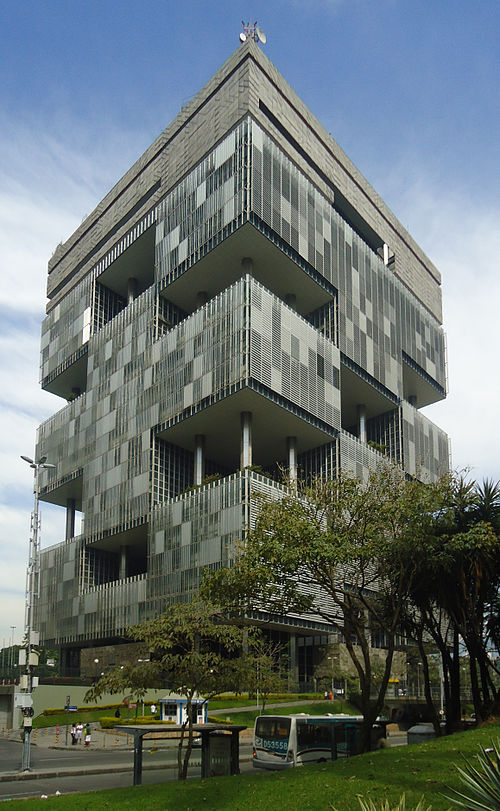
Major Contract with Petrobras in Brazil
PGS secures a large multi-year contract with Petrobras for seismic acquisition offshore Brazil, reinforcing its presence in the Santos Basin presalt play. The contract is valued at over $500 million. #contract #brazil
Major Contract with Petrobras in Brazil By Wilfredor - This file was derived from: SedePetrobras.JPG, CC BY-SA 4.0, https://commons.wikimedia.org/w/index.php?curid=44876962
2007 CE
Acquisition of Multi-Client Data Library from Veritas DGC
PGS acquires a large multi-client seismic data library from Veritas DGC (later acquired by CGG), expanding its coverage in the Gulf of Mexico and North Sea. #acquisition #data
2008 CE
Peak Revenues at $2.2 Billion
PGS reports record annual revenues of $2.2 billion, driven by high oil prices and strong demand for seismic data. The company's fleet operates at near full capacity. #financials #record
2009 CE
Impact of Financial Crisis and Cost Reduction
The global financial crisis leads to a sharp drop in oil prices and seismic spending. PGS implements cost reduction measures, including fleet stacking and layoffs, to weather the downturn. #crisis #restructuring
Impact of Financial Crisis and Cost Reduction By David Shankbone - Own work, CC BY-SA 3.0, https://commons.wikimedia.org/w/index.php?curid=2559779
2010 CE
Deepwater Horizon Spill Impact on Industry
The Gulf of Mexico oil spill leads to stricter regulations and a temporary moratorium on deepwater drilling. PGS faces delays in surveys but adapts by providing data for well containment planning. #spill #regulation
Deepwater Horizon Spill Impact on Industry By NASA/GSFC, MODIS Rapid Response AND demis.nl AND FT2 - 1/ File:Deepwater Horizon oil spill - May 24, 2010.jpg (based upon Original image with cropping)2/ Locator by FT2 from File:Map of USA topological.png (Public domain by author demis.nl)., Public domain, https://commons.wikimedia.org/w/index.php?curid=10671450
2011 CE
Launch of Ramform Atlas and Ramform Tethys
PGS adds two new Ramform-class vessels, Atlas and Tethys, each capable of towing 22 streamers. The fleet expansion supports growing demand for high-density 3D seismic. #vessel #fleet
2012 CE
Acquisition of Seabird Exploration's Vessels and Operations
PGS acquires three seismic vessels and related operations from Seabird Exploration, strengthening its fleet in the Asia-Pacific region. The deal adds 2D and 3D capabilities. #acquisition #asia
Acquisition of Seabird Exploration's Vessels and Operations By Dghemingway - Own work, CC BY-SA 4.0, https://commons.wikimedia.org/w/index.php?curid=59481577
2013 CE
Introduction of GeoStreamer Technology
PGS launches GeoStreamer, a revolutionary solid streamer technology that improves seismic data quality across frequencies and reduces noise. The technology becomes a key differentiator in the market. #technology #innovation
2014 CE
Strategic Partnership with Schlumberger (Multi-Client Seismic)
PGS enters a multi-client seismic agreement with Schlumberger's WesternGeco, co-investing in large surveys in the Gulf of Mexico and Brazil. The partnership leverages both companies' data libraries. #partnership #collaboration
Strategic Partnership with Schlumberger (Multi-Client Seismic) By Schlumberger Limited - https://mediabank.slb.com/portals/7qfoze4v/SLBMediaKit, Public domain, https://commons.wikimedia.org/w/index.php?curid=124564719
2015 CE
Oil Price Crash and Fleet Reduction
The collapse of oil prices forces PGS to stack several vessels and reduce staff. The company focuses on high-grading its fleet and cutting costs, including scrapping older vessels. #downturn #costcutting
Oil Price Crash and Fleet Reduction By Wikideas1 - Own work https://www.eia.gov/dnav/pet/hist/LeafHandler.ashx?n=PET&s=WCESTUS1&f=W, Public domain, https://commons.wikimedia.org/w/index.php?curid=120238738
2016 CE
Restructuring and Debt Refinancing
PGS completes a comprehensive financial restructuring, including a rights issue and debt refinancing, to strengthen its balance sheet. The company reduces net debt by over $1 billion. #restructuring #debt
2017 CE
Acquisition of the MultiClient Library of CGG
PGS acquires parts of CGG's multi-client data library in the North Sea and the Barents Sea, expanding its coverage in mature basins. The deal includes cash and future revenue sharing. #acquisition #data
2018 CE
PGS Wins Major Contract for 4D Seismic (Time-Lapse)
PGS secures a significant 4D (time-lapse) seismic contract from an operator in the North Sea, demonstrating the value of repeated surveys for reservoir monitoring. The contract spans multiple years. #seismic #reservoir
2019 CE
Delisting from NYSE (Voluntary)
PGS voluntarily delists from the New York Stock Exchange due to low trading volume and cost savings. The company continues trading on Oslo Børs as its primary listing. #delist #finance
2020 CE
COVID-19 Pandemic Impact and Further Restructuring
The pandemic leads to sharp decline in seismic activity. PGS implements another cost reduction program, including salary cuts and fleet layups, while maintaining core technical capabilities. #pandemic #restructuring
COVID-19 Pandemic Impact and Further Restructuring By Gustavo Basso - https://www.flickr.com/photos/gustavocb/49913440386, CC BY-SA 4.0, https://commons.wikimedia.org/w/index.php?curid=112916636
2021 CE
Acquisition of the multi-client library of Polarcus (merged entity)
PGS and TGS announce a merger agreement to create a combined seismic data provider. The deal, pending regulatory approval, aims to form a larger multi-client library and reduce competition. #merger #consolidation
Acquisition of the multi-client library of Polarcus (merged entity) By TGS - https://tgs.com, Public domain, https://commons.wikimedia.org/w/index.php?curid=160179974
2022 CE
PGS/TGS Merger Completion and New Entity
The merger between PGS and TGS is completed, forming a combined company named 'PGS ASA' (or TGS-PGS). The new entity becomes the largest pure-play seismic company globally, with a vast data library and fleet. #merger #seismic
2023 CE
PGS Rebranding and Focus on Energy Transition
The merged company rebrands under the PGS name, emphasizing its role in carbon capture and storage (CCS) and renewable energy surveys. The company launches new services for offshore wind and geothermal. #energytransition #rebrand
Mar 1, 2024 CE
PGS Reports First Profitable Quarter in Two Years
PGS announces a net profit for Q1 2024, driven by improved utilization and cost controls. The company benefits from renewed interest in seismic for exploration in deepwater and CCS sites. #financials #profit