Apr 13, 1846 CE
Pennsylvania Railroad Chartered
The Pennsylvania Railroad is chartered by the Pennsylvania legislature to build a railroad across the state from Philadelphia to Pittsburgh. #railroad #history
The Pennsylvania Railroad (PRR) was a major American railroad founded in 1846, known for its extensive network in the Northeast, technological innovations, and eventual merger into Penn Central in 1968. Its history includes landmark engineering feats like the Horseshoe Curve and New York Penn Station, and it played a pivotal role in the development of the U.S. railway system.
The Pennsylvania Railroad is chartered by the Pennsylvania legislature to build a railroad across the state from Philadelphia to Pittsburgh. #railroad #history
Samuel Vaughan Merrick is elected the first president of the Pennsylvania Railroad, overseeing initial construction. #railroad #corporate

Ground is broken for the Pennsylvania Railroad's main line between Harrisburg and Pittsburgh, starting decades of expansion. #railroad #infrastructure
The Pennsylvania Railroad completes its main line from Harrisburg to Pittsburgh, with the first train running on December 10, 1852. #railroad #engineering
The Horseshoe Curve, a famous engineering marvel near Altoona, Pennsylvania, opens, allowing trains to climb the Allegheny Mountains. #railroad #engineering )

The Pennsylvania Railroad purchases the state-owned Main Line of Public Works, including the Philadelphia and Columbia Railroad, for $7.5 million. #railroad #acquisition
The Pennsylvania Railroad leases the Pittsburgh, Fort Wayne and Chicago Railway, gaining a direct route to Chicago and expanding its network westward. #railroad #expansion
The Pennsylvania Railroad acquires the United New Jersey Railroad and Canal Company, securing a route to New York Harbor and the Hudson River. #railroad #expansion
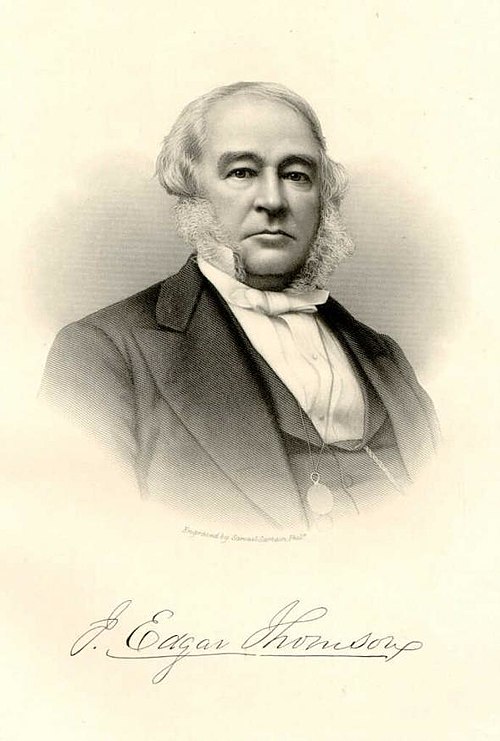
John Edgar Thomson, president of the Pennsylvania Railroad since 1852 and a key figure in its growth, dies. He is succeeded by Thomas A. Scott. #railroad #leadership
The Pennsylvania Railroad joins other major railroads in adopting standardized time zones, revolutionizing scheduling across the United States. #railroad #technology

The Pennsylvania Railroad begins planning electrification of its lines, initially for the Philadelphia-to-Washington corridor, though full implementation takes decades. #railroad #technology
The Pennsylvania Railroad officially launches a major electrification project, beginning with the installation of catenary wires near Philadelphia. #railroad #technology
The Pennsylvania Railroad tests its first electric locomotive, the DD1, paving the way for the electrification of the Northeast Corridor. #railroad #innovation
Pennsylvania Station in New York City opens, a grand Beaux-Arts building that becomes the railroad's flagship station and a major urban landmark. #railroad #architecture )

The Pennsylvania Railroad completes electrification of its main line from New York to Philadelphia, reducing travel times and pollution. #railroad #technology
The Pennsylvania Railroad launches the Broadway Limited, a premier luxury train between New York and Chicago, known for its speed and service. #railroad #luxury

The Great Depression causes a sharp decline in revenue and traffic for the Pennsylvania Railroad, leading to financial restructuring and layoffs. #railroad #economics
The Pennsylvania Railroad introduces streamlined passenger trains like the GG1 electric locomotives, setting new standards for speed and design. #railroad #design

Pennsylvania Railroad moves record amounts of freight and troops during World War II, contributing significantly to the war effort. #railroad #wartime
The Pennsylvania Railroad celebrates its 100th anniversary with special events and a commemorative train, though the company faces growing competition. #railroad #history
Post-war automobile and airline competition cause a steep decline in Pennsylvania Railroad passenger traffic, leading to service cuts and deficits. #railroad #decline
The Pennsylvania Railroad begins informal merger discussions with the New York Central Railroad, eventually leading to the largest railroad merger in U.S. history. #railroad #merger
The Interstate Commerce Commission approves the merger of the Pennsylvania Railroad and the New York Central, over opposition from competitors. #railroad #regulation
The Pennsylvania Railroad merges with the New York Central to form Penn Central Transportation Company, creating the sixth largest corporation in the U.S. #railroad #merger

Penn Central files for bankruptcy, the largest bankruptcy in U.S. history at that time, due to mismanagement and financial pressures. #railroad #bankruptcy
The federal government creates Conrail to take over the bankrupt Penn Central and other northeastern railroads, marking the end of the Pennsylvania Railroad's corporate identity. #railroad #government
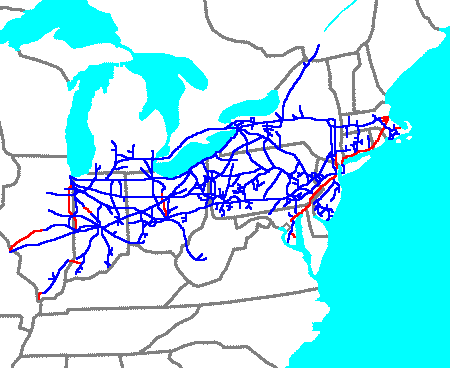
Conrail is split between CSX Transportation and Norfolk Southern Railway, with former Pennsylvania Railroad lines divided between the two companies. #railroad #corporate