Organic Synthesis & Reaction Mechanisms: Global Cross-Cultural Perspectives
Encyclopedia/1. The Cosmos & The Natural World/2. Physics & Chemistry/03. Chemistry & Periodic Table of Elements • Curated by Admin Timeline.sg
This timeline traces global contributions to organic synthesis and reaction mechanisms, from ancient fermentation and alchemy to modern Nobel Prize-winning methodologies, highlighting diverse cultural perspectives spanning Mesopotamia, China, India, the Islamic world, and the West.
Chronological Storyline (40 Milestones)
3000 BCE
Sumerian Beer Brewing: Early Fermentation
Sumerians in Mesopotamia brew beer from barley, using fermentation—a biochemical process central to organic chemistry. This early biotechnology demonstrates human manipulation of organic reactions. #organicchemistry #history
Sumerian Beer Brewing: Early Fermentation By Hanay - Own work, CC BY-SA 3.0, https://commons.wikimedia.org/w/index.php?curid=19472476
2000 BCE
Indigo Dyeing in Ancient India
Indigo, a natural organic pigment, is used for dyeing textiles in the Indus Valley. This early application of organic compounds highlights the importance of plant-derived dyes in ancient chemistry. #organicchemistry #dyes
Indigo Dyeing in Ancient India By David Stroe - Own work, CC BY-SA 3.0, https://commons.wikimedia.org/w/index.php?curid=25102943
500 BCE
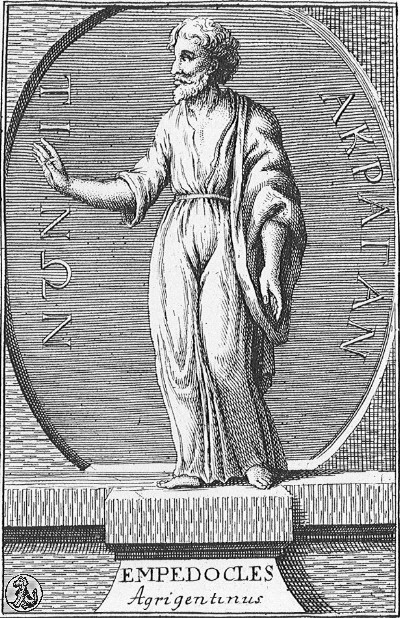
Empedocles' Four Elements Theory
Greek philosopher Empedocles proposes that all matter consists of four elements: earth, air, fire, and water. This theory, though non-organic, influences later alchemical thought and the search for organic principles. #philosophy #chemistry
Empedocles' Four Elements Theory By Unknown author - http://www.phil-fak.uni-duesseldorf.de/philo/galerie/antike/empedok.html, Public domain, https://commons.wikimedia.org/w/index.php?curid=74149
300 BCE
Theophrastus Describes Natural Substances
Theophrastus, a Greek philosopher, writes 'On the History of Plants', describing the properties of plant-derived substances. His work lays groundwork for understanding organic materials. #botany #chemistry
Theophrastus Describes Natural Substances By Teofrasto_Orto_botanico_PA.jpg: tato grasso derivative work: Singinglemon (talk) - Teofrasto_Orto_botanico_PA.jpg, CC BY-SA 2.5, https://commons.wikimedia.org/w/index.php?curid=5927179
105 CE
Cai Lun Improves Papermaking in China
Cai Lun develops a method for making paper from mulberry bark, hemp, and rags—a process involving chemical pulping of organic fibers. This invention revolutionizes communication and organic material processing. #papermaking #china
Cai Lun Improves Papermaking in China By Unknown author - Tsien Tsuen-Hsuin (1985) Needham, Joseph, ed. Science and Civilisation in China: Volume 5, Chemistry and Chemical Technology, Part 1, Paper and Printing, Taipei: Caves Books, pp. 108–109 ISBN: 978-0-521-08690-5. Etnografiska museet, Stockholm: 1935.50.3366.30, Public domain, https://commons.wikimedia.org/w/index.php?curid=3154438
800 CE
Jabir ibn Hayyan: Father of Alchemy
Jabir (Geber) describes methods for distillation, crystallization, and preparation of acetic and sulfuric acids. His work includes organic compounds like tannins and introduces systematic experimentation. #alchemy #islamicgoldenage
Jabir ibn Hayyan: Father of Alchemy By Unknown author - https://cdn.britannica.com/10/132710-050-CECF006B/illustration-manuscript-Abu-Musa-Jabir-ibn-Hayyan.jpg, Public domain, https://commons.wikimedia.org/w/index.php?curid=166835469
840 CE
Chinese Alchemists Discover Gunpowder
Chinese alchemists accidentally invent gunpowder by mixing saltpeter, sulfur, and charcoal—a carbon-based organic component. This explosive mixture marks a major organic reaction in early chemistry. #gunpowder #china
Chinese Alchemists Discover Gunpowder By Lord Mountbatten - Own work, CC BY-SA 3.0, https://commons.wikimedia.org/w/index.php?curid=23036022
900 CE
Al-Razi Classifies Chemical Substances
Persian physician Al-Razi (Rhazes) categorizes substances into animal, vegetable, mineral, and derivative groups, including organic compounds. His works influence later chemical classification. #chemistry #persia
1000 CE
Avicenna Describes Distillation of Essential Oils
Ibn Sina (Avicenna) develops techniques for steam distillation, obtaining essential oils from plants. This method becomes fundamental for isolating organic compounds. #chemistry #distillation
Avicenna Describes Distillation of Essential Oils By National Library of Medicine - https://www.flickr.com/photos/nlmhmd/54093321223/, No restrictions, https://commons.wikimedia.org/w/index.php?curid=168831766
1250 CE
Albertus Magnus Describes Acetic Acid
Albertus Magnus details the preparation of acetic acid from vinegar, an early organic acid. His writings compile Greek and Arabic chemical knowledge for medieval Europe. #chemistry #acid
Albertus Magnus Describes Acetic Acid By Vicente Salvador Gómez - [2], Public domain, https://commons.wikimedia.org/w/index.php?curid=8528799
1525 CE
Paracelsus Promotes Iatrochemistry
Paracelsus emphasizes the use of chemical substances, including organic preparations, in medicine. He marks a shift from alchemy to applied chemistry. #medicine #chemistry
Paracelsus Promotes Iatrochemistry By Unknown author - https://wellcomeimages.org/indexplus/obf_images/30/44/56ec07dc7139fa8474a939e67261.jpg Gallery: https://wellcomeimages.org/indexplus/image/V0004455.html Wellcome Collection gallery (2018-03-23): https://wellcomecollection.org/works/x7zn552n CC-BY-4.0, CC BY 4.0, https://commons.wikimedia.org/w/index.php?curid=36412798
1661 CE
Boyle Defines Chemical Elements
Robert Boyle publishes 'The Sceptical Chymist', distinguishing elements from compounds and laying the foundation for modern chemical reactivity, including organic. #chemistry #science
Boyle Defines Chemical Elements By Johann Kerseboom - https://digital.sciencehistory.org/works/3r074v879, Public domain, https://commons.wikimedia.org/w/index.php?curid=27091904
1700 CE
Scheele Discovers Organic Acids
Swedish chemist Carl Wilhelm Scheele isolates many organic acids from natural sources, including citric, lactic, and uric acids. His work advances the chemistry of natural products. #organicchemistry #acids
Scheele Discovers Organic Acids By Johann Gottfried Scheffner - https://www.portraitindex.de/documents/obj/33207871, PDM-owner, https://commons.wikimedia.org/w/index.php?curid=173735144
1777 CE
Lavoisier Defines Combustion and Organic Analysis
Antoine Lavoisier demonstrates that organic compounds contain carbon, hydrogen, and oxygen, formulating the oxygen theory of combustion. He revolutionizes quantitative organic analysis. #chemistry #combustion
Lavoisier Defines Combustion and Organic Analysis By Jacques-Louis David - Metropolitan Museum of Art: entry 436106 (accession number: 1977.10), Public domain, https://commons.wikimedia.org/w/index.php?curid=141652400
1806 CE
Berzelius Coins 'Organic Chemistry'
Jöns Jacob Berzelius defines organic chemistry as the study of compounds from living organisms, introducing the term. He also develops techniques for elemental analysis. #organicchemistry #terminology
Berzelius Coins 'Organic Chemistry' By John Way [1] - https://www.meisterdrucke.com/fine-art-prints/Unknown-artist/1000178/Portrait-of-the-Swedish-Chemist-Jons-Jacob-Berzelius.html, Public domain, https://commons.wikimedia.org/w/index.php?curid=162866730
1828 CE
Wöhler Synthesizes Urea
Friedrich Wöhler accidentally produces urea from ammonium cyanate, an inorganic source. This disproves vitalism and proves organic compounds can be synthesized. #organicchemistry #vitalism
1832 CE
Wöhler and Liebig Discover the Benzoyl Radical
Wöhler and Justus von Liebig identify the benzoyl group (C6H5CO) as a common functional group, introducing the concept of radicals in organic chemistry. #organicchemistry #radicals
Wöhler and Liebig Discover the Benzoyl Radical By Smokefoot - Own work, Public domain, https://commons.wikimedia.org/w/index.php?curid=32289369
1845 CE
Kolbe Synthesizes Acetic Acid from Elements
Hermann Kolbe achieves the first total synthesis of an organic compound (acetic acid) from carbon and other elements, demonstrating complete synthesis from inorganic precursors. #organicchemistry #totalsynthesis
1856 CE
Perkin Discovers Mauveine, First Synthetic Dye
William Henry Perkin accidentally synthesizes mauveine while trying to make quinine. This launches the synthetic dye industry and spurs organic chemistry research. #dyes #organicchemistry
Perkin Discovers Mauveine, First Synthetic Dye By Henry Rzepa (en:User:Rzepa) - en:Image:Mauv2.jpg created & uploaded by en:User:Rzepa, CC BY-SA 2.5, https://commons.wikimedia.org/w/index.php?curid=854834
1858 CE
Kekulé and Couper Propose Tetravalent Carbon
August Kekulé and Archibald Scott Couper independently postulate that carbon is tetravalent and can form chains, the basis of structural organic chemistry. #organicchemistry #structure
1865 CE
Kekulé Formulates Benzene Ring Structure
August Kekulé proposes the cyclic structure of benzene after a dream of a snake biting its tail. This explains aromaticity and guides reaction mechanisms. #organicchemistry #aromatic
Kekulé Formulates Benzene Ring Structure By Laurent Mazouin at lb.wikipedia - Own work Transferred from lb.wikipedia, Public domain, https://commons.wikimedia.org/w/index.php?curid=1379125
1874 CE
Van 't Hoff and Le Bel: Tetrahedral Carbon and Stereochemistry
Jacobus Henricus van 't Hoff and Joseph Le Bel independently propose the tetrahedral arrangement of bonds to carbon, explaining optical activity and founding stereochemistry. #stereochemistry #organicchemistry
1877 CE
Friedel-Crafts Alkylation Reaction
Charles Friedel and James Crafts discover the alkylation of aromatic compounds using aluminum chloride. This reaction becomes a fundamental transformation in organic synthesis. #reactions #organicchemistry
1901 CE
Grignard Reaction Discovered
Victor Grignard discovers organomagnesium compounds (Grignard reagents) which are widely used for carbon-carbon bond formation. He wins the Nobel Prize in 1912. #grignard #organicchemistry
Grignard Reaction Discovered By Calvero - Own work, CC BY-SA 3.0, https://commons.wikimedia.org/w/index.php?curid=2658885
1912 CE
Grignard and Sabatier Win Nobel Prize
Victor Grignard (for Grignard reagent) and Paul Sabatier (for hydrogenation catalysis) share the Nobel Prize in Chemistry, highlighting key organic reactions. #nobel #catalysis
1920 CE
Staudinger Proposes Polymer Chains
Hermann Staudinger suggests that polymers are long chains of repeating organic units, laying the foundation for polymer chemistry. #polymers #organicchemistry
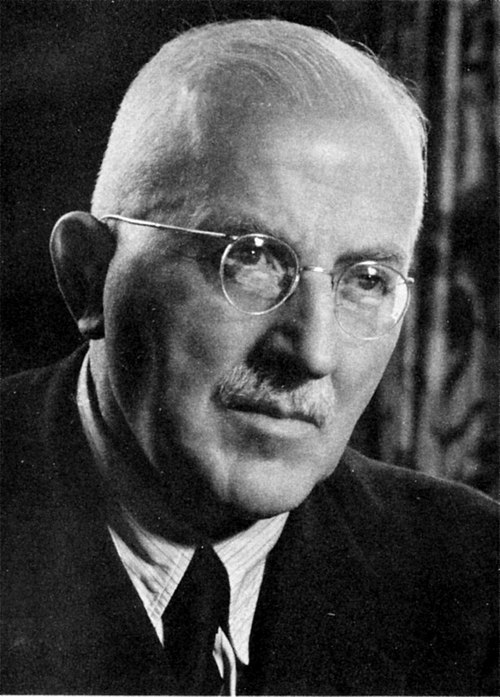
Staudinger Proposes Polymer Chains By Nobel Foundation - Les Prix Nobel en 1953, Public domain, https://commons.wikimedia.org/w/index.php?curid=18542861
1928 CE
Diels-Alder Cycloaddition Reaction
Otto Diels and Kurt Alder discover the [4+2] cycloaddition reaction between a diene and a dienophile, a powerful method for constructing six-membered rings. #reactions #organicchemistry
Diels-Alder Cycloaddition Reaction By User:Innerstream - Own work, Public domain, https://commons.wikimedia.org/w/index.php?curid=122283758
1930 CE
Robinson Annulation Reaction
Robert Robinson develops the Robinson annulation, a series of reactions to form six-membered rings, crucial for natural product synthesis. #reactions #organicchemistry
1942 CE
Woodward Synthesizes Quinine
Robert Burns Woodward completes the first total synthesis of quinine, a complex natural product. This milestone demonstrates the power of synthetic organic chemistry. #totalsynthesis #organicchemistry
1955 CE
Woodward Synthesizes Strychnine
Woodward achieves the total synthesis of strychnine, a complex alkaloid, showcasing sophisticated reaction planning and stereocontrol. #totalsynthesis #alkaloids
1965 CE
Woodward-Hoffmann Rules for Pericyclic Reactions
Robert B. Woodward and Roald Hoffmann formulate conservation of orbital symmetry rules, explaining the stereochemistry of pericyclic reactions. Nobel Prize in 1981. #pericyclic #reactionmechanisms
Woodward-Hoffmann Rules for Pericyclic Reactions By Ivogt - Own work, CC BY-SA 3.0, https://commons.wikimedia.org/w/index.php?curid=23034878
1969 CE
Corey Develops Retrosynthetic Analysis
E. J. Corey introduces the concept of retrosynthetic analysis, a systematic approach for planning organic syntheses. He wins the Nobel Prize in 1990. #retrosynthesis #organicchemistry
1973 CE
Heck Reaction: Palladium-Catalyzed Cross-Coupling
Richard F. Heck reports the palladium-catalyzed coupling of alkenes with aryl halides. This reaction, now part of the Nobel Prize 2010, revolutionizes C–C bond formation. #crosscoupling #catalysis
1979 CE
Suzuki Coupling Reaction
Akira Suzuki discovers the palladium-catalyzed cross-coupling of boronic acids with halides. This versatile method, sharing the Nobel Prize 2010, is widely used in organic synthesis. #crosscoupling #catalysis
1980 CE
Wittig Reaction Recognized with Nobel Prize
Georg Wittig is awarded the Nobel Prize (shared with Herbert C. Brown) for his olefination reaction using phosphonium ylides, a key C–C bond-forming method. #wittig #nobel
1984 CE
Merrifield Develops Solid-Phase Peptide Synthesis
Bruce Merrifield invents solid-phase peptide synthesis (SPPS), enabling automated synthesis of peptides. He wins the Nobel Prize in 1984. #peptides #solidphase
Merrifield Develops Solid-Phase Peptide Synthesis By Algertzars (talk) - Own work, Public domain, https://commons.wikimedia.org/w/index.php?curid=65305772
Oct 10, 2001 CE
Noyori, Sharpless, and Knowles Win Nobel for Asymmetric Hydrogenation
Ryoji Noyori (Japan), K. Barry Sharpless (USA), and William S. Knowles (USA) receive the Nobel Prize for chiral catalysis in asymmetric hydrogenation and oxidation reactions, vital for enantioselective synthesis. #asymmetric #catalysis
Oct 5, 2005 CE
Chauvin, Grubbs, and Schrock Nobel for Metathesis
Yves Chauvin, Robert H. Grubbs, and Richard R. Schrock win the Nobel Prize for the development of the metathesis method, key for olefin rearrangement in organic synthesis. #metathesis #nobel
Chauvin, Grubbs, and Schrock Nobel for Metathesis By Ple210 - Own work, CC BY-SA 4.0, https://commons.wikimedia.org/w/index.php?curid=81966544
Oct 6, 2021 CE
List and MacMillan: Organocatalysis Nobel Prize
Benjamin List and David W.C. MacMillan receive the Nobel Prize for the development of organocatalysis, a new concept in asymmetric catalysis using small organic molecules. #organocatalysis #nobel
List and MacMillan: Organocatalysis Nobel Prize By Mike Kotke at English Wikipedia - Transferred from en.wikipedia to Commons by Ronhjones using CommonsHelper., Public domain, https://commons.wikimedia.org/w/index.php?curid=16246978
Oct 5, 2022 CE
Bertozzi, Meldal, and Sharpless Win Nobel for Click Chemistry
Carolyn Bertozzi, Morten Meldal, and K. Barry Sharpless (second Nobel) are awarded for the development of click chemistry and bioorthogonal reactions, powerful tools in organic synthesis and biology. #clickchemistry #nobel