Organic Synthesis & Polymer Chemistry: Global Cross-Cultural Milestones
Encyclopedia/1. The Cosmos & The Natural World/2. Physics & Chemistry • Curated by Admin Timeline.sg
This timeline traces the global evolution of organic synthesis and polymer chemistry, from ancient fermentation and dyeing techniques to modern click chemistry and sustainable polymers, highlighting contributions from diverse civilizations including China, India, the Islamic world, Europe, and the Americas.
Chronological Storyline (41 Milestones)
8000 BCE
Ancient Fermentation for Beverages
Early civilizations in Mesopotamia, China, and Egypt develop fermentation to produce alcoholic beverages, one of the first organic chemical processes. #chemistry #history
Ancient Fermentation for Beverages By Tjhackmann - Own work, CC BY-SA 4.0, https://commons.wikimedia.org/w/index.php?curid=152132653
3000 BCE
Indigo Dyeing in the Indus Valley
Indus Valley civilization uses indigo for dyeing textiles, an early organic synthesis of a natural dye. #chemistry #history
Indigo Dyeing in the Indus Valley By David Stroe - Own work, CC BY-SA 3.0, https://commons.wikimedia.org/w/index.php?curid=25102943
1200 BCE
Chinese Lacquer Craft
Chinese artisans develop lacquerware using urushiol, a natural polymer, for decorative and protective coatings. #chemistry #history
Chinese Lacquer Craft By Liubomir G - Own work, CC BY-SA 4.0, https://commons.wikimedia.org/w/index.php?curid=84055487
800 CE
Jabir ibn Hayyan's Chemical Works
Jabir ibn Hayyan (Geber) writes on distillation, crystallization, and the preparation of acids, laying foundations for organic chemistry. #chemistry #history
Jabir ibn Hayyan's Chemical Works By Unknown author - https://cdn.britannica.com/10/132710-050-CECF006B/illustration-manuscript-Abu-Musa-Jabir-ibn-Hayyan.jpg, Public domain, https://commons.wikimedia.org/w/index.php?curid=166835469
1661 CE
Robert Boyle Defines Element
Robert Boyle publishes 'The Sceptical Chymist', distinguishing elements from compounds and promoting experimental chemistry. #chemistry #history
Robert Boyle Defines Element By Robert Boyle, 1627-1691 - Science History Institute, Public domain, https://commons.wikimedia.org/w/index.php?curid=26729105
1770 CE
Scheele Discovers Organic Acids
Carl Wilhelm Scheele isolates numerous organic acids (tartaric, citric, lactic) from natural sources, advancing organic chemistry. #chemistry #history
Scheele Discovers Organic Acids By Johann Gottfried Scheffner - https://www.portraitindex.de/documents/obj/33207871, PDM-owner, https://commons.wikimedia.org/w/index.php?curid=173735144
1806 CE
Berzelius Coins 'Organic Chemistry'
Jöns Jacob Berzelius introduces the term 'organic chemistry' for compounds derived from living organisms. #chemistry #history
Berzelius Coins 'Organic Chemistry' By John Way [1] - https://www.meisterdrucke.com/fine-art-prints/Unknown-artist/1000178/Portrait-of-the-Swedish-Chemist-Jons-Jacob-Berzelius.html, Public domain, https://commons.wikimedia.org/w/index.php?curid=162866730
1828 CE
Wöhler Synthesizes Urea
Friedrich Wöhler accidentally synthesizes urea from ammonium cyanate, disproving vitalism and founding organic synthesis. #chemistry #history
1832 CE
Liebig and Wöhler Study Benzoyl Radical
Justus von Liebig and Friedrich Wöhler discover the benzoyl radical, advancing the theory of organic radicals. #chemistry #history
Liebig and Wöhler Study Benzoyl Radical By Smokefoot - Own work, Public domain, https://commons.wikimedia.org/w/index.php?curid=32289369
1845 CE
Kolbe Synthesizes Acetic Acid
Hermann Kolbe synthesizes acetic acid from inorganic carbon disulfide, another milestone in total synthesis. #chemistry #history
1856 CE
Perkin Discovers Mauveine
William Henry Perkin accidentally synthesizes mauveine, the first synthetic aniline dye, launching the dye industry. #chemistry #history
Perkin Discovers Mauveine By Henry Rzepa (en:User:Rzepa) - en:Image:Mauv2.jpg created & uploaded by en:User:Rzepa, CC BY-SA 2.5, https://commons.wikimedia.org/w/index.php?curid=854834
1865 CE
Kekulé Proposes Benzene Ring Structure
August Kekulé deduces the cyclic structure of benzene, a cornerstone of organic chemistry. #chemistry #history
Kekulé Proposes Benzene Ring Structure By Unknown author - https://www.gettyimages.ie/detail/news-photo/german-organic-chemist-friedrich-august-kekule-von-news-photo/72242781, Public domain, https://commons.wikimedia.org/w/index.php?curid=167877
1874 CE
van't Hoff and Le Bel Propose Tetrahedral Carbon
Jacobus Henricus van 't Hoff and Joseph Le Bel independently propose the tetrahedral arrangement of carbon bonds, founding stereochemistry. #chemistry #history
1884 CE
Fischer Elucidates Sugar Structures
Emil Fischer determines the structures of glucose and other sugars, pioneering carbohydrate chemistry. #chemistry #history
Fischer Elucidates Sugar Structures By Unknown author - https://wellcomeimages.org/indexplus/obf_images/29/85/3104172da6b66ab0d72a53a71f82.jpg Gallery: https://wellcomeimages.org/indexplus/image/V0027668.html Wellcome Collection gallery (2018-03-23): https://wellcomecollection.org/works/pbekk7qp CC-BY-4.0, CC BY 4.0, https://commons.wikimedia.org/w/index.php?curid=180238528
1900 CE
Grignard Reagents Discovered
Victor Grignard develops organomagnesium compounds (Grignard reagents), enabling new carbon-carbon bond formations. #chemistry #history
Grignard Reagents Discovered By Ben Mills - Own work, Public domain, https://commons.wikimedia.org/w/index.php?curid=2594188
1907 CE
Baekeland Invents Bakelite
Leo Baekeland creates Bakelite, the first synthetic plastic, from phenol and formaldehyde. #chemistry #history
Baekeland Invents Bakelite By Original: MarkusZi Vector: Dirk Hünniger - Bakelit Struktur.png, CC BY-SA 3.0, https://commons.wikimedia.org/w/index.php?curid=20188781
1910 CE
Synthetic Rubber Developed
Fritz Hofmann and others develop synthetic rubber (methyl rubber) in Germany, leading to Buna rubbers. #chemistry #history
1920 CE
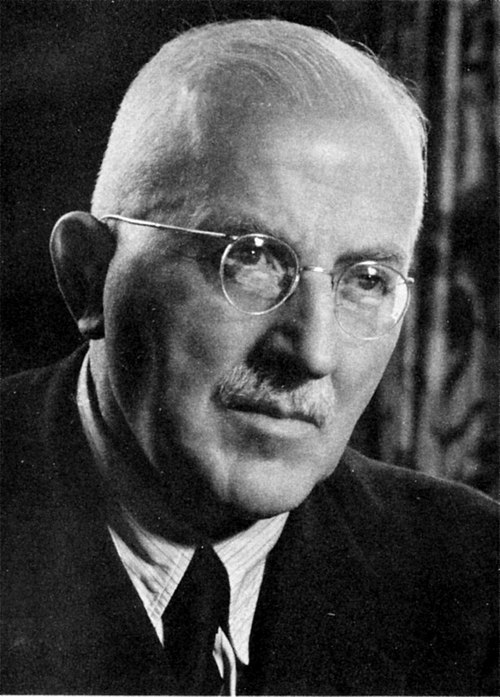
Staudinger Proposes Macromolecules
Hermann Staudinger proposes that polymers are long chains of repeating units, founding polymer chemistry. #chemistry #history
Staudinger Proposes Macromolecules By Nobel Foundation - Les Prix Nobel en 1953, Public domain, https://commons.wikimedia.org/w/index.php?curid=18542861
1928 CE
Diels–Alder Reaction Discovered
Otto Diels and Kurt Alder discover the cycloaddition reaction, a powerful tool for ring formation. #chemistry #history
Diels–Alder Reaction Discovered By User:Innerstream - Own work, Public domain, https://commons.wikimedia.org/w/index.php?curid=122283758
1935 CE
Carothers Invents Nylon
Wallace Carothers at DuPont synthesizes nylon, the first synthetic fiber, from condensation polymerization. #chemistry #history
Carothers Invents Nylon By User:Innerstream - Own work, Public domain, https://commons.wikimedia.org/w/index.php?curid=112727156
1938 CE
Teflon Discovered
Roy Plunkett accidentally discovers polytetrafluoroethylene (Teflon), a non-stick polymer. #chemistry #history
Teflon Discovered By Vectorization: Alhadis - Own work based on: Teflon structure.PNG by Dubaj~commonswiki, Public domain, https://commons.wikimedia.org/w/index.php?curid=84729767
1944 CE
Woodward Synthesizes Quinine
Robert Burns Woodward achieves the total synthesis of quinine, a landmark in organic synthesis. #chemistry #history
1953 CE
Ziegler–Natta Catalysts
Karl Ziegler and Giulio Natta develop catalysts for stereoregular polymers, revolutionizing plastics. #chemistry #history
1954 CE
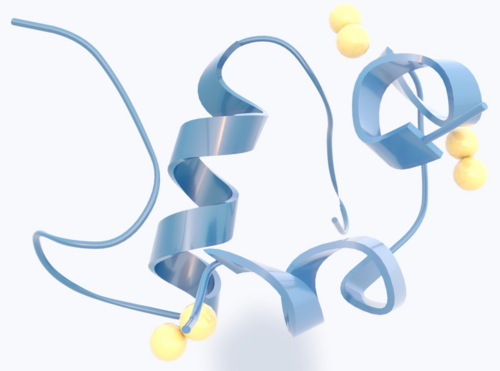
Sanger Sequences Insulin
Frederick Sanger determines the amino acid sequence of insulin, showing proteins are ordered polymers. #chemistry #history
Sanger Sequences Insulin By User:AtikaAtikawa - Own work, CC BY-SA 4.0, https://commons.wikimedia.org/w/index.php?curid=107840330
1963 CE
Merrifield Develops Solid-Phase Peptide Synthesis
Bruce Merrifield invents solid-phase peptide synthesis, automating peptide and protein synthesis. #chemistry #history
1965 CE
Woodward–Hoffmann Rules
Robert Burns Woodward and Roald Hoffmann formulate rules for pericyclic reactions, unifying organic reaction mechanisms. #chemistry #history
Woodward–Hoffmann Rules By Ivogt - Own work, CC BY-SA 3.0, https://commons.wikimedia.org/w/index.php?curid=23034878
1970 CE
Corey Develops Retrosynthetic Analysis
E.J. Corey formalizes retrosynthetic analysis, a systematic approach to planning organic syntheses. #chemistry #history
1974 CE
Heck Reaction Discovered
Richard Heck reports the palladium-catalyzed cross-coupling reaction (Heck reaction), enabling new C-C bond formations. #chemistry #history
1980 CE
Conductive Polymers Discovered
Alan Heeger, Alan MacDiarmid, and Hideki Shirakawa discover conductive polymers (polyacetylene), earning the Nobel Prize. #chemistry #history
Conductive Polymers Discovered By Smokefoot - Own work, Public domain, https://commons.wikimedia.org/w/index.php?curid=6893639
1984 CE
Olefin Metathesis Catalysts
Robert H. Grubbs and Richard R. Schrock develop well-defined catalysts for olefin metathesis, a powerful synthetic tool. #chemistry #history
Olefin Metathesis Catalysts By Ple210 - Own work, CC BY-SA 4.0, https://commons.wikimedia.org/w/index.php?curid=81966544
1990 CE
Fullerene Synthesis
Sumio Iijima and others discover fullerenes (C60), new carbon allotropes with unique properties. #chemistry #history
Fullerene Synthesis By 痛 - Own work, CC BY-SA 4.0, https://commons.wikimedia.org/w/index.php?curid=118428240
1991 CE
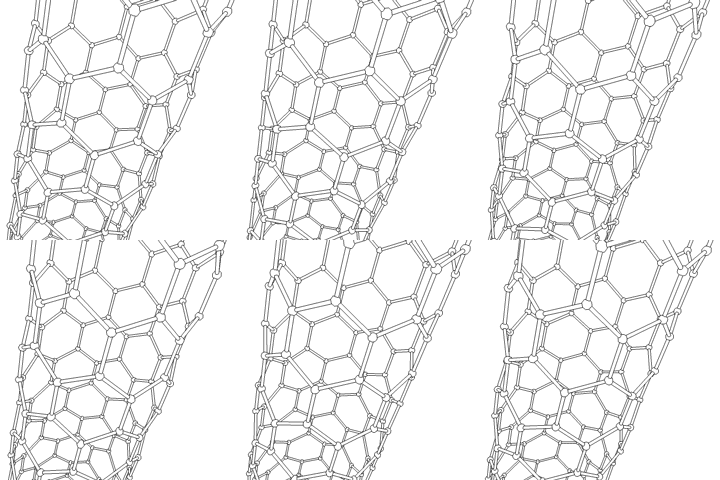
Carbon Nanotubes Discovered
Sumio Iijima discovers carbon nanotubes, cylindrical nanostructures with exceptional strength and conductivity. #chemistry #history
Carbon Nanotubes Discovered By Original hochgeladen von Schwarzm am 30. Aug 2004; Selbst gemacht mit C4D/Cartoonrenderer, GNU FDL - German Wikipedia, original upload 29. Dez 2004 by APPER, CC BY-SA 3.0, https://commons.wikimedia.org/w/index.php?curid=350208
1995 CE
First Total Synthesis of Taxol
K.C. Nicolaou and Robert Holton independently achieve the total synthesis of paclitaxel (Taxol), a complex anticancer natural product. #chemistry #history
First Total Synthesis of Taxol By V8rik at English Wikipedia - Transferred from en.wikipedia to Commons by Ronhjones using CommonsHelper., CC BY-SA 3.0, https://commons.wikimedia.org/w/index.php?curid=15734014
2001 CE
Click Chemistry Introduced
K. Barry Sharpless introduces click chemistry, a set of highly efficient and selective reactions for rapid synthesis. #chemistry #history
2004 CE
Graphene Isolated
Andre Geim and Konstantin Novoselov isolate graphene, a single-layer carbon polymer with remarkable properties. #chemistry #history
Graphene Isolated By AlexanderAlUS - Own work, CC BY-SA 3.0, https://commons.wikimedia.org/w/index.php?curid=11294534
2005 CE
Olefin Metathesis Nobel Prize
Yves Chauvin, Robert H. Grubbs, and Richard R. Schrock win the Nobel Prize for olefin metathesis. #chemistry #history
2010 CE
Palladium-Catalyzed Cross-Coupling Nobel Prize
Richard Heck, Ei-ichi Negishi, and Akira Suzuki win the Nobel Prize for palladium-catalyzed cross-coupling reactions. #chemistry #history
2016 CE
Molecular Machines Nobel Prize
Jean-Pierre Sauvage, Sir J. Fraser Stoddart, and Ben Feringa win the Nobel Prize for designing and synthesizing molecular machines. #chemistry #history
Molecular Machines Nobel Prize By PKS615 - Own work, CC BY 4.0, https://commons.wikimedia.org/w/index.php?curid=147658142
2019 CE
Lithium-Ion Battery Nobel Prize
John B. Goodenough, M. Stanley Whittingham, and Akira Yoshino win the Nobel Prize for lithium-ion batteries, which rely on polymer electrolytes. #chemistry #history
Lithium-Ion Battery Nobel Prize By Kristoferb - Own work (enwiki), CC BY-SA 3.0, https://commons.wikimedia.org/w/index.php?curid=12279566
2020 CE
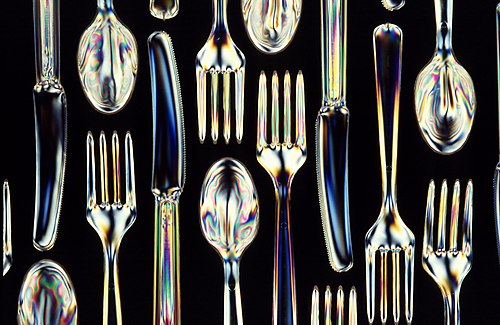
Biodegradable Polymers from Biomass
Research advances in polylactic acid (PLA) and other biopolymers from renewable resources for sustainable plastics. #chemistry #history
Biodegradable Polymers from Biomass By Scott Bauer - This image was released by the Agricultural Research Service, the research agency of the United States Department of Agriculture, with the ID k7245-1 (next)., Public domain, https://commons.wikimedia.org/w/index.php?curid=1675054
2022 CE
AI in Organic Synthesis
Machine learning models like IBM RXN and others predict retrosynthetic pathways, accelerating organic synthesis. #chemistry #history