1828 CE
Wöhler Synthesizes Urea
Friedrich Wöhler accidentally synthesizes urea from ammonium cyanate, disproving vitalism and founding organic chemistry. #chemistry #history
Organic chemistry traces its origins to Friedrich Wöhler's 1828 synthesis of urea, which disproved vitalism. This timeline covers key milestones from the discovery of molecular structure to modern total synthesis and click chemistry, highlighting global contributions.
Friedrich Wöhler accidentally synthesizes urea from ammonium cyanate, disproving vitalism and founding organic chemistry. #chemistry #history
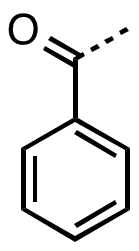
Wöhler and Justus von Liebig discover the benzoyl radical, establishing the concept of functional groups in organic chemistry. #chemistry #history
Hermann Kolbe synthesizes acetic acid from inorganic compounds, further disproving vitalism. #chemistry #history
William Henry Perkin accidentally discovers mauveine, the first synthetic dye, launching the dye industry. #chemistry #history

August Kekulé proposes that carbon is tetravalent and forms chains, a foundation of structural organic chemistry. #chemistry #history

August Kekulé proposes the cyclic structure of benzene, revolutionizing aromatic chemistry. #chemistry #history

Jacobus Henricus van 't Hoff and Joseph Le Bel independently propose the tetrahedral arrangement of bonds around carbon, explaining optical isomerism. #chemistry #history
Emil Fischer determines the structure of glucose and other sugars, pioneering carbohydrate chemistry. #chemistry #history

Victor Grignard discovers organomagnesium compounds (Grignard reagents), crucial for carbon-carbon bond formation. #chemistry #history

Emil Fischer synthesizes the first peptide (glycyl-glycine), laying groundwork for protein chemistry. #chemistry #history

Leo Baekeland invents Bakelite, the first synthetic plastic, launching the polymer industry. #chemistry #history

Robert Robinson develops the electronic theory of organic reactions, using curved arrows to show electron movement. #chemistry #history )

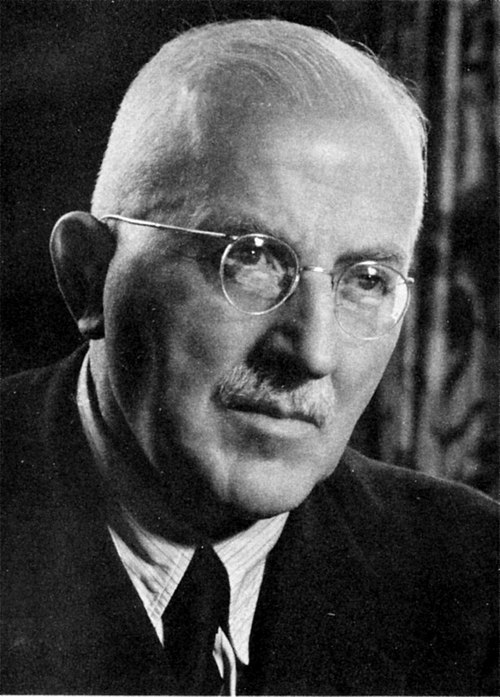
Hermann Staudinger proposes that polymers are long chains of repeating units, founding polymer chemistry. #chemistry #history
Otto Diels and Kurt Alder discover the Diels-Alder cycloaddition, a powerful method for forming six-membered rings. #chemistry #history

Wallace Carothers invents nylon, the first synthetic fiber, at DuPont. #chemistry #history

Linus Pauling publishes his seminal book, applying quantum mechanics to chemical bonding. #chemistry #history
Robert Burns Woodward achieves the first total synthesis of quinine, a landmark in organic synthesis. #chemistry #history
Woodward completes the total synthesis of cholesterol, demonstrating complex steroid synthesis. #chemistry #history

James Watson and Francis Crick propose the double helix structure of DNA, based on X-ray data. #chemistry #biology

Karl Ziegler and Giulio Natta discover catalysts for stereoregular polymerization, revolutionizing plastics. #chemistry #history
Woodward completes the total synthesis of chlorophyll, a complex natural pigment. #chemistry #history

Robert Burns Woodward and Roald Hoffmann publish the Woodward-Hoffmann rules for pericyclic reactions. #chemistry #history

E.J. Corey formalizes retrosynthetic analysis, a systematic approach to planning organic syntheses. #chemistry #history
E.J. Corey achieves the total synthesis of prostaglandins, important biological mediators. #chemistry #history

Richard Heck, Ei-ichi Negishi, and Akira Suzuki develop palladium-catalyzed cross-coupling reactions, enabling efficient C-C bond formation. #chemistry #history
Bruce Merrifield develops solid-phase peptide synthesis, automating peptide production. #chemistry #history
K. C. Nicolaou and Robert Holton independently achieve the total synthesis of Taxol (paclitaxel), an anticancer drug. #chemistry #history

K. Barry Sharpless develops asymmetric epoxidation, a key method for enantioselective synthesis. #chemistry #history

K. Barry Sharpless introduces click chemistry, a modular approach for rapid, reliable molecular assembly. #chemistry #history
Ben Feringa develops the first molecular motor, a rotary molecule driven by light. #chemistry #nanotech

Yoshito Kishi and others complete the total synthesis of palytoxin, one of the most complex natural products. #chemistry #history

Yves Chauvin, Robert H. Grubbs, and Richard R. Schrock win the Nobel Prize for olefin metathesis. #chemistry #history

Richard Heck, Ei-ichi Negishi, and Akira Suzuki win the Nobel Prize for palladium-catalyzed cross-coupling. #chemistry #history
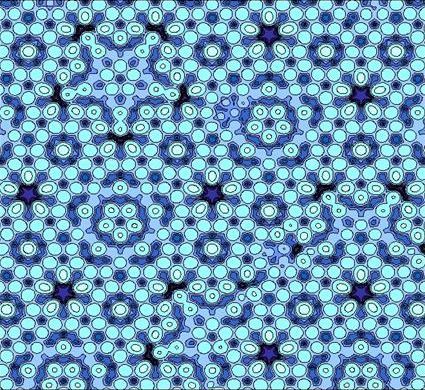
Dan Shechtman wins the Nobel Prize for discovering quasicrystals, challenging previous notions of crystal structure. #chemistry #physics
Paul Rothemund develops DNA origami, using DNA strands to create nanoscale shapes. #chemistry #nanotech

Jean-Pierre Sauvage, Sir J. Fraser Stoddart, and Ben Feringa win the Nobel Prize for molecular machines. #chemistry #nanotech

Frances Arnold wins the Nobel Prize for directed evolution of enzymes, enabling greener chemical synthesis. #chemistry #biology

John B. Goodenough, M. Stanley Whittingham, and Akira Yoshino win the Nobel Prize for lithium-ion batteries. #chemistry #energy

Emmanuelle Charpentier and Jennifer Doudna win the Nobel Prize for CRISPR-Cas9 gene editing. #chemistry #biology

Benjamin List and David MacMillan win the Nobel Prize for asymmetric organocatalysis. #chemistry #history

Carolyn Bertozzi, Morten Meldal, and K. Barry Sharpless win the Nobel Prize for click chemistry and bioorthogonal chemistry. #chemistry #biology
Moungi Bawendi, Louis Brus, and Alexei Ekimov win the Nobel Prize for the discovery and synthesis of quantum dots. #chemistry #nanotech