Optics & Light Physics: Mozi & Ibn al-Haytham to Lasers & Quantum Optics
Encyclopedia/1. The Cosmos & The Natural World/2. Physics & Chemistry/05. Electromagnetism & Optics • Curated by Admin Timeline.sg
This timeline traces the history of optics and light physics from ancient camera obscura experiments to modern quantum optics and laser technology, highlighting key contributions from diverse cultures including Mozi, Ibn al-Haytham, Newton, Maxwell, and Maiman.
Chronological Storyline (44 Milestones)
400 BCE
Mozi Describes Camera Obscura
Chinese philosopher Mozi records the first known description of the camera obscura, noting how light travels in straight lines to form an inverted image. #optics #ancientchina
Mozi Describes Camera Obscura By Vjacheslav Rublevskiy - https://www.flickr.com/photos/193162016@N04/51221161306/, CC0, https://commons.wikimedia.org/w/index.php?curid=106219380
300 BCE
Euclid's Optics
Greek mathematician Euclid writes 'Optics', treating vision as rays from the eye to objects, laying groundwork for geometric optics. #optics #ancientgreece
Euclid's Optics By Euclid - Available in the BEIC digital library and uploaded in partnership with BEIC Foundation., Public domain, https://commons.wikimedia.org/w/index.php?curid=37857016
250 BCE
Archimedes Studies Reflection
Archimedes investigates reflection and reportedly uses mirrors to focus sunlight, contributing to catoptrics. #optics #ancientgreece
Archimedes Studies Reflection By Domenico Fetti - http://archimedes2.mpiwg-berlin.mpg.de/archimedes_templates/popup.htm, Public domain, https://commons.wikimedia.org/w/index.php?curid=146592
150 CE
Ptolemy's Optics
Claudius Ptolemy writes 'Optics', studying refraction and reflection, and tabulating angles of refraction for various media. #optics #ancientrome
Ptolemy's Optics By Justus van Gent / Pedro Berruguete - Public domainPublic domainfalsefalse This work is in the public domain in its country of origin and other countries and areas where the copyright term is the author's life plus 100 years or fewer. You must also include a United States public domain tag to indicate why this work is in the public domain in the United States. This file has been identified as being free of known restrictions under copyright law, including all related and neighboring rights. https://creativecommons.org/publicdomain/mark/1.0/PDMCreative Commons Public Domain Mark 1.0falsefalse, Public domain, https://commons.wikimedia.org/w/index.php?curid=16043714
1021 CE
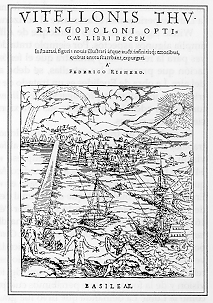
Ibn al-Haytham Publishes Book of Optics
Ibn al-Haytham (Alhazen) completes his seven-volume 'Book of Optics', correctly explaining vision as light entering the eye, using experiments with camera obscura, and founding the scientific method. #optics #islamicgoldenage
Ibn al-Haytham Publishes Book of Optics By Ibn al-Haytham, Vitello, Friedrich Risner - University of Oklahoma History of Science Collections et BnF Gallica : http://gallica.bnf.fr/ark:/12148/bpt6k312873d.r=Haytham?rk=407727;2, Public domain, https://commons.wikimedia.org/w/index.php?curid=48189707
1267 CE
Roger Bacon Writes on Optics
English friar Roger Bacon writes 'Opus Majus', discussing lenses and the nature of light, influenced by Ibn al-Haytham. #optics #medieval
Roger Bacon Writes on Optics By Unknown author, CC BY-SA 3.0, https://commons.wikimedia.org/w/index.php?curid=131754
1270 CE
Witelo's Perspectiva
Polish scholar Witelo publishes 'Perspectiva', a comprehensive treatise on optics based on Ibn al-Haytham's work. #optics #medieval
Witelo's Perspectiva By Unknown author, Public domain, https://commons.wikimedia.org/w/index.php?curid=1114772
1590 CE
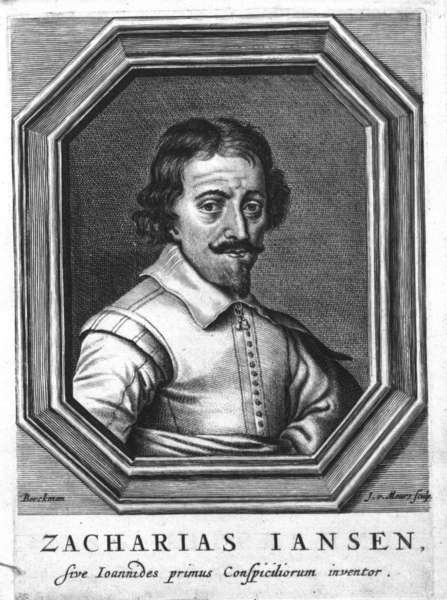
Zacharias Janssen Invents Compound Microscope
Dutch spectacle maker Zacharias Janssen is credited with inventing the compound microscope, enabling new observations in optics and biology. #optics #invention
Zacharias Janssen Invents Compound Microscope By Pierre Borel - Pierre Borel, De vero telescopii inventore, Public domain, https://commons.wikimedia.org/w/index.php?curid=3990766
1604 CE
Kepler's Astronomiae Pars Optica
Johannes Kepler publishes 'Astronomiae Pars Optica', correctly explaining how the eye forms an image on the retina and describing the inverse-square law of light. #optics #astronomy
1611 CE
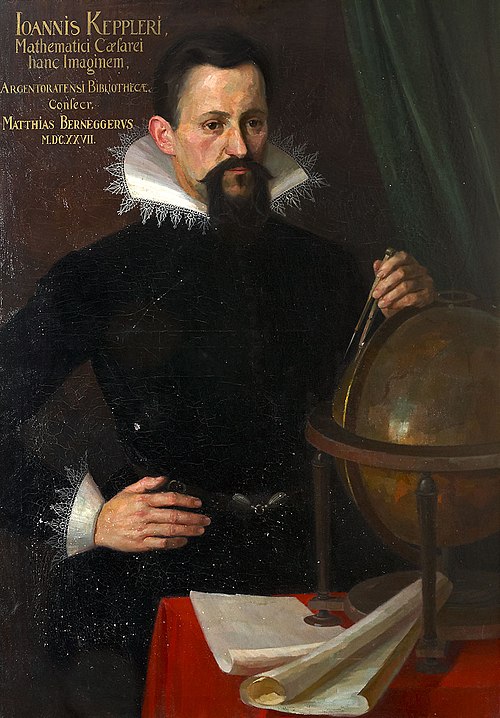
Kepler's Dioptrice
Kepler publishes 'Dioptrice', explaining refraction by lenses and the principles of the telescope and microscope. #optics #telescope
Kepler's Dioptrice By August Köhler [1] - Kepler-Museum in Weil der Stadt, Public domain, https://commons.wikimedia.org/w/index.php?curid=9406242
1621 CE
Snell's Law of Refraction
Dutch mathematician Willebrord Snellius discovers the law of refraction (Snell's law), relating angles of incidence and refraction. #optics #physics
Snell's Law of Refraction By Oleg Alexandrov — I just tweaked the original - Rotated and tweaked version of en:Image:Snells law.svg, same license, Public domain, https://commons.wikimedia.org/w/index.php?curid=3273668
1637 CE
Descartes Explains Rainbow
René Descartes publishes 'Les Météores', explaining the rainbow through refraction and reflection in raindrops. #optics #rainbow
Descartes Explains Rainbow By After Frans Hals - André Hatala [e.a.] (1997) De eeuw van Rembrandt, Bruxelles: Crédit communal de Belgique, ISBN 2-908388-32-4., Public domain, https://commons.wikimedia.org/w/index.php?curid=2774313
1665 CE
Hooke's Micrographia
Robert Hooke publishes 'Micrographia', with detailed observations using a microscope, coining the term 'cell'. #optics #microscopy
Hooke's Micrographia By Robert Hooke (1635-1703) - This image is available from the National Library of Wales, Public domain, https://commons.wikimedia.org/w/index.php?curid=7442137
1666 CE
Newton's Prism Experiment
Isaac Newton demonstrates that white light is composed of colors by passing sunlight through a prism, founding spectral analysis. #optics #physics
1672 CE
Newton's Theory of Light and Colors
Newton publishes his theory of light and colors, arguing that light is composed of particles (corpuscles). #optics #physics
Newton's Theory of Light and Colors By Unknown author, Public domain, https://commons.wikimedia.org/w/index.php?curid=510265
1678 CE
Huygens' Wave Theory of Light
Christiaan Huygens proposes the wave theory of light, explaining reflection and refraction using wavefronts. #optics #physics
Huygens' Wave Theory of Light By Caspar Netscher - http://ressources2.techno.free.fr/informatique/sites/inventions/inventions.html, Public domain, https://commons.wikimedia.org/w/index.php?curid=44047
1704 CE
Newton's Opticks Published
Newton publishes 'Opticks', summarizing his experiments and theories on light, including diffraction and the colors of thin films. #optics #physics
1800 CE
Herschel Discovers Infrared Radiation
William Herschel discovers infrared radiation by measuring temperature beyond the red end of the visible spectrum. #optics #infrared
Herschel Discovers Infrared Radiation By Unknown author, CC BY-SA 3.0, https://commons.wikimedia.org/w/index.php?curid=3484188
1801 CE
Ritter Discovers Ultraviolet Light
Johann Wilhelm Ritter discovers ultraviolet radiation beyond the violet end of the spectrum. #optics #ultraviolet
Ritter Discovers Ultraviolet Light By Brainass - Own work, CC BY-SA 3.0, https://commons.wikimedia.org/w/index.php?curid=10639041
1801 CE
Young's Double-Slit Experiment
Thomas Young performs the double-slit experiment, demonstrating the wave nature of light through interference patterns. #optics #physics
1815 CE
Fresnel's Wave Optics
Augustin-Jean Fresnel develops a comprehensive wave theory of light, explaining diffraction and polarization. #optics #physics
Fresnel's Wave Optics By E Rosette after a painting by A Tardieu - Plate II, Light and Colour, by RA Houstoun, 1903, Public domain, https://commons.wikimedia.org/w/index.php?curid=304190
1845 CE
Faraday Discovers Magneto-Optic Effect
Michael Faraday discovers that light polarization can be rotated by a magnetic field (Faraday effect), linking light and electromagnetism. #optics #electromagnetism
1865 CE
Maxwell's Electromagnetic Theory of Light
James Clerk Maxwell publishes his theory showing that light is an electromagnetic wave, unifying optics with electricity and magnetism. #optics #physics
Maxwell's Electromagnetic Theory of Light By Unknown author - https://www.researchgate.net/figure/James-Clerk-Maxwell-1831-1879_fig1_360164096, Public domain, https://commons.wikimedia.org/w/index.php?curid=129476608
1887 CE
Michelson-Morley Experiment
Albert Michelson and Edward Morley perform an experiment that fails to detect the luminiferous aether, leading to special relativity. #optics #physics
Michelson-Morley Experiment By Case Western Reserve University - http://www.cellularuniverse.org/AA2MM_Aether.htm, Public domain, https://commons.wikimedia.org/w/index.php?curid=48697725
1900 CE
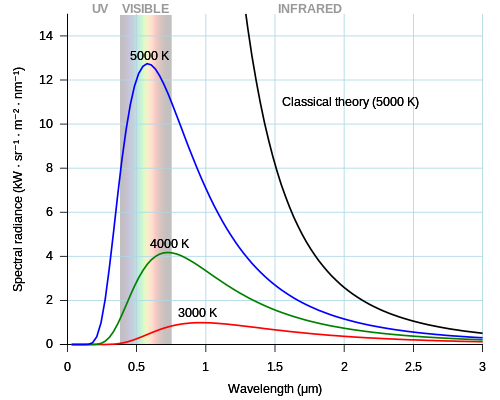
Planck's Quantum Hypothesis
Max Planck introduces the quantum of action, explaining blackbody radiation and laying the foundation for quantum optics. #optics #quantum
Planck's Quantum Hypothesis By Darth Kule - Own work, Public domain, https://commons.wikimedia.org/w/index.php?curid=10555337
1905 CE
Einstein's Photoelectric Effect
Albert Einstein explains the photoelectric effect by proposing that light consists of quanta (photons), supporting the particle nature of light. #optics #quantum
Einstein's Photoelectric Effect By Ponor - Own work, CC BY-SA 4.0, https://commons.wikimedia.org/w/index.php?curid=92684859
1917 CE
Einstein's Theory of Stimulated Emission
Einstein introduces the concept of stimulated emission, the theoretical basis for lasers. #optics #laser
Einstein's Theory of Stimulated Emission By 彭嘉傑 - Own work, CC BY 2.5, https://commons.wikimedia.org/w/index.php?curid=60733412
1924 CE
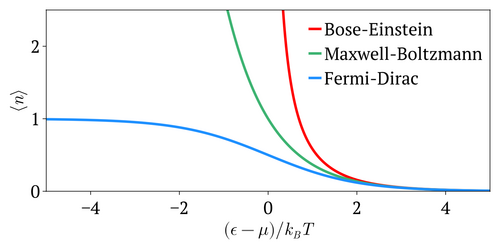
Bose-Einstein Statistics for Photons
Satyendra Nath Bose and Albert Einstein develop Bose-Einstein statistics, describing the behavior of photons as bosons. #optics #quantum
Bose-Einstein Statistics for Photons By Ashton Bradley Aspir8 (talk) - Own work based on: Fermi-Dirac Bose-Einstein Maxwell-Boltzmann statistics.svg, CC0, https://commons.wikimedia.org/w/index.php?curid=149697440
1928 CE
Raman Effect Discovered
C. V. Raman discovers the Raman effect, inelastic scattering of light, leading to Raman spectroscopy. #optics #spectroscopy
Raman Effect Discovered By KCVelaga - File:Electron-scattering.png by JabberWok, CC BY-SA 4.0, https://commons.wikimedia.org/w/index.php?curid=79274364
1953 CE
Townes Invents Maser
Charles Townes builds the first maser (microwave amplification by stimulated emission of radiation), precursor to the laser. #optics #maser
Townes Invents Maser By Dan Rubin - Retrieved February 18, 2015 from Shunaman, Fred "Revolutionary new oscillator-amplifier" in Radio-Electronic Engineering magazine, Ziff-Davis Publishing Co., New York, Vol. 26, No. 6, June 1955, cover on http://www.americanradiohistory.com, Public domain, https://commons.wikimedia.org/w/index.php?curid=38461589
May 16, 1960 CE
Maiman Demonstrates First Laser
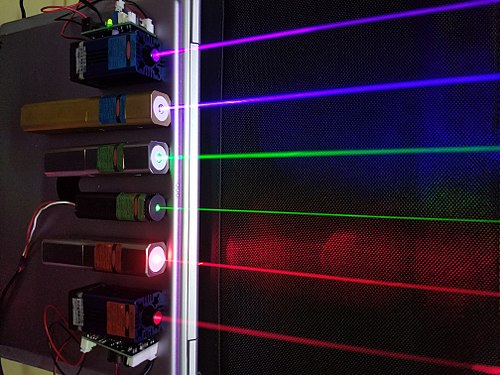
Theodore Maiman operates the first working laser, a ruby laser emitting pulsed red light, revolutionizing optics and technology. #optics #laser
Maiman Demonstrates First Laser By Andrey Chernogorodov - Own work, CC BY 4.0, https://commons.wikimedia.org/w/index.php?curid=90481144
1961 CE
First Continuous-Wave Laser
Ali Javan, William Bennett, and Donald Herriott demonstrate the first continuous-wave helium-neon laser. #optics #laser
First Continuous-Wave Laser By Tommy Markstein - Own work (Original text: Tommy Markstein), CC BY-SA 3.0, https://commons.wikimedia.org/w/index.php?curid=24295060
1964 CE
Nobel Prize for Maser-Laser Work
Charles Townes, Nikolay Basov, and Alexander Prokhorov share the Nobel Prize in Physics for fundamental work in quantum electronics leading to masers and lasers. #optics #nobel
Nobel Prize for Maser-Laser Work By Unknown author - [1], Public domain, https://commons.wikimedia.org/w/index.php?curid=92738267
1966 CE
Kao Proposes Optical Fiber Communication
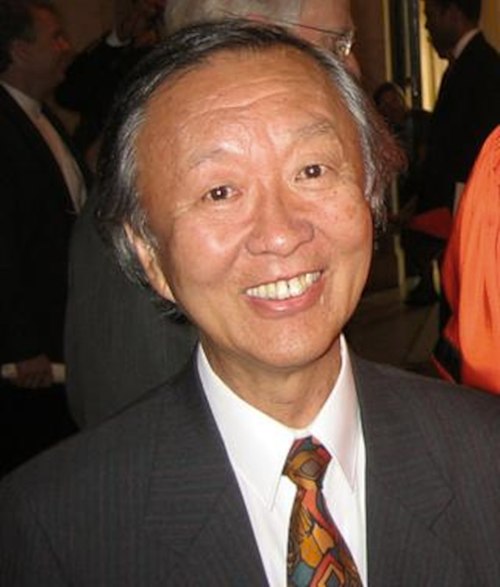
Charles K. Kao demonstrates that optical fibers with low loss can be used for long-distance communication, earning him the Nobel Prize. #optics #fiberoptics
Kao Proposes Optical Fiber Communication By David Dobkin [1] - http://www.cs.princeton.edu/~dpd/DeanOfFaculty/person_FILES/Charles.Kao.html, CC BY-SA 3.0, https://commons.wikimedia.org/w/index.php?curid=8000542
1970 CE
First Room-Temperature Continuous-Wave Diode Laser
Researchers at Bell Labs and Ioffe Institute develop the first continuous-wave semiconductor laser operating at room temperature. #optics #laser
First Room-Temperature Continuous-Wave Diode Laser By Unknown author - Jet Propulsion Laboratory website: http://technology.jpl.nasa.gov/gallery/index.cfm?page=imageDetail&ItemID=120&catId=8 (archive), Public domain, https://commons.wikimedia.org/w/index.php?curid=2359148
1971 CE
Gabor Wins Nobel for Holography
Dennis Gabor receives the Nobel Prize in Physics for inventing holography, a method of recording and reconstructing three-dimensional images using light. #optics #holography
Gabor Wins Nobel for Holography By Keystone - [1], Public domain, https://commons.wikimedia.org/w/index.php?curid=62245929
1977 CE
First Optical Fiber Telephone System
The first live telephone traffic using optical fiber is tested in Chicago, marking the beginning of fiber-optic communications. #optics #telecom
First Optical Fiber Telephone System By Alby (talk) - Own work (Original text: I (Alby (talk)) created this work entirely by myself.), Public domain, https://commons.wikimedia.org/w/index.php?curid=27148045
1981 CE
Bloembergen and Schawlow Nobel for Laser Spectroscopy
Nicolaas Bloembergen and Arthur Schawlow share the Nobel Prize in Physics for contributions to laser spectroscopy. #optics #spectroscopy
Bloembergen and Schawlow Nobel for Laser Spectroscopy By D-Kuru - Own work, CC BY-SA 3.0 at, https://commons.wikimedia.org/w/index.php?curid=7082370
1995 CE
Bose-Einstein Condensate Created
Eric Cornell and Carl Wieman create the first Bose-Einstein condensate, using laser cooling and trapping, opening new quantum optics regimes. #optics #quantum
Bose-Einstein Condensate Created By Vectorized version by AG Caesar, original by DG85 - Inspired by a work from Wikipedia User DG85 https://commons.wikimedia.org/wiki/File:QuantumPhaseTransition.png, Public domain, https://commons.wikimedia.org/w/index.php?curid=67110336
2001 CE
Nobel for Bose-Einstein Condensation
Eric Cornell, Carl Wieman, and Wolfgang Ketterle receive the Nobel Prize for achieving Bose-Einstein condensation in dilute gases. #optics #nobel
Nobel for Bose-Einstein Condensation By Betsythedevine - Own work, CC BY-SA 4.0, https://commons.wikimedia.org/w/index.php?curid=46346398
2005 CE
Nobel for Optical Coherence Tomography
John Hall and Theodor Hänsch share the Nobel Prize for contributions to laser-based precision spectroscopy, including optical frequency comb. #optics #spectroscopy
Nobel for Optical Coherence Tomography By Rubber Duck (☮ • ✍) - Own work, Public domain, https://commons.wikimedia.org/w/index.php?curid=39652854
2012 CE
Haroche and Wineland Nobel for Quantum Optics
Serge Haroche and David Wineland win the Nobel Prize for measuring and manipulating individual quantum systems using light and matter. #optics #quantum
Haroche and Wineland Nobel for Quantum Optics By Bengt Nyman - Flickr: IMG_4704, CC BY 2.0, https://commons.wikimedia.org/w/index.php?curid=23083045
2018 CE
Nobel for Laser Physics
Arthur Ashkin wins half the Nobel Prize for optical tweezers, and Gérard Mourou and Donna Strickland for chirped pulse amplification. #optics #nobel
Nobel for Laser Physics By Bengt Nyman from Vaxholm, Sweden - Arthur Ashkin EM1B5678, CC BY 2.0, https://commons.wikimedia.org/w/index.php?curid=74934691
2023 CE
Attosecond Physics Nobel
Pierre Agostini, Ferenc Krausz, and Anne L'Huillier receive the Nobel Prize for experimental methods generating attosecond pulses of light for studying electron dynamics. #optics #attosecond
Attosecond Physics Nobel By FedericoVis - Own work, CC BY-SA 4.0, https://commons.wikimedia.org/w/index.php?curid=106611728