Optics & Light: From Ibn al-Haytham's Camera Obscura to Lasers
Encyclopedia/1. The Cosmos & The Natural World/2. Physics & Chemistry/05. Electromagnetism & Optics • Curated by Admin Timeline.sg
The physics of light: from Mohist camera obscura and Ibn al-Haytham's Book of Optics to Newton's prism spectrum, Maxwell's electromagnetic theory, and laser spectroscopy.
Chronological Storyline (44 Milestones)
400 BCE
Mozi Describes Camera Obscura
Chinese philosopher Mozi (Mo Tzu) records the first known description of the camera obscura, noting that light travels in straight lines and an inverted image is formed through a small hole. This foundational observation in optics predates similar Western accounts by centuries. #optics #cameraObscura #ancientChina
Mozi Describes Camera Obscura By Vjacheslav Rublevskiy - https://www.flickr.com/photos/193162016@N04/51221161306/, CC0, https://commons.wikimedia.org/w/index.php?curid=106219380
300 BCE
Euclid's Optics
Greek mathematician Euclid writes 'Optics', one of the earliest works on light and vision, proposing that light rays travel in straight lines. His geometric approach influences later theories of reflection and refraction. #optics #ancientGreece #geometry
Euclid's Optics By Jusepe de Ribera (Spanish / Italian, 1591 - 1652) (1591 - 1652) – artist (Spanish / Italian) Details on Google Art Project - wAGVeSb2M1HfDA at Google Cultural Institute maximum zoom level, Public domain, https://commons.wikimedia.org/w/index.php?curid=21993409
250 BCE
Archimedes Studies Reflection
Archimedes investigates the law of reflection and reportedly uses mirrors to focus sunlight, possibly setting ships on fire. His work on burning mirrors and catoptrics advances understanding of reflective optics. #optics #reflection #ancientGreece
Archimedes Studies Reflection By Domenico Fetti - http://archimedes2.mpiwg-berlin.mpg.de/archimedes_templates/popup.htm, Public domain, https://commons.wikimedia.org/w/index.php?curid=146592
150 CE
Ptolemy's Optics
Claudius Ptolemy writes 'Optics', studying refraction and tabulating angles of incidence and refraction for various media. His work, though containing errors, is a key ancient text on light behavior. #optics #refraction #ancientGreece
Ptolemy's Optics By Justus van Gent / Pedro Berruguete - Public domainPublic domainfalsefalse This work is in the public domain in its country of origin and other countries and areas where the copyright term is the author's life plus 100 years or fewer. You must also include a United States public domain tag to indicate why this work is in the public domain in the United States. This file has been identified as being free of known restrictions under copyright law, including all related and neighboring rights. https://creativecommons.org/publicdomain/mark/1.0/PDMCreative Commons Public Domain Mark 1.0falsefalse, Public domain, https://commons.wikimedia.org/w/index.php?curid=16043714
1021 CE
Ibn al-Haytham's Book of Optics
Arab scientist Ibn al-Haytham (Alhazen) publishes 'Kitab al-Manazir' (Book of Optics), revolutionizing optics with experimental methods. He correctly explains vision as light entering the eye, describes the camera obscura, and studies refraction and reflection. #optics #islamicGoldenAge #experimentalScience
Ibn al-Haytham's Book of Optics By Ibn al-Haytham, Vitello, Friedrich Risner - University of Oklahoma History of Science Collections et BnF Gallica : http://gallica.bnf.fr/ark:/12148/bpt6k312873d.r=Haytham?rk=407727;2, Public domain, https://commons.wikimedia.org/w/index.php?curid=48189707
1267 CE
Roger Bacon on Optics
English friar Roger Bacon writes 'Opus Majus', discussing lenses and the nature of light, building on Ibn al-Haytham's work. He proposes using lenses for magnification, foreshadowing telescopes and microscopes. #optics #medievalScience #lenses
Roger Bacon on Optics By Unknown author, CC BY-SA 3.0, https://commons.wikimedia.org/w/index.php?curid=131754
1590 CE
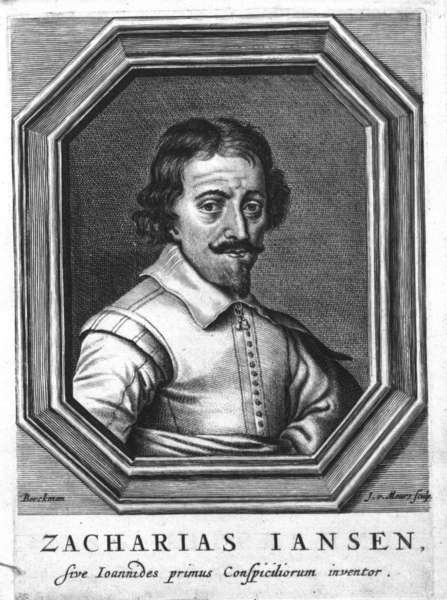
Zacharias Janssen Invents Compound Microscope
Dutch spectacle maker Zacharias Janssen, with his father Hans, creates the first compound microscope using two convex lenses. This invention opens new worlds in biology and materials science. #optics #microscope #invention
Zacharias Janssen Invents Compound Microscope By Pierre Borel - Pierre Borel, De vero telescopii inventore, Public domain, https://commons.wikimedia.org/w/index.php?curid=3990766
1604 CE
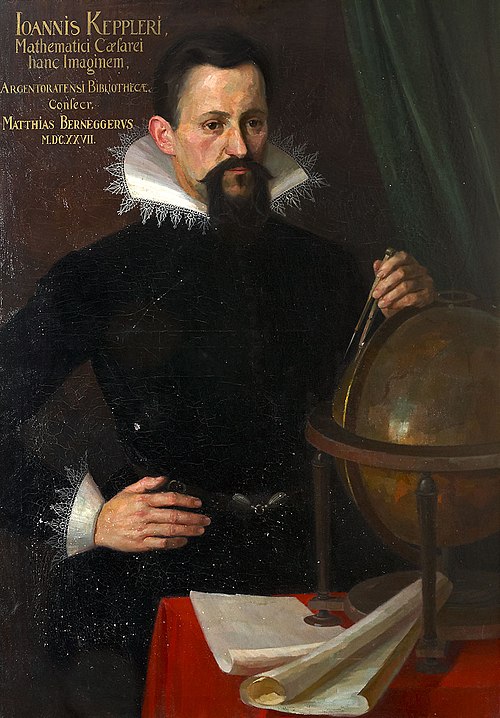
Kepler's Law of Refraction
Johannes Kepler publishes 'Ad Vitellionem paralipomena', refining the law of refraction and explaining the operation of the eye. He correctly describes how the lens focuses light onto the retina. #optics #refraction #vision
Kepler's Law of Refraction By August Köhler [1] - Kepler-Museum in Weil der Stadt, Public domain, https://commons.wikimedia.org/w/index.php?curid=9406242
1608 CE
Hans Lippershey Applies for Telescope Patent
Dutch lensmaker Hans Lippershey attempts to patent the first refracting telescope, using a convex objective and concave eyepiece. His design spreads across Europe, enabling astronomical discoveries. #optics #telescope #invention
Hans Lippershey Applies for Telescope Patent By Pierre Borel - De vero telescopii inventore (See http://fermi.imss.fi.it/rd/bdv?/bdviewer/bid=000000300919), Public domain, https://commons.wikimedia.org/w/index.php?curid=3990839
1609 CE
Galileo Improves Telescope
Galileo Galilei constructs an improved telescope and uses it to observe celestial bodies, discovering Jupiter's moons, lunar craters, and sunspots. His observations challenge geocentric cosmology. #optics #telescope #astronomy
Galileo Improves Telescope By Justus Sustermans - http://collections.rmg.co.uk/collections/objects/14174, Public domain, https://commons.wikimedia.org/w/index.php?curid=62614082
1621 CE
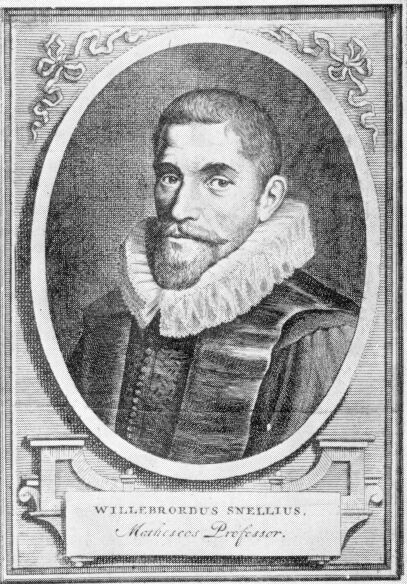
Snell's Law of Refraction
Dutch mathematician Willebrord Snellius discovers the mathematical law of refraction, relating angles of incidence and refraction via constant ratios. Published later by Descartes, it becomes fundamental to geometric optics. #optics #refraction #law
Snell's Law of Refraction By Unknown author - [1] [2], Public domain, https://commons.wikimedia.org/w/index.php?curid=1074602
1637 CE
Descartes' Optics
René Descartes publishes 'La Dioptrique', presenting the law of refraction (Snell's law) and explaining the rainbow. He proposes a mechanical model of light as a pressure transmitted through a medium. #optics #refraction #rainbow
Descartes' Optics By After Frans Hals - André Hatala [e.a.] (1997) De eeuw van Rembrandt, Bruxelles: Crédit communal de Belgique, ISBN 2-908388-32-4., Public domain, https://commons.wikimedia.org/w/index.php?curid=2774313
1665 CE
Hooke's Micrographia
Robert Hooke publishes 'Micrographia', featuring detailed observations with a compound microscope, including the first depiction of cells. He also discusses the wave theory of light, suggesting light is a rapid vibration. #optics #microscope #waveTheory
Hooke's Micrographia By Robert Hooke (1635-1703) - This image is available from the National Library of Wales, Public domain, https://commons.wikimedia.org/w/index.php?curid=7442137
1666 CE
Newton's Prism Experiment
Isaac Newton uses a prism to split white light into a spectrum of colors, demonstrating that white light is composed of different colors. He also shows that a second prism can recombine them, refuting the idea that prisms add color. #optics #spectrum #prism
Newton's Prism Experiment By Godfrey Kneller - File:Portrait of Sir Isaac Newton, 1689.jpg from https://exhibitions.lib.cam.ac.uk/linesofthought/artifacts, Public domain, https://commons.wikimedia.org/w/index.php?curid=132521185
1672 CE
Newton's Corpuscular Theory
Newton presents his corpuscular theory of light, proposing that light consists of tiny particles. This theory explains rectilinear propagation and reflection but struggles with diffraction and interference. #optics #corpuscularTheory #particle
1678 CE
Huygens' Wave Theory
Christiaan Huygens proposes the wave theory of light, explaining reflection, refraction, and double refraction in Iceland spar. His principle that each point on a wavefront is a source of secondary wavelets becomes a cornerstone of wave optics. #optics #waveTheory #HuygensPrinciple
Huygens' Wave Theory By Caspar Netscher - http://ressources2.techno.free.fr/informatique/sites/inventions/inventions.html, Public domain, https://commons.wikimedia.org/w/index.php?curid=44047
1704 CE
Newton's Opticks Published
Newton publishes 'Opticks', summarizing his experiments on light and color, including the prism spectrum and observations of thin-film interference (Newton's rings). The work influences optics for centuries. #optics #Newton #color
Newton's Opticks Published By Unknown author, Public domain, https://commons.wikimedia.org/w/index.php?curid=510265
1801 CE
Young's Double-Slit Experiment
Thomas Young performs the double-slit experiment, demonstrating interference patterns that support the wave theory of light. He measures the wavelengths of light, providing strong evidence against Newton's corpuscular theory. #optics #interference #waveTheory
Young's Double-Slit Experiment By Henry Perronet Briggs - http://rstb.royalsocietypublishing.org/content/370/1666/20140308, CC BY-SA 4.0, https://commons.wikimedia.org/w/index.php?curid=109315084
1808 CE
Malus Discovers Polarization
Étienne-Louis Malus discovers that light can be polarized by reflection, observing that reflected light from glass behaves differently when viewed through a calcite crystal. This leads to the study of polarization. #optics #polarization #reflection
Malus Discovers Polarization By Louis-Léopold Boilly - https://s3-eu-west-1.amazonaws.com/bertrand-malvaux.com/web/images/1/produits3/6/produit_image3_33806_1584441567.JPG, CC0, https://commons.wikimedia.org/w/index.php?curid=144677774
1815 CE
Fresnel's Wave Optics
Augustin-Jean Fresnel develops a comprehensive wave theory of light, explaining diffraction and polarization. His mathematical formulation, including Fresnel integrals, accurately predicts diffraction patterns. #optics #diffraction #waveTheory
Fresnel's Wave Optics By E Rosette after a painting by A Tardieu - Plate II, Light and Colour, by RA Houstoun, 1903, Public domain, https://commons.wikimedia.org/w/index.php?curid=304190
1845 CE
Faraday Discovers Magneto-Optic Effect
Michael Faraday discovers that polarized light's plane of rotation changes when passing through a magnetic field (Faraday effect). This first evidence of a link between light and electromagnetism inspires Maxwell. #optics #electromagnetism #FaradayEffect
Faraday Discovers Magneto-Optic Effect By Unknown author - [1], Public domain, https://commons.wikimedia.org/w/index.php?curid=141504840
1865 CE
Maxwell's Electromagnetic Theory of Light
James Clerk Maxwell publishes his theory showing that light is an electromagnetic wave, unifying optics with electricity and magnetism. He predicts that light speed equals the ratio of electric and magnetic units. #optics #electromagnetism #lightTheory
Maxwell's Electromagnetic Theory of Light By Unknown author - https://www.researchgate.net/figure/James-Clerk-Maxwell-1831-1879_fig1_360164096, Public domain, https://commons.wikimedia.org/w/index.php?curid=129476608
1887 CE
Michelson-Morley Experiment
Albert Michelson and Edward Morley conduct an experiment to detect the luminiferous aether, finding no evidence of it. The null result challenges existing theories and later supports Einstein's special relativity. #optics #relativity #aether
Michelson-Morley Experiment By Case Western Reserve University - http://www.cellularuniverse.org/AA2MM_Aether.htm, Public domain, https://commons.wikimedia.org/w/index.php?curid=48697725
1900 CE
Planck's Quantum Hypothesis
Max Planck proposes that energy is quantized to explain blackbody radiation, introducing the constant h. This marks the birth of quantum theory, which later revolutionizes optics with the photon concept. #optics #quantum #PlanckConstant
Planck's Quantum Hypothesis By Hugo Erfurth - This file was derived from: Max Planck by Hugo Erfurth 1938cr.jpg Original source: https://www.dhm.de/lemo/bestand/objekt/max-planck, Public domain, https://commons.wikimedia.org/w/index.php?curid=153625300
1905 CE
Einstein's Photoelectric Effect
Albert Einstein explains the photoelectric effect by proposing that light consists of discrete quanta (photons) with energy proportional to frequency. This particle-like behavior of light is a cornerstone of quantum optics. #optics #photons #quantum
Einstein's Photoelectric Effect By Ponor - Own work, CC BY-SA 4.0, https://commons.wikimedia.org/w/index.php?curid=92684859
1911 CE
First Practical Interferometer
Albert Michelson develops the Michelson interferometer, a device that splits and recombines light beams to measure tiny distances and wavelengths. It becomes essential for precision measurements and later for gravitational wave detection. #optics #interferometry #precision
First Practical Interferometer By Unknown author, CC BY-SA 4.0, https://commons.wikimedia.org/w/index.php?curid=580180
1917 CE
Einstein's Stimulated Emission
Einstein introduces the concept of stimulated emission, where an incoming photon can trigger an atom to emit a second identical photon. This theoretical basis for lasers remains unexploited for decades. #optics #laser #quantum
Einstein's Stimulated Emission By 彭嘉傑 - Own work, CC BY 2.5, https://commons.wikimedia.org/w/index.php?curid=60733412
1924 CE
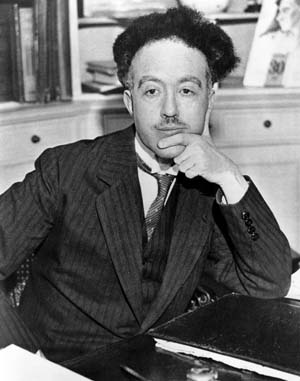
de Broglie's Wave-Particle Duality
Louis de Broglie proposes that particles like electrons have wave properties, extending wave-particle duality to matter. This concept deepens the understanding of light's dual nature and influences quantum optics. #optics #waveParticleDuality #quantum
de Broglie's Wave-Particle Duality By Unknown author - https://www.physics.umd.edu/courses/Phys420/Spring2002/Parra_Spring2002/HTMPages/whoswho.htm, Public domain, https://commons.wikimedia.org/w/index.php?curid=622169
1928 CE
Raman Effect Discovered
C. V. Raman discovers that light scattered by molecules changes wavelength due to vibrational energy exchange (Raman effect). This phenomenon becomes a powerful spectroscopic tool for chemical analysis. #optics #spectroscopy #Raman
Raman Effect Discovered By KCVelaga - File:Electron-scattering.png by JabberWok, CC BY-SA 4.0, https://commons.wikimedia.org/w/index.php?curid=79274364
1953 CE
Townes Invents Maser
Charles Townes builds the first maser (microwave amplification by stimulated emission of radiation), a precursor to the laser. It produces coherent microwaves using ammonia molecules. #optics #maser #laserPrecursor
Townes Invents Maser By Unknown author - [1], Public domain, https://commons.wikimedia.org/w/index.php?curid=92738267
May 16, 1960 CE
Maiman Demonstrates First Laser
Theodore Maiman operates the first working laser, a ruby laser emitting pulsed red light at 694 nm. This breakthrough initiates the field of laser science and technology, with applications from surgery to communications. #optics #laser #invention
Maiman Demonstrates First Laser By Unknown author - Press photo taken for the periodical Los Angeles Reader, 1985, CC BY-SA 4.0, https://commons.wikimedia.org/w/index.php?curid=91254657
1961 CE
First Continuous-Wave Laser
Ali Javan, William Bennett, and Donald Herriott demonstrate the first continuous-wave (CW) laser using a helium-neon gas mixture. This laser emits a stable beam, enabling practical applications like barcode scanners. #optics #laser #continuousWave
First Continuous-Wave Laser By Tommy Markstein - Own work (Original text: Tommy Markstein), CC BY-SA 3.0, https://commons.wikimedia.org/w/index.php?curid=24295060
1962 CE
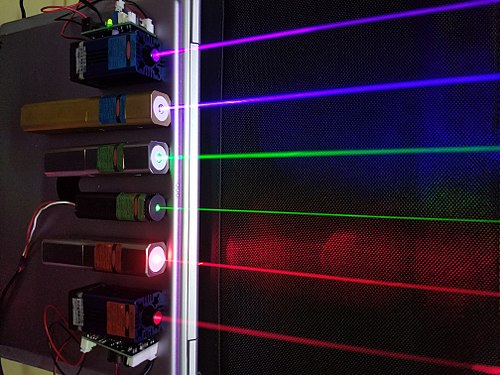
Semiconductor Laser Invented
Robert Hall and colleagues invent the first semiconductor (diode) laser, using gallium arsenide. Compact and efficient, diode lasers become ubiquitous in fiber optics, CD players, and laser pointers. #optics #laser #semiconductor
Semiconductor Laser Invented By Unknown author - Jet Propulsion Laboratory website: http://technology.jpl.nasa.gov/gallery/index.cfm?page=imageDetail&ItemID=120&catId=8 (archive), Public domain, https://commons.wikimedia.org/w/index.php?curid=2359148
1964 CE
Holography Invented by Gabor
Dennis Gabor develops the principle of holography, a method to record and reconstruct three-dimensional images using coherent light. Though earlier theoretical, practical holograms become possible with lasers. #optics #holography #3Dimaging
Holography Invented by Gabor By Keystone - [1], Public domain, https://commons.wikimedia.org/w/index.php?curid=62245929
1966 CE
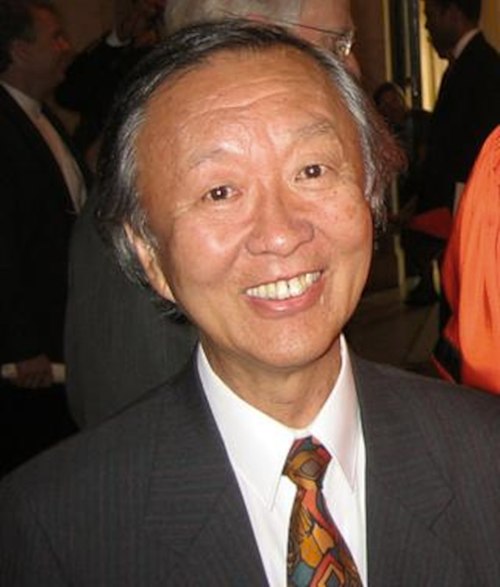
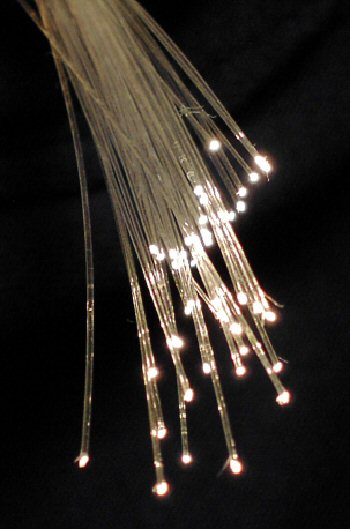
Kao Proposes Optical Fiber Communication
Charles K. Kao demonstrates that optical fibers with low impurity glass can transmit light over long distances, laying the foundation for fiber-optic communications. He later wins the Nobel Prize for this work. #optics #fiberOptics #communication
Kao Proposes Optical Fiber Communication By David Dobkin [1] - http://www.cs.princeton.edu/~dpd/DeanOfFaculty/person_FILES/Charles.Kao.html, CC BY-SA 3.0, https://commons.wikimedia.org/w/index.php?curid=8000542
1970 CE
First Low-Loss Optical Fiber
Corning Glass Works produces the first optical fiber with attenuation below 20 dB/km, making long-distance light transmission feasible. This breakthrough enables the global fiber-optic network. #optics #fiberOptics #telecommunications
First Low-Loss Optical Fiber By BigRiz - First upload: (Sep 25 2004) en:Wikipedia, CC BY-SA 3.0, https://commons.wikimedia.org/w/index.php?curid=46561
1971 CE
First Dye Laser
Peter Sorokin and John Lankard operate the first dye laser, using organic dyes as gain medium. Dye lasers are tunable across a wide wavelength range, revolutionizing spectroscopy. #optics #laser #tunable
First Dye Laser By Unknown author, CC BY 2.5, https://commons.wikimedia.org/w/index.php?curid=913343
1977 CE
First Free-Electron Laser
John Madey and colleagues demonstrate the first free-electron laser, generating coherent radiation from a relativistic electron beam. This laser is tunable over a broad spectrum, from microwaves to X-rays. #optics #laser #freeElectron
First Free-Electron Laser By MarloesGielen - Own work, CC BY-SA 4.0, https://commons.wikimedia.org/w/index.php?curid=87044650
1985 CE
Femtosecond Laser Pulses
Researchers at Bell Labs generate laser pulses as short as 6 femtoseconds using mode-locking techniques. Ultrafast lasers enable study of molecular dynamics and lead to femtochemistry. #optics #ultrafast #laser
1995 CE
Bose-Einstein Condensate Created
Eric Cornell and Carl Wieman create the first Bose-Einstein condensate (BEC) using laser cooling and trapping. This state of matter allows study of quantum phenomena at macroscopic scales. #optics #laserCooling #quantum
Bose-Einstein Condensate Created By Vectorized version by AG Caesar, original by DG85 - Inspired by a work from Wikipedia User DG85 https://commons.wikimedia.org/wiki/File:QuantumPhaseTransition.png, Public domain, https://commons.wikimedia.org/w/index.php?curid=67110336
2001 CE
Slow Light Demonstrated
Lene Hau and colleagues slow light to 17 meters per second using a Bose-Einstein condensate. This extreme control over light speed has implications for quantum computing and optical storage. #optics #slowLight #quantum
2005 CE
Frequency Comb Spectroscopy
John Hall and Theodor Hänsch win the Nobel Prize for developing the optical frequency comb, a precise tool for measuring light frequencies. It enables ultra-accurate clocks and advances spectroscopy. #optics #spectroscopy #precision
Frequency Comb Spectroscopy By Rubber Duck (☮ • ✍) - Own work, Public domain, https://commons.wikimedia.org/w/index.php?curid=39652854
Sep 14, 2015 CE
LIGO Detects Gravitational Waves
The Laser Interferometer Gravitational-Wave Observatory (LIGO) makes the first direct detection of gravitational waves, using laser interferometry to measure minuscule spacetime ripples. This opens a new era of gravitational-wave astronomy. #optics #gravitationalWaves #interferometry
LIGO Detects Gravitational Waves By Amber Stuver - Own work, CC BY-SA 4.0, https://commons.wikimedia.org/w/index.php?curid=46993713
2018 CE
Attosecond Light Pulses
Researchers generate attosecond (10^-18 s) light pulses, enabling observation of electron motion in atoms. This extreme time resolution pushes the frontier of ultrafast optics and quantum dynamics. #optics #ultrafast #attosecond