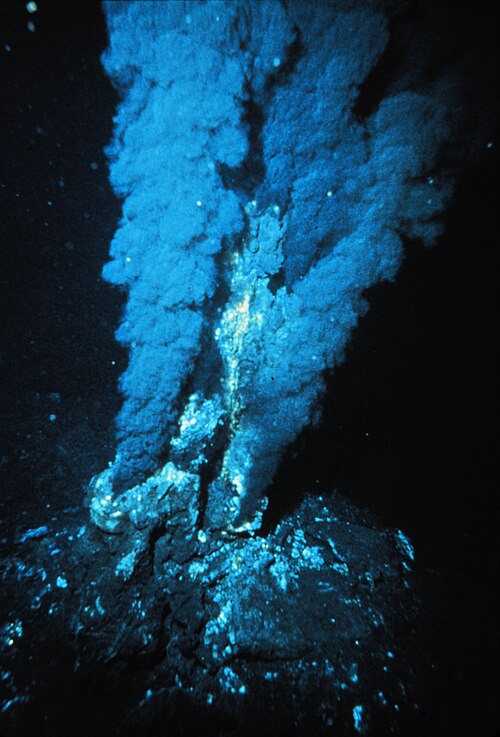
Oceanography & Deep Sea Exploration: Challenger Expedition to Hydrothermal Vents
Encyclopedia/1. The Cosmos & The Natural World/4. Earth Sciences/01. Oceanography & Marine Geosciences • Curated by Admin Timeline.sg
The exploration of Earth's oceans has advanced from the pioneering HMS Challenger expedition to the discovery of hydrothermal vent ecosystems and deep-sea submersible dives. Key milestones include the first human descent to the Mariana Trench in 1960 and the 1977 discovery of chemosynthetic life at vents.
Chronological Storyline (40 Milestones)
Dec 21, 1872 CE
HMS Challenger Departs on Oceanographic Voyage
The HMS Challenger departs from Portsmouth, England, on a 68,000-nautical-mile voyage to explore the world's oceans. This marks the birth of modern oceanography. #oceanography #exploration
HMS Challenger Departs on Oceanographic Voyage By Unidentified engraver - The Report of the Scientific Results of the Exploring Voyage of HMS Challenger during the years 1873–1876, Public domain, https://commons.wikimedia.org/w/index.php?curid=867862
May 24, 1876 CE
HMS Challenger Returns After Groundbreaking Voyage
The Challenger returns to England, having gathered thousands of oceanographic samples and data. Its discoveries include the first soundings of the Mariana Trench and deep-sea life. #oceanography #science
1880 CE
Publication of Challenger Reports Begins
The first volumes of the Challenger Report series are published, detailing findings in biology, geology, and physics. This multi-decade publication becomes a foundational reference for oceanography. #oceanography #science
1895 CE
Last Volume of Challenger Reports Published
The final volume of the Challenger Report series is published, completing the most comprehensive oceanographic study of its time. The reports total 50 volumes. #oceanography #history
Jun 11, 1930 CE
First Bathysphere Dive by William Beebe
William Beebe and Otis Barton descend to 244 meters off Bermuda in the bathysphere, a tethered steel sphere. This is the first human observation of deep-sea life. #deepsea #exploration
First Bathysphere Dive by William Beebe By Mike Cole - Flickr: Bathysphere, CC BY 2.0, https://commons.wikimedia.org/w/index.php?curid=14518676
Aug 15, 1934 CE
Beebe and Barton Set Depth Record of 923 m
In the bathysphere, Beebe and Barton descend to 923 meters (3,028 ft) off Bermuda, a record that stands for 15 years. They observe bioluminescent creatures. #deepsea #record
1943 CE
Jacques Cousteau Co-Invents the Aqua-Lung
Jacques Cousteau and Émile Gagnan develop the first successful open-circuit scuba equipment, the Aqua-Lung. This revolutionizes underwater exploration and scientific diving. #scuba #invention
Jacques Cousteau Co-Invents the Aqua-Lung By Anthony Appleyard at English Wikipedia - Transferred from en.wikipedia to Commons by Liftarn using CommonsHelper., Public domain, https://commons.wikimedia.org/w/index.php?curid=11911011
1949 CE
Auguste Piccard Tests First Bathyscaphe
Swiss physicist Auguste Piccard launches the FNRS-2, a free-diving bathyscaphe. Though limited, it proves the concept of untethered deep-sea submersibles. #oceanography #technology
Auguste Piccard Tests First Bathyscaphe By Unknown author - U.S. Navy photo NH 96797, Public domain, https://commons.wikimedia.org/w/index.php?curid=46839
1953 CE
Trieste Bathyscaphe Reaches 3,150 m
Auguste Piccard and his son Jacques dive the Trieste bathyscaphe to 3,150 meters off Italy. This demonstrates the craft's potential for hadal depths. #deepsea #submersible )
Trieste Bathyscaphe Reaches 3,150 m By Unknown author - Retrieved from NH 96801 U.S. Navy Bathyscaphe Trieste (1958-1963), Art collection, U.S. Naval History and Heritage Command website. Released by the U.S. Navy Electronics Laboratory, San Diego, California., Public domain, https://commons.wikimedia.org/w/index.php?curid=209622
Jan 23, 1960 CE
Trieste Descends to Challenger Deep
Jacques Piccard and Don Walsh dive the bathyscaphe Trieste to 10,911 meters in the Mariana Trench. This is the first and only human visit to the deepest point until 2012. #deepsea #record )
Nov 1, 1964 CE
DSV Alvin Commissioned
The deep-submergence vehicle Alvin is commissioned by the US Navy and operated by Woods Hole Oceanographic Institution. Alvin becomes the most famous research submersible, enabling countless discoveries. #submersible #research
DSV Alvin Commissioned By The original uploader was Jholman at English Wikipedia. Later versions were uploaded by Aarchiba at en.wikipedia. - NOAA, Public domain, https://commons.wikimedia.org/w/index.php?curid=1609549
Jan 17, 1966 CE
Alvin Recovers Lost Hydrogen Bomb
Alvin locates and helps retrieve a lost hydrogen bomb off the coast of Spain after a B-52 crash. This demonstrates the submersible's deep-sea capabilities. #submersible #coldwar
Jul 1, 1974 CE
Project FAMOUS: First Manned Dives on Mid-Atlantic Ridge
French and American submersibles (Archimède, Alvin) explore the Mid-Atlantic Ridge, providing the first direct observation of seafloor spreading. This confirms plate tectonic theory. #geology #oceanography
Project FAMOUS: First Manned Dives on Mid-Atlantic Ridge By various US government agencies I created a submap and added labels - https://maps.ngdc.noaa.gov/viewers/bathymetry/, Public domain, https://commons.wikimedia.org/w/index.php?curid=78267832
Feb 17, 1977 CE
Discovery of Hydrothermal Vents at Galapagos Rift
Scientists aboard Alvin discover lush ecosystems around hydrothermal vents near the Galapagos Islands. This is the first observation of chemosynthetic life thriving in darkness. #hydrothermalvents #biology
Discovery of Hydrothermal Vents at Galapagos Rift By P. Rona / OAR/National Undersea Research Program (NURP); NOAA - NOAA Photo Library. Memento (WayBack Machine archive.org), Public domain, https://commons.wikimedia.org/w/index.php?curid=262511
Nov 1, 1979 CE
Black Smokers Discovered at East Pacific Rise
Alvin dives at the East Pacific Rise and observes black smokers—chimneys spewing superheated mineral-rich water. These extreme environments host unique organisms. #hydrothermalvents #geology
1980 CE
Chemosynthesis Discovered as Basis of Vent Ecosystems
Research confirms that bacteria at hydrothermal vents use chemosynthesis, not photosynthesis, to produce energy. This revolutionizes understanding of life's limits. #biology #oceanography
Chemosynthesis Discovered as Basis of Vent Ecosystems By No machine-readable author provided. Thermophile~commonswiki assumed (based on copyright claims). - No machine-readable source provided. Own work assumed (based on copyright claims)., CC BY-SA 3.0, https://commons.wikimedia.org/w/index.php?curid=3652603
1982 CE
Hydrothermal Vents Found at Juan de Fuca Ridge
Vent fields are discovered off the coast of the Pacific Northwest. This site becomes a key location for studying vent ecology and ocean chemistry. #hydrothermalvents #oceanography
Hydrothermal Vents Found at Juan de Fuca Ridge By W. Jacquelyne Kious and Robert I. Tilling (https://pubs.usgs.gov/gip/dynamic/Endnotes.html) - "This Dynamic Earth: The Story of Plate Tectonics" by W. Jacquelyne Kious and Robert I. Tilling. http://pubs.usgs.gov/gip/dynamic/graphics/Fig6.gif and https://pubs.usgs.gov/gip/dynamic/dynamic.html, Public domain, https://commons.wikimedia.org/w/index.php?curid=31797826
1984 CE
French Submersible Nautile Launched
France's Nautile, capable of diving to 6,000 meters, is launched. It joins the global fleet of deep-sea research submersibles. #submersible #research
French Submersible Nautile Launched By Unknown author, CC BY-SA 3.0, https://commons.wikimedia.org/w/index.php?curid=472219
Sep 1, 1985 CE
Discovery of RMS Titanic Wreck
Robert Ballard and team aboard the research vessel Knorr discover the wreck of the Titanic using the deep-towed camera system Argo. This captures global attention. #deepsea #shipwreck
Discovery of RMS Titanic Wreck By Courtesy of NOAA/Institute for Exploration/University of Rhode Island (NOAA/IFE/URI). - http://www.gc.noaa.gov/gcil_titanic.html, Public domain, https://commons.wikimedia.org/w/index.php?curid=18643198
Jul 1, 1986 CE
Alvin Explores Titanic Wreck
Ballard returns with Alvin to explore the Titanic wreck in person, making numerous dives and documenting the state of the ship. #deepsea #exploration
1989 CE
JASON ROV System Deployed
The remotely operated vehicle JASON is deployed by Woods Hole, capable of deep-sea observation and sampling at depths to 6,500 meters. #ROV #technology )
1990 CE
NOAA VENTS Program Established
The National Oceanic and Atmospheric Administration launches the VENTS program to study hydrothermal vent systems along the Juan de Fuca Ridge and elsewhere. #hydrothermalvents #research
1992 CE
Hydrothermal Vents Discovered in the Atlantic
The first active hydrothermal vents in the Atlantic Ocean are found on the Mid-Atlantic Ridge, showing vent distribution is global. #hydrothermalvents #oceanography
1993 CE
Shinkai 6500 Submersible Commissioned
Japan's Shinkai 6500, capable of diving to 6,500 meters, is commissioned. It greatly expands Asian deep-sea research capabilities. #submersible #Japan
Shinkai 6500 Submersible Commissioned By toshinori baba - Own work, Public domain, https://commons.wikimedia.org/w/index.php?curid=7012723
1995 CE
Argo Ocean Observing System Launched
The international Argo program begins deploying profiling floats to measure temperature and salinity globally, revolutionizing ocean climate monitoring. #oceanography #climate )
Argo Ocean Observing System Launched By Hjfreeland - Own work, CC BY-SA 4.0, https://commons.wikimedia.org/w/index.php?curid=67718669
2000 CE
Census of Marine Life Begins
A global collaborative effort launches to assess and explain the diversity, distribution, and abundance of marine life. The ten-year project reveals millions of new species. #marinebiology #biodiversity
Dec 1, 2003 CE
Lost City Hydrothermal Field Discovered
Scientists discover the Lost City, an alkaline hydrothermal field on the Atlantis Massif. Unlike black smokers, its chimneys release low-temperature, hydrogen-rich fluids, supporting unique life. #hydrothermalvents #science )
Lost City Hydrothermal Field Discovered By National Science Foundation (University of Washington/Woods Hole Oceanographic Institution) - https://www.nsf.gov/od/lpa/news/press/01/pr0156.htm, Public domain, https://commons.wikimedia.org/w/index.php?curid=7121090
2005 CE
China Launches Jiaolong Manned Submersible
The Jiaolong, China's first deep-sea manned submersible, is completed. It reaches 7,062 meters in 2012, making China one of the few nations capable of hadal exploration. #submersible #China )
China Launches Jiaolong Manned Submersible By N509FZ - Own work, CC BY-SA 4.0, https://commons.wikimedia.org/w/index.php?curid=63389127
2008 CE
First Global Map of Ocean Thermohaline Circulation
Using Argo data and other sources, oceanographers produce the first comprehensive map of the global thermohaline circulation. This reveals the ocean's role in climate regulation. #oceanography #climate
First Global Map of Ocean Thermohaline Circulation By Robert Simmon, NASA. Minor modifications by Robert A. Rohde also released to the public domain - NASA Earth Observatory, Public domain, https://commons.wikimedia.org/w/index.php?curid=3794372
Mar 26, 2012 CE
James Cameron's Dive to Challenger Deep
Filmmaker James Cameron descends solo to 10,908 meters in the Deepsea Challenger submersible. This is the first solo dive and the second human visit to the deepest point. #deepsea #record
James Cameron's Dive to Challenger Deep By Zuckerberg - Own work, CC BY-SA 3.0, https://commons.wikimedia.org/w/index.php?curid=18867589
2014 CE
Discovery of New Hadal Zone Life Forms
Expeditions to the Mariana Trench discover unusual organisms like giant amoebas and deep-sea snailfish, expanding knowledge of life at extreme pressures. #hadalzone #biology
Discovery of New Hadal Zone Life Forms By Deepdisco - Own work, CC BY-SA 4.0, https://commons.wikimedia.org/w/index.php?curid=123574720
2015 CE
New Hydrothermal Vent Fields Found Worldwide
Multiple expeditions discover new vent fields in the Pacific, Atlantic, and Indian Oceans, including fields in the South Atlantic and near Antarctica. #hydrothermalvents #oceanography
2017 CE
Deepest Fish Ever Recorded Found at 8,178 m
A snailfish (Pseudoliparis swirei) is filmed in the Mariana Trench at a depth of 8,178 meters, setting a record for the deepest living fish. #hadalzone #marinebiology
May 1, 2019 CE
DSSV Pressure Drop Completes Mapping of Mariana Trench
The research vessel DSSV Pressure Drop conducts the first high-resolution mapping of the entire Mariana Trench, revealing seafloor details. #oceanography #mapping
DSSV Pressure Drop Completes Mapping of Mariana Trench By Inkfish LLC, CC BY-SA 4.0, https://commons.wikimedia.org/w/index.php?curid=175111895
2020 CE
Discovery of New Hydrothermal Vents in Indian Ocean
Scientists discover previously unknown vent fields on the Central Indian Ridge, highlighting the continued need for exploration. #hydrothermalvents #indianocean
Aug 1, 2021 CE
Octopus Garden Discovered Off California
Thousands of brooding octopuses are found at a warm hydrothermal seep near Monterey Bay, the largest known aggregation of octopuses. #deepsea #marinebiology
Octopus Garden Discovered Off California By albert kok - Own work, CC BY-SA 3.0, https://commons.wikimedia.org/w/index.php?curid=2795257
2022 CE
Deep-Sea Mining Controversy Intensifies
Growing interest in mining polymetallic nodules from the abyssal plain sparks debate over environmental impacts. The International Seabed Authority faces pressure to regulate. #deepseamining #environment
Deep-Sea Mining Controversy Intensifies By Carlos Muñoz-Royo - https://www.researchgate.net/figure/Schematic-of-a-polymetallic-nodule-mining-operation-From-top-to-bottom-the-three_fig1_353483138, CC BY-SA 4.0, https://commons.wikimedia.org/w/index.php?curid=124394760
2023 CE
New Species Discovered at Hydrothermal Vents
Expeditions to vent fields in the Pacific and Atlantic reveal new species of crabs, tube worms, and microbial communities, underscoring the biodiversity of these ecosystems. #hydrothermalvents #biodiversity
2024 CE
Global Ocean Observing Network Expands
The Argo program exceeds 4,000 floats, and new biogeochemical sensors extend monitoring of ocean health. This network now provides real-time data for climate science. #oceanography #climate )
2025 CE
Proposed Manned Submersible to Full Ocean Depth
Several nations and private entities announce plans for new manned submersibles capable of reaching the deepest trenches, aiming to expand hadal exploration. #deepsea #exploration
Proposed Manned Submersible to Full Ocean Depth By Johntex - Own work, CC BY-SA 3.0, https://commons.wikimedia.org/w/index.php?curid=574737