Neuroscience: Ramón y Cajal's Neuron Doctrine to Synaptic Plasticity & fMRI
Encyclopedia/1. The Cosmos & The Natural World/5. Life Sciences/06. Neuroscience & Neurobiology • Curated by Admin Timeline.sg
This timeline traces the evolution of neuroscience from Santiago Ramón y Cajal's neuron doctrine in the late 19th century to modern advances in synaptic plasticity and brain imaging. Key milestones include the Hodgkin-Huxley action potential model, discovery of long-term potentiation, and the development of functional MRI.
Chronological Storyline (42 Milestones)
1873 CE
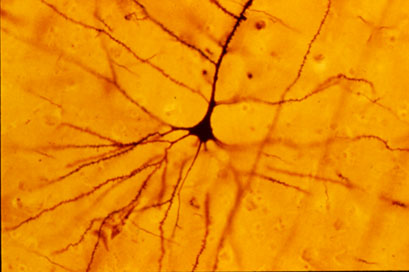
Golgi Develops Silver Staining Method
Camillo Golgi develops a silver staining technique that reveals individual neurons, paving the way for Cajal's neuron doctrine. #neuroscience #history
Golgi Develops Silver Staining Method By The original uploader was Cahass at English Wikipedia. - Transferred from en.wikipedia to Commons., CC BY-SA 3.0, https://commons.wikimedia.org/w/index.php?curid=651365
1888 CE
Ramón y Cajal Formulates Neuron Doctrine
Santiago Ramón y Cajal uses Golgi's stain to argue that the nervous system is composed of discrete neurons, not a continuous network. This neuron doctrine becomes the foundation of modern neuroscience. #neuroscience #cajal
Ramón y Cajal Formulates Neuron Doctrine By Santiago Ramón - http://www.sharpbrains.com/wp-content/uploads/2008/02/cajal-chick-cerebellum.jpg, Public domain, https://commons.wikimedia.org/w/index.php?curid=555397
1897 CE
Sherrington Coins the Term 'Synapse'
Charles Sherrington introduces the word 'synapse' to describe the junction between neurons, emphasizing the gap that chemical transmission will later fill. #neuroscience #history
Sherrington Coins the Term 'Synapse' By Curtis Neveu - Own work, CC BY-SA 4.0, https://commons.wikimedia.org/w/index.php?curid=117410942
1906 CE
Nobel Prize for Golgi and Cajal
Camillo Golgi and Santiago Ramón y Cajal share the Nobel Prize in Physiology or Medicine for their work on the structure of the nervous system, despite their differing views. #neuroscience #nobel
1921 CE
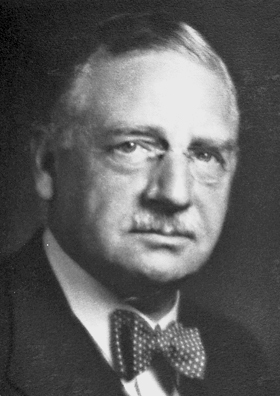
Loewi Discovers Chemical Neurotransmission
Otto Loewi experiments with frog hearts to demonstrate that nerves release chemical substances (Vagusstoff) to communicate, establishing chemical neurotransmission. #neuroscience #science
Loewi Discovers Chemical Neurotransmission By Albert Hilscher - https://www.nobelprize.org/prizes/medicine/1936/loewi/facts/, Public domain, https://commons.wikimedia.org/w/index.php?curid=18336306
1929 CE
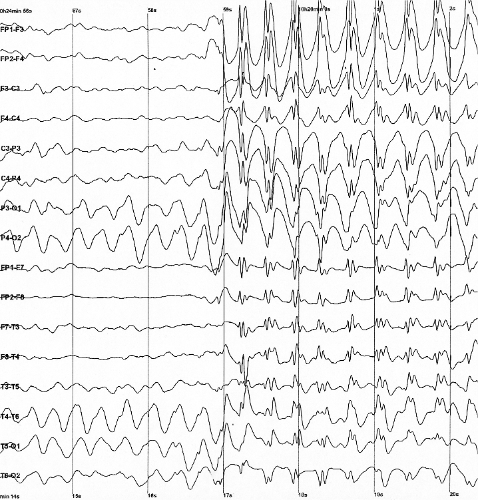
Berger Records First Human EEG
Hans Berger records the first human electroencephalogram (EEG), revealing electrical oscillations from the brain. #neuroscience #technology
Berger Records First Human EEG By Unknown author, CC BY-SA 2.0, https://commons.wikimedia.org/w/index.php?curid=845554
1932 CE
Sherrington and Adrian Win Nobel
Charles Sherrington and Edgar Adrian share the Nobel Prize for discoveries regarding the function of neurons, including the all-or-none law of nerve impulses. #neuroscience #nobel
1939 CE
Hodgkin and Huxley Record Action Potential
Alan Hodgkin and Andrew Huxley use the squid giant axon to record intracellular action potentials, laying groundwork for the ionic model of nerve conduction. #neuroscience #actionpotential
Hodgkin and Huxley Record Action Potential By Laurentaylorj - Own work, CC BY-SA 3.0, https://commons.wikimedia.org/w/index.php?curid=26311114
1949 CE
Hebb Proposes Hebbian Theory
Donald Hebb publishes 'The Organization of Behavior', proposing that synaptic connections strengthen when neurons 'fire together, wire together', a key concept in learning and memory. #neuroscience #plasticity
1952 CE
Hodgkin-Huxley Model Published
Hodgkin and Huxley publish the mathematical model of the action potential, describing voltage-gated ion channels. This model earn them the 1963 Nobel Prize. #neuroscience #modeling
Hodgkin-Huxley Model Published By Krishnavedala - Own work, CC0, https://commons.wikimedia.org/w/index.php?curid=21725464
John Eccles uses intracellular recording to show that synapses can be excitatory or inhibitory, confirming the neuron doctrine at the electrophysiological level. #neuroscience #synapse )
Eccles Demonstrates Synaptic Excitation/Inhibition By Unknown author - https://wellcomeimages.org/indexplus/obf_images/42/86/2e1a4ca2e1c91a1f5aa88c6db04d.jpg Gallery: https://wellcomeimages.org/indexplus/image/L0026812.html, CC BY 4.0, https://commons.wikimedia.org/w/index.php?curid=36013687
1959 CE
Hubel and Wiesel Discover Orientation Columns
David Hubel and Torsten Wiesel record from the cat visual cortex and discover neurons that respond selectively to edges of specific orientations, revealing columnar organization. #neuroscience #vision
1963 CE
Katz Discovers Quantal Neurotransmitter Release
Bernard Katz demonstrates that neurotransmitters are released in discrete quanta (vesicles) at the neuromuscular junction, providing evidence for the vesicle hypothesis. #neuroscience #transmission
Katz Discovers Quantal Neurotransmitter Release By After Nick Sinclair - Own work, CC BY-SA 3.0, https://commons.wikimedia.org/w/index.php?curid=38809978
1963 CE
Hodgkin, Huxley, Eccles Win Nobel
Alan Hodgkin, Andrew Huxley, and John Eccles share the Nobel Prize for their discoveries concerning the ionic mechanisms of nerve cell membrane excitation and inhibition. #neuroscience #nobel
1967 CE
Llinás Discovers Dendritic Spikes
Rodolfo Llinás records active dendritic spikes in Purkinje cells, showing that dendrites can generate action potentials, not just propagate them passively. #neuroscience #dendrite
Llinás Discovers Dendritic Spikes By Rodolfo Llinas - Own work, Public domain, https://commons.wikimedia.org/w/index.php?curid=11655296
1970 CE
Kandel Begins Aplysia Studies
Eric Kandel starts using the sea slug Aplysia to study the cellular basis of learning and memory, leading to discoveries about synaptic plasticity. #neuroscience #memory
Kandel Begins Aplysia Studies By Bengt Oberger - Own work, CC BY-SA 4.0, https://commons.wikimedia.org/w/index.php?curid=37241660
1973 CE
Bliss and Lømo Discover LTP
Timothy Bliss and Terje Lømo describe long-term potentiation (LTP) in the rabbit hippocampus, a form of synaptic strengthening considered a cellular correlate of memory. #neuroscience #plasticity
Bliss and Lømo Discover LTP By Synaptidude at English Wikipedia - This image created by Synaptidude 23:45, 15 August 2005 (UTC) , assembled in CorelDraw!, CC BY-SA 3.0, https://commons.wikimedia.org/w/index.php?curid=886855
1976 CE
Neher and Sakmann Develop Patch-Clamp
Erwin Neher and Bert Sakmann invent the patch-clamp technique, enabling measurement of currents through single ion channels, revolutionizing cellular neuroscience. #neuroscience #technique
Neher and Sakmann Develop Patch-Clamp By Vlad75 at English Wikipedia - Transferred from en.wikipedia to Commons., Public domain, https://commons.wikimedia.org/w/index.php?curid=5072761
1977 CE
Discovery of Enkephalins
John Hughes and Hans Kosterlitz isolate enkephalins, endogenous opioid peptides in the brain, revealing the body's own pain-relief system. #neuroscience #peptides
Discovery of Enkephalins By ElaineMeng - Own work, CC BY-SA 3.0, https://commons.wikimedia.org/w/index.php?curid=9102858
1980 CE
Greengard Identifies Dopamine Receptors
Paul Greengard discovers D1 and D2 dopamine receptors and shows how dopamine mediates neurotransmission via second messengers, earning him the 2000 Nobel Prize. #neuroscience #dopamine
Greengard Identifies Dopamine Receptors By Unknown author - http://www.drugabuse.gov/NIDA_notes/NNvol15N6/Research.html, Public domain, https://commons.wikimedia.org/w/index.php?curid=8012717
1981 CE
Hubel and Wiesel Win Nobel
David Hubel and Torsten Wiesel share the Nobel Prize for their discoveries concerning information processing in the visual system. #neuroscience #nobel
1986 CE
Levi-Montalcini Awarded Nobel for NGF
Rita Levi-Montalcini shares the Nobel Prize for discovering nerve growth factor (NGF), a key factor in neuron survival and development. #neuroscience #growthfactor
Levi-Montalcini Awarded Nobel for NGF By Kurt Hagblom, Firma Hagblom-Foto, restored by Adam Cuerden - University Library, Lund UniversityURL: https://www.alvin-portal.org/alvin/imageViewer.jsf?dsId=ATTACHMENT-0001&pid=alvin-record%3A240038&dswid=5683, Public domain, https://commons.wikimedia.org/w/index.php?curid=179179277
1990 CE
Ogawa Discovers BOLD fMRI
Seiji Ogawa identifies the blood-oxygen-level dependent (BOLD) contrast in fMRI, enabling non-invasive imaging of brain activity with high spatial resolution. #neuroscience #imaging
Ogawa Discovers BOLD fMRI By OpenStax - https://openstax.org/books/anatomy-and-physiology/pages/12-1-basic-structure-and-function-of-the-nervous-system, CC BY 4.0, https://commons.wikimedia.org/w/index.php?curid=30147912
1991 CE
Mirror Neurons Discovered in Monkeys
Giacomo Rizzolatti and colleagues discover mirror neurons in the macaque premotor cortex that fire both when an animal performs an action and when it sees the same action performed. #neuroscience #mirrorneurons
1993 CE
First Human fMRI Study Published
The first functional MRI study of the human brain is published, mapping visual cortex activity using BOLD contrast. #neuroscience #fMRI
1997 CE
Lauterbur and Mansfield Develop MRI
Paul Lauterbur and Peter Mansfield share the Nobel Prize for their work on magnetic resonance imaging (MRI), which becomes essential for brain imaging. #neuroscience #imaging
Lauterbur and Mansfield Develop MRI By Structural.gif: Dwayne Reed (talk) The original uploader was Dwayne Reed at English Wikipedia. derivative work: Sherool (talk) - Structural.gif, CC BY-SA 3.0, https://commons.wikimedia.org/w/index.php?curid=8793834
1998 CE
Adult Neurogenesis Confirmed in Humans
Peter Eriksson and colleagues show that new neurons are generated in the adult human hippocampus, overturning the long-held belief that no new neurons form after birth. #neuroscience #neurogenesis
Adult Neurogenesis Confirmed in Humans By Phenotypes_of_proliferating_cells_in_the_Rostral_Migratory_Stream_and_Dentate_Gyrus.jpg: Maryam Faiz , Laia Acarin , Bernardo Castellano and Berta Gonzalez derivative work: CopperKettle (talk) - Phenotypes_of_proliferating_cells_in_the_Rostral_Migratory_Stream_and_Dentate_Gyrus.jpg, CC BY 2.0, https://commons.wikimedia.org/w/index.php?curid=7553302
2000 CE
Kandel, Greengard, and Axel Win Nobel
Eric Kandel, Paul Greengard, and Arvid Carlsson share the Nobel Prize for discoveries concerning signal transduction in the nervous system, particularly dopamine and synaptic plasticity. #neuroscience #nobel
2002 CE
Tsien Develops GFP for Neuroscience
Roger Tsien engineers fluorescent proteins like GFP that can label specific neurons, enabling real-time imaging of neural circuits. #neuroscience #imaging
Tsien Develops GFP for Neuroscience By Jawahar Swaminathan and MSD staff at the European Bioinformatics Institute - https://www.ebi.ac.uk/pdbe/static/entry/1ema_deposited_chain_front_image-800x800.png, displayed on https://www.ebi.ac.uk/pdbe/entry/pdb/1ema, Public domain, https://commons.wikimedia.org/w/index.php?curid=6307286
2005 CE
Deisseroth Develops Optogenetics
Karl Deisseroth and colleagues use light-sensitive proteins to control neurons genetically, introducing optogenetics as a revolutionary tool for neuroscience. #neuroscience #optogenetics
2006 CE
iPSCs Generated for Neuronal Research
Shinya Yamanaka develops induced pluripotent stem cells (iPSCs) from mouse fibroblasts, later used to create patient-specific neurons for disease modeling. #neuroscience #stemcells
iPSCs Generated for Neuronal Research By NIH Image Gallery from Bethesda, Maryland, USA - Human induced pluripotent stem cell colony, Public domain, https://commons.wikimedia.org/w/index.php?curid=114900547
2009 CE
Human Connectome Project Launched
The National Institutes of Health (NIH) launches the Human Connectome Project to map the structural and functional connectivity of the human brain. #neuroscience #connectome
2010 CE
Decade of the Brain Initiative Ends
The U.S. Congress declares the 1990s the 'Decade of the Brain', boosting funding and research into brain function and disorders. #neuroscience #policy
Decade of the Brain Initiative Ends By US Gov. - https://www.loc.gov/loc/brain/, Public domain, https://commons.wikimedia.org/w/index.php?curid=37228176
2011 CE
Brainbow Technique for Neural Circuit Tracing
Jeff Lichtman and colleagues develop Brainbow, a genetic method that labels individual neurons with distinct colors, enabling visualization of neural circuits. #neuroscience #technique
Brainbow Technique for Neural Circuit Tracing By Jeff W. Lichtman and Joshua R. Sanes - https://www.ncbi.nlm.nih.gov/pmc/articles/PMC2577038/, CC BY 3.0, https://commons.wikimedia.org/w/index.php?curid=25703326
2013 CE
BRAIN Initiative Announced
President Barack Obama launches the BRAIN Initiative (Brain Research through Advancing Innovative Neurotechnologies) to accelerate the development of new tools for neuroscience. #neuroscience #policy
2014 CE
Optogenetics Used to Treat Depression in Mice
Researchers use optogenetics to stimulate or inhibit specific neural circuits in mice, reversing depression-like behaviors, demonstrating potential for targeted therapy. #neuroscience #optogenetics
2015 CE
CRISPR Applied to Neuronal Genome Editing
Ed Boyden and Feng Zhang use CRISPR-Cas9 to edit genes in neurons, enabling functional studies of neurological disease mechanisms. #neuroscience #genetics
CRISPR Applied to Neuronal Genome Editing By Deposition authors: Nishimasu, H., Ishitani, R., Nureki, O.; Visualization author: Synpath - Atom coordinates: https://www.rcsb.org/structure/4OO8; Visualization: Own work, CC0, https://commons.wikimedia.org/w/index.php?curid=133423568
2017 CE
Human Brain Project Progress
The European Human Brain Project releases a first draft of the mouse brain's microcircuitry, advancing large-scale brain simulation. #neuroscience #modeling
Human Brain Project Progress By Patrick J. Lynch, medical illustrator, CC BY 2.5, https://commons.wikimedia.org/w/index.php?curid=1496706
2020 CE
Allen Institute Publishes Brain Cell Atlas
The Allen Institute for Brain Science releases a comprehensive transcriptomic cell atlas of the mouse and human brain, categorizing thousands of cell types. #neuroscience #atlas
Allen Institute Publishes Brain Cell Atlas By Joe Mabel - Photo by Joe Mabel, CC BY-SA 3.0, https://commons.wikimedia.org/w/index.php?curid=43622340
2021 CE
Neuralink Demonstrates Brain-Machine Interface
Elon Musk's Neuralink shows a monkey playing a video game with its mind via implanted electrodes, highlighting advances in brain-computer interfaces. #neuroscience #BCI
Neuralink Demonstrates Brain-Machine Interface By Neuralink Corp; converted to SVG by Saucy - https://www.neuralink.com/, Public domain, https://commons.wikimedia.org/w/index.php?curid=80364982
2022 CE
First Connectome of Drosophila Brain
Researchers publish the complete connectome of the fruit fly brain's central complex, mapping thousands of neurons and millions of synapses. #neuroscience #connectome
First Connectome of Drosophila Brain By Xavier Gigandet et. al. - Gigandet X, Hagmann P, Kurant M, Cammoun L, Meuli R, et al. (2008) Estimating the Confidence Level of White Matter Connections Obtained with MRI Tractography. PLoS ONE 3(12): e4006. doi:10.1371/journal.pone.0004006, CC BY 2.5, https://commons.wikimedia.org/w/index.php?curid=8134159
2023 CE
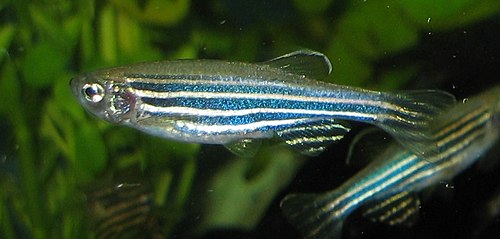
Whole-Brain Connectome of Zebrafish
A complete connectome of the larval zebrafish brain is published, providing the first whole-brain wiring diagram of a vertebrate. #neuroscience #connectome
Whole-Brain Connectome of Zebrafish By Azul - Own work, Copyrighted free use, https://commons.wikimedia.org/w/index.php?curid=260841