Encyclopedia/1. The Cosmos & The Natural World/6. Medicine & Human Biology • Curated by Admin Timeline.sg
A comprehensive timeline of neuroscience and brain synapses, covering ancient observations, key discoveries in neuroanatomy, electrophysiology, neurotransmission, and modern techniques from diverse global cultures.
Chronological Storyline (41 Milestones)
1700 BCE
Edwin Smith Papyrus Describes Brain
The Edwin Smith Papyrus, an ancient Egyptian medical text, describes the brain, meninges, and cerebrospinal fluid, noting brain injuries affect body function. #neuroscience #ancient
Edwin Smith Papyrus Describes Brain By Jeff Dahl - Edited version of Image:EdSmPaPlateVIandVIIPrintsx.jpg, Public domain, https://commons.wikimedia.org/w/index.php?curid=2854143
400 BCE
Hippocrates Identifies Brain as Seat of Intellect
Hippocrates, the Greek physician, proposed that the brain is the center of intelligence and sensation, challenging heart-centered theories. #neuroscience #history
Hippocrates Identifies Brain as Seat of Intellect By Unidentified engraver - 1881 Young Persons' Cyclopedia of Persons and Places Upload by RedWolf 05:45, Jan 10, 2005 (UTC), Public domain, https://commons.wikimedia.org/w/index.php?curid=164808
350 BCE
Aristotle Places Intellect in the Heart
Aristotle argued the heart is the seat of intelligence and the brain serves to cool the blood, a view that persisted for centuries. #neuroscience #philosophy
Aristotle Places Intellect in the Heart By After Lysippos - Jastrow (2006), Public domain, https://commons.wikimedia.org/w/index.php?curid=1359807
300 BCE
Herophilus Dissects Brain and Identifies Ventricles
Herophilus of Chalcedon, a Greek anatomist, dissected human brains and described the ventricles, cerebrum, and cerebellum, earning the title 'Father of Anatomy'. #neuroscience #anatomy
Herophilus Dissects Brain and Identifies Ventricles By Ecelan - Own work, CC BY-SA 3.0 es, https://commons.wikimedia.org/w/index.php?curid=16641053
150 CE
Galen Describes Brain Anatomy and Ventricular Theory
Roman physician Galen detailed brain structure and proposed that animal spirits flow through ventricles, influencing medieval medicine. #neuroscience #history
Galen Describes Brain Anatomy and Ventricular Theory By Georg Paul Busch (engraver) - The Lancet, Public domain, https://commons.wikimedia.org/w/index.php?curid=40855568
600 CE
Sushruta Samhita Describes Nervous System
The ancient Indian text Sushruta Samhita describes nerves, the brain, and spinal cord, and mentions treatments for brain injuries. #neuroscience #ayurveda
Sushruta Samhita Describes Nervous System By Unknown author - Image: http://collections.lacma.org/sites/default/files/remote_images/piction/ma-31972784-O3.jpg Gallery: http://collections.lacma.org/node/170472 archive copy at the Wayback Machine, Public domain, https://commons.wikimedia.org/w/index.php?curid=32452002
1025 CE
Avicenna Discusses Brain and Nerves in Canon of Medicine
Persian polymath Avicenna compiled medical knowledge including brain anatomy, cranial nerves, and neurological disorders in his influential encyclopedia. #neuroscience #islamicgoldenage
Avicenna Discusses Brain and Nerves in Canon of Medicine By Coffeetalkh - Own work, CC BY-SA 3.0, https://commons.wikimedia.org/w/index.php?curid=11906621
1543 CE
Vesalius Publishes Accurate Brain Drawings
Andreas Vesalius' De Humani Corporis Fabrica provided detailed, accurate illustrations of the human brain, correcting many of Galen's errors. #neuroscience #anatomy
Vesalius Publishes Accurate Brain Drawings By Jan van Calcar - Hermitage Museum, Public domain, https://commons.wikimedia.org/w/index.php?curid=81174973
1664 CE
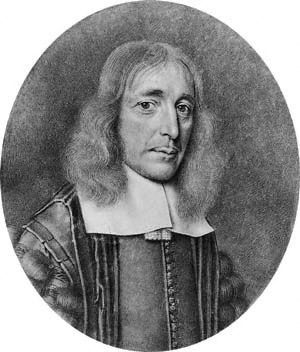
Thomas Willis Coins 'Neurology'
English physician Thomas Willis published 'Cerebri Anatome', describing the brain's anatomy in detail and introducing the term 'neurology'. #neuroscience #history
Thomas Willis Coins 'Neurology' By David Loggan - http://www.oxforddnb.com/view/article/29587, Public domain, https://commons.wikimedia.org/w/index.php?curid=20313755
1791 CE
Galvani Discovers Animal Electricity
Luigi Galvani's experiments on frog legs showed that electrical stimulation causes muscle contraction, founding the field of bioelectricity. #neuroscience #physiology
Galvani Discovers Animal Electricity By Unidentified painter - http://www.museopalazzopoggi.unibo.it//poggi_eng/palazzo/foto/prot http://biografieonline.it/foto-di.htm?n=Luigi+Galvani, Public domain, https://commons.wikimedia.org/w/index.php?curid=2707375
1811 CE
Bell-Magendie Law Established
Charles Bell and François Magendie independently discovered that dorsal spinal roots carry sensory fibers and ventral roots carry motor fibers. #neuroscience #anatomy
Bell-Magendie Law Established By User:Polarlys - Own work, CC BY 2.5, https://commons.wikimedia.org/w/index.php?curid=1476281
1861 CE
Broca Identifies Speech Center
Paul Broca localized language production to the left frontal lobe, now known as Broca's area, linking specific brain regions to functions. #neuroscience #cognition
Broca Identifies Speech Center By Unknown author - Битнер В.В. На рубеже столетий: Обзор гл. науч. и культур. приобретений XIX века. 1901. URL:http://dlib.rsl.ru/view.php?path=/rsl01003000000/rsl01003963000/rsl01003963893/rsl01003963893.pdf#?page=451, Public domain, https://commons.wikimedia.org/w/index.php?curid=16545674
1873 CE
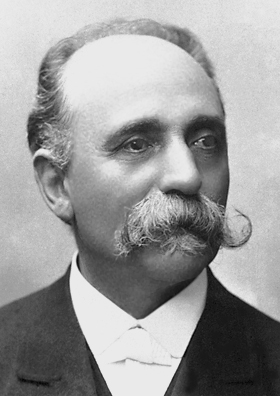
Golgi Develops Silver Staining for Neurons
Camillo Golgi invented the silver stain (reazione nera) which allowed visualization of individual neurons, revealing their structure. #neuroscience #histology
Golgi Develops Silver Staining for Neurons By Unknown author - [1] [2] [3], Public domain, https://commons.wikimedia.org/w/index.php?curid=18347448
1874 CE
Wernicke Describes Sensory Aphasia
Carl Wernicke identified a region in the left temporal lobe involved in language comprehension, now known as Wernicke's area. #neuroscience #cognition
Wernicke Describes Sensory Aphasia By J.F. Lehmann, Muenchen - IHM, Public domain, https://commons.wikimedia.org/w/index.php?curid=9679254
1888 CE
Ramón y Cajal Establishes Neuron Doctrine
Santiago Ramón y Cajal used Golgi's stain to show that the nervous system consists of individual neurons, not a continuous network. #neuroscience #histology
Ramón y Cajal Establishes Neuron Doctrine By Original photo is anonymous although published by Clark University in 1899. Restoration by Garrondo - Cajal.PNG, Public domain, https://commons.wikimedia.org/w/index.php?curid=12334552
1897 CE
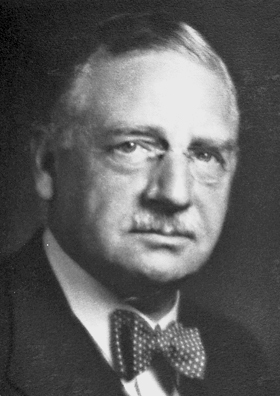
Sherrington Coins 'Synapse'
Charles Sherrington introduced the term 'synapse' to describe the junction between neurons, pioneering the study of neural integration. #neuroscience #synapse
Sherrington Coins 'Synapse' By Unknown author - https://wellcomeimages.org/indexplus/image/L0014994.html, CC BY 4.0, https://commons.wikimedia.org/w/index.php?curid=33623905
1906 CE
Alzheimer Describes Senile Dementia
Alois Alzheimer reported the first case of what would become Alzheimer's disease, linking memory loss to brain plaques and tangles. #neuroscience #disease
Alzheimer Describes Senile Dementia By Unknown author - Images from the History of Medicine (IHM), Public domain, https://commons.wikimedia.org/w/index.php?curid=11648572
1914 CE
Pavlov Publishes Conditioned Reflexes
Ivan Pavlov described classical conditioning, demonstrating associative learning through neural reflexes. #neuroscience #learning
Pavlov Publishes Conditioned Reflexes By Unknown author - http://ihm.nlm.nih.gov/images/B21072, Public domain, https://commons.wikimedia.org/w/index.php?curid=19270394
1921 CE
Loewi Discovers Chemical Neurotransmission
Otto Loewi's experiment with frog hearts showed that a chemical (later identified as acetylcholine) transmits signals across synapses. #neuroscience #neurotransmitter
Loewi Discovers Chemical Neurotransmission By Albert Hilscher - https://www.nobelprize.org/prizes/medicine/1936/loewi/facts/, Public domain, https://commons.wikimedia.org/w/index.php?curid=18336306
1924 CE
Berger Records First Human EEG
Hans Berger recorded the first human electroencephalogram (EEG), revealing electrical brain activity and opening the field of electrophysiology. #neuroscience #EEG
Berger Records First Human EEG By Unknown author - http://www.psychiatrie.uk-j.de/Geschichte.html, Public domain, https://commons.wikimedia.org/w/index.php?curid=12160449
1936 CE
Dale and Loewi Share Nobel for Chemical Transmission
Henry Dale and Otto Loewi received the Nobel Prize for their discoveries on chemical neurotransmission, solidifying the concept of synaptic signaling. #neuroscience #Nobel
Dale and Loewi Share Nobel for Chemical Transmission By Michieli - [1], CC BY 4.0, https://commons.wikimedia.org/w/index.php?curid=32752539
1948 CE
Hodgkin and Huxley Begin Squid Axon Experiments
Alan Hodgkin and Andrew Huxley started using the giant squid axon to study action potentials, leading to the ionic theory of nerve conduction. #neuroscience #physiology
Hodgkin and Huxley Begin Squid Axon Experiments By Krishnavedala - Own work, CC0, https://commons.wikimedia.org/w/index.php?curid=21725464
1952 CE
Hodgkin and Huxley Describe Ionic Basis of Action Potential
Using voltage clamp, Hodgkin and Huxley published the ionic mechanisms underlying the action potential, winning the Nobel Prize in 1963. #neuroscience #electrophysiology
Hodgkin and Huxley Describe Ionic Basis of Action Potential By Laurentaylorj - Own work, CC BY-SA 3.0, https://commons.wikimedia.org/w/index.php?curid=26311114
1953 CE
Levi-Montalcini Discovers Nerve Growth Factor
Rita Levi-Montalcini identified nerve growth factor (NGF), demonstrating that neurotrophic factors regulate neuron survival and development. #neuroscience #growthfactors
Levi-Montalcini Discovers Nerve Growth Factor By Kurt Hagblom, Firma Hagblom-Foto, restored by Adam Cuerden - University Library, Lund UniversityURL: https://www.alvin-portal.org/alvin/imageViewer.jsf?dsId=ATTACHMENT-0001&pid=alvin-record%3A240038&dswid=5683, Public domain, https://commons.wikimedia.org/w/index.php?curid=179179277
1962 CE
Katz Reveals Quantal Release of Neurotransmitters
Bernard Katz demonstrated that neurotransmitters are released in discrete quanta at the neuromuscular junction, providing evidence for vesicular release. #neuroscience #synapse
Katz Reveals Quantal Release of Neurotransmitters By After Nick Sinclair - Own work, CC BY-SA 3.0, https://commons.wikimedia.org/w/index.php?curid=38809978
1965 CE
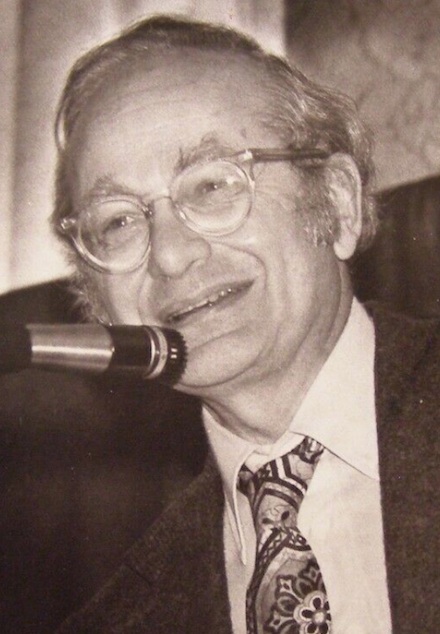
Hubel and Wiesel Map Visual Cortex
David Hubel and Torsten Wiesel discovered orientation-selective neurons in the cat visual cortex, revealing how the brain processes visual information. #neuroscience #vision
Hubel and Wiesel Map Visual Cortex By Joey cantod - Own work, CC BY-SA 4.0, https://commons.wikimedia.org/w/index.php?curid=79369186
1970 CE
Kandel Shows Synaptic Plasticity in Aplysia
Eric Kandel demonstrated that learning and memory involve changes in synaptic strength (synaptic plasticity) using the sea slug Aplysia. #neuroscience #memory
Kandel Shows Synaptic Plasticity in Aplysia By Bengt Oberger - Own work, CC BY-SA 4.0, https://commons.wikimedia.org/w/index.php?curid=37241660
1971 CE
LTP Discovered in Hippocampus
Tim Bliss and Terje Lømo reported long-term potentiation (LTP) in the rabbit hippocampus, a key cellular mechanism for memory formation. #neuroscience #plasticity
LTP Discovered in Hippocampus By Synaptidude at English Wikipedia - This image created by Synaptidude 23:45, 15 August 2005 (UTC) , assembled in CorelDraw!, CC BY-SA 3.0, https://commons.wikimedia.org/w/index.php?curid=886855
1973 CE
PET Scan Developed for Brain Imaging
Positron emission tomography (PET) was introduced, allowing functional imaging of brain activity by detecting radioactive tracers. #neuroscience #imaging
PET Scan Developed for Brain Imaging By Spacecoastcreative - Own work, CC0, https://commons.wikimedia.org/w/index.php?curid=149063982
1981 CE
First fMRI Developed
Functional magnetic resonance imaging (fMRI) was developed, enabling non-invasive mapping of brain activity via blood oxygen level-dependent (BOLD) signals. #neuroscience #imaging
First fMRI Developed By OpenStax - https://openstax.org/books/anatomy-and-physiology/pages/12-1-basic-structure-and-function-of-the-nervous-system, CC BY 4.0, https://commons.wikimedia.org/w/index.php?curid=30147912
1986 CE
NMDA Receptor Role in LTP Elucidated
Studies showed that NMDA receptors are critical for inducing LTP, linking glutamate receptors to synaptic plasticity and learning. #neuroscience #receptors
NMDA Receptor Role in LTP Elucidated By RicHard-59 - Own work, based on File:Activated NMDAR.PNG, CC BY-SA 3.0, https://commons.wikimedia.org/w/index.php?curid=21286587
1990 CE
Decade of the Brain Proclaimed
U.S. President George H.W. Bush declared the 1990s the Decade of the Brain, boosting neuroscience research funding and public awareness. #neuroscience #policy
Decade of the Brain Proclaimed By US Gov. - https://www.loc.gov/loc/brain/, Public domain, https://commons.wikimedia.org/w/index.php?curid=37228176
1997 CE
Optogenetics Begins with Channelrhodopsin
Discovery of channelrhodopsin in algae led to the development of optogenetics, allowing precise control of neurons with light. #neuroscience #optogenetics
1998 CE
Adult Neurogenesis Confirmed
Evidence of new neurons forming in adult human hippocampus was confirmed, overturning the long-held belief that adult neurogenesis does not occur. #neuroscience #plasticity
Adult Neurogenesis Confirmed By Phenotypes_of_proliferating_cells_in_the_Rostral_Migratory_Stream_and_Dentate_Gyrus.jpg: Maryam Faiz , Laia Acarin , Bernardo Castellano and Berta Gonzalez derivative work: CopperKettle (talk) - Phenotypes_of_proliferating_cells_in_the_Rostral_Migratory_Stream_and_Dentate_Gyrus.jpg, CC BY 2.0, https://commons.wikimedia.org/w/index.php?curid=7553302
2004 CE
Human Connectome Project Launched
The Human Connectome Project began mapping the structural and functional connections of the human brain, aiming to understand neural networks. #neuroscience #connectome
2013 CE
BRAIN Initiative Launched in US
President Obama announced the Brain Research through Advancing Innovative Neurotechnologies (BRAIN) Initiative, accelerating neuroscience tool development. #neuroscience #policy
2013 CE
Optogenetics Used to Treat Parkinson's in Mice
Researchers used optogenetics to restore movement in a mouse model of Parkinson's disease, demonstrating therapeutic potential. #neuroscience #therapy
2014 CE
Human Genome Project-Inspired Allen Brain Atlas Released
The Allen Institute for Brain Science released comprehensive gene expression maps of the mouse and human brain, revealing molecular diversity. #neuroscience #genomics
2016 CE
CRISPR Used to Edit Genes in Neurons
CRISPR-Cas9 gene editing was applied to neurons, enabling study of genetic influences on brain function and potential therapies. #neuroscience #genetics
CRISPR Used to Edit Genes in Neurons By Deposition authors: Nishimasu, H., Ishitani, R., Nureki, O.; Visualization author: Synpath - Atom coordinates: https://www.rcsb.org/structure/4OO8; Visualization: Own work, CC0, https://commons.wikimedia.org/w/index.php?curid=133423568
2017 CE
First Brain-Computer Interface Implant in Humans for Paralysis
Researchers implanted electrode arrays in paralyzed patients to control external devices via thought, advancing neuroprosthetics. #neuroscience #BCI
First Brain-Computer Interface Implant in Humans for Paralysis By Mike Cai Chen - My friend is a photographer and took some pictures of myself and gave me the picture to use for whatever I want. https://www.mikekaichen.com/, CC0, https://commons.wikimedia.org/w/index.php?curid=168405025
2020 CE
Single-Cell Sequencing Reveals Brain Cell Types
Large-scale single-cell RNA sequencing projects catalogued hundreds of cell types in the human brain, revolutionizing cellular neuroscience. #neuroscience #genomics