Encyclopedia/1. The Cosmos & The Natural World/2. Physics & Chemistry/10. Foundational & General Physics • Curated by Admin Timeline.sg
This timeline traces the foundational milestones in neuroscience and brain mapping from ancient times to the early 20th century, highlighting key discoveries about brain structure, function, and the nervous system that laid the groundwork for modern neuroscience.
Chronological Storyline (51 Milestones)
1700 BCE
Edwin Smith Surgical Papyrus Describes Brain
The Edwin Smith Papyrus, an ancient Egyptian medical text, contains the earliest known reference to the brain, describing its surface, meninges, and cerebrospinal fluid. It also notes that brain injuries can affect motor function on the opposite side of the body. #neuroscience #history #medicine
Edwin Smith Surgical Papyrus Describes Brain By Jeff Dahl - Edited version of Image:EdSmPaPlateVIandVIIPrintsx.jpg, Public domain, https://commons.wikimedia.org/w/index.php?curid=2854143
500 BCE
Alcmaeon of Croton Identifies the Brain as Seat of Intelligence
Greek philosopher and physician Alcmaeon of Croton proposed that the brain, not the heart, is the center of sensation and thought. He conducted dissections and discovered the optic nerves, linking the eyes to the brain. #neuroscience #history #philosophy
Alcmaeon of Croton Identifies the Brain as Seat of Intelligence By Unknown author - http://archiviostoricoarborensemarrubiu.blogspot.ru/2015/04/scheda-04-n-9-storia-della-medicina.html http://www.ilportaledelsud.org/medagliere_di_rauso_1.htm http://www.ilportaledelsud.org/medagliere_di_rauso_1.htm, Public domain, https://commons.wikimedia.org/w/index.php?curid=16747402
400 BCE
Hippocrates Describes Epilepsy as a Brain Disorder
Hippocrates, the 'Father of Medicine,' wrote 'On the Sacred Disease,' arguing that epilepsy is not a divine punishment but a brain disorder. He emphasized the brain's role in controlling the body and intellect. #neuroscience #history #medicine
Hippocrates Describes Epilepsy as a Brain Disorder By Unidentified engraver - 1881 Young Persons' Cyclopedia of Persons and Places Upload by RedWolf 05:45, Jan 10, 2005 (UTC), Public domain, https://commons.wikimedia.org/w/index.php?curid=164808
335 BCE
Aristotle Advocates Cardiocentric View
Aristotle argued that the heart is the seat of intelligence and sensation, relegating the brain to a cooling function for the blood. This cardiocentric view persisted for centuries, despite earlier evidence for the brain. #neuroscience #history #philosophy
Aristotle Advocates Cardiocentric View By After Lysippos - Jastrow (2006), Public domain, https://commons.wikimedia.org/w/index.php?curid=1359807
280 BCE
Herophilus Dissects Human Brain and Identifies Ventricles
Herophilus of Chalcedon, a Greek anatomist, performed systematic dissections of human brains and distinguished the cerebrum from the cerebellum. He identified the ventricles and described the calamus scriptorius. #neuroscience #history #anatomy
Herophilus Dissects Human Brain and Identifies Ventricles By Ecelan - Own work, CC BY-SA 3.0 es, https://commons.wikimedia.org/w/index.php?curid=16641053
250 BCE
Erasistratus Links Brain to Nerves and Intelligence
Erasistratus of Ceos, a Greek anatomist, distinguished sensory and motor nerves and proposed that the brain's convolutions are related to intelligence. He also described the cerebral ventricles and their role in animal spirits. #neuroscience #history #anatomy
Erasistratus Links Brain to Nerves and Intelligence By Didier Descouens - Own work, Public domain, https://commons.wikimedia.org/w/index.php?curid=90209212
177 CE
Galen Describes Cranial Nerves and Brain Function
Roman physician Galen conducted extensive animal dissections and described seven of the twelve cranial nerves. He proposed that the brain controls movement and sensation via a system of ventricles and animal spirits. #neuroscience #history #medicine
Galen Describes Cranial Nerves and Brain Function By Georg Paul Busch (engraver) - The Lancet, Public domain, https://commons.wikimedia.org/w/index.php?curid=40855568
1000 CE
Al-Zahrawi Develops Neurosurgical Instruments
Andalusian surgeon Al-Zahrawi (Abulcasis) wrote 'Al-Tasrif,' a medical encyclopedia describing surgical instruments and techniques for treating head injuries, skull fractures, and spinal disorders. He is considered a pioneer of neurosurgery. #neuroscience #history #surgery
1316 CE
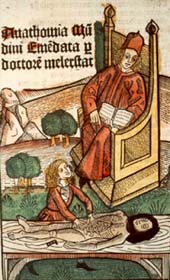
Mondino de Luzzi Publishes First Anatomy Textbook
Mondino de Luzzi, an Italian anatomist, wrote 'Anathomia,' the first European anatomy text based on human dissection. He described the brain's ventricles and meninges, reviving interest in neuroanatomy. #neuroscience #history #anatomy
Mondino de Luzzi Publishes First Anatomy Textbook By Unknown author - Transferred from de.wikipedia to Commons. Dieses aus: Geschichte der Medizin, Website bei der Universität Erlangen Laut Franco Bacchellis Artikel Liuzzi, Mondino de' in Dizionario Biografico degli Italiani, Band 65 (2005), handelt es sich um die Titelseite der Leipziger Ausgabe der Anothomia von 1493 - wiedergegeben in V. Octane und G. Giuliani Piccari, L'opera di Anna Morandi Manzolini nella coroplastica bolognese, in Alma Mater Studiorum. La presenza femminile dal XVIII al XX secolo, Bologna 1988, S. 84. (Das Werk der Anna Morandi Manzolini in der Töpferkunst in Bologna, in: Alma Mater Studiorum. Die Präsenz von Frauen vom 18. bis zum 20. Jahrhundert), Public domain, https://commons.wikimedia.org/w/index.php?curid=1718618
1543 CE
Vesalius Publishes 'De Humani Corporis Fabrica'
Andreas Vesalius's groundbreaking work corrected many of Galen's errors, providing detailed illustrations of the brain and nervous system. He emphasized direct observation and dissection, revolutionizing anatomy. #neuroscience #history #anatomy
Vesalius Publishes 'De Humani Corporis Fabrica' By Unknown author, Public domain, https://commons.wikimedia.org/w/index.php?curid=457251
1664 CE
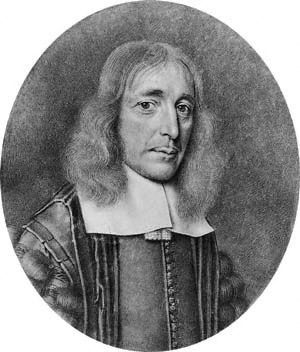
Thomas Willis Publishes 'Cerebri Anatome'
English physician Thomas Willis coined the term 'neurology' and described the arterial circle at the base of the brain (Circle of Willis). He linked specific brain regions to functions like memory and emotion. #neuroscience #history #neurology
Thomas Willis Publishes 'Cerebri Anatome' By David Loggan - http://www.oxforddnb.com/view/article/29587, Public domain, https://commons.wikimedia.org/w/index.php?curid=20313755
1791 CE
Luigi Galvani Discovers Animal Electricity
Italian physician Luigi Galvani demonstrated that frog leg muscles twitch when stimulated by electrical sparks, suggesting that nerves transmit electrical signals. This laid the foundation for electrophysiology. #neuroscience #history #electrophysiology
Luigi Galvani Discovers Animal Electricity By Unidentified painter - http://www.museopalazzopoggi.unibo.it//poggi_eng/palazzo/foto/prot http://biografieonline.it/foto-di.htm?n=Luigi+Galvani, Public domain, https://commons.wikimedia.org/w/index.php?curid=2707375
1809 CE
Franz Joseph Gall Proposes Phrenology
German physician Franz Joseph Gall developed phrenology, the theory that mental faculties are localized in specific brain regions and that skull shape reflects personality. Though later discredited, it spurred research on brain localization. #neuroscience #history #phrenology
Franz Joseph Gall Proposes Phrenology By Zéphirin Félix Jean Marius Belliard (1798–), engraver Delpech (Paris) - http://ihm.nlm.nih.gov/images/B12582, Public domain, https://commons.wikimedia.org/w/index.php?curid=19055991
1824 CE
Flourens Conducts Ablation Experiments on Animals
French physiologist Marie-Jean-Pierre Flourens used ablation techniques on animals to study brain function, concluding that the cerebellum coordinates movement and the medulla controls vital functions. He opposed phrenology. #neuroscience #history #experiment
Flourens Conducts Ablation Experiments on Animals By Unknown author, Public domain, https://commons.wikimedia.org/w/index.php?curid=1013650
1837 CE
Jan Purkinje Describes Purkinje Cells
Czech anatomist Jan Evangelista Purkinje identified large neurons in the cerebellar cortex, now known as Purkinje cells. He also described the Purkinje effect and contributed to histology. #neuroscience #history #histology
Jan Purkinje Describes Purkinje Cells By Rudolph Hoffmann - This image is available from the United States Library of Congress's Prints and Photographs division under the digital ID cph.3c33404.This tag does not indicate the copyright status of the attached work. A normal copyright tag is still required. See Commons:Licensing., Public domain, https://commons.wikimedia.org/w/index.php?curid=3015732
1838 CE
Schwann and Schleiden Formulate Cell Theory
Theodor Schwann and Matthias Jakob Schleiden proposed that all living organisms are composed of cells. This theory later applied to the nervous system, leading to the understanding that neurons are the basic units. #neuroscience #history #biology
Schwann and Schleiden Formulate Cell Theory By TenOfAllTrades at English Wikipedia - Own work, Public domain, https://commons.wikimedia.org/w/index.php?curid=1583880
1848 CE
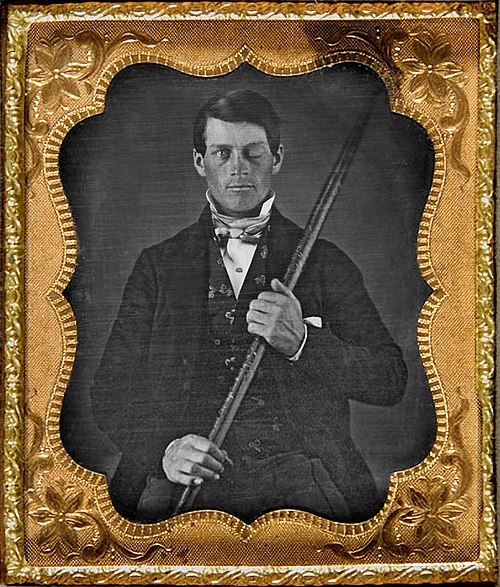
Phineas Gage Survives Severe Brain Injury
Railroad worker Phineas Gage survived an iron rod piercing his frontal lobe, resulting in profound personality changes. This case provided early evidence for the frontal lobe's role in personality and social behavior. #neuroscience #history #braininjury
Phineas Gage Survives Severe Brain Injury By Photograph by Jack and Beverly Wilgus of daguerreotype originally from their collection, and now in the Warren Anatomical Museum, Center for the History of Medicine, Francis A. Countway Library of Medicine, Harvard Medical School.Enlarged using Waifu2x and retouched by Joe Haythornthwaite (see notes on talk page). - Own work, CC BY-SA 3.0, https://commons.wikimedia.org/w/index.php?curid=64865123
1861 CE
Broca Discovers Speech Center in the Brain
French surgeon Paul Broca examined a patient with speech impairment (Tan) and found a lesion in the left frontal lobe. He identified the region responsible for speech production, now known as Broca's area. #neuroscience #history #language
Broca Discovers Speech Center in the Brain By Unknown author - Битнер В.В. На рубеже столетий: Обзор гл. науч. и культур. приобретений XIX века. 1901. URL:http://dlib.rsl.ru/view.php?path=/rsl01003000000/rsl01003963000/rsl01003963893/rsl01003963893.pdf#?page=451, Public domain, https://commons.wikimedia.org/w/index.php?curid=16545674
1870 CE
Fritsch and Hitzig Map Motor Cortex via Electrical Stimulation
German physicians Gustav Fritsch and Eduard Hitzig electrically stimulated the cerebral cortex of dogs, eliciting specific muscle movements. They demonstrated that motor functions are localized in the brain. #neuroscience #history #motorcortex
Fritsch and Hitzig Map Motor Cortex via Electrical Stimulation By Rudolf Dührkoop - [1], Public domain, https://commons.wikimedia.org/w/index.php?curid=57525502
1873 CE
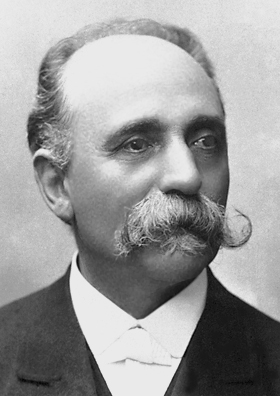
Camillo Golgi Develops Silver Staining Method
Italian physician Camillo Golgi invented the silver nitrate staining technique (Golgi stain) that allowed visualization of individual neurons. This method revealed the complex structure of nerve cells. #neuroscience #history #histology
Camillo Golgi Develops Silver Staining Method By Unknown author - [1] [2] [3], Public domain, https://commons.wikimedia.org/w/index.php?curid=18347448
1874 CE
Wernicke Identifies Language Comprehension Area
German neurologist Carl Wernicke described a region in the left temporal lobe (Wernicke's area) responsible for language comprehension. He proposed a model of language processing involving connections between brain areas. #neuroscience #history #language
Wernicke Identifies Language Comprehension Area By J.F. Lehmann, Muenchen - IHM, Public domain, https://commons.wikimedia.org/w/index.php?curid=9679254
1885 CE
Santiago Ramón y Cajal Applies Golgi Stain to Study Neurons
Spanish neuroscientist Santiago Ramón y Cajal used Golgi's stain to study the nervous system, proposing the neuron doctrine: that neurons are discrete cells that communicate via synapses. He is considered the father of modern neuroscience. #neuroscience #history #neurondoctrine
Santiago Ramón y Cajal Applies Golgi Stain to Study Neurons By Original photo is anonymous although published by Clark University in 1899. Restoration by Garrondo - Cajal.PNG, Public domain, https://commons.wikimedia.org/w/index.php?curid=12334552
1887 CE
Sherrington Coins the Term 'Synapse'
English physiologist Charles Scott Sherrington introduced the term 'synapse' to describe the junction between neurons. His work on reflex arcs and neural integration laid the foundation for understanding neural circuits. #neuroscience #history #synapse
Sherrington Coins the Term 'Synapse' By Unknown author - https://wellcomeimages.org/indexplus/image/L0014994.html, CC BY 4.0, https://commons.wikimedia.org/w/index.php?curid=33623905
1891 CE
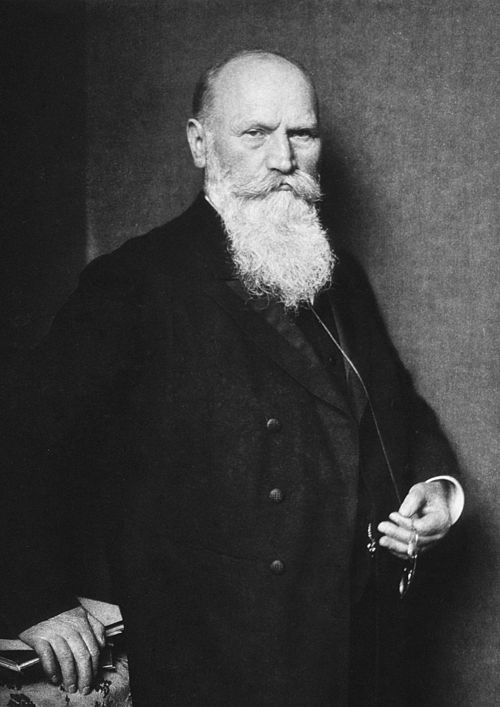
Wilhelm von Waldeyer Coins 'Neuron'
German anatomist Wilhelm von Waldeyer-Hartz proposed the term 'neuron' to describe the nerve cell as the structural and functional unit of the nervous system, consolidating Cajal's neuron doctrine. #neuroscience #history #neuron
Wilhelm von Waldeyer Coins 'Neuron' By Unknown author - http://ihm.nlm.nih.gov/images/B25498, Public domain, https://commons.wikimedia.org/w/index.php?curid=20366667
1898 CE
Golgi and Cajal Share Nobel Prize for Neuroscience
Camillo Golgi and Santiago Ramón y Cajal were jointly awarded the Nobel Prize in Physiology or Medicine for their work on the structure of the nervous system. Despite their differing views, their contributions were foundational. #neuroscience #history #Nobel
1906 CE
Alois Alzheimer Describes Alzheimer's Disease
German psychiatrist Alois Alzheimer presented a case of a woman with memory loss and brain abnormalities, including plaques and tangles. This became the first description of Alzheimer's disease. #neuroscience #history #Alzheimers
Alois Alzheimer Describes Alzheimer's Disease By Unknown author - Images from the History of Medicine (IHM), Public domain, https://commons.wikimedia.org/w/index.php?curid=11648572
1909 CE
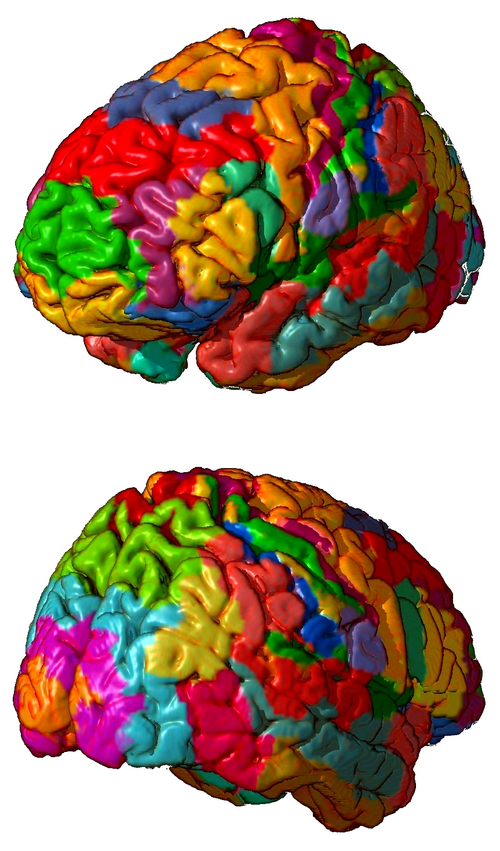
Korbinian Brodmann Maps Brain Cytoarchitecture
German neurologist Korbinian Brodmann published a map of the cerebral cortex based on cell organization, identifying 52 distinct areas (Brodmann areas). This cytoarchitectonic map remains widely used today. #neuroscience #history #brainmapping
Korbinian Brodmann Maps Brain Cytoarchitecture By Mark Dow. Research Assistant Brain Development Lab, University of Oregon. - http://lcni.uoregon.edu/~dow/Space_software/renderings.html, Public domain, https://commons.wikimedia.org/w/index.php?curid=8324220
1914 CE
Harvey Cushing Pioneers Modern Neurosurgery
American neurosurgeon Harvey Cushing developed techniques for brain tumor surgery, introduced the use of electrosurgery, and reduced mortality rates. He is considered the father of modern neurosurgery. #neuroscience #history #neurosurgery
Harvey Cushing Pioneers Modern Neurosurgery By Unknown author - https://wellcomeimages.org/indexplus/image/V0027585.html This file comes from the Wellcome Collection, a website operated by Wellcome Trust, a global charitable foundation based in the United Kingdom. Refer to Wellcome blog post (archive).This tag does not indicate the copyright status of the attached work. A normal copyright tag is still required. See Commons:Licensing., CC BY 4.0, https://commons.wikimedia.org/w/index.php?curid=33621104
1924 CE
Hans Berger Records First Human Electroencephalogram (EEG)
German psychiatrist Hans Berger recorded the first human EEG, demonstrating electrical activity from the brain. He identified alpha and beta waves, opening the field of electroencephalography. #neuroscience #history #EEG
Hans Berger Records First Human Electroencephalogram (EEG) By Unknown author - http://www.psychiatrie.uk-j.de/Geschichte.html, Public domain, https://commons.wikimedia.org/w/index.php?curid=12160449
1932 CE
Sherrington and Adrian Win Nobel for Neuron Function
Charles Sherrington and Edgar Adrian shared the Nobel Prize for discoveries regarding the function of neurons, including the all-or-none law of nerve impulses and synaptic transmission. #neuroscience #history #Nobel
1937 CE
Papez Proposes Limbic System for Emotion
American anatomist James Papez described a neural circuit (Papez circuit) involving the hippocampus, thalamus, and cingulate cortex, proposing it as the basis for emotion. This laid groundwork for the limbic system concept. #neuroscience #history #emotion
Papez Proposes Limbic System for Emotion By Original: teens.drugabuse.gov Vector: Pixelsquid🎱 - This file was derived from: Brain limbicsystem.jpg:, Public domain, https://commons.wikimedia.org/w/index.php?curid=99460976
1938 CE
Lorente de Nó Describes Recurrent Collateral Circuits
Spanish neuroscientist Rafael Lorente de Nó identified recurrent collateral circuits in the hippocampus, contributing to the understanding of neural networks and memory formation. #neuroscience #history #neuralcircuits
1943 CE
McCulloch and Pitts Propose Neural Network Model
Warren McCulloch and Walter Pitts published a mathematical model of artificial neurons, showing that simple neural networks could perform logical operations. This work laid the foundation for artificial neural networks and computational neuroscience. #neuroscience #history #AI
McCulloch and Pitts Propose Neural Network Model By Funcs - Own work, CC0, https://commons.wikimedia.org/w/index.php?curid=148910507
1949 CE
Donald Hebb Proposes Hebbian Learning Rule
Canadian psychologist Donald Hebb published 'The Organization of Behavior,' proposing that neurons that fire together wire together (Hebbian theory). This principle became fundamental for understanding synaptic plasticity and learning. #neuroscience #history #plasticity
Donald Hebb Proposes Hebbian Learning Rule By Henry Vandyke Carter - Henry Gray (1918) Anatomy of the Human Body (See "Book" section below) Bartleby.com: Gray's Anatomy, Plate 728 This is a retouched picture, which means that it has been digitally altered from its original version. Modifications: vectorization (CorelDraw). The original can be viewed here: Gray728.png: . Modifications made by Mysid., Public domain, https://commons.wikimedia.org/w/index.php?curid=1676555
1950 CE
Alan Hodgkin and Andrew Huxley Describe Action Potential
British physiologists Alan Hodgkin and Andrew Huxley used the squid giant axon to describe the ionic mechanisms underlying the action potential. Their model earned them the Nobel Prize and is a cornerstone of neurophysiology. #neuroscience #history #actionpotential
Alan Hodgkin and Andrew Huxley Describe Action Potential By Krishnavedala - Own work, CC0, https://commons.wikimedia.org/w/index.php?curid=21725464
1952 CE
First Successful Human Deep Brain Stimulation
Neurosurgeons performed the first deep brain stimulation (DBS) in humans to treat movement disorders. DBS later became a key therapy for Parkinson's disease and other conditions. #neuroscience #history #DBS
First Successful Human Deep Brain Stimulation By Hellerhoff - Own work, CC BY-SA 3.0, https://commons.wikimedia.org/w/index.php?curid=13785677
1953 CE
Patient HM Undergoes Temporal Lobe Surgery
Henry Molaison (Patient HM) had bilateral medial temporal lobe resection to treat epilepsy, resulting in severe anterograde amnesia. His case revealed the critical role of the hippocampus in forming new memories. #neuroscience #history #memory
1957 CE
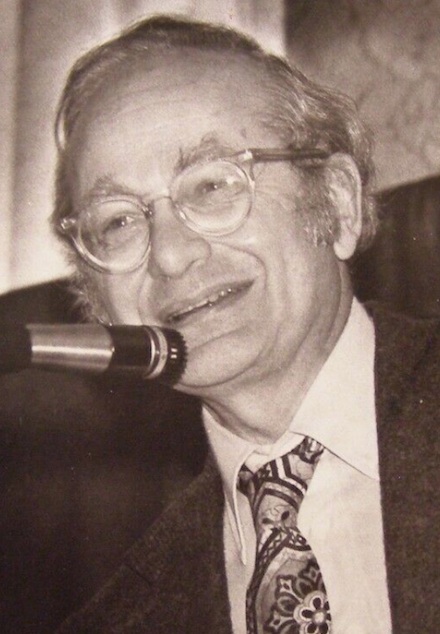
Vernon Mountcastle Discovers Cortical Columns
American neuroscientist Vernon Mountcastle identified columnar organization in the somatosensory cortex, where neurons with similar properties are arranged vertically. This concept became a fundamental principle of cortical organization. #neuroscience #history #cortex
1960 CE
Hubel and Wiesel Discover Orientation Columns in Visual Cortex
David Hubel and Torsten Wiesel used single-unit recording in cats to show that neurons in the visual cortex respond to specific orientations. Their work on visual processing earned them a Nobel Prize. #neuroscience #history #vision
Hubel and Wiesel Discover Orientation Columns in Visual Cortex By Joey cantod - Own work, CC BY-SA 4.0, https://commons.wikimedia.org/w/index.php?curid=79369186
1963 CE
Eccles, Hodgkin, and Huxley Win Nobel for Synaptic Transmission
John Eccles shared the Nobel Prize with Hodgkin and Huxley for his work on synaptic transmission, particularly the role of ions in excitatory and inhibitory postsynaptic potentials. #neuroscience #history #Nobel
Eccles, Hodgkin, and Huxley Win Nobel for Synaptic Transmission By Unknown author - https://wellcomeimages.org/indexplus/obf_images/42/86/2e1a4ca2e1c91a1f5aa88c6db04d.jpg Gallery: https://wellcomeimages.org/indexplus/image/L0026812.html, CC BY 4.0, https://commons.wikimedia.org/w/index.php?curid=36013687
1966 CE
Paul MacLean Proposes Triune Brain Model
American physician Paul MacLean introduced the triune brain model, dividing the brain into reptilian, limbic, and neocortex layers. Though later criticized, it popularized the idea of brain evolution. #neuroscience #history #evolution
Paul MacLean Proposes Triune Brain Model By Lchunhori at English Wikipedia - Own work by the original uploader, CC BY-SA 2.5, https://commons.wikimedia.org/w/index.php?curid=42657486
1970 CE
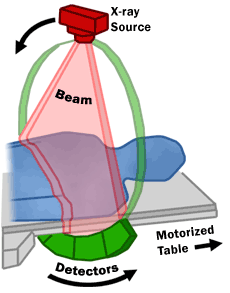
First CT Scan of the Brain
Godfrey Hounsfield and Allan Cormack developed computed tomography (CT), enabling non-invasive imaging of the brain. CT scans revolutionized diagnosis of brain tumors, hemorrhages, and structural abnormalities. #neuroscience #history #imaging
First CT Scan of the Brain By Food and Drug Administration - https://fda.gov/radiation-emitting-products/medical-x-ray-imaging/computed-tomography-ct, Public domain, https://commons.wikimedia.org/w/index.php?curid=99627315
1973 CE
Paul Lauterbur Develops MRI
American chemist Paul Lauterbur produced the first magnetic resonance image (MRI) of a living organism. MRI later became a crucial tool for brain imaging, providing detailed soft tissue contrast. #neuroscience #history #MRI
Paul Lauterbur Develops MRI By Bush6NobelLaureates.jpg: Tina Hager derivative work: Elinnea (talk) - Bush6NobelLaureates.jpg, Public domain, https://commons.wikimedia.org/w/index.php?curid=16855696
1976 CE
Seiji Ogawa Discovers BOLD Signal for fMRI
Japanese physicist Seiji Ogawa identified the blood-oxygen-level-dependent (BOLD) contrast mechanism, which became the basis for functional MRI (fMRI). This allowed mapping of brain activity non-invasively. #neuroscience #history #fMRI
Seiji Ogawa Discovers BOLD Signal for fMRI By Rickinasia - Own work, CC BY-SA 4.0, https://commons.wikimedia.org/w/index.php?curid=83027417
1980 CE
First Human Brain PET Scan
Positron emission tomography (PET) was first used to image human brain metabolism and neurotransmitter activity. PET scans enabled studies of brain function in health and disease. #neuroscience #history #PET
First Human Brain PET Scan By Spacecoastcreative - Own work, CC0, https://commons.wikimedia.org/w/index.php?curid=149063982
1981 CE
Hubel and Wiesel Win Nobel for Visual System
David Hubel and Torsten Wiesel received the Nobel Prize for their discoveries about information processing in the visual system, including orientation columns and binocular vision. #neuroscience #history #Nobel
1986 CE
Eric Kandel Identifies Molecular Basis of Memory in Aplysia
Austrian-born American neuroscientist Eric Kandel used the sea slug Aplysia to study the molecular mechanisms of learning and memory, discovering the role of protein synthesis in long-term potentiation. #neuroscience #history #memory
Eric Kandel Identifies Molecular Basis of Memory in Aplysia By Bengt Oberger - Own work, CC BY-SA 4.0, https://commons.wikimedia.org/w/index.php?curid=37241660
1990 CE
Human Genome Project Launched
The Human Genome Project began, aiming to sequence the entire human genome. This project later provided insights into genetic factors influencing brain development, function, and neurological disorders. #neuroscience #history #genetics
Human Genome Project Launched By U.S. Department of Energy, Human Genome Project - http://www.ornl.gov/hgmis, Public domain, https://commons.wikimedia.org/w/index.php?curid=2485616
1991 CE
First Functional MRI (fMRI) of Human Brain
Researchers performed the first fMRI scans of the human brain using BOLD contrast, demonstrating that brain activity could be mapped non-invasively. fMRI became a dominant tool in cognitive neuroscience. #neuroscience #history #fMRI
First Functional MRI (fMRI) of Human Brain By OpenStax - https://openstax.org/books/anatomy-and-physiology/pages/12-1-basic-structure-and-function-of-the-nervous-system, CC BY 4.0, https://commons.wikimedia.org/w/index.php?curid=30147912
1997 CE
Deep Brain Stimulation Approved for Parkinson's
The U.S. FDA approved deep brain stimulation (DBS) for treating essential tremor and Parkinson's disease. DBS involves implanting electrodes in specific brain regions to modulate abnormal neural activity. #neuroscience #history #Parkinsons
2000 CE
Arvid Carlsson, Paul Greengard, Eric Kandel Win Nobel for Signal Transduction
The Nobel Prize was awarded for discoveries concerning signal transduction in the nervous system, including dopamine's role in Parkinson's and molecular mechanisms of memory. #neuroscience #history #Nobel