Encyclopedia/2. Technology & The Built World/5. Materials & Chemical Engineering/01. Metallurgy & Alloys • Curated by Admin Timeline.sg
Nanotechnology and smart materials have evolved from theoretical concepts to transformative technologies, enabling breakthroughs in medicine, electronics, and materials science. This timeline traces key milestones from Richard Feynman's visionary lecture to modern applications like graphene and DNA origami.
Chronological Storyline (41 Milestones)
Dec 29, 1959 CE
Feynman's 'There's Plenty of Room at the Bottom'
Physicist Richard Feynman delivers a visionary lecture at Caltech, outlining the principles of nanotechnology and the ability to manipulate individual atoms and molecules. This talk is widely considered the conceptual birth of nanotechnology. #nanotechnology #science
1974 CE
Norio Taniguchi Coins 'Nanotechnology'
Japanese scientist Norio Taniguchi first uses the term 'nanotechnology' to describe precision machining of materials at the nanometer level. His definition sets the stage for the field's formal recognition. #nanotechnology #terminology
1981 CE
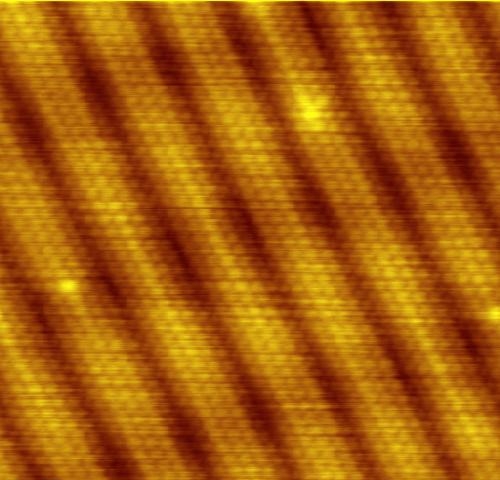
Invention of the Scanning Tunneling Microscope
Gerd Binnig and Heinrich Rohrer at IBM Zurich invent the scanning tunneling microscope (STM), enabling imaging of individual atoms for the first time. This breakthrough earns them the 1986 Nobel Prize in Physics and revolutionizes nanoscale observation. #microscopy #nanotechnology
Invention of the Scanning Tunneling Microscope By Erwinrossen - en:File:Atomic_resolution_Au100.JPG, see upload log, Public domain, https://commons.wikimedia.org/w/index.php?curid=1790142
1985 CE
Discovery of Fullerenes (Buckminsterfullerene)
Harry Kroto, Robert Curl, and Richard Smalley discover C60, a spherical carbon molecule known as buckminsterfullerene or 'buckyball'. This discovery opens the field of carbon nanomaterials and earns them the 1996 Nobel Prize in Chemistry. #carbon #nanomaterials
Discovery of Fullerenes (Buckminsterfullerene) By 痛 - Own work, CC BY-SA 4.0, https://commons.wikimedia.org/w/index.php?curid=118428240
1986 CE
Engines of Creation Published
K. Eric Drexler publishes 'Engines of Creation: The Coming Era of Nanotechnology', popularizing the concept of molecular nanotechnology and self-replicating nanobots. The book sparks public imagination and debate about the future of nanotechnology. #nanotechnology #books
1986 CE
Invention of the Atomic Force Microscope
Gerd Binnig, Calvin Quate, and Christoph Gerber invent the atomic force microscope (AFM), which measures forces between a sharp tip and a sample surface. The AFM becomes a versatile tool for imaging and manipulating nanoscale materials. #microscopy #nanotechnology
Invention of the Atomic Force Microscope By Unknown author, Public domain, https://commons.wikimedia.org/w/index.php?curid=3592868
1989 CE
IBM Spells 'IBM' with Xenon Atoms
Don Eigler and Erhard Schweizer at IBM use a scanning tunneling microscope to arrange 35 xenon atoms on a nickel surface to spell out 'IBM'. This demonstrates precise atomic manipulation and becomes an iconic image of nanotechnology. #nanotechnology #atomic
1991 CE
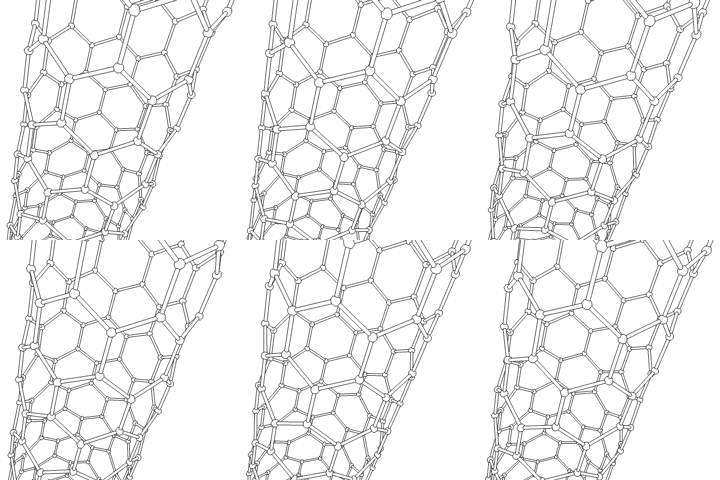
Discovery of Carbon Nanotubes
Sumio Iijima of NEC discovers carbon nanotubes, cylindrical carbon structures with extraordinary strength and electrical properties. This discovery ignites intense research into carbon-based nanomaterials for electronics, composites, and medicine. #carbon #nanomaterials
Discovery of Carbon Nanotubes By Original hochgeladen von Schwarzm am 30. Aug 2004; Selbst gemacht mit C4D/Cartoonrenderer, GNU FDL - German Wikipedia, original upload 29. Dez 2004 by APPER, CC BY-SA 3.0, https://commons.wikimedia.org/w/index.php?curid=350208
1993 CE
First Single-Electron Transistor
Researchers at Bell Labs and other institutions demonstrate the first single-electron transistor, which controls the movement of individual electrons. This device is a key step toward nanoelectronics and quantum computing. #nanoelectronics #quantum
First Single-Electron Transistor By tteab11 - Own work, CC BY-SA 4.0, https://commons.wikimedia.org/w/index.php?curid=65373680
1998 CE
First Nanowire Transistor
Charles Lieber's group at Harvard creates the first transistor using a semiconductor nanowire. This breakthrough demonstrates the potential of nanowires for future nanoelectronic devices and sensors. #nanoelectronics #nanowires
2000 CE
US National Nanotechnology Initiative Launched
President Bill Clinton announces the National Nanotechnology Initiative (NNI), a US federal program to coordinate nanotechnology research and development. The NNI provides significant funding and catalyzes global investment in nanotechnology. #policy #nanotechnology
US National Nanotechnology Initiative Launched By US Federal Government National Nanotechnology Coordination Office - https://www.nano.gov/2025BudgetSupplement, Public domain, https://commons.wikimedia.org/w/index.php?curid=163991308
2000 CE
First Nanocar Built
Researchers at Rice University create the first nanocar, a molecule with a chassis and wheels that can roll across a surface. This demonstrates molecular-scale mechanical motion and paves the way for nanomachines. #nanomachines #chemistry
First Nanocar Built By Shirai, Y. et al. Uploaded by Materialscientist at en.wikipedia - I (Materialscientist (talk)) created this work entirely by myself., Public domain, https://commons.wikimedia.org/w/index.php?curid=16454593
2001 CE
First Commercial Nanotechnology Products
Nanotechnology begins appearing in consumer products, including stain-resistant fabrics, sunscreens with nanoparticles, and nanocomposite tennis balls. These early products mark the transition from lab to market. #commercialization #nanotechnology
First Commercial Nanotechnology Products By NASA - Great Images in NASA: Home page – Source – Image, Public domain, https://commons.wikimedia.org/w/index.php?curid=6452532
2002 CE
DNA Origami Technique Developed
Nadrian Seeman's group at New York University develops DNA origami, a method to fold DNA into nanoscale shapes. This technique enables the creation of complex nanostructures for drug delivery and nanorobotics. #DNA #nanotechnology
DNA Origami Technique Developed By Origamimonkey - Own work, CC BY-SA 3.0, https://commons.wikimedia.org/w/index.php?curid=23081745
2004 CE
Isolation of Graphene
Andre Geim and Konstantin Novoselov at the University of Manchester isolate graphene, a single layer of carbon atoms with exceptional strength and conductivity. Their work earns them the 2010 Nobel Prize in Physics and ignites a graphene research boom. #graphene #2Dmaterials
Isolation of Graphene By AlexanderAlUS - Own work, CC BY-SA 3.0, https://commons.wikimedia.org/w/index.php?curid=11294534
2005 CE
First Nanoscale Mass Spectrometer
Researchers develop a nanoscale mass spectrometer capable of detecting single molecules. This device enhances analytical chemistry and enables sensitive detection of biomolecules. #nanotechnology #analytical
First Nanoscale Mass Spectrometer By Francis William Aston - "Positive Ray Parabolas". Isotopes. London, England: Edward Arnold Publishers Ltd, 1922. Digital file made available by Science History Institute, at https://digital.sciencehistory.org/works/79407z32j, Public domain, https://commons.wikimedia.org/w/index.php?curid=2976526
2006 CE
Nanofluidic Transistor Demonstrated
Scientists create a nanofluidic transistor that controls ion flow through nanoscale channels. This device mimics biological ion channels and has potential for lab-on-a-chip applications. #nanofluidics #transistor
Nanofluidic Transistor Demonstrated By Kingtl at English Wikipedia - Transferred from en.wikipedia to Commons by Jacopo Werther., Public domain, https://commons.wikimedia.org/w/index.php?curid=7514877
2007 CE
First Nanowire Battery
Researchers at Stanford University develop a lithium-ion battery using silicon nanowires as anodes, significantly increasing capacity and cycle life. This innovation promises longer-lasting batteries for electronics and electric vehicles. #battery #nanowires
2008 CE
First Nanoscale Motor Powered by Light
Scientists create a molecular motor that rotates when exposed to light, converting light energy into mechanical motion. This nanomotor is a step toward light-powered nanomachines. #nanomachines #light
First Nanoscale Motor Powered by Light By User:Bensaccount. Original uploader was Bensaccount at en.wikipedia - Transferred from en.wikipedia, CC BY 3.0, https://commons.wikimedia.org/w/index.php?curid=8287100
2009 CE
Graphene Transistor Demonstrated
Researchers fabricate the first graphene transistor, showing high electron mobility. This demonstration highlights graphene's potential for ultra-fast electronics, though challenges with bandgap remain. #graphene #electronics
2010 CE
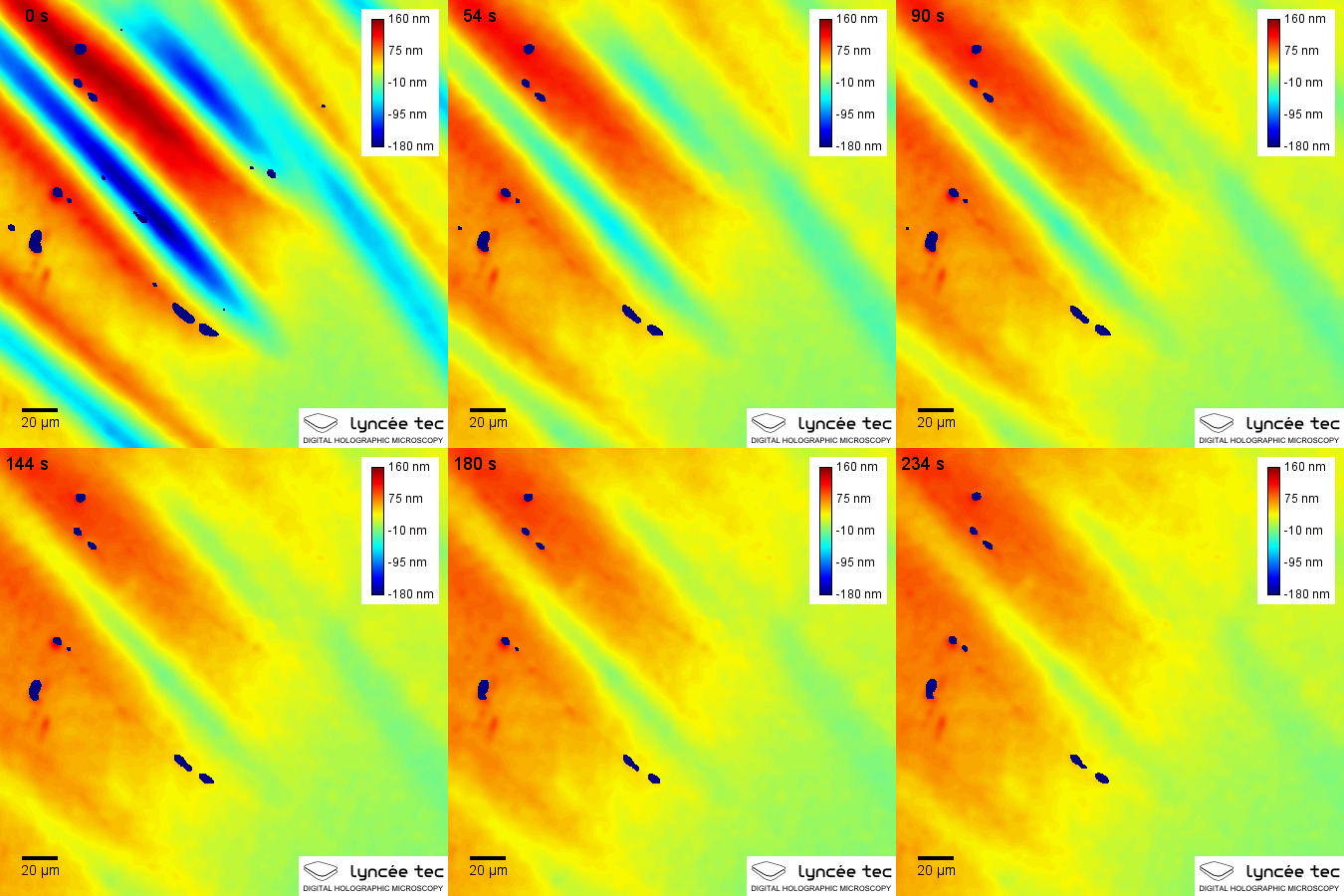
First Self-Healing Material
Scientists develop a polymer that can heal cracks autonomously when exposed to light. This smart material mimics biological healing and has applications in coatings, electronics, and aerospace. #smartmaterials #selfhealing
First Self-Healing Material By Jejmule - Own work, CC BY-SA 4.0, https://commons.wikimedia.org/w/index.php?curid=55714245
2011 CE
Nanoparticle Drug Delivery for Cancer Approved
The FDA approves Abraxane, a nanoparticle formulation of paclitaxel for breast cancer treatment. This milestone validates nanomedicine's potential to improve drug efficacy and reduce side effects. #nanomedicine #cancer
2012 CE
First Nanoscale LED
Researchers demonstrate a nanoscale light-emitting diode (LED) using nanowires. This nanoscale LED enables ultra-high-resolution displays and efficient lighting. #LED #nanowires
2013 CE
Graphene-Based Flexible Display Prototype
Samsung and others showcase a flexible display prototype using graphene electrodes. This demonstrates graphene's potential for bendable electronics and foldable screens. #graphene #flexible
Graphene-Based Flexible Display Prototype By Steve Jurvetson - https://www.flickr.com/photos/jurvetson/6919668081/, CC BY 2.0, https://commons.wikimedia.org/w/index.php?curid=57286180
2014 CE
First Nanoscale 3D Printing
Researchers develop a method for 3D printing objects at the nanoscale using two-photon lithography. This technique enables fabrication of complex nanostructures for photonics and medicine. #3Dprinting #nanofabrication
First Nanoscale 3D Printing By RepRapPro - YouTube: https://www.youtube.com/watch?v=r5nDrae3gJg – View/save archived versions on archive.org, CC BY 3.0, https://commons.wikimedia.org/w/index.php?curid=45334835
2015 CE
DNA Nanorobots Target Cancer Cells
Scientists create DNA-based nanorobots that can deliver drugs specifically to cancer cells by recognizing molecular signals. This breakthrough advances targeted therapy and smart drug delivery. #DNA #nanomedicine
2016 CE
Discovery of MXenes
Researchers at Drexel University discover MXenes, a class of two-dimensional transition metal carbides and nitrides. These materials exhibit high conductivity and tunable properties for energy storage and sensors. #2Dmaterials #MXene
2017 CE
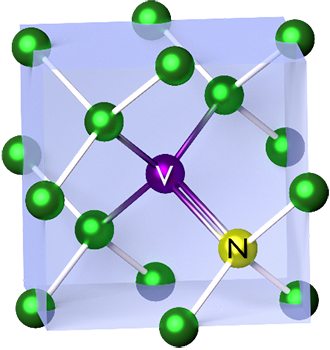
First Nanoscale Quantum Sensor
Scientists develop a quantum sensor using nitrogen-vacancy centers in nanodiamonds, capable of measuring magnetic fields with high sensitivity. This sensor has applications in imaging and navigation. #quantum #sensor
First Nanoscale Quantum Sensor By NIST - https://www.nist.gov/programs-projects/diamond-nv-center-magnetometry, Public domain, https://commons.wikimedia.org/w/index.php?curid=100241886
2018 CE
Graphene-Based Brain Implant Tested
Researchers implant a graphene-based electrode array in a mouse brain, demonstrating high-resolution neural recording. This advance paves the way for graphene-based brain-machine interfaces. #graphene #BCI
Graphene-Based Brain Implant Tested By Mike Cai Chen - My friend is a photographer and took some pictures of myself and gave me the picture to use for whatever I want. https://www.mikekaichen.com/, CC0, https://commons.wikimedia.org/w/index.php?curid=168405025
2019 CE
First Nanoscale Robot with Legs
Scientists create a nanoscale robot with movable legs, powered by light, that can walk on surfaces. This demonstrates complex mechanical motion at the molecular level. #nanorobotics #light
2020 CE
Nanoparticle Vaccine for COVID-19 Developed
Pfizer-BioNTech and Moderna develop mRNA vaccines using lipid nanoparticles for delivery. These vaccines prove highly effective and accelerate nanomedicine adoption globally. #nanomedicine #vaccine
Nanoparticle Vaccine for COVID-19 Developed By Lasse Folkersen og Ann-Louise Bergström - Own work, CC BY-SA 4.0, https://commons.wikimedia.org/w/index.php?curid=110274951
2021 CE
First Room-Temperature Quantum Coherence in Nanodiamonds
Researchers achieve quantum coherence in nitrogen-vacancy centers in nanodiamonds at room temperature. This breakthrough enables practical quantum sensors and quantum information processing. #quantum #nanodiamonds
2022 CE
Self-Assembling Nanostructures for Data Storage
Scientists develop a method for self-assembling block copolymers into nanoscale patterns for high-density data storage. This approach could increase storage capacity by orders of magnitude. #data #selfassembly
Self-Assembling Nanostructures for Data Storage By Mankash - Own work based on: ✦ Copolymers.png: by V8rik, CC BY-SA 3.0, https://commons.wikimedia.org/w/index.php?curid=4789624
2023 CE
Nanoscale 3D Printing of Metal Structures
Researchers achieve 3D printing of metal nanostructures with sub-micrometer resolution using electrodeposition. This enables fabrication of complex metallic microdevices for electronics and MEMS. #3Dprinting #metals
2024 CE
Graphene-Based Water Filter Commercialized
A company launches a commercial water filter using graphene oxide membranes that remove contaminants and salt. This product demonstrates graphene's potential for addressing water scarcity. #graphene #water
Graphene-Based Water Filter Commercialized By own work - Structural features taken from: model for graphite oxide Heyong Hea, Jacek Klinowski, Michael Forsterb, Anton Lerf. Chemical Physics Letters Volume 287, Issues 1–2; 1998. -- from https://dx.doi.org/10.1016/S0009-2614(98)00144-4 picture from the article currently at [1], Public domain, https://commons.wikimedia.org/w/index.php?curid=18699429
2025 CE
First Nanoscale Optical Switch
Researchers demonstrate a nanoscale optical switch that can control light at the single-photon level. This device is a key component for future optical computing and quantum networks. #photonics #nanotechnology
2026 CE
Smart Wound Dressing with Nanosensors
A smart bandage incorporating nanosensors that monitor pH and temperature is developed for chronic wounds. This material releases antibiotics on demand, improving healing outcomes. #smartmaterials #health
2027 CE
Nanowire-Based Artificial Retina Implanted
Scientists implant a nanowire-based artificial retina in a blind patient, restoring partial vision. This breakthrough demonstrates the potential of nanomaterials for neural prosthetics. #nanowires #prosthetics
2028 CE
Self-Healing Concrete with Nanofibers
Construction companies begin using concrete embedded with nanofibers that release healing agents when cracks form. This smart material extends infrastructure lifespan and reduces maintenance costs. #smartmaterials #construction
Self-Healing Concrete with Nanofibers By Niranjan Prabhu K - Own work, CC BY-SA 4.0, https://commons.wikimedia.org/w/index.php?curid=120122262
2029 CE
Quantum Dot Solar Cells Achieve 30% Efficiency
Researchers develop quantum dot solar cells that convert 30% of sunlight into electricity, surpassing traditional silicon cells. This advance could make solar energy more affordable and efficient. #solar #quantumdots
Quantum Dot Solar Cells Achieve 30% Efficiency By Lukasz Brzozowski - Lukasz Brzozowski, Director, Photovoltaics Research Program, Department of Electrical and Computer Engineering, University of Toronto, CC BY-SA 3.0, https://commons.wikimedia.org/w/index.php?curid=23042681
2030 CE
First Commercial Nanoscale Assembly Line
A factory opens that uses DNA origami and robotic arms to assemble nanoscale components for electronics. This marks the beginning of industrial-scale nanomanufacturing. #nanomanufacturing #DNA