1959 CE
Feynman's 'Plenty of Room at the Bottom'
Physicist Richard Feynman delivers a lecture at Caltech envisioning the manipulation of individual atoms, laying the conceptual foundation for nanotechnology. #nanotech #feynman
Nanotechnology focuses on engineering at the atomic and molecular scale, with milestones from Feynman's 1959 lecture to the isolation of graphene. Key developments include the scanning tunneling microscope, carbon nanotubes, and fullerene C60, enabling advances in materials science, medicine, and electronics.
Physicist Richard Feynman delivers a lecture at Caltech envisioning the manipulation of individual atoms, laying the conceptual foundation for nanotechnology. #nanotech #feynman
Japanese scientist Norio Taniguchi first uses the term 'nanotechnology' to describe precision machining at the nanometer scale. #nanotech #terminology
Gerd Binnig and Heinrich Rohrer at IBM Zurich invent the STM, enabling imaging and manipulation of individual atoms. It wins the 1986 Nobel Prize in Physics. #nanotech #STM
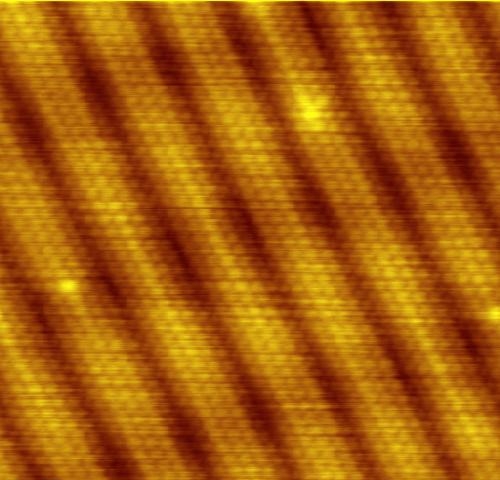
Harold Kroto, James Heath, Sean O'Brien, Robert Curl, and Richard Smalley discover C60, a spherical carbon molecule, opening a new field of carbon nanomaterials. They receive the 1996 Nobel Prize. #nanotech #fullerene
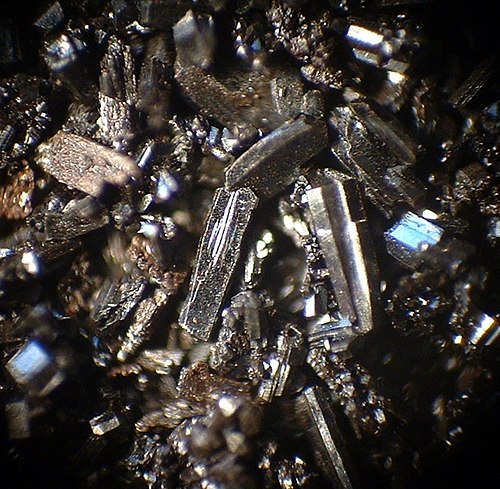
Eric Drexler popularizes the concept of molecular nanotechnology and assemblers, sparking public interest and debate. #nanotech #drexlernano
Gerd Binnig, Calvin Quate, and Christoph Gerber invent the AFM, which uses a cantilever to measure surface topography at the atomic level. #nanotech #AFM

Scientists at IBM use an STM to arrange 48 iron atoms into a quantum corral on a copper surface, demonstrating wave-like behavior of electrons. #nanotech #quantumcorral
IBM researchers spell 'IBM' with 35 xenon atoms on a nickel surface using an STM, confirming atomic-scale manipulation. #nanotech #atomicprecision
Sumio Iijima discovers multi-walled carbon nanotubes, cylindrical carbon structures with extraordinary strength and conductivity. #nanotech #carbonnanotubes
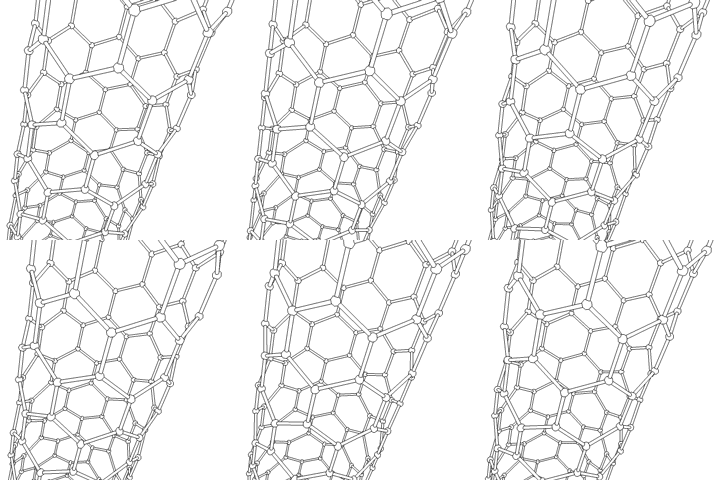
Sumio Iijima and Toshinari Ichihashi, and independently Donald Bethune, synthesize single-walled carbon nanotubes. #nanotech #SWCNT
Researchers at IBM create the first transistor using carbon nanotubes, paving the way for nanoelectronics. #nanotech #transistor
Harold Kroto, Robert Curl, and Richard Smalley receive the Nobel Prize in Chemistry for discovering fullerenes. #nanotech #nobel

Scientists at University of California, Berkeley, create a molecular gear made of carbon nanotubes. #nanotech #nanogear
President Clinton announces the National Nanotechnology Initiative (NNI) to coordinate federal research and development. #nanotech #NNI

Ben Feringa and colleagues build the first synthetic molecular motor, a nanoscale rotor that can be driven by light. #nanotech #molecularmotor

Products like nano-sunscreen (using zinc oxide nanoparticles) and stain-resistant fabrics enter the market. #nanotech #consumerproducts
Researchers develop method to grow silicon nanowires, enabling future nanoelectronic components. #nanotech #nanowires
Studies begin on the environmental and health impacts of nanoparticles, leading to the field of nanotoxicology. #nanotech #safety
Andre Geim and Konstantin Novoselov isolate a single layer of graphite (graphene) using Scotch tape, revolutionizing materials science. They win the 2010 Nobel Prize. #nanotech #graphene

Researchers show the first graphene-based field-effect transistor, highlighting its potential for high-speed electronics. #nanotech #graphene
First targeted drug delivery using nanoparticles, enhancing cancer treatment efficacy. #nanotech #nanomedicine
Paul Rothemund introduces DNA origami, enabling precise nanoscale structures using folded DNA strands. #nanotech #DNAorigami

Alex Zettl's group at UC Berkeley builds a nanoscale electric motor using carbon nanotubes. #nanotech #nanomotor

Development of lithium-ion batteries with nanostructured electrodes increases energy density and charging speed. #nanotech #batteries

Andre Geim and Konstantin Novoselov receive the Nobel Prize in Physics for their work on graphene. #nanotech #graphene #nobel
Abraxane, a nanoparticle formulation of paclitaxel, is approved for treating breast cancer. #nanotech #cancer
Development of plasmonic nanohole arrays for label-free biosensing applications. #nanotech #biosensing
Technique for 3D printing with sub-100 nm resolution is demonstrated, enabling complex nanostructures. #nanotech #3Dprinting
Nano-porous membranes and nanoparticles are used to remove contaminants from water effectively. #nanotech #water
Quantum dot technology enters consumer displays, offering brighter and more accurate colors. #nanotech #quantumdots
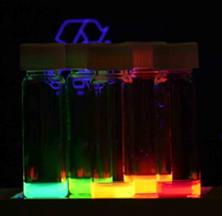
A device that mimics photosynthesis using nanomaterials to convert sunlight into fuel is developed. #nanotech #artificialleaf
Scientists demonstrate DNA nanorobots that can carry drugs to specific cells in living animals. #nanotech #nanorobots
Perovskite solar cells with nanostructured layers achieve record efficiency, surpassing 25%. #nanotech #solar

Lipid nanoparticles become a key delivery system for mRNA vaccines, including the COVID-19 vaccines. #nanotech #vaccine

The US National Science Foundation allocates significant funding for nanotechnology research, supporting quantum materials and nanoelectronics. #nanotech #NSF
Development of MXenes and other 2D materials beyond graphene, expanding the nanomaterial family. #nanotech #2Dmaterials
IBM demonstrates a 2-nanometer chip technology, pushing the limits of silicon nanotechnology. #nanotech #computing
Researchers achieve complex 3D nanoscale structures through DNA-directed self-assembly. #nanotech #selfassembly

First commercial graphene-based sensors and transistors enter the market, promising improved performance. #nanotech #graphene