Molecular Biology & DNA Architecture: Global Cross-Cultural Perspectives
Encyclopedia/1. The Cosmos & The Natural World/5. Life Sciences • Curated by Admin Timeline.sg
This timeline traces global contributions to molecular biology and DNA architecture, from ancient concepts of heredity to modern gene-editing technologies, highlighting cross-cultural breakthroughs.
Chronological Storyline (42 Milestones)
500 BCE
Hippocrates Proposes Pangenesis
Greek physician Hippocrates theorizes that hereditary traits are transmitted via particles from all body parts (pangenesis), influencing later ideas on inheritance. #biology #history
Hippocrates Proposes Pangenesis By Ian Alexander - Own work, CC BY-SA 4.0, https://commons.wikimedia.org/w/index.php?curid=62047504
1665 CE
Hooke Discovers Cells
Robert Hooke observes cork cells under a microscope, coining the term 'cell' and laying the foundation for cell theory. #biology #microscopy
Hooke Discovers Cells By Mary Beale - https://arthistoryproject.com/artists/mary-beale/portrait-of-a-mathematician/, Public domain, https://commons.wikimedia.org/w/index.php?curid=92677611
1676 CE
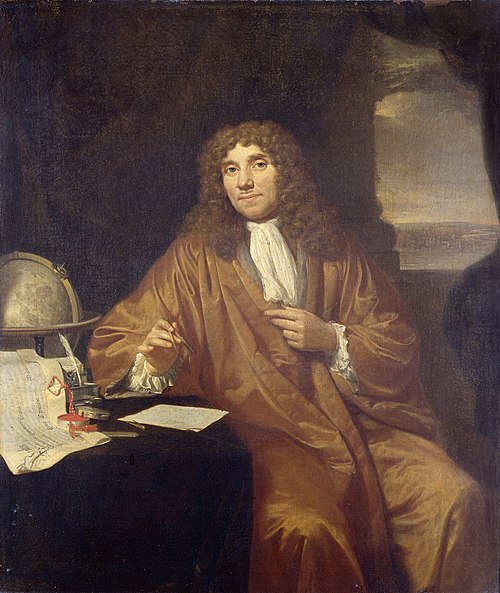
Leeuwenhoek Observes Microorganisms
Antonie van Leeuwenhoek uses his handmade microscopes to observe bacteria and protozoa, opening the microscopic world. #microbiology #history
Leeuwenhoek Observes Microorganisms By Jan Verkolje - http://www.rijksmuseum.nl/collectie/SK-A-957, Public domain, https://commons.wikimedia.org/w/index.php?curid=34320547
1831 CE
Brown Identifies Nucleus
Robert Brown describes the cell nucleus in orchids, recognizing it as a universal cellular structure. #biology #cellbiology )
1856 CE
Mendel Begins Pea Experiments
Gregor Mendel starts his hybridization experiments on pea plants, later establishing laws of inheritance that become the foundation of genetics. #genetics #history
Mendel Begins Pea Experiments By Unknown author - http://0.tqn.com/d/biology/1/0/l/e/3244238.jpg, Public domain, https://commons.wikimedia.org/w/index.php?curid=33347279
1869 CE
Miescher Isolates Nuclein
Friedrich Miescher extracts a substance from white blood cell nuclei, later identified as DNA, nuclein. #molecularbiology #dna
Miescher Isolates Nuclein By Unknown author - copied from http://www.pbs.org/wgbh/nova/photo51/images/befo-miescher.jpg, Public domain, https://commons.wikimedia.org/w/index.php?curid=789048
1881 CE
Pasteur Develops Germ Theory
Louis Pasteur disproves spontaneous generation and formulates germ theory, revolutionizing microbiology and medical science. #microbiology #medicine
Pasteur Develops Germ Theory By Unknown author, Copyrighted free use, https://commons.wikimedia.org/w/index.php?curid=197609
1902 CE
Sutton Proposes Chromosome Theory
Walter Sutton suggests chromosomes carry hereditary units, linking Mendel's factors to chromosomes. #genetics #cellbiology
Sutton Proposes Chromosome Theory By Walter_sutton.jpg: Unknown Theodor_Boveri.jpg: Unknown derivative work: Earthdirt (talk) - Walter_sutton.jpg Theodor_Boveri.jpg, Public domain, https://commons.wikimedia.org/w/index.php?curid=8550969
1909 CE
Johannsen Coins 'Gene'
Danish botanist Wilhelm Johannsen introduces the term 'gene' for Mendel's hereditary factors. #genetics #terminology
Johannsen Coins 'Gene' By Unknown author - The History of Biology de Erik Nordenskiöld, Ed. Knopf, 1928 (domaine public), Copyrighted free use, https://commons.wikimedia.org/w/index.php?curid=743923
1928 CE
Griffith's Transformation Experiment
Frederick Griffith discovers that non-virulent bacteria can become virulent when mixed with heat-killed virulent bacteria, hinting at a transforming principle (later DNA). #molecularbiology #genetics
Griffith's Transformation Experiment By No machine-readable author provided. Madprime assumed (based on copyright claims). - No machine-readable source provided. Own work assumed (based on copyright claims)., CC BY-SA 3.0, https://commons.wikimedia.org/w/index.php?curid=1819839
1935 CE
Belozersky Finds DNA in Bacteria
Soviet biochemist Andrei Belozersky demonstrates the presence of DNA in bacteria, confirming nucleic acids in prokaryotes. #molecularbiology #dna
1941 CE
Beadle and Tatum: One Gene-One Enzyme
George Beadle and Edward Tatum show that each gene controls the production of a specific enzyme using Neurospora crassa. #genetics #biochemistry
1944 CE
Avery-MacLeod-McCarty: DNA as Principle
Oswald Avery, Colin MacLeod, and Maclyn McCarty demonstrate that DNA is the transforming principle, providing the first solid evidence that DNA carries genetic information. #molecularbiology #dna
Avery-MacLeod-McCarty: DNA as Principle By Bbkkk - self-made in the Naturkunste Museum in Berlin, CC BY-SA 4.0, https://commons.wikimedia.org/w/index.php?curid=3679283
1947 CE
McClintock Discovers Transposons
Barbara McClintock identifies mobile genetic elements (transposons) in maize, revolutionizing understanding of genome dynamics. #genetics #molecularbiology
McClintock Discovers Transposons By Smithsonian Institution/Science Service; Restored by Adam Cuerden - Flickr: Barbara McClintock (1902-1992)Smithsonian original, Public domain, https://commons.wikimedia.org/w/index.php?curid=25629182
1952 CE
Hershey-Chase Confirm DNA as Genetic Material
Alfred Hershey and Martha Chase use bacteriophages to confirm that DNA, not protein, is the genetic material. #molecularbiology #dna
Hershey-Chase Confirm DNA as Genetic Material By Thomasione - Modified from German Wikipedia [1], GFDL, https://commons.wikimedia.org/w/index.php?curid=15034881
1953 CE
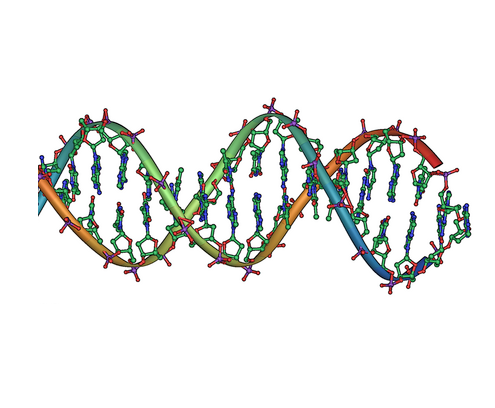
Watson and Crick Propose DNA Double Helix
James Watson and Francis Crick, using data from Rosalind Franklin and Maurice Wilkins, publish the double-helix model of DNA, a landmark in molecular biology. #dna #structure
Watson and Crick Propose DNA Double Helix By Data: Marc Imhoff/NASA GSFC, Christopher Elvidge/NOAA NGDC; Image: Craig Mayhew and Robert Simmon/NASA GSFC - https://visibleearth.nasa.gov/view.php?id=55167 (image link), Public domain, https://commons.wikimedia.org/w/index.php?curid=233702
1958 CE
Meselson-Stahl: Semiconservative Replication
Matthew Meselson and Franklin Stahl demonstrate that DNA replication is semiconservative using isotope labeling. #molecularbiology #replication
1960 CE
Jacob and Monod: Operon Model
François Jacob and Jacques Monod propose the operon model for gene regulation in bacteria, a key concept in molecular biology. #genetics #regulation
1961 CE
Nirenberg Cracks First Genetic Code Word
Marshall Nirenberg and Johann Matthaei decipher the first codon (UUU for phenylalanine), breaking the genetic code. #molecularbiology #geneticcode
Nirenberg Cracks First Genetic Code Word By NIH History Office from Bethesda - J. Heinreich Matthaei and Marshall Nirenberg, Public domain, https://commons.wikimedia.org/w/index.php?curid=82867048
1965 CE
Khorana Synthesizes First Gene
Indian-born biochemist Har Gobind Khorana chemically synthesizes a functional gene, pioneering synthetic biology. #syntheticbiology #genetics
Khorana Synthesizes First Gene By Unknown author - http://www.nobelprize.org/nobel_prizes/medicine/laureates/1968/, Public domain, https://commons.wikimedia.org/w/index.php?curid=194932927
1970 CE
Restriction Enzymes Discovered
Hamilton Smith and Daniel Nathans isolate restriction enzymes that cut DNA at specific sequences, enabling recombinant DNA technology. #molecularbiology #biotechnology
1972 CE
First Recombinant DNA Created
Paul Berg and colleagues produce the first recombinant DNA molecule by combining DNA from different sources, launching genetic engineering. #geneticengineering #biotech
First Recombinant DNA Created By Unknown author - http://profiles.nlm.nih.gov/CD/B/B/L/L/, Public domain, https://commons.wikimedia.org/w/index.php?curid=3702286
1975 CE
Milstein Develops Monoclonal Antibodies
César Milstein and Georges Köhler discover hybridoma technology to produce monoclonal antibodies, revolutionizing immunology and diagnostics. #immunology #biotechnology
Milstein Develops Monoclonal Antibodies By Adenosine - Own work, CC BY-SA 3.0, https://commons.wikimedia.org/w/index.php?curid=9659630
1977 CE
Sanger DNA Sequencing Method
Frederick Sanger develops chain-termination DNA sequencing, enabling rapid reading of genetic codes. #sequencing #dna
Sanger DNA Sequencing Method By Estevezj - Own work, CC BY-SA 3.0, https://commons.wikimedia.org/w/index.php?curid=23264166
1983 CE
PCR Invented by Kary Mullis
Kary Mullis conceptualizes the polymerase chain reaction (PCR), amplifying DNA exponentially and transforming molecular biology. #pcr #biotech
PCR Invented by Kary Mullis By Madprime - Own work, CC0, https://commons.wikimedia.org/w/index.php?curid=2104468
1985 CE
Jeffreys Develops DNA Fingerprinting
Alec Jeffreys discovers variable number tandem repeats (VNTRs) and pioneers DNA fingerprinting for identification. #forensics #genetics
Jeffreys Develops DNA Fingerprinting By Jerome Walker - Own work, created from GDFL work created by Michael Ströck, Public domain, https://commons.wikimedia.org/w/index.php?curid=934419
1990 CE
Human Genome Project Launched
The international Human Genome Project begins, aiming to sequence the entire human genome. #genome #sequencing
Human Genome Project Launched By U.S. Department of Energy, Human Genome Project - http://www.ornl.gov/hgmis, Public domain, https://commons.wikimedia.org/w/index.php?curid=2485616
1991 CE
Tsui et al. Identify CFTR Gene
Lap-Chee Tsui leads the team that discovers the gene for cystic fibrosis (CFTR), advancing molecular medicine. #genetics #disease )
Tsui et al. Identify CFTR Gene By Emw - Own work, CC BY-SA 3.0, https://commons.wikimedia.org/w/index.php?curid=10561381
1995 CE
First Bacterial Genome Sequenced
The complete genome of Haemophilus influenzae is sequenced, the first for a free-living organism, marking a milestone in genomics. #genomics #bacteria
First Bacterial Genome Sequenced By Stefan Walkowski - Own work, CC BY-SA 4.0, https://commons.wikimedia.org/w/index.php?curid=41492226
1996 CE
Dolly the Sheep Cloned
Ian Wilmut and colleagues clone Dolly the sheep from an adult somatic cell, demonstrating mammalian nuclear transfer. #cloning #biotech )
1997 CE
First Eukaryotic Genome: S. cerevisiae
The genome of Saccharomyces cerevisiae (baker's yeast) is completely sequenced, the first eukaryotic genome. #genomics #yeast
First Eukaryotic Genome: S. cerevisiae By Mogana Das Murtey and Patchamuthu Ramasamy - https://www.intechopen.com/chapters/49652, CC BY 3.0, https://commons.wikimedia.org/w/index.php?curid=52254246
2000 CE
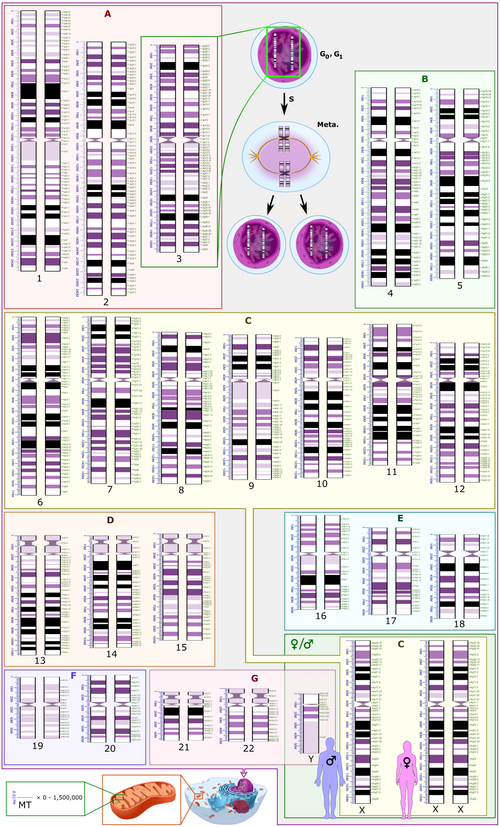
Draft Human Genome Announced
Both the public Human Genome Project and Celera Genomics announce the first draft of the human genome sequence. #genome #sequencing
Draft Human Genome Announced By Mikael Häggström, M.D. Author info - Reusing images- Conflicts of interest: None Mikael Häggström, M.D.- The work integrates Public Domain source images by Was A Bee, Kelvin Ma and Michał Komorniczak- Also, a special acknowledgement to everyone involved in the Human Genome Project for generating the source data.edit - editOwn work, integrating the following Public Domain pictures: Chromosomes, with annotated bands and sub-bands, by User:Was a bee, in turn using data from the Human Genome Project, as displayed in the Ensembl genome database: Ensembl - Homo sapiens: Animal Cell.svg by Kelvin Ma (for mitochondrial localization) Animal cell cycle-en.svg by Kelvin Ma (for cell cycle changes at top) Female shadow (for the female silhouette), by Mikael Häggström Autodominant en.svg by Michał Komorniczak (for the male silhouette) The purple hue for the chromosomes and cell nuclei was digitally sampled from the following image: Human Chromosomes (crop), before conversion to grayscale, by SANCHITA20. Creative Commons Attribution 4.0 International license., CC0, https://commons.wikimedia.org/w/index.php?curid=125968286
2005 CE
Next-Generation Sequencing Emerges
The 454 Life Sciences platform introduces pyrosequencing, launching next-generation sequencing (NGS) for high-throughput DNA analysis. #sequencing #technology
2007 CE
Personal Genome Sequencing
James Watson's genome is sequenced and made publicly available, one of the first personal genomes. #genomics #personalizedmedicine
Personal Genome Sequencing By Newspaper Enterprise Association - This image is available from the United States Library of Congress's Prints and Photographs division under the digital ID cph.3c37336.This tag does not indicate the copyright status of the attached work. A normal copyright tag is still required. See Commons:Licensing., Public domain, https://commons.wikimedia.org/w/index.php?curid=189390308
2010 CE
First Synthetic Bacterial Genome
Craig Venter's team creates Mycoplasma mycoides JCVI-syn1.0, the first self-replicating cell controlled by a synthetic genome. #syntheticbiology #genome
2012 CE
CRISPR-Cas9 Gene Editing System
Jennifer Doudna, Emmanuelle Charpentier, and others characterize CRISPR-Cas9 as a programmable gene-editing tool, winning the Nobel Prize. #crispr #geneediting
CRISPR-Cas9 Gene Editing System By Deposition authors: Nishimasu, H., Ishitani, R., Nureki, O.; Visualization author: Synpath - Atom coordinates: https://www.rcsb.org/structure/4OO8; Visualization: Own work, CC0, https://commons.wikimedia.org/w/index.php?curid=133423568
2015 CE
CRISPR Used in Human Embryos (China)
Chinese scientists report the first use of CRISPR-Cas9 on non-viable human embryos, sparking global ethical debates. #crispr #ethics
2016 CE
Synthetic Minimal Genome Created
A team including Craig Venter designs and synthesizes JCVI-syn3.0, a minimal bacterial genome with only essential genes. #syntheticbiology #genome
Synthetic Minimal Genome Created By Thomas Shafee - Own work, CC BY 4.0, https://commons.wikimedia.org/w/index.php?curid=48343444
2018 CE
Base Editing Developed
David Liu and colleagues invent base editing, a CRISPR-derived method that can precisely change single DNA bases. #geneediting #crispr
Base Editing Developed By Mazhar Adli - review article : The CRISPR tool kit for genome editing and beyond DOI: 10.1038/s41467-018-04252-2, CC BY 4.0, https://commons.wikimedia.org/w/index.php?curid=81074194
2019 CE
Prime Editing Breakthrough
David Liu's team introduces prime editing, a 'search-and-replace' genome editing technique with greater precision. #geneediting #crispr
Prime Editing Breakthrough By Ciencias Españolas KoS - File:ADN_2.png File:Pince_a_épiler.png, CC BY-SA 3.0, https://commons.wikimedia.org/w/index.php?curid=75624775
2020 CE
mRNA Vaccines for COVID-19
Moderna and Pfizer-BioNTech develop mRNA-based vaccines using synthetic biology, leveraging decades of molecular biology research. #vaccine #mRNA
mRNA Vaccines for COVID-19 By Lasse Folkersen og Ann-Louise Bergström - Own work, CC BY-SA 4.0, https://commons.wikimedia.org/w/index.php?curid=110274951
2022 CE
Complete Human Genome Published
The Telomere-to-Telomere (T2T) consortium publishes the first truly complete human genome sequence, filling in remaining gaps. #genomics #dna