Modern Cosmology: Expanding Universe, Cosmic Microwave Background & Dark Energy
Encyclopedia/1. The Cosmos & The Natural World/3. Astronomy & Planetary Science/03. Extragalactic Astronomy & Cosmology • Curated by Admin Timeline.sg
Modern cosmology traces the origin and evolution of the universe from the Big Bang to the present, encompassing Hubble's law, the cosmic microwave background, dark matter, and dark energy. Key milestones include the discovery of the expanding universe, the prediction and detection of the CMB, and the evidence for cosmic acceleration.
Chronological Storyline (39 Milestones)
1912 CE
Vesto Slipher measures spiral galaxy redshifts
American astronomer Vesto Slipher obtains the first measurements of radial velocities for spiral nebulae (galaxies), finding most are receding from Earth. This provides early evidence for an expanding universe. #astronomy #cosmology
1917 CE
Einstein introduces cosmological constant
Albert Einstein modifies his general relativity equations by adding a cosmological constant (Λ) to allow for a static universe, which he later calls his 'biggest blunder'. #physics #cosmology
Einstein introduces cosmological constant By NASA/WMAP Science Team - Original version: NASA; modified by Cherkash, Public domain, https://commons.wikimedia.org/w/index.php?curid=11885244
1922 CE
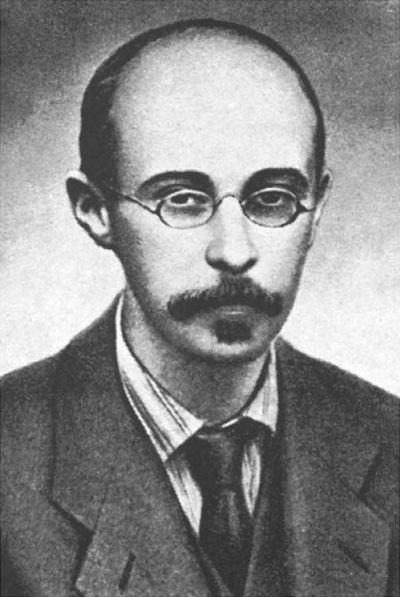
Friedmann proposes expanding universe
Russian mathematician Alexander Friedmann derives solutions to Einstein's field equations that describe an expanding universe, laying the foundation for Big Bang theory. #cosmology #mathematics
Friedmann proposes expanding universe By Unknown author - Cropped From, Public domain, https://commons.wikimedia.org/w/index.php?curid=2630080
1924 CE
Hubble proves galaxies are outside Milky Way
Edwin Hubble identifies Cepheid variables in the Andromeda Nebula, establishing it as a separate galaxy and proving the universe is much larger than previously thought. #astronomy #cosmology
Hubble proves galaxies are outside Milky Way By Johan Hagemeyer - http://hdl.huntington.org/cdm/ref/collection/p15150coll2/id/129, Public domain, https://commons.wikimedia.org/w/index.php?curid=53878391
1927 CE
Lemaître proposes Big Bang (primeval atom)
Belgian priest and astronomer Georges Lemaître formulates the theory of an expanding universe from a single 'primeval atom', later known as the Big Bang. #cosmology #physics
Lemaître proposes Big Bang (primeval atom) By Unknown author - https://societyforthehistoryofastronomy.com/wp-content/uploads/2023/01/AA14-June-20.pdf, Public domain, https://commons.wikimedia.org/w/index.php?curid=154504242
1929 CE
Hubble discovers expansion: Hubble's Law
Edwin Hubble announces a linear relationship between galaxy distances and their recessional velocities, now known as Hubble's Law, providing strong evidence for an expanding universe. #astronomy #cosmology
Hubble discovers expansion: Hubble's Law By w:en:User:ScienceApologist - This image was copied from wikipedia:en. The original description was: The raisin bread model of the universe explains how each galaxy can perceive every other galaxy in the universe as receding from it. From the WMAP website., Public domain, https://commons.wikimedia.org/w/index.php?curid=2615116
1933 CE
Zwicky first evidence of dark matter
Swiss astronomer Fritz Zwicky observes that galaxies in the Coma Cluster move too fast for the visible mass, suggesting unseen 'dark matter'. #astronomy #darkmatter
Zwicky first evidence of dark matter By Comet Photo AG (Zürich) - http://doi.org/10.3932/ethz-a-000050128, CC BY-SA 4.0, https://commons.wikimedia.org/w/index.php?curid=177261830
1948 CE
Gamow predicts cosmic microwave background
George Gamow, with Ralph Alpher and Robert Herman, predicts the existence of cosmic microwave background radiation as a remnant of the Big Bang. #cosmology #physics
Gamow predicts cosmic microwave background By NASA / WMAP Science Team - http://map.gsfc.nasa.gov/media/121238/ilc_9yr_moll4096.png, Public domain, https://commons.wikimedia.org/w/index.php?curid=23285693
1948 CE
Steady State theory proposed
Fred Hoyle, Hermann Bondi, and Thomas Gold propose the Steady State theory, which suggests the universe is eternal and expanding but maintains constant density via continuous matter creation. #cosmology #astronomy
1964 CE
Penzias and Wilson discover CMB
Arno Penzias and Robert Wilson accidentally discover cosmic microwave background radiation, providing strong evidence for the Big Bang and earning them the 1978 Nobel Prize. #astronomy #cosmology
Penzias and Wilson discover CMB By ESA and the Planck Collaboration - Cosmic Microwave Background, CC BY 4.0, https://commons.wikimedia.org/w/index.php?curid=130789180
1965 CE
CMB interpreted as Big Bang relic
Robert Dicke, James Peebles, and colleagues interpret the CMB as the afterglow of the Big Bang, solidifying the Big Bang theory over Steady State. #cosmology #physics
1970 CE
Vera Rubin confirms dark matter in galaxies
Vera Rubin and Kent Ford measure flat rotation curves of spiral galaxies, showing they contain substantial dark matter, providing decisive evidence for its existence. #astronomy #darkmatter
Vera Rubin confirms dark matter in galaxies By Photograph by Mark Godfrey, courtesy of AIP Emilio Segrè Visual Archives, Gift of Vera Rubin - https://repository.aip.org/node/111858, Attribution, https://commons.wikimedia.org/w/index.php?curid=177261379
1974 CE
Hawking shows black holes emit radiation
Stephen Hawking predicts that black holes emit Hawking radiation due to quantum effects, connecting general relativity and quantum mechanics. #physics #cosmology
1980 CE
Inflation theory proposed by Alan Guth
Alan Guth proposes cosmic inflation, a rapid expansion in the early universe, solving the horizon and flatness problems. #cosmology #physics )
1987 CE
Supernova 1987A observed
The closest supernova observed in centuries, SN 1987A, provides insights into stellar evolution, neutrino astronomy, and the role of heavy elements in the universe. #astronomy #supernova
Supernova 1987A observed By NASA Goddard Space Flight Center from Greenbelt, MD, USA - New Hubble Observations of Supernova 1987A Trace Shock Wave, Public domain, https://commons.wikimedia.org/w/index.php?curid=69021019
1990 CE
Hubble Space Telescope launched
The Hubble Space Telescope is launched, revolutionizing astronomy with crisp images and enabling precise measurements of the universe's expansion rate and age. #astronomy #telescope
Hubble Space Telescope launched By NASA - http://spaceflight.nasa.gov/gallery/images/shuttle/sts-125/html/s125e012050.html, Public domain, https://commons.wikimedia.org/w/index.php?curid=6833760
1992 CE
COBE detects CMB fluctuations
NASA's COBE satellite detects tiny temperature fluctuations in the CMB, providing the first evidence of the seeds of cosmic structure and supporting inflation. #cosmology #astronomy
COBE detects CMB fluctuations By NASA - https://science.nasa.gov/toolkits/spacecraft-icons (image link), Public domain, https://commons.wikimedia.org/w/index.php?curid=58072784
1998 CE
Dark energy discovered via supernovae
Two teams, the Supernova Cosmology Project and the High-Z Supernova Search Team, find that distant Type Ia supernovae are fainter than expected, indicating the universe's expansion is accelerating due to dark energy. #cosmology #darkenergy
2001 CE
WMAP mission launched
NASA's Wilkinson Microwave Anisotropy Probe (WMAP) begins mapping the CMB with high precision, providing detailed measurements of cosmological parameters. #cosmology #astronomy
WMAP mission launched By NASA / WMAP Science Team - [1]; converted from the high-resolution TIFF version to a JPEG, Public domain, https://commons.wikimedia.org/w/index.php?curid=3944989
2003 CE
Sloan Digital Sky Survey begins
The SDSS conducts a massive survey of galaxies, quasars, and stars, creating a detailed 3D map of the universe and contributing to dark matter and dark energy studies. #astronomy #cosmology
Sloan Digital Sky Survey begins By Sloan Digital Sky Survey - http://skyserver.sdss.org/dr14/SkyServerWS/ImgCutout/getjpeg?TaskName=Skyserver.Chart.Image&ra=218.928604&dec=+08.300503&scale=0.3&width=800&height=800&opt=&query=, CC BY 4.0, https://commons.wikimedia.org/w/index.php?curid=75828618
2006 CE
WMAP confirms dark energy and flat universe
WMAP results show the universe is flat and composed of about 4% ordinary matter, 23% dark matter, and 73% dark energy, confirming the standard cosmological model. #cosmology #physics
2009 CE
Planck satellite launched
ESA's Planck mission is launched to study the CMB with unprecedented sensitivity and resolution, improving measurements of cosmological parameters. #astronomy #cosmology )
Planck satellite launched By Photograph by Mike Peel (www.mikepeel.net). - Own work, CC BY-SA 4.0, https://commons.wikimedia.org/w/index.php?curid=14045307
2011 CE
Nobel Prize for dark energy discovery
Saul Perlmutter, Brian Schmidt, and Adam Riess win the Nobel Prize in Physics for the discovery of the accelerating expansion of the universe through supernova observations. #physics #cosmology
Nobel Prize for dark energy discovery By Design of the medal: The Nobel Foundation. Sculptor and engraver: Erik Lindberg (1902). - Source of this work Photographer: David Monniaux (2005, 2006, 2007) Edited by: hidro 21:17, 28 July 2008 (UTC) Design of the medal: The Nobel Foundation. Sculptor and engraver: Erik Lindberg (1902)., Cc-by-sa-3.0, https://en.wikipedia.org/w/index.php?curid=18622921
2013 CE
Planck releases all-sky CMB map
The Planck mission releases its first all-sky map of the CMB, providing the most precise values for the universe's age (13.8 billion years) and composition. #cosmology #astronomy )
2015 CE
LIGO detects first gravitational waves
The LIGO collaboration detects gravitational waves from a binary black hole merger, opening a new window on the universe and testing general relativity. #physics #astronomy
LIGO detects first gravitational waves By B. P. Abbott et al. (LIGO Scientific Collaboration and Virgo Collaboration) — full list at the end of the article - http://physics.aps.org/featured-article-pdf/10.1103/PhysRevLett.116.061102 . See also the associated Jupyter notebook., CC BY 3.0, https://commons.wikimedia.org/w/index.php?curid=46987868
2016 CE
Dark Energy Survey begins
The Dark Energy Survey (DES) starts mapping galaxies and supernovae to understand the nature of dark energy, using the Blanco telescope in Chile. #cosmology #astronomy
Dark Energy Survey begins By Felipe Menanteau and the Dark Energy Survey Collaboration - https://opensource.ncsa.illinois.edu/confluence/pages/viewpage.action?pageId=61604315, CC BY-SA 4.0, https://commons.wikimedia.org/w/index.php?curid=59740733
2017 CE
Binary neutron star merger observed
LIGO and Virgo detect gravitational waves from a neutron star merger (GW170817), followed by electromagnetic observations, ushering in multi-messenger astronomy. #astronomy #physics
Binary neutron star merger observed By LIGO Scientific Collaboration and Virgo Collaboration - https://journals.aps.org/prl/abstract/10.1103/PhysRevLett.119.161101 This W3C-unspecified plot was created with Matplotlib., CC BY-SA 4.0, https://commons.wikimedia.org/w/index.php?curid=63455773
2018 CE
Gaia DR2 released
ESA's Gaia mission releases its second data release, providing precise positions and motions for over 1 billion stars, revolutionizing galactic archaeology and cosmology. #astronomy #space )
Gaia DR2 released By European Space Agency - Gaia observes the Milky Way, CC BY-SA 3.0 igo, https://commons.wikimedia.org/w/index.php?curid=119243221
2019 CE
Event Horizon Telescope images black hole
The EHT collaboration releases the first direct image of a black hole's event horizon in M87, confirming predictions of general relativity. #astronomy #physics
Event Horizon Telescope images black hole By D. Marrone/UofA - Event Horizon Telescope Collaboration, CC BY 4.0, https://commons.wikimedia.org/w/index.php?curid=133002860
2020 CE
Nobel Prize for black hole discoveries
Roger Penrose wins for theoretical black hole study; Andrea Ghez and Reinhard Genzel for discovery of supermassive black hole at Milky Way's center. #physics #astronomy
2021 CE
James Webb Space Telescope launched
NASA's James Webb Space Telescope, the most powerful space telescope ever, is launched to study the early universe, exoplanets, and more. #astronomy #space
James Webb Space Telescope launched By NASA - https://www.jwst.nasa.gov/content/webbLaunch/whereIsWebb.html, Public domain, https://commons.wikimedia.org/w/index.php?curid=114125719
2022 CE
Dark Energy Spectroscopic Instrument (DESI) begins
DESI starts its 5-year survey to create a 3D map of galaxies and quasars, aiming to constrain dark energy and cosmic expansion. #cosmology #astronomy
Dark Energy Spectroscopic Instrument (DESI) begins By Lawrence Berkeley National Lab/KPNO/NOIRLab/NSF/AURA - DESI crossfade 4, CC BY 4.0, https://commons.wikimedia.org/w/index.php?curid=134717399
2022 CE
Euclid mission launched
ESA's Euclid space telescope is launched to study dark energy and dark matter by mapping the geometry of the universe. #cosmology #astronomy )
Euclid mission launched By European Space Agency - Euclid looking into the Universe, CC BY-SA 3.0 igo, https://commons.wikimedia.org/w/index.php?curid=128347141
2023 CE
NANOGrav finds evidence for gravitational wave background
The North American Nanohertz Observatory for Gravitational Waves (NANOGrav) detects a low-frequency gravitational wave background likely from supermassive black hole binaries. #physics #astronomy
NANOGrav finds evidence for gravitational wave background By NANOGrav - https://nanograv.org/press/image-gallery (info about licence can be found here: https://nanograv.org/resources/press), CC BY 4.0, https://commons.wikimedia.org/w/index.php?curid=171055295
2023 CE
JWST discovers early massive galaxies
James Webb Space Telescope observes unexpectedly massive galaxies in the early universe, challenging existing models of galaxy formation. #astronomy #cosmology
2024 CE
Hubble tension remains unresolved
Persistent discrepancy between local and early universe measurements of Hubble constant suggests possible new physics beyond ΛCDM. #cosmology #physics
2024 CE
Dark matter particle search continues
Experiments like LZ and XENONnT set new limits on dark matter interactions, but no detection yet, driving new theoretical directions. #physics #darkmatter
2025 CE
Planned: Nancy Grace Roman Space Telescope launch
NASA's Roman Telescope (formerly WFIRST) is scheduled to launch, aiming to study dark energy, exoplanets, and infrared astrophysics. #astronomy #space
Planned: Nancy Grace Roman Space Telescope launch By NASA - https://roman.gsfc.nasa.gov/gallery-spacecraftillustrations.html, Public domain, https://commons.wikimedia.org/w/index.php?curid=136706293
2025 CE
LISA pathfinder mission continued
The Laser Interferometer Space Antenna (LISA) pathfinder demonstrates technology for future space-based gravitational wave observatory. #physics #astronomy
LISA pathfinder mission continued By NASA, Public domain, https://commons.wikimedia.org/w/index.php?curid=10372273