Microbiology & Virology: Leeuwenhoek's Animalcules to Superbugs & Bacteriophages
Encyclopedia/1. The Cosmos & The Natural World/5. Life Sciences/03. Molecular & Cellular Biology • Curated by Admin Timeline.sg
The timeline of microbiology and virology spans from Antonie van Leeuwenhoek's first observation of microorganisms in the 17th century to modern discoveries of the human microbiome, antibiotic resistance, and bacteriophages. It includes key milestones such as the formulation of Koch's postulates, the discovery of viruses, the development of electron microscopy, and the sequencing of microbial genomes.
Chronological Storyline (41 Milestones)
1676 CE
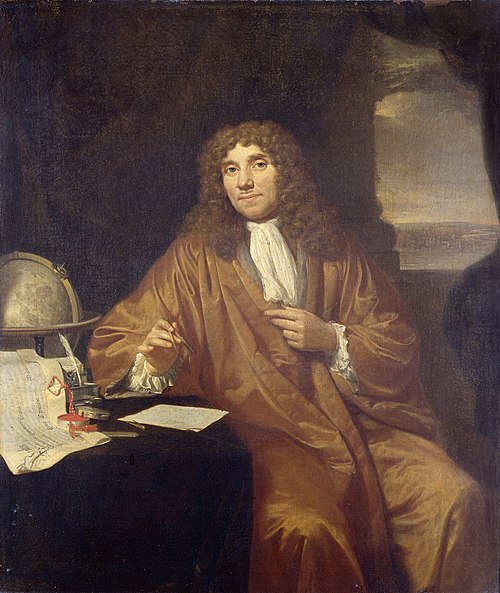
Leeuwenhoek Observes Animalcules
Antonie van Leeuwenhoek uses a single-lens microscope to observe bacteria and protozoa in water, which he calls 'animalcules'. This marks the first discovery of microorganisms, founding microbiology. #microbiology #history
Leeuwenhoek Observes Animalcules By Jan Verkolje - http://www.rijksmuseum.nl/collectie/SK-A-957, Public domain, https://commons.wikimedia.org/w/index.php?curid=34320547
1798 CE
Jenner's Smallpox Vaccine
Edward Jenner develops the first smallpox vaccine using cowpox, pioneering immunology and the concept of vaccination to prevent infectious diseases. #virology #medicine
Jenner's Smallpox Vaccine By John Raphael Smith - [1] [2], originally uploaded to en by User:Magnus Manske, Public domain, https://commons.wikimedia.org/w/index.php?curid=31245
1854 CE
Pasteur Discovers Microbial Fermentation
Louis Pasteur demonstrates that fermentation is caused by microorganisms and develops pasteurization to kill harmful microbes, revolutionizing food safety and the germ theory of disease. #microbiology #foodscience
Pasteur Discovers Microbial Fermentation By Paul Nadar - File:Louis Pasteur, foto av Paul Nadar.jpg, Public domain, https://commons.wikimedia.org/w/index.php?curid=28039885
1864 CE
Pasteur's Swan-Neck Flask Experiment
Louis Pasteur disproves spontaneous generation using swan-necked flasks, proving that life arises only from preexisting life, solidifying the germ theory. #microbiology #science
Pasteur's Swan-Neck Flask Experiment By Ian Alexander - Own work, CC BY-SA 4.0, https://commons.wikimedia.org/w/index.php?curid=120373498
1876 CE
Koch Identifies Anthrax Bacillus
Robert Koch isolates Bacillus anthracis, the bacterium causing anthrax, and proposes Koch's postulates to prove the causal relationship between a microbe and a disease. #microbiology #infectiousdiseases
Koch Identifies Anthrax Bacillus By Unknown author - https://ihm.nlm.nih.gov/images/B16691, Public domain, https://commons.wikimedia.org/w/index.php?curid=1825905
1882 CE
Koch Discovers Tuberculosis Bacterium
Robert Koch identifies Mycobacterium tuberculosis as the cause of tuberculosis, a major killer at the time, leading to improved diagnostics and treatment. #microbiology #tb
Koch Discovers Tuberculosis Bacterium By Photo Credit: Content Providers(s): CDC/Dr. George Kubica - This media comes from the Centers for Disease Control and Prevention's Public Health Image Library (PHIL), with identification number #4428. Note: Not all PHIL images are public domain; be sure to check copyright status and credit authors and content providers. العربية | Deutsch | English | македонски | slovenščina | +/−, Public domain, https://commons.wikimedia.org/w/index.php?curid=422340
1884 CE
Koch's Postulates Published
Robert Koch publishes his postulates for establishing the microbial cause of a disease, providing a scientific framework for medical microbiology. #microbiology #history
Koch's Postulates Published By Unknown author - http://ihm.nlm.nih.gov/images/B16692, Public domain, https://commons.wikimedia.org/w/index.php?curid=5495788
1884 CE
Gram Develops Staining Technique
Hans Christian Gram develops the Gram stain, a differential staining method that classifies bacteria into Gram-positive and Gram-negative, still fundamental in microbiology. #microbiology #laboratory
Gram Develops Staining Technique By Mikael Häggström, M.D. Author info - Reusing images- Conflicts of interest: None Mikael Häggström, M.D. - Own work, CC0, https://commons.wikimedia.org/w/index.php?curid=139041868
1887 CE
Beijerinck Develops Enrichment Culture
Martinus Beijerinck develops enrichment culture techniques to isolate specific microorganisms from natural samples, advancing microbial ecology and diversity studies. #microbiology #ecology
Beijerinck Develops Enrichment Culture By Unknown author - https://wellcomeimages.org/indexplus/image/M0002348.html, CC BY 4.0, https://commons.wikimedia.org/w/index.php?curid=33668284
1892 CE
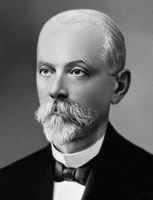
Ivanovsky Describes Tobacco Mosaic Virus
Dmitri Ivanovsky shows that the causative agent of tobacco mosaic disease passes through filters that retain bacteria, suggesting a filterable agent (virus) exists. #virology #plantdisease
Ivanovsky Describes Tobacco Mosaic Virus By Unknown author, PD-RU, https://en.wikipedia.org/w/index.php?curid=2472759
1898 CE
Beijerinck Concludes Viruses are Not Bacteria
Martinus Beijerinck repeats Ivanovsky's work and proposes that tobacco mosaic disease is caused by a 'contagium vivum fluidum' (contagious living fluid), coining the concept of virus. #virology #history
Beijerinck Concludes Viruses are Not Bacteria By Unknown author - [1], Public domain, https://commons.wikimedia.org/w/index.php?curid=3430584
1901 CE
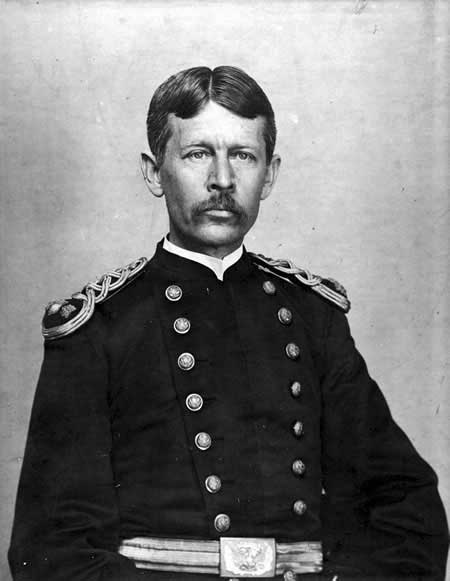
Reed Discovers Yellow Fever Virus
Walter Reed and colleagues prove that yellow fever is caused by a filterable virus transmitted by mosquitoes, a major breakthrough in virology and epidemiology. #virology #tropicalmedicine
Reed Discovers Yellow Fever Virus By Unidentified photographer - en:Image:WalterReed.jpeg, Public domain, https://commons.wikimedia.org/w/index.php?curid=240486
1905 CE
Schaudinn and Hoffmann Discover Syphilis Spirochete
Fritz Schaudinn and Erich Hoffmann identify Treponema pallidum, the bacterium causing syphilis, leading to better diagnosis and treatment. #microbiology #std
Schaudinn and Hoffmann Discover Syphilis Spirochete By Photo credit: Content providers(s): CDC / Dr. David Cox - This media comes from the Centers for Disease Control and Prevention's Public Health Image Library (PHIL), with identification number #1977. Note: Not all PHIL images are public domain; be sure to check copyright status and credit authors and content providers. العربية | Deutsch | English | македонски | slovenščina | +/− Originally from en.wikipedia.org; description page is/was here., Public domain, https://commons.wikimedia.org/w/index.php?curid=2256695
1910 CE
Ehrlich Develops First Effective Antisyphilitic
Paul Ehrlich develops Salvarsan (arsphenamine), the first effective chemical treatment for syphilis, pioneering chemotherapy and targeted drug therapy. #microbiology #pharmacology
Ehrlich Develops First Effective Antisyphilitic By Unknown author, Public domain, https://commons.wikimedia.org/w/index.php?curid=1054621
1915 CE
Twort Discovers Bacteriophages
Frederick Twort observes a lytic agent infecting staphylococci, proposing it as a virus, but his work is interrupted. This is the first report of bacteriophages. #virology #bacteriophage
Twort Discovers Bacteriophages By Unknown author - Obituary Notices of Fellows of the Royal Society, Vol. 7, No. 20. (Nov., 1951), pp. 504-517., Public domain, https://commons.wikimedia.org/w/index.php?curid=2517949
1917 CE
d'Herelle Isolates Bacteriophages
Félix d'Herelle independently discovers bacteriophages and coins the term 'bacteriophage' (bacteria-eater). He uses them to treat dysentery, founding phage therapy. #virology #therapy
d'Herelle Isolates Bacteriophages By [Service photo Institut Pasteur - Photothèque] - This file comes from Gallica Digital Library and is available under the digital ID btv1b32000224/f64, Public domain, https://commons.wikimedia.org/w/index.php?curid=37247789
1928 CE
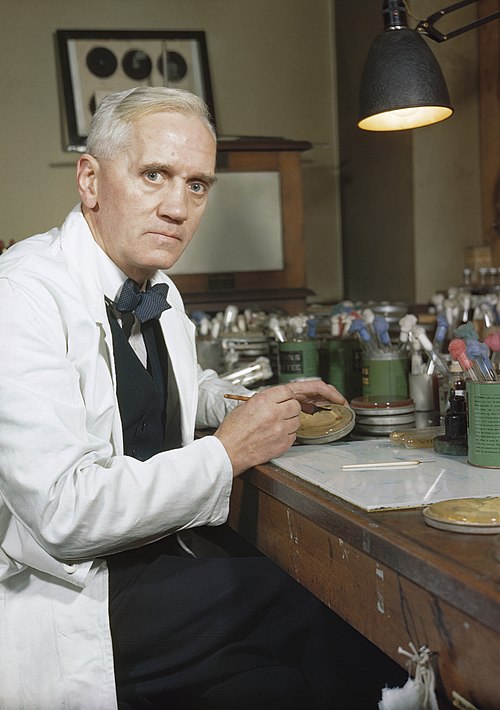
Fleming Discovers Penicillin
Alexander Fleming observes that the mold Penicillium notatum kills bacteria, discovering penicillin, the first antibiotic, revolutionizing medicine. #microbiology #antibiotics
Fleming Discovers Penicillin By Official photographer - http://media.iwm.org.uk/iwm/mediaLib//32/media-32192/large.jpg This photograph TR 1468 comes from the collections of the Imperial War Museums., Public domain, https://commons.wikimedia.org/w/index.php?curid=24436974
1931 CE
Ruska Builds First Electron Microscope
Ernst Ruska develops the first electron microscope, enabling visualization of viruses and subcellular structures, revolutionizing microbiology. #microbiology #microscopy
Ruska Builds First Electron Microscope By J Brew, uploaded on the English-speaking Wikipedia by en:User:Hat'nCoat. - originally posted to Flickr as Electron Microscope Deutsches Museum, CC BY-SA 3.0, https://commons.wikimedia.org/w/index.php?curid=5309032
1935 CE
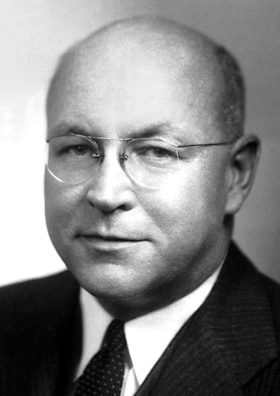
Stanley Crystallizes Tobacco Mosaic Virus
Wendell Stanley crystallizes tobacco mosaic virus, proving that viruses are composed of proteins and nucleic acids, and earns the Nobel Prize. #virology #crystallography
Stanley Crystallizes Tobacco Mosaic Virus By Unknown author - http://www.nobelprize.org/nobel_prizes/chemistry/laureates/1946/stanley.html, Public domain, https://commons.wikimedia.org/w/index.php?curid=18260423
1944 CE
Avery, MacLeod, and McCarty: DNA is Genetic Material
Oswald Avery, Colin MacLeod, and Maclyn McCarty demonstrate that DNA (not protein) is the transforming principle in bacteria, proving DNA is the genetic material. #microbiology #genetics
Avery, MacLeod, and McCarty: DNA is Genetic Material By Bbkkk - self-made in the Naturkunste Museum in Berlin, CC BY-SA 4.0, https://commons.wikimedia.org/w/index.php?curid=3679283
1946 CE
Lederberg and Tatum Discover Bacterial Conjugation
Joshua Lederberg and Edward Tatum show that bacteria can exchange genetic material through direct contact (conjugation), providing a method for genetic recombination in prokaryotes. #microbiology #genetics
Lederberg and Tatum Discover Bacterial Conjugation By Unknown author - http://profiles.nlm.nih.gov/BB/B/B/Q/C/, Public domain, https://commons.wikimedia.org/w/index.php?curid=3920211
1952 CE
Hershey-Chase Experiment Confirms DNA is Genetic Material
Alfred Hershey and Martha Chase use bacteriophages to confirm that DNA (not protein) carries genetic information, solidifying the role of DNA as hereditary material. #virology #genetics
Hershey-Chase Experiment Confirms DNA is Genetic Material By Thomasione - Modified from German Wikipedia [1], GFDL, https://commons.wikimedia.org/w/index.php?curid=15034881
1953 CE
Watson and Crick Propose DNA Double Helix
James Watson and Francis Crick, using X-ray data from Rosalind Franklin, propose the double helix structure of DNA, revealing the molecular basis of genetics. #microbiology #dna
Watson and Crick Propose DNA Double Helix By Zephyris - Own work, CC BY-SA 3.0, https://commons.wikimedia.org/w/index.php?curid=15027555
1955 CE
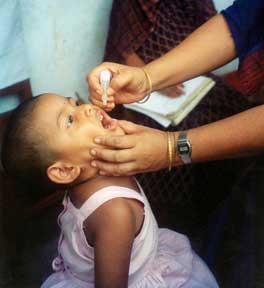
Salk Polio Vaccine Declared Safe
Jonas Salk's inactivated polio vaccine (IPV) is declared safe and effective, leading to widespread vaccination and a dramatic reduction in polio cases. #virology #vaccines
Salk Polio Vaccine Declared Safe By USAID - USAID Bangladesh, Public domain, https://commons.wikimedia.org/w/index.php?curid=1021
1955 CE
Poliovirus Grown in Cell Culture by Enders
John Enders, Thomas Weller, and Frederick Robbins successfully grow poliovirus in non-neural cell cultures, enabling vaccine development and earning the Nobel Prize. #virology #vaccines
1957 CE
Isaacs and Lindenmann Discover Interferons
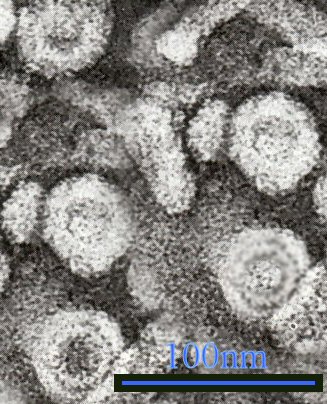
Alick Isaacs and Jean Lindenmann discover interferons, proteins released by virus-infected cells that interfere with viral replication, leading to antiviral therapy. #virology #immunology
Isaacs and Lindenmann Discover Interferons By Nevit Dilmen - Self created from PDB entry with Cn3D Data Source: https://www.ncbi.nlm.nih.gov/Structure/, CC BY-SA 3.0, https://commons.wikimedia.org/w/index.php?curid=1308980
1961 CE
Jacob and Monod Propose Operon Model
François Jacob and Jacques Monod propose the operon model for gene regulation in bacteria, using the lac operon in E. coli, a paradigm for molecular biology. #microbiology #genetics
1962 CE
Arber Discovers Restriction Enzymes
Werner Arber discovers restriction enzymes in bacteria that cut DNA at specific sites, enabling genetic engineering and recombinant DNA technology. #microbiology #biotechnology
1970 CE
Baltimore and Temin Discover Reverse Transcriptase
David Baltimore and Howard Temin independently discover reverse transcriptase in retroviruses, showing RNA can be converted to DNA, revolutionizing virology and molecular biology. #virology #genetics
Baltimore and Temin Discover Reverse Transcriptase By Thomas Splettstoesser (www.scistyle.com) - Own work, CC BY-SA 3.0, https://commons.wikimedia.org/w/index.php?curid=33598425
1977 CE
Woese Discovers Archaea
Carl Woese uses ribosomal RNA sequencing to identify Archaea as a third domain of life, separate from Bacteria and Eukarya, reshaping the tree of life. #microbiology #evolution
Woese Discovers Archaea By Don Hamerman - Institute for Genomic Biology, University of Illinois at Urbana-Champaign, CC BY 3.0, https://commons.wikimedia.org/w/index.php?curid=23565944
1981 CE
First Molecular Cloning of a Viral Genome
The complete genome of the hepatitis B virus (HBV) is cloned and expressed in bacteria, enabling the production of the first recombinant vaccine. #virology #biotechnology
First Molecular Cloning of a Viral Genome By Graham Beards at English Wikipedia - Transferred from en.wikipedia to Commons., CC BY 3.0, https://commons.wikimedia.org/w/index.php?curid=6032684
1983 CE
HIV Isolated as Cause of AIDS
Françoise Barré-Sinoussi and Luc Montagnier isolate the human immunodeficiency virus (HIV) from a patient with AIDS, leading to diagnostic tests and therapies. #virology #aids
HIV Isolated as Cause of AIDS By Photo Credit: C. Goldsmith Content Providers: CDC/ C. Goldsmith, P. Feorino, E. L. Palmer, W. R. McManus - This media comes from the Centers for Disease Control and Prevention's Public Health Image Library (PHIL), with identification number #10000. Note: Not all PHIL images are public domain; be sure to check copyright status and credit authors and content providers. العربية | Deutsch | English | македонски | slovenščina | +/−, Public domain, https://commons.wikimedia.org/w/index.php?curid=3909584
1985 CE
Mullis Develops PCR Technique
Kary Mullis invents the polymerase chain reaction (PCR), allowing rapid amplification of DNA, transforming diagnostics, genetics, and virology. #microbiology #biotechnology
Mullis Develops PCR Technique By Dona Mapston - Cropped from Flickr image, CC BY-SA 3.0, https://commons.wikimedia.org/w/index.php?curid=5533280
1995 CE
First Bacterial Genome Sequenced
The complete genome of the bacterium Haemophilus influenzae is sequenced by Craig Venter's team, the first free-living organism's genome, launching genomics. #microbiology #genomics
First Bacterial Genome Sequenced By Stefan Walkowski - Own work, CC BY-SA 4.0, https://commons.wikimedia.org/w/index.php?curid=41492226
2003 CE
SARS Coronavirus Outbreak
Severe acute respiratory syndrome (SARS) caused by a novel coronavirus spreads globally, leading to rapid identification and containment, highlighting emerging viruses. #virology #outbreak
SARS Coronavirus Outbreak By Photo Credit: Content Providers(s): CDC/C.S. Goldsmith - https://www.cdc.gov/sars/lab/images.html, Public domain, https://commons.wikimedia.org/w/index.php?curid=86419462
2005 CE
First Human Microbiome Project Launched
The Human Microbiome Project (HMP) is launched by the NIH to characterize microbial communities in the human body, revealing their role in health and disease. #microbiology #microbiome
First Human Microbiome Project Launched By none listed in file properties - http://commonfund.nih.gov/hmp/, Public domain, https://commons.wikimedia.org/w/index.php?curid=18649111
2010 CE
First Self-Replicating Synthetic Bacterial Cell
J. Craig Venter Institute creates Mycoplasma mycoides JCVI-syn1.0, the first synthetic bacterial cell with a chemically synthesized genome, advancing synthetic biology. #microbiology #syntheticbiology
First Self-Replicating Synthetic Bacterial Cell By David S. Goodsell - https://pdb101.rcsb.org/sci-art/goodsell-gallery/jcvi-syn3a-minimal-cell, CC BY 4.0, https://commons.wikimedia.org/w/index.php?curid=118463017
2012 CE
CRISPR-Cas9 Gene Editing Demonstrated
Emmanuelle Charpentier and Jennifer Doudna show that the bacterial CRISPR-Cas9 system can be programmed to edit specific genes, revolutionizing genetics and therapy. #microbiology #genetics
CRISPR-Cas9 Gene Editing Demonstrated By Deposition authors: Nishimasu, H., Ishitani, R., Nureki, O.; Visualization author: Synpath - Atom coordinates: https://www.rcsb.org/structure/4OO8; Visualization: Own work, CC0, https://commons.wikimedia.org/w/index.php?curid=133423568
2014 CE
Ebola Outbreak in West Africa
A large outbreak of Ebola virus in West Africa infects over 28,000, leading to emergency response, vaccine trials, and increased awareness of viral hemorrhagic fevers. #virology #outbreak
Ebola Outbreak in West Africa By ZeLonewolf - Own work, CC0, https://commons.wikimedia.org/w/index.php?curid=36564671
2019 CE
COVID-19 Pandemic Begins
A novel coronavirus, SARS-CoV-2, causes a global pandemic leading to millions of deaths, rapid vaccine development using mRNA technology, and unprecedented research in virology. #virology #pandemic
COVID-19 Pandemic Begins By Gustavo Basso - https://www.flickr.com/photos/gustavocb/49913440386, CC BY-SA 4.0, https://commons.wikimedia.org/w/index.php?curid=112916636
2022 CE
First Successful CRISPR-Based HIV Therapy in Humans
A patient with HIV undergoes CRISPR-based therapy to excise the HIV genome from cells, showing promise as a potential cure for HIV infection. #virology #geneediting