Microbiology & Virology: From Leeuwenhoek & Pasteur to Archaea
Encyclopedia/1. The Cosmos & The Natural World/5. Life Sciences/03. Molecular & Cellular Biology • Curated by Admin Timeline.sg
Microbiology & virology trace the discovery of microorganisms, germ theory, and the tree of life, from Leeuwenhoek's animacules to Pasteur's germ theory, Kitasato's plague bacillus, and Woese's Archaea domain.
Chronological Storyline (44 Milestones)
1674 CE
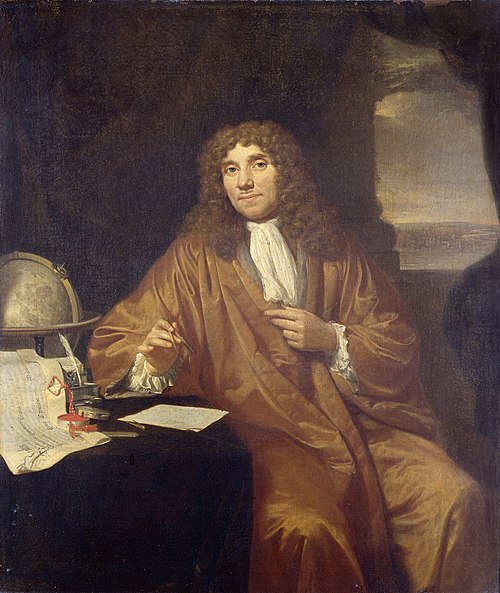
Leeuwenhoek Observes Animacules
Antonie van Leeuwenhoek uses a simple microscope to observe bacteria and protozoa in pond water, which he calls 'animalcules'. This marks the first direct observation of microorganisms, founding microbiology. #microbiology #microscopy
Leeuwenhoek Observes Animacules By Jan Verkolje - http://www.rijksmuseum.nl/collectie/SK-A-957, Public domain, https://commons.wikimedia.org/w/index.php?curid=34320547
1683 CE
Leeuwenhoek Describes Bacteria
Leeuwenhoek reports observing bacteria from his own tooth scrapings, providing the first detailed description of bacterial morphology. His letters to the Royal Society establish the existence of a hidden microbial world. #microbiology #bacteria
1798 CE
Jenner Develops Smallpox Vaccine
Edward Jenner uses cowpox material to inoculate against smallpox, demonstrating the principle of vaccination. This pioneering work in immunology relies on understanding infectious agents, though microbes are not yet identified. #virology #vaccine
Jenner Develops Smallpox Vaccine By John Raphael Smith - [1] [2], originally uploaded to en by User:Magnus Manske, Public domain, https://commons.wikimedia.org/w/index.php?curid=31245
1835 CE
Bassi Shows Microorganism Causes Disease
Agostino Bassi demonstrates that a fungus causes muscardine disease in silkworms, providing the first clear evidence that a microorganism can cause disease. This supports the germ theory of disease. #microbiology #germtheory
Bassi Shows Microorganism Causes Disease By Unknown author - [1], CC BY 4.0, https://commons.wikimedia.org/w/index.php?curid=32981604
1847 CE
Semmelweis Advocates Handwashing
Ignaz Semmelweis introduces handwashing with chlorinated lime to reduce puerperal fever in maternity wards, showing that antiseptic practices prevent infection. His work precedes germ theory but demonstrates microbial transmission. #microbiology #antiseptic
Semmelweis Advocates Handwashing By József Borsos / Albert Doctor - Ágnes Szemerédi: A fényképészet úttörői, OSZK blog, 2022 [1], Public domain, https://commons.wikimedia.org/w/index.php?curid=123555011
1854 CE
Pacini Discovers Vibrio cholerae
Filippo Pacini identifies the comma-shaped bacterium Vibrio cholerae in cholera patients, correctly linking it to the disease. His discovery is overlooked until later confirmed by Koch. #microbiology #cholera
Pacini Discovers Vibrio cholerae By Unknown author - http://www.ph.ucla.edu/epi/snow/firstdiscoveredcholera.html, Public domain, https://commons.wikimedia.org/w/index.php?curid=532850
1857 CE
Pasteur Proposes Germ Theory
Louis Pasteur demonstrates that fermentation is caused by microorganisms, refuting spontaneous generation. He shows that microbes are responsible for souring wine and beer, laying the foundation for germ theory. #microbiology #germtheory
Pasteur Proposes Germ Theory By Paul Nadar - File:Louis Pasteur, foto av Paul Nadar.jpg, Public domain, https://commons.wikimedia.org/w/index.php?curid=28039885
1861 CE
Pasteur Develops Pasteurization
Louis Pasteur invents pasteurization, a process of heating liquids to kill harmful microbes. This technique prevents spoilage and disease transmission, revolutionizing food safety and microbiology. #microbiology #pasteurization
Pasteur Develops Pasteurization By Chicago Department of Health artist - https://www.ncbi.nlm.nih.gov/pmc/articles/PMC1448139/, Public domain, https://commons.wikimedia.org/w/index.php?curid=71824380
1867 CE
Lister Introduces Antiseptic Surgery
Joseph Lister uses carbolic acid to sterilize surgical instruments and wounds, drastically reducing post-operative infections. His antiseptic method is based on Pasteur's germ theory, transforming surgery. #microbiology #antiseptic
Lister Introduces Antiseptic Surgery By Unknown author - Weltrundschau zu Reclams Universum 1902, Public domain, https://commons.wikimedia.org/w/index.php?curid=9647607
1876 CE
Koch Identifies Bacillus anthracis
Robert Koch proves that Bacillus anthracis causes anthrax, fulfilling his postulates to link a specific microbe to a disease. This establishes the germ theory of disease and Koch's postulates as a standard. #microbiology #germtheory
Koch Identifies Bacillus anthracis By Unknown author - https://ihm.nlm.nih.gov/images/B16691, Public domain, https://commons.wikimedia.org/w/index.php?curid=1825905
1881 CE
Pasteur Develops Anthrax Vaccine
Louis Pasteur creates the first live attenuated vaccine for anthrax, successfully immunizing sheep. This demonstrates the practical application of germ theory to prevent disease. #microbiology #vaccine
Pasteur Develops Anthrax Vaccine By Nhj78992 - Own work, CC BY-SA 3.0, https://commons.wikimedia.org/w/index.php?curid=32500182
1882 CE
Koch Discovers Mycobacterium tuberculosis
Robert Koch isolates the bacterium causing tuberculosis, Mycobacterium tuberculosis, and presents his findings on March 24, 1882. This landmark discovery leads to better diagnosis and control of TB. #microbiology #tuberculosis
Koch Discovers Mycobacterium tuberculosis By Photo Credit: Content Providers(s): CDC/Dr. George Kubica - This media comes from the Centers for Disease Control and Prevention's Public Health Image Library (PHIL), with identification number #4428. Note: Not all PHIL images are public domain; be sure to check copyright status and credit authors and content providers. العربية | Deutsch | English | македонски | slovenščina | +/−, Public domain, https://commons.wikimedia.org/w/index.php?curid=422340
1884 CE
Gram Develops Gram Stain
Hans Christian Gram introduces a staining technique that differentiates bacteria into Gram-positive and Gram-negative groups. This method remains essential for bacterial classification and diagnosis. #microbiology #staining
Gram Develops Gram Stain By Mikael Häggström, M.D. Author info - Reusing images- Conflicts of interest: None Mikael Häggström, M.D. - Own work, CC0, https://commons.wikimedia.org/w/index.php?curid=139041868
1884 CE
Koch Publishes Koch's Postulates
Robert Koch formalizes criteria to establish a causal relationship between a microbe and a disease, known as Koch's postulates. These principles guide medical microbiology for decades. #microbiology #germtheory
Koch Publishes Koch's Postulates By Unknown author - http://ihm.nlm.nih.gov/images/B16692, Public domain, https://commons.wikimedia.org/w/index.php?curid=5495788
1885 CE
Pasteur Develops Rabies Vaccine
Louis Pasteur successfully tests a rabies vaccine on a boy bitten by a rabid dog, using attenuated virus. This marks the first human vaccine against a viral disease, advancing virology. #virology #vaccine
Pasteur Develops Rabies Vaccine By Whispyhistory - Own work, CC BY-SA 4.0, https://commons.wikimedia.org/w/index.php?curid=113048305
1887 CE
Petri Dish Invented
Julius Richard Petri, a bacteriologist working with Koch, invents the Petri dish, a shallow glass dish used to culture microorganisms. This simple tool becomes indispensable in microbiology labs. #microbiology #labequipment
Petri Dish Invented By Ufficio Comunicazione, Azienda Ospedaliera SS. Antonio e Biagio e Cesare Arrigo, Alessandria and Biblioteca Biomedica Centro di Documentazione - Azienda Ospedaliera SS. Antonio e Biagio e Cesare Arrigo, Alessandria, CC BY-SA 4.0, https://commons.wikimedia.org/w/index.php?curid=84863271
1892 CE
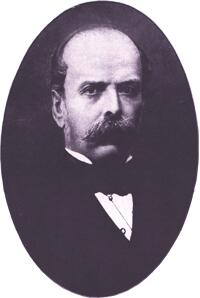
Ivanovsky Discovers Tobacco Mosaic Virus
Dmitri Ivanovsky shows that the causative agent of tobacco mosaic disease passes through a filter that retains bacteria, suggesting a filterable agent. This is considered the first discovery of a virus. #virology #tobacco mosaic virus
Ivanovsky Discovers Tobacco Mosaic Virus By Unknown author, PD-RU, https://en.wikipedia.org/w/index.php?curid=2472759
1894 CE
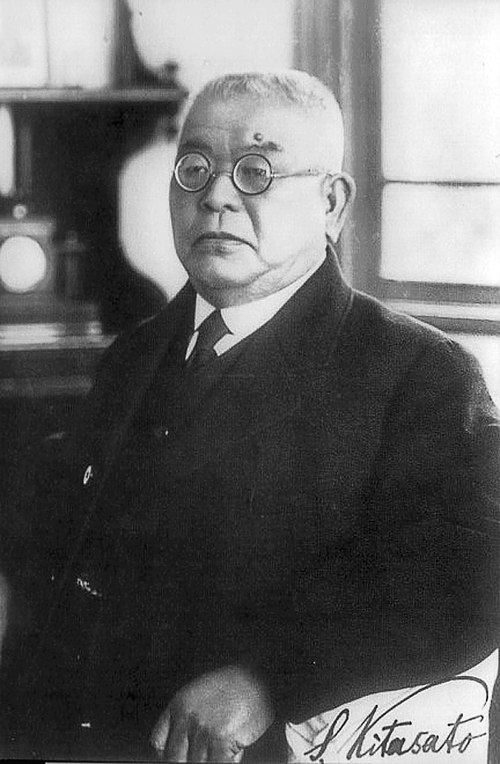
Kitasato and Yersin Discover Plague Bacillus
Shibasaburo Kitasato and Alexandre Yersin independently identify Yersinia pestis as the cause of bubonic plague during the Hong Kong epidemic. Kitasato's work highlights Japanese contributions to microbiology. #microbiology #plague
Kitasato and Yersin Discover Plague Bacillus By Unknown author - http://www.adthree.com/exanim/50nen/fac/kitazato.htm, Public domain, https://commons.wikimedia.org/w/index.php?curid=1293507
1897 CE
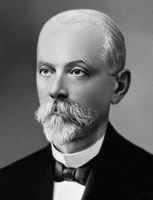
Beijerinck Coins 'Virus'
Martinus Beijerinck, building on Ivanovsky's work, proposes that tobacco mosaic disease is caused by a 'contagium vivum fluidum' (soluble living germ), coining the term 'virus'. He recognizes viruses as distinct from bacteria. #virology #tobacco mosaic virus
Beijerinck Coins 'Virus' By Unknown author - https://wellcomeimages.org/indexplus/image/M0002348.html, CC BY 4.0, https://commons.wikimedia.org/w/index.php?curid=33668284
1899 CE
Ross Discovers Malaria Transmission
Ronald Ross demonstrates that malaria parasites are transmitted by mosquitoes, proving the vector-borne nature of the disease. This discovery impacts microbiology and tropical medicine. #microbiology #malaria
Ross Discovers Malaria Transmission By Unknown author - http://resource.nlm.nih.gov/101427700, Public domain, https://commons.wikimedia.org/w/index.php?curid=108775
1901 CE
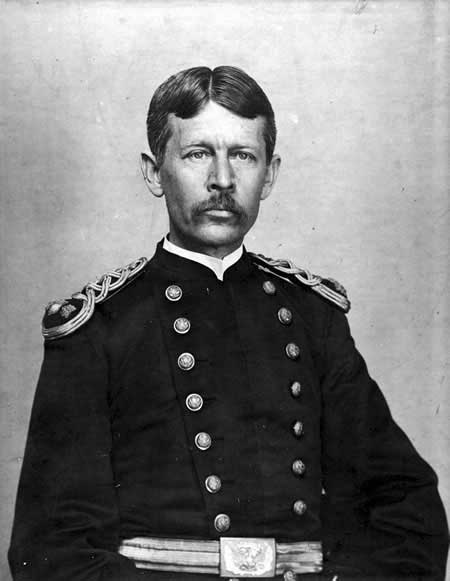
Reed Confirms Yellow Fever Virus
Walter Reed and his team prove that yellow fever is caused by a filterable virus transmitted by mosquitoes. This is a milestone in virology and epidemiology, leading to control measures. #virology #yellow fever
Reed Confirms Yellow Fever Virus By Unidentified photographer - en:Image:WalterReed.jpeg, Public domain, https://commons.wikimedia.org/w/index.php?curid=240486
1905 CE
Schaudinn and Hoffmann Discover Treponema pallidum
Fritz Schaudinn and Erich Hoffmann identify Treponema pallidum as the spirochete bacterium causing syphilis. This discovery enables specific diagnosis and treatment of the sexually transmitted infection. #microbiology #syphilis
Schaudinn and Hoffmann Discover Treponema pallidum By Photo credit: Content providers(s): CDC / Dr. David Cox - This media comes from the Centers for Disease Control and Prevention's Public Health Image Library (PHIL), with identification number #1977. Note: Not all PHIL images are public domain; be sure to check copyright status and credit authors and content providers. العربية | Deutsch | English | македонски | slovenščina | +/− Originally from en.wikipedia.org; description page is/was here., Public domain, https://commons.wikimedia.org/w/index.php?curid=2256695
1910 CE
Ehrlich Develops Salvarsan
Paul Ehrlich introduces Salvarsan, an arsenic compound effective against syphilis, as the first modern chemotherapeutic agent. This 'magic bullet' concept pioneers targeted antimicrobial therapy. #microbiology #chemotherapy
Ehrlich Develops Salvarsan By Unknown author, Public domain, https://commons.wikimedia.org/w/index.php?curid=1054621
1915 CE
Twort Discovers Bacteriophages
Frederick Twort observes a filterable agent that destroys bacterial colonies, later identified as bacteriophages. This discovery opens the field of phage research and potential antibacterial therapy. #virology #bacteriophage
Twort Discovers Bacteriophages By Unknown author - Obituary Notices of Fellows of the Royal Society, Vol. 7, No. 20. (Nov., 1951), pp. 504-517., Public domain, https://commons.wikimedia.org/w/index.php?curid=2517949
1917 CE
d'Herelle Coins 'Bacteriophage'
Félix d'Herelle independently discovers bacteriophages and names them, proposing their use for treating bacterial infections. Phage therapy gains attention but later declines with antibiotics. #virology #bacteriophage
d'Herelle Coins 'Bacteriophage' By [Service photo Institut Pasteur - Photothèque] - This file comes from Gallica Digital Library and is available under the digital ID btv1b32000224/f64, Public domain, https://commons.wikimedia.org/w/index.php?curid=37247789
1928 CE
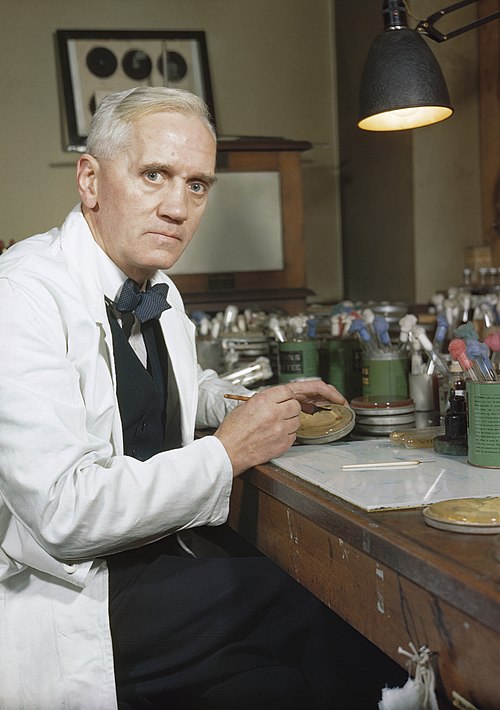
Fleming Discovers Penicillin
Alexander Fleming observes that a mold, Penicillium notatum, inhibits bacterial growth, leading to the discovery of penicillin. This revolutionizes medicine by introducing the first antibiotic. #microbiology #antibiotic
Fleming Discovers Penicillin By Official photographer - http://media.iwm.org.uk/iwm/mediaLib//32/media-32192/large.jpg This photograph TR 1468 comes from the collections of the Imperial War Museums., Public domain, https://commons.wikimedia.org/w/index.php?curid=24436974
1931 CE
Electron Microscope Invented
Ernst Ruska and Max Knoll build the first electron microscope, enabling visualization of viruses and subcellular structures. This tool transforms microbiology and virology by revealing ultrastructure. #microbiology #microscopy
Electron Microscope Invented By Alice im Miniland - Own work, CC BY-SA 4.0, https://commons.wikimedia.org/w/index.php?curid=42485910
1935 CE
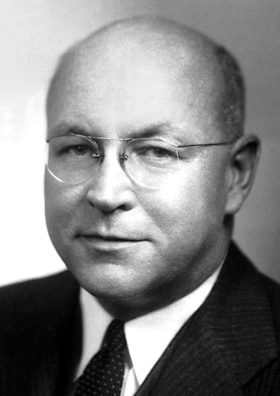
Stanley Crystallizes Tobacco Mosaic Virus
Wendell Stanley crystallizes tobacco mosaic virus, demonstrating that viruses are composed of protein and nucleic acid. This work earns a Nobel Prize and advances understanding of viral structure. #virology #tobacco mosaic virus
Stanley Crystallizes Tobacco Mosaic Virus By Unknown author - http://www.nobelprize.org/nobel_prizes/chemistry/laureates/1946/stanley.html, Public domain, https://commons.wikimedia.org/w/index.php?curid=18260423
1941 CE
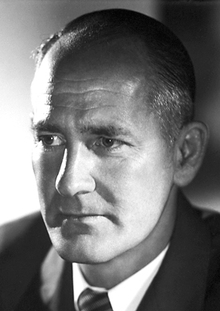
Beadle and Tatum Propose One Gene-One Enzyme
George Beadle and Edward Tatum use the fungus Neurospora crassa to show that genes control metabolic enzymes. This links genetics to biochemistry, influencing microbial genetics. #microbiology #genetics
Beadle and Tatum Propose One Gene-One Enzyme By Unknown - http://www.nobelprize.org/nobel_prizes/medicine/laureates/1958/, PD-Sweden, https://en.wikipedia.org/w/index.php?curid=31240247
1944 CE
Avery Identifies DNA as Genetic Material
Oswald Avery, Colin MacLeod, and Maclyn McCarty demonstrate that DNA from pneumococci can transform bacteria, proving DNA is the genetic material. This landmark experiment in microbiology underpins molecular biology. #microbiology #DNA
Avery Identifies DNA as Genetic Material By Bbkkk - self-made in the Naturkunste Museum in Berlin, CC BY-SA 4.0, https://commons.wikimedia.org/w/index.php?curid=3679283
1952 CE
Hershey-Chase Confirm DNA as Genetic Material
Alfred Hershey and Martha Chase use bacteriophages to confirm that DNA, not protein, carries genetic information. Their experiment solidifies the role of DNA in heredity. #virology #DNA
Hershey-Chase Confirm DNA as Genetic Material By Thomasione - Modified from German Wikipedia [1], GFDL, https://commons.wikimedia.org/w/index.php?curid=15034881
1953 CE
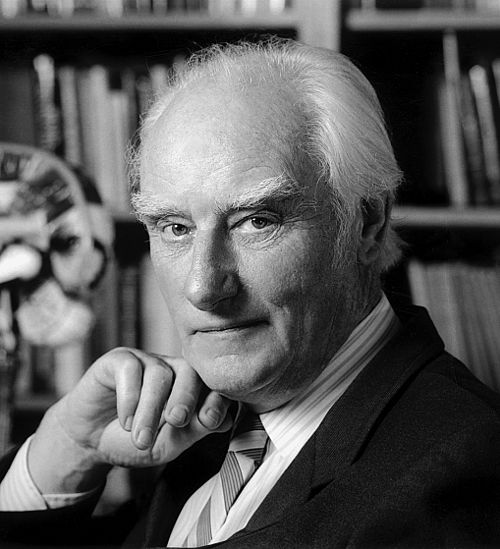
Watson and Crick Propose DNA Structure
James Watson and Francis Crick publish the double helix model of DNA, based on X-ray diffraction data from Rosalind Franklin. This revolutionizes molecular biology and microbiology. #microbiology #DNA
Watson and Crick Propose DNA Structure By Francis_Crick.png: Photo: Marc Lieberman, per ticket:2015100910022707 derivative work: Materialscientist (talk) - This file was derived from: Francis Crick.png:, CC BY 2.5, https://commons.wikimedia.org/w/index.php?curid=18346375
1955 CE
Salk Polio Vaccine Declared Safe
Jonas Salk's inactivated polio vaccine is announced as safe and effective after large-scale trials. This milestone in virology leads to the near-eradication of polio worldwide. #virology #vaccine
Salk Polio Vaccine Declared Safe By SAS Scandinavian Airlines - Commons: file, Public domain, https://commons.wikimedia.org/w/index.php?curid=53755620
1958 CE
Meselson-Stahl Demonstrate DNA Replication
Matthew Meselson and Franklin Stahl use E. coli to show that DNA replication is semi-conservative. Their experiment is a classic in molecular microbiology. #microbiology #DNA
1961 CE
Jacob and Monod Propose Operon Model
François Jacob and Jacques Monod describe the lac operon in E. coli, explaining gene regulation. This model becomes a paradigm for understanding bacterial gene expression. #microbiology #genetics
Jacob and Monod Propose Operon Model By Unknown author - http://www.nobelprize.org/nobel_prizes/medicine/laureates/196(/, Public domain, https://commons.wikimedia.org/w/index.php?curid=18346872
1969 CE
Whittaker Proposes Five-Kingdom System
Robert Whittaker classifies life into five kingdoms: Animalia, Plantae, Fungi, Protista, and Monera. This system places bacteria in Monera, influencing microbial taxonomy. #microbiology #taxonomy
1970 CE
Baltimore Classifies Viruses
David Baltimore develops the Baltimore classification system for viruses based on genome type and replication strategy. This system organizes virology and aids understanding of viral diversity. #virology #classification
Baltimore Classifies Viruses By Original: Graham Beards (GrahamColm) at English Wikipedia Vector: gesamtszenario - Own work based on: Baltimore Classification.png by Graham Beards (GrahamColm) at English Wikipedia, Public domain, https://commons.wikimedia.org/w/index.php?curid=124761986
1977 CE
Woese Discovers Archaea
Carl Woese and George Fox use rRNA sequencing to identify a third domain of life, Archaea, distinct from Bacteria and Eukarya. This revolutionizes the tree of life and microbial taxonomy. #microbiology #archaea
Woese Discovers Archaea By Don Hamerman - Institute for Genomic Biology, University of Illinois at Urbana-Champaign, CC BY 3.0, https://commons.wikimedia.org/w/index.php?curid=23565944
1983 CE
Montagnier and Gallo Identify HIV
Luc Montagnier and Robert Gallo independently discover the human immunodeficiency virus (HIV) as the cause of AIDS. This breakthrough in virology leads to diagnostic tests and therapies. #virology #HIV
Montagnier and Gallo Identify HIV By Photo Credit: C. Goldsmith Content Providers: CDC/ C. Goldsmith, P. Feorino, E. L. Palmer, W. R. McManus - This media comes from the Centers for Disease Control and Prevention's Public Health Image Library (PHIL), with identification number #10000. Note: Not all PHIL images are public domain; be sure to check copyright status and credit authors and content providers. العربية | Deutsch | English | македонски | slovenščina | +/−, Public domain, https://commons.wikimedia.org/w/index.php?curid=3909584
1995 CE
First Bacterial Genome Sequenced
The complete genome of Haemophilus influenzae is sequenced, the first for a free-living organism. This milestone in genomics opens the era of microbial genome sequencing. #microbiology #genomics
First Bacterial Genome Sequenced By Stefan Walkowski - Own work, CC BY-SA 4.0, https://commons.wikimedia.org/w/index.php?curid=41492226
2003 CE
SARS Coronavirus Identified
The World Health Organization announces that a novel coronavirus causes severe acute respiratory syndrome (SARS). This highlights the emergence of new viral diseases and global surveillance. #virology #coronavirus
SARS Coronavirus Identified By Photo Credit: Content Providers(s): CDC/C.S. Goldsmith - https://www.cdc.gov/sars/lab/images.html, Public domain, https://commons.wikimedia.org/w/index.php?curid=86419462
2008 CE
Human Microbiome Project Launched
The NIH Human Microbiome Project begins to characterize microbial communities living on and in the human body. This project reveals the importance of the microbiome for health and disease. #microbiology #microbiome
Human Microbiome Project Launched By none listed in file properties - http://commonfund.nih.gov/hmp/, Public domain, https://commons.wikimedia.org/w/index.php?curid=18649111
2013 CE
CRISPR-Cas9 Gene Editing Developed
Emmanuelle Charpentier and Jennifer Doudna harness the bacterial CRISPR-Cas9 system for genome editing. This revolutionary tool, derived from microbial immunity, transforms genetics and medicine. #microbiology #CRISPR
CRISPR-Cas9 Gene Editing Developed By Deposition authors: Nishimasu, H., Ishitani, R., Nureki, O.; Visualization author: Synpath - Atom coordinates: https://www.rcsb.org/structure/4OO8; Visualization: Own work, CC0, https://commons.wikimedia.org/w/index.php?curid=133423568
2020 CE
COVID-19 Pandemic Declared
The World Health Organization declares COVID-19 a pandemic, caused by SARS-CoV-2. This event underscores the global impact of viruses and accelerates vaccine development using mRNA technology. #virology #coronavirus
COVID-19 Pandemic Declared By Gustavo Basso - https://www.flickr.com/photos/gustavocb/49913440386, CC BY-SA 4.0, https://commons.wikimedia.org/w/index.php?curid=112916636