Microbiology & Viral Replication: Global Cross-Cultural Perspectives
Encyclopedia/1. The Cosmos & The Natural World/5. Life Sciences • Curated by Admin Timeline.sg
This timeline traces the global history of microbiology and viral replication from ancient empirical observations to modern molecular breakthroughs, highlighting contributions from diverse civilizations including China, India, the Islamic world, Europe, and the Americas.
Chronological Storyline (48 Milestones)
1500 BCE
Ancient Indian Sushruta Describes Germ Theory
Sushruta, an ancient Indian physician, writes the Sushruta Samhita, describing contagious diseases and recommending sterilization of surgical instruments. This early work hints at microbial transmission. #medicine #history
Ancient Indian Sushruta Describes Germ Theory By Unknown author - Image: http://collections.lacma.org/sites/default/files/remote_images/piction/ma-31972784-O3.jpg Gallery: http://collections.lacma.org/node/170472 archive copy at the Wayback Machine, Public domain, https://commons.wikimedia.org/w/index.php?curid=32452002
500 BCE
Lucretius Proposes 'Seeds of Disease'
The Roman poet and philosopher Lucretius, in his work De Rerum Natura, suggests that invisible 'seeds' (semina) cause disease, anticipating germ theory. #philosophy #science
Lucretius Proposes 'Seeds of Disease' By Designed by “T. C.” (possibly Thomas Creech, died 1700); drawn and engraved by M. Burghers - T. Lucretius Carus of the Nature of Things (https://archive.org/details/tlucretiuscaruso01lucr/page/n5/mode/2up), Public domain, https://commons.wikimedia.org/w/index.php?curid=127341911
1025 CE
Avicenna's Canon of Medicine Describes Contagion
In The Canon of Medicine, Persian polymath Avicenna details contagious diseases such as tuberculosis and measles, proposing that they are spread by invisible agents. #medicine #islamicgoldenage
Avicenna's Canon of Medicine Describes Contagion By Coffeetalkh - Own work, CC BY-SA 3.0, https://commons.wikimedia.org/w/index.php?curid=11906621
1546 CE
Fracastoro Proposes Contagion Theory
Italian physician Girolamo Fracastoro publishes De Contagione, suggesting that diseases are caused by tiny, transferrable ‘germs’ and outlining modes of transmission. #science #history
Fracastoro Proposes Contagion Theory By Attributed to Titian - This file was derived from: Titian Girolamo Fracastoro.jpg:, Public domain, https://commons.wikimedia.org/w/index.php?curid=79211693
1676 CE
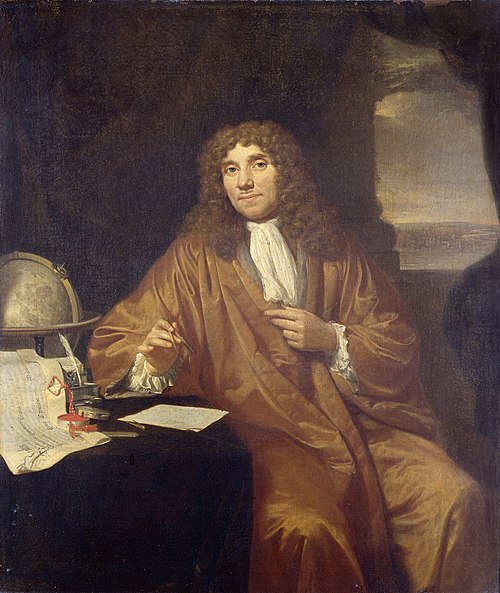
Leeuwenhoek Observes 'Animalcules'
Dutch draper Antonie van Leeuwenhoek, using a simple microscope, reports seeing tiny living organisms ('animalcules') in water and dental plaque, becoming the first to observe bacteria. #microbiology #science
Leeuwenhoek Observes 'Animalcules' By Jan Verkolje - http://www.rijksmuseum.nl/collectie/SK-A-957, Public domain, https://commons.wikimedia.org/w/index.php?curid=34320547
1683 CE
Leeuwenhoek Describes Spirochetes
Leeuwenhoek writes to the Royal Society describing spiral-shaped bacteria (spirochetes) from human mouth samples, the first recorded observation of these pathogens. #microbiology
1762 CE
von Plenciz Proposes Microorganisms Cause Disease
Austrian physician Markus Antonius von Plenciz argues that each disease is caused by a specific microorganism, expanding on earlier germ theories. #medicine #history
May 14, 1796 CE
Jenner Tests Smallpox Vaccination
Edward Jenner inoculates James Phipps using cowpox material, demonstrating protection against smallpox. This first vaccine marks a milestone in immunology and microbiology. #medicine #vaccination
Jenner Tests Smallpox Vaccination By John Raphael Smith - [1] [2], originally uploaded to en by User:Magnus Manske, Public domain, https://commons.wikimedia.org/w/index.php?curid=31245
1835 CE
Bassi Demonstrates Microorganism Causes Disease in Silkworms
Italian entomologist Agostino Bassi shows that a fungus transmits the muscardine disease of silkworms, providing the first clear proof that a microorganism can cause disease. #microbiology #science
Bassi Demonstrates Microorganism Causes Disease in Silkworms By Unknown author - [1], CC BY 4.0, https://commons.wikimedia.org/w/index.php?curid=32981604
1837 CE
Fuchsia Discovered in Red Algae
German botanist Leonhart Fuchs describes the red pigment in algae, later used as a stain; aniline dyes later become crucial for microscopy in microbiology. #botany #microscopy
Fuchsia Discovered in Red Algae By Heinrich Füllmaurer - Die Renaissance im deutschen Südwesten zwischen Reformation und Dreißigjährigem Krieg. Eine Ausstellung des Landes Baden-Württemberg, Heidelberger Schloss, 21. Juni - 19 Oktober 1986 (Württembergisches Landesmuseum, Stuttgart), Public domain, https://commons.wikimedia.org/w/index.php?curid=3023898
1847 CE
Semmelweis Advocates Handwashing to Reduce Childbed Fever
Hungarian physician Ignaz Semmelweis observes that handwashing with chlorinated lime drastically reduces mortality from puerperal fever, pioneering antiseptic practice. #medicine #publichealth
Semmelweis Advocates Handwashing to Reduce Childbed Fever By József Borsos / Albert Doctor - Ágnes Szemerédi: A fényképészet úttörői, OSZK blog, 2022 [1], Public domain, https://commons.wikimedia.org/w/index.php?curid=123555011
Aug 1, 1854 CE
Snow Connects Cholera Outbreak to Contaminated Water
British physician John Snow maps a London cholera outbreak to a public water pump on Broad Street, establishing epidemiology and microbial transmission. #epidemiology #science
Snow Connects Cholera Outbreak to Contaminated Water By Unknown author - [1] Originally from en.wikipedia; description page is/was here., Public domain, https://commons.wikimedia.org/w/index.php?curid=403227
1857 CE
Pasteur Demonstrates Fermentation by Microorganisms
French chemist Louis Pasteur proves that fermentation is caused by living yeast cells, refuting spontaneous generation and laying the foundation for microbiology. #microbiology #science
Pasteur Demonstrates Fermentation by Microorganisms By Paul Nadar - File:Louis Pasteur, foto av Paul Nadar.jpg, Public domain, https://commons.wikimedia.org/w/index.php?curid=28039885
1861 CE
Pasteur Develops Pasteurization
Louis Pasteur invents pasteurization, a process of heating liquids to kill bacteria, revolutionizing food safety and microbiology. #science #food
Pasteur Develops Pasteurization By Chicago Department of Health artist - https://www.ncbi.nlm.nih.gov/pmc/articles/PMC1448139/, Public domain, https://commons.wikimedia.org/w/index.php?curid=71824380
1865 CE
Mendel Publishes Work on Heredity (Not Micro but Foundational)
Gregor Mendel's experiments on pea plants establish genetics, later essential for microbial genetics and virology. #genetics #biology
Mendel Publishes Work on Heredity (Not Micro but Foundational) By Unknown author - http://0.tqn.com/d/biology/1/0/l/e/3244238.jpg, Public domain, https://commons.wikimedia.org/w/index.php?curid=33347279
1876 CE
Koch Identifies Bacillus anthracis as Cause of Anthrax
Robert Koch proves that the bacterium Bacillus anthracis causes anthrax, fulfilling Koch's postulates and establishing the germ theory of disease. #microbiology #medicine
Koch Identifies Bacillus anthracis as Cause of Anthrax By Unknown author - https://ihm.nlm.nih.gov/images/B16691, Public domain, https://commons.wikimedia.org/w/index.php?curid=1825905
1878 CE
Hayem Discovers Blood Platelets
French physician Georges Hayem describes blood platelets, later important for understanding viral infections and immune responses. #medicine #hematology
Hayem Discovers Blood Platelets By Corlieu, A. - https://wellcomeimages.org/indexplus/image/L0010578.html, CC BY 4.0, https://commons.wikimedia.org/w/index.php?curid=33665746
1881 CE
Pasteur Develops Anthrax Vaccine
Louis Pasteur creates an attenuated anthrax vaccine, demonstrating immunity induction and advancing applied microbiology. #vaccine #microbiology
Pasteur Develops Anthrax Vaccine By Nhj78992 - Own work, CC BY-SA 3.0, https://commons.wikimedia.org/w/index.php?curid=32500182
Mar 24, 1882 CE
Koch Discovers Mycobacterium tuberculosis
Robert Koch announces the discovery of the tubercle bacillus, providing the first definitive cause of tuberculosis. #microbiology #disease
Koch Discovers Mycobacterium tuberculosis By Photo Credit: Content Providers(s): CDC/Dr. George Kubica - This media comes from the Centers for Disease Control and Prevention's Public Health Image Library (PHIL), with identification number #4428. Note: Not all PHIL images are public domain; be sure to check copyright status and credit authors and content providers. العربية | Deutsch | English | македонски | slovenščina | +/−, Public domain, https://commons.wikimedia.org/w/index.php?curid=422340
1884 CE
Gram Develops Gram Stain
Danish bacteriologist Hans Christian Gram devises the Gram stain, a fundamental technique for classifying bacteria. #microbiology #labtechnique
Gram Develops Gram Stain By Mikael Häggström, M.D. Author info - Reusing images- Conflicts of interest: None Mikael Häggström, M.D. - Own work, CC0, https://commons.wikimedia.org/w/index.php?curid=139041868
Jul 6, 1885 CE
Pasteur Successfully Vaccinates Against Rabies
Louis Pasteur administers the first rabies vaccine to Joseph Meister, a boy bitten by a rabid dog, marking a triumph for virology and vaccination. #virology #vaccine
Pasteur Successfully Vaccinates Against Rabies By Whispyhistory - Own work, CC BY-SA 4.0, https://commons.wikimedia.org/w/index.php?curid=113048305
1892 CE
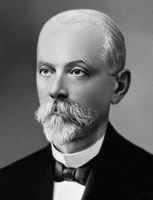
Ivanovsky Discovers Tobacco Mosaic Virus
Russian scientist Dmitri Ivanovsky finds that the causative agent of tobacco mosaic disease passes through a filter that retains bacteria, discovering the first virus. #virology #science
Ivanovsky Discovers Tobacco Mosaic Virus By Unknown author, PD-RU, https://en.wikipedia.org/w/index.php?curid=2472759
1898 CE
Beijerinck Introduces Concept of 'Virus'
Dutch microbiologist Martinus Beijerinck repeats Ivanovsky’s work and coins the term 'virus' (contagium vivum fluidum), recognizing viruses as distinct infectious agents. #virology #microbiology
Beijerinck Introduces Concept of 'Virus' By Unknown author - https://wellcomeimages.org/indexplus/image/M0002348.html, CC BY 4.0, https://commons.wikimedia.org/w/index.php?curid=33668284
1899 CE
Sanarelli Describes Filterable Agent of Myxomatosis
Italian physician Giuseppe Sanarelli identifies the filterable agent causing myxomatosis in rabbits, another early virus discovery. #virology
Sanarelli Describes Filterable Agent of Myxomatosis By Unknown author - https://wellcomeimages.org/indexplus/obf_images/92/bd/9d9b462824a001b0dbe312ec6ff3.jpg Gallery: https://wellcomeimages.org/indexplus/image/M0019453.html Wellcome Collection gallery (2018-03-29): https://wellcomecollection.org/works/fzqanh8u CC-BY-4.0, CC BY 4.0, https://commons.wikimedia.org/w/index.php?curid=36379440
1901 CE
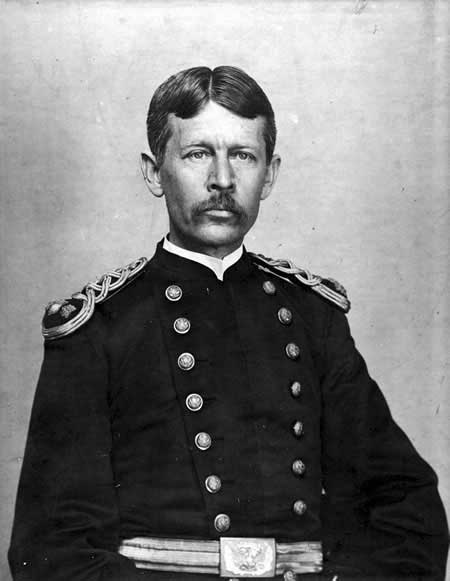
Reed and Gorgas Link Yellow Fever to Mosquitoes
Walter Reed’s commission proves yellow fever is transmitted by mosquitoes, advancing virology and vector-borne disease understanding. #virology #publichealth
Reed and Gorgas Link Yellow Fever to Mosquitoes By Unidentified photographer - en:Image:WalterReed.jpeg, Public domain, https://commons.wikimedia.org/w/index.php?curid=240486
1908 CE
Ellermann and Bang Show Avian Leukemia Caused by Virus
Vilhelm Ellermann and Oluf Bang demonstrate that avian leukemia is transmitted by a filterable agent, the first evidence of a virus causing cancer. #virology #cancer
1911 CE
Rous Discovers Rous Sarcoma Virus
Peyton Rous discovers that a filterable agent (now known as Rous sarcoma virus) causes sarcomas in chickens, groundbreaking for viral oncology. #virology #cancer
Frederick Twort reports a filterable agent that destroys bacteria, later identified as bacteriophages, opening the field of phage biology. #virology #microbiology
Twort Discovers Bacteriophages By Unknown author - Obituary Notices of Fellows of the Royal Society, Vol. 7, No. 20. (Nov., 1951), pp. 504-517., Public domain, https://commons.wikimedia.org/w/index.php?curid=2517949
1917 CE
d'Herelle Coins 'Bacteriophage'
Félix d'Herelle independently discovers bacteriophages and names them, advocating for phage therapy against bacterial infections. #virology #phagetherapy
d'Herelle Coins 'Bacteriophage' By [Service photo Institut Pasteur - Photothèque] - This file comes from Gallica Digital Library and is available under the digital ID btv1b32000224/f64, Public domain, https://commons.wikimedia.org/w/index.php?curid=37247789
Sep 28, 1928 CE
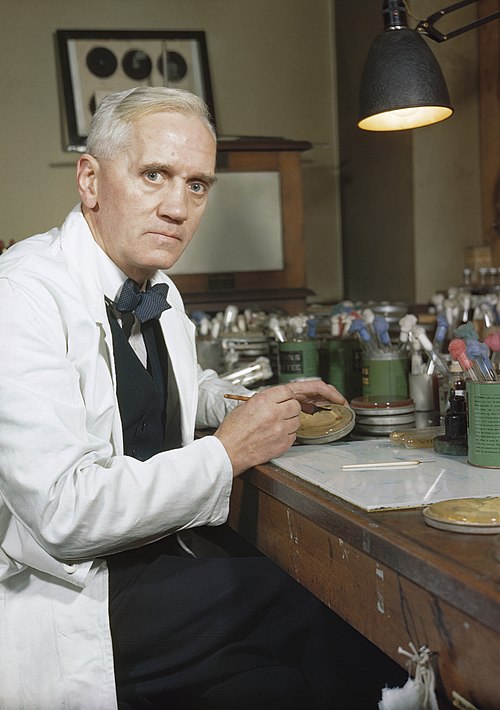
Fleming Discovers Penicillin
Alexander Fleming observes that a mold (Penicillium notatum) inhibits bacterial growth, leading to the first antibiotic and revolutionizing microbiology and medicine. #microbiology #antibiotics
Fleming Discovers Penicillin By Official photographer - http://media.iwm.org.uk/iwm/mediaLib//32/media-32192/large.jpg This photograph TR 1468 comes from the collections of the Imperial War Museums., Public domain, https://commons.wikimedia.org/w/index.php?curid=24436974
1931 CE
Electron Microscope Allows Observation of Viruses
German physicists Ernst Ruska and Max Knoll build the first electron microscope, enabling the visualization of viruses for the first time. #microscopy #virology
Electron Microscope Allows Observation of Viruses By J Brew, uploaded on the English-speaking Wikipedia by en:User:Hat'nCoat. - originally posted to Flickr as Electron Microscope Deutsches Museum, CC BY-SA 3.0, https://commons.wikimedia.org/w/index.php?curid=5309032
1935 CE
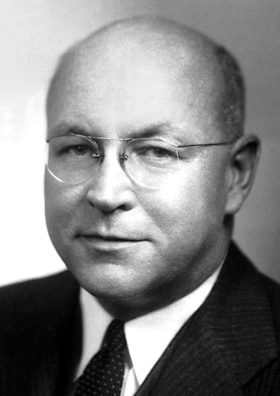
Stanley Crystallizes Tobacco Mosaic Virus
Wendell Stanley crystallizes the tobacco mosaic virus, demonstrating that viruses are not cells but macromolecular complexes, earning a Nobel Prize. #virology #chemistry
Stanley Crystallizes Tobacco Mosaic Virus By Unknown author - http://www.nobelprize.org/nobel_prizes/chemistry/laureates/1946/stanley.html, Public domain, https://commons.wikimedia.org/w/index.php?curid=18260423
1936 CE
Bawden and Pirie Discover Viral RNA
British scientists Norman Pirie and Frederick Bawden find that tobacco mosaic virus contains RNA, confirming that viruses use nucleic acids as genetic material. #virology #molecularbiology
1943 CE
Luria and Delbrück Confirm Random Mutations in Bacteria
The Luria–Delbrück experiment demonstrates that bacterial resistance to phage is due to random mutations, establishing microbial genetics. #microbiology #genetics
Luria and Delbrück Confirm Random Mutations in Bacteria By Madprime - Own work, CC BY-SA 3.0, https://commons.wikimedia.org/w/index.php?curid=2103556
1952 CE
Hershey-Chase Experiment Confirms DNA as Genetic Material
Alfred Hershey and Martha Chase use bacteriophages to prove that DNA, not protein, carries genetic information, a milestone in molecular biology and virology. #virology #genetics
Hershey-Chase Experiment Confirms DNA as Genetic Material By Thomasione - Modified from German Wikipedia [1], GFDL, https://commons.wikimedia.org/w/index.php?curid=15034881
Apr 25, 1953 CE
Watson and Crick Propose DNA Double Helix
James Watson and Francis Crick publish the structure of DNA, a foundation for understanding viral replication and genetic engineering. #molecularbiology #genetics
Watson and Crick Propose DNA Double Helix By Zephyris - Own work, CC BY-SA 3.0, https://commons.wikimedia.org/w/index.php?curid=15027555
1955 CE
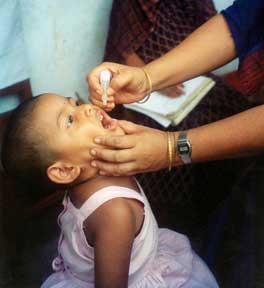
Salk Polio Vaccine Declared Safe and Effective
Jonas Salk's inactivated polio vaccine is announced successful, preventing a viral disease that had plagued millions. #virology #vaccine
Salk Polio Vaccine Declared Safe and Effective By USAID - USAID Bangladesh, Public domain, https://commons.wikimedia.org/w/index.php?curid=1021
1961 CE
Baltimore Discovers Reverse Transcriptase in RNA Viruses
David Baltimore and Howard Temin independently discover reverse transcriptase in retroviruses, showing RNA can be copied into DNA, revolutionizing virology and cancer research. #virology #molecularbiology
Baltimore Discovers Reverse Transcriptase in RNA Viruses By Thomas Splettstoesser (www.scistyle.com) - Own work, CC BY-SA 3.0, https://commons.wikimedia.org/w/index.php?curid=33598425
1970 CE
First Restriction Enzyme Isolated
Hamilton Smith isolates restriction enzyme HindII, enabling the manipulation of DNA from viruses and bacteria, a key tool for molecular microbiology. #microbiology #genetics
1976 CE
First Complete Genome of an Organism: Bacteriophage φX174
Frederick Sanger determines the complete DNA sequence of bacteriophage φX174, the first genome ever sequenced. #virology #genomics
First Complete Genome of an Organism: Bacteriophage φX174 By ShiftFn - http://studia.scienceontheweb.net/visualization.php, CC BY-SA 4.0, https://commons.wikimedia.org/w/index.php?curid=43612770
1983 CE
HIV Identified as Cause of AIDS
Luc Montagnier and Robert Gallo independently isolate the retrovirus HIV, leading to understanding of viral replication and the AIDS pandemic. #virology #publichealth
HIV Identified as Cause of AIDS By Photo Credit: C. Goldsmith Content Providers: CDC/ C. Goldsmith, P. Feorino, E. L. Palmer, W. R. McManus - This media comes from the Centers for Disease Control and Prevention's Public Health Image Library (PHIL), with identification number #10000. Note: Not all PHIL images are public domain; be sure to check copyright status and credit authors and content providers. العربية | Deutsch | English | македонски | slovenščina | +/−, Public domain, https://commons.wikimedia.org/w/index.php?curid=3909584
1985 CE
Mullis Invents Polymerase Chain Reaction (PCR)
Kary Mullis develops PCR, allowing amplification of DNA from tiny samples, crucial for viral detection and microbiology. #molecularbiology #biotech
Mullis Invents Polymerase Chain Reaction (PCR) By Madprime - Own work, CC0, https://commons.wikimedia.org/w/index.php?curid=2104468
1990 CE
First Successful Gene Therapy Trial (ADA-SCID)
A four-year-old girl with ADA deficiency receives gene therapy using a retroviral vector, highlighting the role of viruses in genetic medicine. #virology #genetherapy
First Successful Gene Therapy Trial (ADA-SCID) By Ciencias Españolas KoS - File:ADN_2.png File:Pince_a_épiler.png, CC BY-SA 3.0, https://commons.wikimedia.org/w/index.php?curid=75624775
1995 CE
First Bacterial Genome Sequenced: Haemophilus influenzae
The complete genome of Haemophilus influenzae is sequenced by Craig Venter, ushering in the era of microbial genomics. #microbiology #genomics
First Bacterial Genome Sequenced: Haemophilus influenzae By Stefan Walkowski - Own work, CC BY-SA 4.0, https://commons.wikimedia.org/w/index.php?curid=41492226
Apr 14, 2003 CE
Human Genome Project Completed
The Human Genome Project finishes sequencing the human genome, advanced by techniques from viral and microbial genetics. #genomics #science
Human Genome Project Completed By U.S. Department of Energy, Human Genome Project - http://www.ornl.gov/hgmis, Public domain, https://commons.wikimedia.org/w/index.php?curid=2485616
2008 CE
CRISPR-Cas9 Bacterial Immune System Harnessed for Gene Editing
Scientists discover that CRISPR-Cas9, a bacterial defense against bacteriophages, can be repurposed for precise genome editing, revolutionizing microbiology and virology. #microbiology #biotechnology
CRISPR-Cas9 Bacterial Immune System Harnessed for Gene Editing By Boghog - Own work, CC BY-SA 4.0, https://commons.wikimedia.org/w/index.php?curid=68597347
Dec 1, 2019 CE
SARS-CoV-2 Identified and Sequenced
Chinese scientists rapidly sequence the novel coronavirus SARS-CoV-2, enabling global response and vaccine development within a year. #virology #pandemic
SARS-CoV-2 Identified and Sequenced By NIAID-RML (https://www.niaid.nih.gov/ & https://www.niaid.nih.gov/about/rocky-mountain-laboratories) - https://www.flickr.com/photos/niaid/49534865371/ (flikr), CC BY 2.0, https://commons.wikimedia.org/w/index.php?curid=92612457
Dec 1, 2020 CE
First mRNA Vaccines Approved for COVID-19
Pfizer-BioNTech and Moderna mRNA vaccines receive emergency authorization, showcasing the power of virology and nucleic acid technology. #virology #vaccine
First mRNA Vaccines Approved for COVID-19 By Lasse Folkersen og Ann-Louise Bergström - Own work, CC BY-SA 4.0, https://commons.wikimedia.org/w/index.php?curid=110274951