Encyclopedia/1. The Cosmos & The Natural World/5. Life Sciences • Curated by Admin Timeline.sg
This timeline traces the historical development of microbiology and the understanding of viral replication, from ancient observations of infectious diseases to modern molecular virology and genetic tools. It highlights key figures, discoveries, and technological advances that shaped the field.
Chronological Storyline (39 Milestones)
1000 BCE
Ancient Chinese variolation
Chinese practitioners develop variolation, using powdered smallpox scabs to induce mild infection and immunity. This early form of inoculation predates modern vaccination by centuries. #history #medicine
Ancient Chinese variolation By Thomas Hickey, 1805 - [1][2], Public domain, https://commons.wikimedia.org/w/index.php?curid=124606920
1546 CE
Fracastoro proposes contagion theory
Italian physician Girolamo Fracastoro publishes 'De Contagione,' suggesting diseases are caused by tiny, transferrable particles (seminaria). This work lays early groundwork for germ theory. #history #medicine
Fracastoro proposes contagion theory By Attributed to Titian - This file was derived from: Titian Girolamo Fracastoro.jpg:, Public domain, https://commons.wikimedia.org/w/index.php?curid=79211693
1665 CE
Hooke observes cells
Robert Hooke publishes 'Micrographia,' detailing microscopic observations of cork cells. His work introduces the term 'cell' and inspires further microscopic study. #microscopy #biology
Hooke observes cells By Robert Hooke (1635-1703) - This image is available from the National Library of Wales, Public domain, https://commons.wikimedia.org/w/index.php?curid=7442137
1676 CE
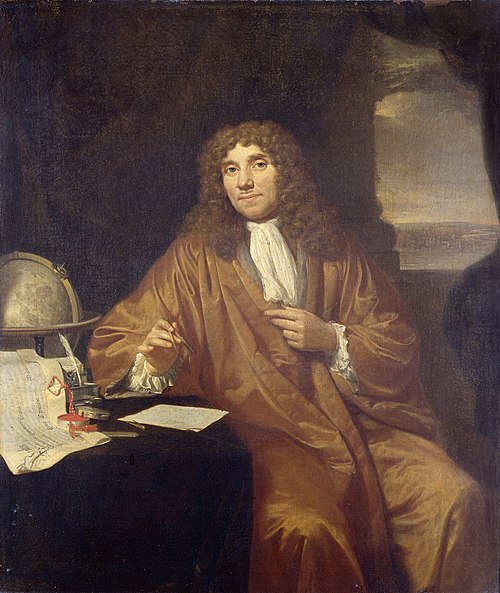
Leeuwenhoek discovers microorganisms
Antonie van Leeuwenhoek uses single-lens microscopes to observe bacteria and protozoa, which he calls 'animalcules.' His discoveries open the door to microbiology. #microbiology #history
Leeuwenhoek discovers microorganisms By Jan Verkolje - http://www.rijksmuseum.nl/collectie/SK-A-957, Public domain, https://commons.wikimedia.org/w/index.php?curid=34320547
May 14, 1796 CE
Jenner tests smallpox vaccine
Edward Jenner inoculates James Phipps with cowpox, demonstrating immunity to smallpox. This marks the beginning of vaccination. #medicine #immunology
Jenner tests smallpox vaccine By John Raphael Smith - [1] [2], originally uploaded to en by User:Magnus Manske, Public domain, https://commons.wikimedia.org/w/index.php?curid=31245
1847 CE
Semmelweis introduces handwashing
Ignaz Semmelweis demonstrates that chlorine handwashing reduces puerperal fever mortality in obstetric wards, pioneering antiseptic practices. #microbiology #medicine
Semmelweis introduces handwashing By József Borsos / Albert Doctor - Ágnes Szemerédi: A fényképészet úttörői, OSZK blog, 2022 [1], Public domain, https://commons.wikimedia.org/w/index.php?curid=123555011
1854 CE
Snow traces cholera to water pump
John Snow maps cholera cases in London to a contaminated water pump on Broad Street, founding epidemiology and demonstrating waterborne disease transmission. #epidemiology #history
Snow traces cholera to water pump By Unknown author - [1] Originally from en.wikipedia; description page is/was here., Public domain, https://commons.wikimedia.org/w/index.php?curid=403227
1857 CE
Pasteur proves fermentation is microbial
Louis Pasteur shows that microorganisms cause fermentation, refuting spontaneous generation and establishing the germ theory of chemical processes. #microbiology #science
Pasteur proves fermentation is microbial By Paul Nadar - File:Louis Pasteur, foto av Paul Nadar.jpg, Public domain, https://commons.wikimedia.org/w/index.php?curid=28039885
1861 CE
Pasteur disproves spontaneous generation
Pasteur's swan-neck flask experiments demonstrate that air carries microorganisms, definitively disproving abiogenesis and supporting biogenesis. #microbiology #science
Pasteur disproves spontaneous generation By Ian Alexander - Own work, CC BY-SA 4.0, https://commons.wikimedia.org/w/index.php?curid=120373498
1867 CE
Lister introduces antiseptic surgery
Joseph Lister uses carbolic acid as an antiseptic during surgery, drastically reducing post-operative infections and advancing medical microbiology. #medicine #microbiology
Lister introduces antiseptic surgery By Unknown author - Weltrundschau zu Reclams Universum 1902, Public domain, https://commons.wikimedia.org/w/index.php?curid=9647607
1876 CE
Koch discovers Bacillus anthracis
Robert Koch identifies the anthrax bacillus as the cause of anthrax, becoming the first to link a specific microbe to a disease. #microbiology #science
Koch discovers Bacillus anthracis By Unknown author - https://ihm.nlm.nih.gov/images/B16691, Public domain, https://commons.wikimedia.org/w/index.php?curid=1825905
Mar 24, 1882 CE
Koch discovers tuberculosis bacterium
Robert Koch announces the discovery of Mycobacterium tuberculosis, the cause of tuberculosis, a major milestone in medical microbiology. #microbiology #medicine
Koch discovers tuberculosis bacterium By Photo Credit: Content Providers(s): CDC/Dr. George Kubica - This media comes from the Centers for Disease Control and Prevention's Public Health Image Library (PHIL), with identification number #4428. Note: Not all PHIL images are public domain; be sure to check copyright status and credit authors and content providers. العربية | Deutsch | English | македонски | slovenščina | +/−, Public domain, https://commons.wikimedia.org/w/index.php?curid=422340
1884 CE
Koch's postulates formulated
Koch and Friedrich Loeffler establish four criteria to prove a causal relationship between a microbe and a disease, known as Koch's postulates. #microbiology #science
Koch's postulates formulated By Unknown author - http://ihm.nlm.nih.gov/images/B16692, Public domain, https://commons.wikimedia.org/w/index.php?curid=5495788
1887 CE
Petri dish invented
Julius Richard Petri designs the Petri dish, a shallow glass dish for culturing microorganisms, revolutionizing microbiology. #microbiology #laboratory
Petri dish invented By Ufficio Comunicazione, Azienda Ospedaliera SS. Antonio e Biagio e Cesare Arrigo, Alessandria and Biblioteca Biomedica Centro di Documentazione - Azienda Ospedaliera SS. Antonio e Biagio e Cesare Arrigo, Alessandria, CC BY-SA 4.0, https://commons.wikimedia.org/w/index.php?curid=84863271
1892 CE
Ivanovsky discovers filterable agent
Dmitri Ivanovsky shows that the causative agent of tobacco mosaic disease passes through a bacteria-proof filter, indicating a smaller pathogen — later identified as a virus. #virology #science
Ivanovsky discovers filterable agent By Unknown author - [1], Public domain, https://commons.wikimedia.org/w/index.php?curid=3430584
1898 CE
Beijerinck coins 'virus'
Martinus Beijerinck builds on Ivanovsky's work, describing tobacco mosaic disease as caused by a 'contagium vivum fluidum' (soluble living germ) and coining the term 'virus.' #virology #history
Beijerinck coins 'virus' By Unknown author - https://wellcomeimages.org/indexplus/image/M0002348.html, CC BY 4.0, https://commons.wikimedia.org/w/index.php?curid=33668284
1900 CE
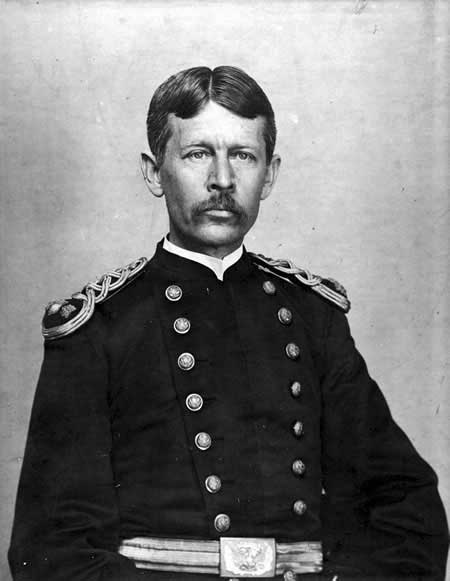
Reed confirms yellow fever virus
Walter Reed and his team prove that yellow fever is caused by a filterable virus transmitted by mosquitoes, advancing tropical medicine. #virology #medicine
Reed confirms yellow fever virus By Unidentified photographer - en:Image:WalterReed.jpeg, Public domain, https://commons.wikimedia.org/w/index.php?curid=240486
1915 CE
Twort discovers bacteriophages
Frederick Twort observes a filterable agent that destroys bacteria, later named bacteriophages. This opens the field of phage biology. #virology #microbiology
Twort discovers bacteriophages By Unknown author - Obituary Notices of Fellows of the Royal Society, Vol. 7, No. 20. (Nov., 1951), pp. 504-517., Public domain, https://commons.wikimedia.org/w/index.php?curid=2517949
1917 CE
d'Herelle confirms phages
Félix d'Herelle independently discovers bacteriophages and develops phage typing, using them for therapy and advancing virology. #virology #history
d'Herelle confirms phages By [Service photo Institut Pasteur - Photothèque] - This file comes from Gallica Digital Library and is available under the digital ID btv1b32000224/f64, Public domain, https://commons.wikimedia.org/w/index.php?curid=37247789
1931 CE
Electron microscope invented
Ernst Ruska builds the first electron microscope, enabling visualization of viruses and subcellular structures. #microscopy #virology
Electron microscope invented By Alice im Miniland - Own work, CC BY-SA 4.0, https://commons.wikimedia.org/w/index.php?curid=42485910
1935 CE
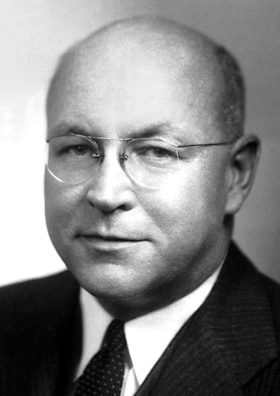
Stanley crystallizes TMV
Wendell Stanley crystallizes tobacco mosaic virus, showing that viruses can be purified as chemical entities, winning the Nobel Prize. #virology #chemistry
Stanley crystallizes TMV By Unknown author - http://www.nobelprize.org/nobel_prizes/chemistry/laureates/1946/stanley.html, Public domain, https://commons.wikimedia.org/w/index.php?curid=18260423
1943 CE
Luria-Delbrück experiment
Max Delbrück and Salvador Luria use phage to demonstrate bacterial mutation, launching molecular biology and phage genetics. #genetics #virology
Luria-Delbrück experiment By Madprime - Own work, CC BY-SA 3.0, https://commons.wikimedia.org/w/index.php?curid=2103556
1944 CE
Avery proves DNA is genetic material
Oswald Avery and colleagues show that DNA from pneumococcus can transform bacteria, identifying DNA as the carrier of genetic information. #genetics #microbiology
Avery proves DNA is genetic material By Bbkkk - self-made in the Naturkunste Museum in Berlin, CC BY-SA 4.0, https://commons.wikimedia.org/w/index.php?curid=3679283
1952 CE
Hershey-Chase experiment
Alfred Hershey and Martha Chase use phage to confirm that DNA, not protein, is the genetic material, using radioactive labeling. #genetics #virology
Hershey-Chase experiment By Thomasione - Modified from German Wikipedia [1], GFDL, https://commons.wikimedia.org/w/index.php?curid=15034881
Apr 25, 1953 CE
Watson-Crick DNA structure
James Watson and Francis Crick publish the double-helix structure of DNA, revolutionizing genetics and molecular biology. #genetics #biology
Watson-Crick DNA structure By Unknown author, Public domain, https://commons.wikimedia.org/w/index.php?curid=510095
1955 CE
Salk polio vaccine successful
Jonas Salk announces a successful inactivated polio vaccine, leading to mass immunization and decline of polio. #medicine #virology
Salk polio vaccine successful By SAS Scandinavian Airlines - Commons: file, Public domain, https://commons.wikimedia.org/w/index.php?curid=53755620
1956 CE
TMV RNA shown as infectious
Heinz Fraenkel-Conrat and Robley C. Williams demonstrate that purified RNA from TMV can cause infection, confirming RNA as genetic material in viruses. #virology #genetics
1961 CE
Jacob-Monod operon model
François Jacob and Jacques Monod propose the operon model of gene regulation in bacteria, explaining how genes control metabolism. #genetics #microbiology
1970 CE
Reverse transcriptase discovered
Howard Temin and David Baltimore independently discover reverse transcriptase in retroviruses, showing RNA can be copied to DNA. #virology #genetics
Reverse transcriptase discovered By Thomas Splettstoesser (www.scistyle.com) - Own work, CC BY-SA 3.0, https://commons.wikimedia.org/w/index.php?curid=33598425
1972 CE
First recombinant DNA
Paul Berg creates the first recombinant DNA molecule, combining SV40 virus DNA with lambda phage, launching genetic engineering. #genetics #biotechnology
First recombinant DNA By Unknown author - http://profiles.nlm.nih.gov/CD/B/B/L/L/, Public domain, https://commons.wikimedia.org/w/index.php?curid=3702286
1975 CE
Sanger sequencing method
Frederick Sanger develops the chain-termination method for DNA sequencing, later used to sequence viral genomes. #genetics #technology
Sanger sequencing method By Estevezj - Own work, CC BY-SA 3.0, https://commons.wikimedia.org/w/index.php?curid=23264166
1977 CE
First complete viral genome sequenced
The genome of bacteriophage φX174 is sequenced, the first complete DNA genome, revealing overlapping genes. #virology #genomics
First complete viral genome sequenced By ShiftFn - http://studia.scienceontheweb.net/visualization.php, CC BY-SA 4.0, https://commons.wikimedia.org/w/index.php?curid=43612770
1981 CE
Prions discovered by Prusiner
Stanley Prusiner proposes that infectious proteins called prions cause neurodegenerative diseases like scrapie, challenging central dogma. #microbiology #neuroscience
Prions discovered by Prusiner By Boghog - Own work, CC0, https://commons.wikimedia.org/w/index.php?curid=151862245
1983 CE
HIV isolated
Luc Montagnier and Robert Gallo independently isolate HIV as the cause of AIDS, transforming virology and public health. #virology #medicine
HIV isolated By Photo Credit: C. Goldsmith Content Providers: CDC/ C. Goldsmith, P. Feorino, E. L. Palmer, W. R. McManus - This media comes from the Centers for Disease Control and Prevention's Public Health Image Library (PHIL), with identification number #10000. Note: Not all PHIL images are public domain; be sure to check copyright status and credit authors and content providers. العربية | Deutsch | English | македонски | slovenščina | +/−, Public domain, https://commons.wikimedia.org/w/index.php?curid=3909584
1985 CE
PCR invented by Mullis
Kary Mullis develops polymerase chain reaction (PCR), amplifying DNA exponentially and revolutionizing molecular biology and diagnostics. #genetics #technology
PCR invented by Mullis By Madprime - Own work, CC0, https://commons.wikimedia.org/w/index.php?curid=2104468
1995 CE
First bacterial genome sequenced
The complete genome of Haemophilus influenzae is sequenced, the first free-living organism's genome, advancing microbiology. #genomics #microbiology
First bacterial genome sequenced By Stefan Walkowski - Own work, CC BY-SA 4.0, https://commons.wikimedia.org/w/index.php?curid=41492226
Apr 14, 2003 CE
Human genome project completed
The Human Genome Project finishes sequencing the human genome, providing a foundational resource for biomedical research. #genetics #genomics
Human genome project completed By U.S. Department of Energy, Human Genome Project - http://www.ornl.gov/hgmis, Public domain, https://commons.wikimedia.org/w/index.php?curid=2485616
Jun 28, 2012 CE
CRISPR-Cas9 adapted for genome editing
Emmanuelle Charpentier and Jennifer Doudna show that CRISPR-Cas9 can be programmed to cut specific DNA sequences, revolutionizing genetic engineering. #genetics #technology
CRISPR-Cas9 adapted for genome editing By Deposition authors: Nishimasu, H., Ishitani, R., Nureki, O.; Visualization author: Synpath - Atom coordinates: https://www.rcsb.org/structure/4OO8; Visualization: Own work, CC0, https://commons.wikimedia.org/w/index.php?curid=133423568
Jan 10, 2020 CE
SARS-CoV-2 genome sequenced
Chinese scientists quickly share the genomic sequence of SARS-CoV-2, enabling global vaccine development and pandemic response. #virology #pandemic
SARS-CoV-2 genome sequenced By NIAID-RML (https://www.niaid.nih.gov/ & https://www.niaid.nih.gov/about/rocky-mountain-laboratories) - https://www.flickr.com/photos/niaid/49534865371/ (flikr), CC BY 2.0, https://commons.wikimedia.org/w/index.php?curid=92612457