Meteorology & Climate Dynamics: Atmosphere, Monsoon & Global Warming
Encyclopedia/1. The Cosmos & The Natural World/4. Earth Sciences/02. Meteorology & Climate Science • Curated by Admin Timeline.sg
The physics of Earth's atmosphere: monsoon dynamics, barometric pressure, Milankovitch orbital cycles, Keeling Curve CO2 monitoring, and IPCC models.
Chronological Storyline (44 Milestones)
1643 CE
Evangelista Torricelli invents the barometer
Torricelli, an Italian physicist, created the first mercury barometer, demonstrating that atmospheric pressure decreases with altitude. This invention laid the foundation for modern meteorology and weather forecasting. #meteorology #invention #barometer
Evangelista Torricelli invents the barometer By Lorenzo Lippi - http://www.tefaf.com/DesktopDefault.aspx?tabid=13&tabindex=12&highlightid=38037&categoryid=37, Public domain, https://commons.wikimedia.org/w/index.php?curid=24875317
1686 CE
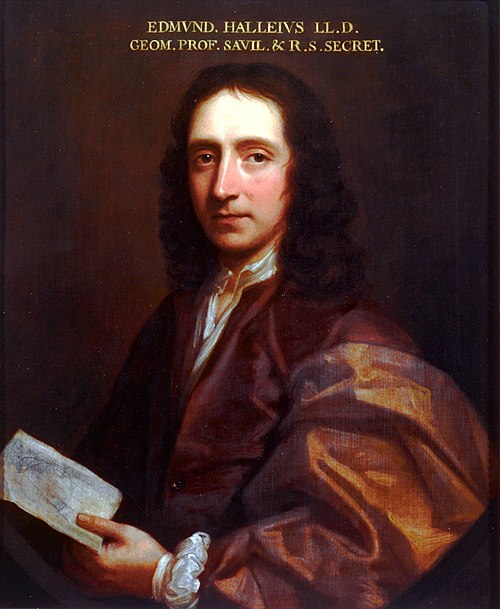
Edmond Halley publishes first meteorological map
Halley produced a chart of trade winds and monsoons, linking atmospheric circulation to solar heating. This work was a pioneering step in understanding global wind patterns. #meteorology #monsoon #wind
Edmond Halley publishes first meteorological map By Thomas Murray - https://commons.wikimedia.org/wiki/File:Edmund_Halley.gif, Public domain, https://commons.wikimedia.org/w/index.php?curid=128394552
1735 CE
George Hadley explains the Hadley cell
Hadley proposed a model of global atmospheric circulation driven by solar heating at the equator, forming the basis for understanding trade winds and tropical weather. #meteorology #atmosphere #circulation
1783 CE
First manned hot air balloon flight
The Montgolfier brothers launched a balloon carrying humans, demonstrating the principle of buoyancy and opening the way for atmospheric exploration. #aviation #atmosphere #balloon
First manned hot air balloon flight By Unidentified painter - Musée des Papeteries Canson et Montgolfier, Public domain, https://commons.wikimedia.org/w/index.php?curid=50751501
1805 CE
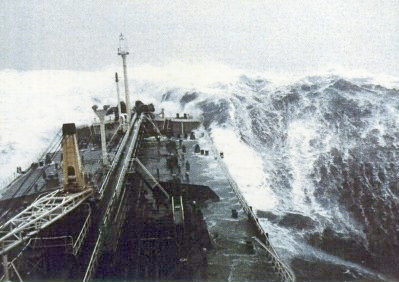
Francis Beaufort develops the Beaufort scale
Beaufort created a standardized scale for estimating wind speeds based on sea conditions, widely adopted for maritime and meteorological use. #meteorology #wind #scale
Francis Beaufort develops the Beaufort scale By NOAA - This image has been extracted from another file, Public domain, https://commons.wikimedia.org/w/index.php?curid=2566306
1835 CE
Gaspard-Gustave Coriolis describes the Coriolis effect
Coriolis explained how Earth's rotation deflects moving air and water, a key concept for understanding cyclones and global wind patterns. #physics #atmosphere #rotation
Gaspard-Gustave Coriolis describes the Coriolis effect By Hubi - German Wikipedia, CC BY-SA 3.0, https://commons.wikimedia.org/w/index.php?curid=1008114
1841 CE
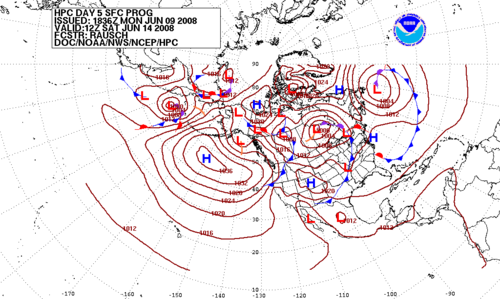
First telegraphic weather report
The use of telegraphy allowed rapid transmission of weather observations, enabling the first real-time weather forecasting networks. #meteorology #telegraph #forecast
First telegraphic weather report By Hydrometeorological Prediction Center - https://www.wpc.ncep.noaa.gov/medr/day5nav.html, Public domain, https://commons.wikimedia.org/w/index.php?curid=37193836
1856 CE
William Ferrel proposes Ferrel cell
Ferrel described a mid-latitude atmospheric circulation cell, completing the three-cell model of global circulation alongside Hadley and polar cells. #meteorology #circulation #atmosphere
William Ferrel proposes Ferrel cell By Kaidor - Own work based on: NASA depiction of earth global atmospheric circulation.jpg, CC BY-SA 3.0, https://commons.wikimedia.org/w/index.php?curid=23902538
1861 CE
First daily weather forecast published
The British Meteorological Office issued the first daily weather forecast in The Times, marking the birth of public weather prediction. #meteorology #forecast #history
1873 CE
International Meteorological Organization founded
The IMO was established to coordinate weather data exchange across nations, later becoming the World Meteorological Organization (WMO). #meteorology #organization #cooperation
1904 CE
Vilhelm Bjerknes proposes numerical weather prediction
Bjerknes outlined the concept of using physical equations to forecast weather, laying the groundwork for modern computer-based models. #meteorology #numerical #prediction
Vilhelm Bjerknes proposes numerical weather prediction By Unknown author - Bjerknes Family, CC BY-SA 4.0, https://commons.wikimedia.org/w/index.php?curid=55068481
1919 CE
Norwegian cyclone model developed
The Bergen School, led by Vilhelm Bjerknes, introduced the polar front theory and cyclone life cycle, revolutionizing mid-latitude weather understanding. #meteorology #cyclone #front
1922 CE
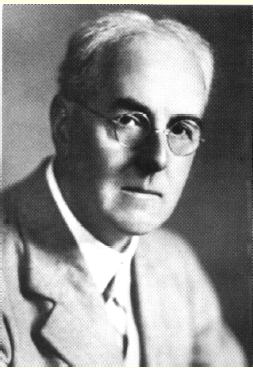
Lewis Fry Richardson pioneers numerical weather prediction
Richardson published 'Weather Prediction by Numerical Process', attempting to solve atmospheric equations manually, though impractical at the time. #meteorology #numerical #prediction
Lewis Fry Richardson pioneers numerical weather prediction By NOAA - NOAA presentation, Public domain, https://commons.wikimedia.org/w/index.php?curid=1506000
1930 CE
First radiosonde launched
The radiosonde, a balloon-borne instrument, began transmitting upper-air data (temperature, humidity, pressure) to ground stations, vastly improving atmospheric profiling. #meteorology #radiosonde #upperair
First radiosonde launched By Paul Wynter - Own work, CC BY-SA 4.0, https://commons.wikimedia.org/w/index.php?curid=95664138
1941 CE
Milutin Milankovitch publishes orbital forcing theory
Milankovitch proposed that variations in Earth's orbit and axial tilt cause long-term climate changes, now a cornerstone of paleoclimatology. #climate #orbital #iceages
Milutin Milankovitch publishes orbital forcing theory By Unknown author - [1], Public domain, https://commons.wikimedia.org/w/index.php?curid=79475750
1947 CE
First computer-based weather forecast
Using the ENIAC computer, a team led by Charney, Fjørtoft, and von Neumann produced the first successful numerical weather prediction. #meteorology #computer #forecast
First computer-based weather forecast By NOAA - http://celebrating200years.noaa.gov/breakthroughs/climate_model/AtmosphericModelSchematic.png, Public domain, https://commons.wikimedia.org/w/index.php?curid=7263986
1950 CE
First successful numerical weather prediction
Charney, Fjørtoft, and von Neumann used the ENIAC to compute a 24-hour forecast, demonstrating the feasibility of computer-based weather modeling. #meteorology #ENIAC #forecast
1951 CE
World Meteorological Organization established
The WMO succeeded the IMO as a UN specialized agency, coordinating global meteorological observations and research. #meteorology #WMO #UN
1957 CE
International Geophysical Year begins
The IGY (1957-1958) spurred global cooperation in Earth sciences, including extensive atmospheric and oceanographic measurements, and led to the discovery of the jet stream's structure. #geophysics #atmosphere #research
International Geophysical Year begins By Original: Special Committee for the International Geophysical Year (CSAGI) Vectorization: Draemmli (Roland Rytz) - Manually traced from the image at [2], Public domain, https://commons.wikimedia.org/w/index.php?curid=181704231
1958 CE
Charles Keeling begins CO2 measurements at Mauna Loa
Keeling initiated continuous monitoring of atmospheric carbon dioxide at Mauna Loa Observatory, producing the iconic Keeling Curve showing rising CO2 levels. #climate #CO2 #Keeling
Charles Keeling begins CO2 measurements at Mauna Loa By Oeneis - Own work. Data from Dr. Pieter Tans, NOAA/ESRL and Dr. Ralph Keeling, Scripps Institution of Oceanography., CC BY-SA 4.0, https://commons.wikimedia.org/w/index.php?curid=40636957
Apr 1, 1960 CE
First weather satellite TIROS-1 launched
TIROS-1 (Television Infrared Observation Satellite) provided the first satellite images of cloud cover, revolutionizing weather observation and forecasting. #satellite #meteorology #TIROS
First weather satellite TIROS-1 launched By Unknown author, PD, https://en.wikipedia.org/w/index.php?curid=26969252
1963 CE
Edward Lorenz discovers chaos theory in weather
Lorenz identified the butterfly effect while running a simple weather model, showing that small changes can lead to large, unpredictable outcomes, founding chaos theory. #chaos #meteorology #butterfly
Edward Lorenz discovers chaos theory in weather By American Geophysical Union (AGU), courtesy of AIP Emilio Segrè Visual Archives - https://repository.aip.org/portrait-edward-lorenz, Attribution, https://commons.wikimedia.org/w/index.php?curid=174571183
1965 CE
First World Climate Conference
The conference in Geneva raised awareness of climate change and led to the establishment of the World Climate Programme. #climate #conference #awareness
1967 CE
Syukuro Manabe and Richard Wetherald publish first climate model
They developed the first comprehensive general circulation model (GCM) linking CO2 doubling to global warming, a landmark in climate science. #climate #model #CO2
Syukuro Manabe and Richard Wetherald publish first climate model By Bengt Nyman from Vaxholm, Sweden - Crafoord Prize EM1B0732, CC BY 2.0, https://commons.wikimedia.org/w/index.php?curid=69430220
1972 CE
First UN Conference on the Human Environment (Stockholm)
The conference addressed environmental issues including climate change, leading to the creation of the UN Environment Programme (UNEP). #environment #UN #climate
1979 CE
First World Climate Conference (Geneva)
This conference declared climate change a global problem and called for international cooperation, leading to the formation of the IPCC later. #climate #conference #IPCC
1985 CE
Villach Conference confirms greenhouse gas warming
Scientists at Villach, Austria, concluded that greenhouse gases would cause significant global warming, prompting policy discussions. #climate #greenhouse #science
1988 CE
Intergovernmental Panel on Climate Change (IPCC) established
The IPCC was created by WMO and UNEP to assess scientific information on climate change, providing comprehensive reports for policymakers. #IPCC #climate #assessment
Intergovernmental Panel on Climate Change (IPCC) established By Intergovernmental Panel on Climate Change - Intergovernmental Panel on Climate Change Documents and Website, Public domain, https://commons.wikimedia.org/w/index.php?curid=74684917
1990 CE
IPCC First Assessment Report published
The report confirmed that human activities are increasing greenhouse gas concentrations and causing warming, leading to the UN Framework Convention on Climate Change. #IPCC #climate #report
Jun 1, 1992 CE
UN Framework Convention on Climate Change (UNFCCC) signed
At the Rio Earth Summit, nations agreed to stabilize greenhouse gas concentrations, establishing a framework for future climate agreements. #UNFCCC #climate #treaty
UN Framework Convention on Climate Change (UNFCCC) signed By Vicente G. Cajilig, Jr. / Living Laudato Si' Philippines - https://www.facebook.com/photo/?fbid=10228588519240651&set=a.1151065499528, CC BY-SA 4.0, https://commons.wikimedia.org/w/index.php?curid=125826506
1995 CE
IPCC Second Assessment Report
The report stated that 'the balance of evidence suggests a discernible human influence on global climate', strengthening the case for action. #IPCC #climate #evidence
Dec 11, 1997 CE
Kyoto Protocol adopted
The Kyoto Protocol set binding emission reduction targets for developed countries, a landmark international climate treaty. #climate #Kyoto #emissions
Kyoto Protocol adopted By User:Canuckguy, User:Danlaycock - File:UNFCCC parties.svg, Public domain, https://commons.wikimedia.org/w/index.php?curid=35866083
2001 CE
IPCC Third Assessment Report
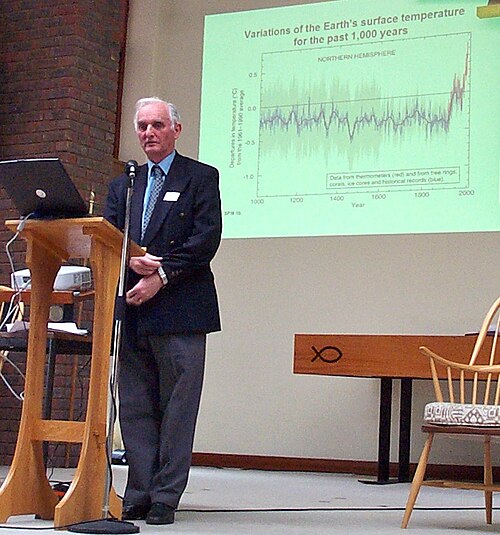
The report concluded that most of the observed warming over the last 50 years is likely due to human activities, with stronger confidence than before. #IPCC #climate #warming
IPCC Third Assessment Report By No machine-readable author provided. Kaihsu assumed (based on copyright claims). - No machine-readable source provided. Own work assumed (based on copyright claims)., CC BY-SA 3.0, https://commons.wikimedia.org/w/index.php?curid=67819
Feb 16, 2005 CE
Kyoto Protocol enters into force
After ratification by Russia, the Kyoto Protocol became legally binding, committing industrialized nations to reduce emissions. #climate #Kyoto #enforcement
2007 CE
IPCC Fourth Assessment Report
The report stated that warming is 'unequivocal' and that human influence is 'very likely' the cause, earning the IPCC the Nobel Peace Prize. #IPCC #climate #Nobel
Dec 1, 2009 CE
Copenhagen Accord
The UN climate conference in Copenhagen produced a non-binding accord acknowledging the need to limit global warming to 2°C. #climate #Copenhagen #accord
2013 CE
IPCC Fifth Assessment Report
The report increased confidence that human influence is the dominant cause of warming since the mid-20th century, and projected future climate changes. #IPCC #climate #report
IPCC Fifth Assessment Report By Efbrazil - Own work, CC BY-SA 4.0, https://commons.wikimedia.org/w/index.php?curid=87862027
Dec 12, 2015 CE
Paris Agreement adopted
Nearly 200 nations agreed to limit global warming to well below 2°C, aiming for 1.5°C, with nationally determined contributions (NDCs). #climate #Paris #agreement
Paris Agreement adopted By L.tak - This file uses File:Detailed Blank World Map.svg as a basis. Changes to the paths and their classes, are shown in the Changelog, which is included at the beginning of the file. Please do also update the Changelog, so that at any time the file can be updated easily if the political map (state borders) changes in the future., CC BY-SA 4.0, https://commons.wikimedia.org/w/index.php?curid=48320267
Nov 4, 2016 CE
Paris Agreement enters into force
The agreement became legally binding after ratification by 55 parties representing 55% of global emissions, a rapid entry into force. #climate #Paris #enforcement
Oct 8, 2018 CE
IPCC Special Report on 1.5°C
The report highlighted the severe impacts of 1.5°C warming and the need for rapid, far-reaching transitions in energy, land, and infrastructure. #IPCC #climate #1.5C
2019 CE
CO2 levels reach 415 ppm at Mauna Loa
Atmospheric CO2 concentration exceeded 415 parts per million for the first time in human history, a stark reminder of ongoing emissions. #CO2 #climate #record
Aug 9, 2021 CE
IPCC Sixth Assessment Report (AR6) published
The report provided the most comprehensive assessment yet, stating that climate change is widespread, rapid, and intensifying, with unequivocal human influence. #IPCC #climate #AR6
Nov 1, 2022 CE
COP27 establishes loss and damage fund
At the UN climate conference in Sharm El-Sheikh, nations agreed to create a fund for loss and damage from climate impacts in vulnerable countries. #COP27 #climate #lossanddamage
Jul 1, 2023 CE
Hottest month on record globally
July 2023 was the hottest month ever recorded, with global average temperatures exceeding previous records, highlighting accelerating climate change. #climate #heat #record
Hottest month on record globally By NASA’s Scientific Visualization Studio, Key and Title by uploader (Eric Fisk) - https://data.giss.nasa.gov/gistemp/maps/index_v4.html, CC BY-SA 4.0, https://commons.wikimedia.org/w/index.php?curid=113131169