Mary Anning: Fossil Pioneer & Jurassic Marine Reptiles
Encyclopedia/1. The Cosmos & The Natural World/4. Earth Sciences/04. Earth Science Biographies • Curated by Admin Timeline.sg
Timeline of Mary Anning (1799-1847), the self-taught English fossil collector whose pioneering discoveries of Jurassic marine reptiles revolutionized paleontology. Her finds of the first complete ichthyosaur, plesiosaur, and pterosaur skeletons provided crucial evidence for extinction and deep time.
Chronological Storyline (36 Milestones)
May 21, 1799 CE
Mary Anning Born in Lyme Regis
Mary Anning is born to Richard and Mary Moore Anning in Lyme Regis, Dorset, England. She will become one of the most important fossil collectors in paleontology. #paleontology #history
Mary Anning Born in Lyme Regis By Credited to 'Mr. Grey' in Crispin Tickell's book 'Mary Anning of Lyme Regis' (1996) - Two versions side by side, Sedgwick Museum. Also see here. According to the Sedgwick Museum, there are two versions. The earlier version is by an unknown artist, dated before 1842 and is preserved in the Natural History Museum, London. The later version is a copy by B.J. M. Donne in 1847 or 1850, and is credited to the Geological Society, London. Also see here., Public domain, https://commons.wikimedia.org/w/index.php?curid=3824696
Oct 1, 1800 CE
Survives Lightning Strike
At 15 months old, Mary Anning survives a lightning strike that kills three women. This event is later romanticized and fuels interest in her extraordinary life. #paleontology #history
Jul 1, 1811 CE
Ichthyosaur Skull Discovered by Brother
Mary's brother Joseph discovers a large ichthyosaur skull. Mary later excavates the full skeleton, which becomes the first complete ichthyosaur known and is sold for £23. #paleontology #fossils
Nov 1, 1812 CE
Father Dies, Family in Debt
Richard Anning, a cabinetmaker and fossil collector, dies of tuberculosis. The family is left in debt, forcing Mary and her brother to intensify fossil hunting for income. #paleontology #history
Jan 1, 1814 CE
First Scientific Description of Ichthyosaur
Sir Everard Home publishes the first scientific description of an ichthyosaur based on Mary's specimen, though he fails to credit her. This specimen later becomes the holotype of Ichthyosaurus communis. #paleontology #science
1815 CE
Mary Becomes Primary Breadwinner
At age 16, Mary Anning becomes the main income earner for her family by selling fossils found on the Blue Lias cliffs of Lyme Regis. Her reputation as a skilled collector grows. #paleontology #history
Dec 1, 1821 CE
Plesiosaur Genus Named by Conybeare
Geologist William Conybeare names the genus Plesiosaurus from fragmentary fossils, setting the stage for Mary's later discovery of a complete skeleton. #paleontology #science
Plesiosaur Genus Named by Conybeare By the paleobear - https://www.flickr.com/photos/paleo_bear/25337926128/, CC BY 2.0, https://commons.wikimedia.org/w/index.php?curid=75685659
Dec 1, 1823 CE
Discovers First Complete Plesiosaur
Mary Anning discovers the first complete plesiosaur skeleton, later named Plesiosaurus dolichodeirus. This find confirms the existence of a new order of marine reptiles and is a landmark in paleontology. #paleontology #fossils
Feb 1, 1824 CE
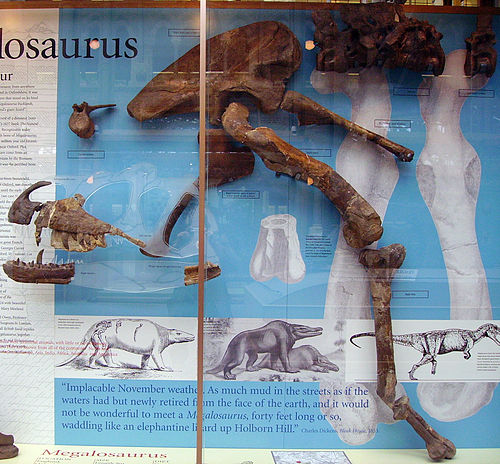
Megalosaurus Described by Buckland
William Buckland describes Megalosaurus, the first dinosaur to be scientifically named. This discovery, though not by Mary, marks the beginning of dinosaur paleontology. #paleontology #dinosaurs
Megalosaurus Described by Buckland By Ballista at English Wikipedia - Transferred from en.wikipedia to Commons by FunkMonk using CommonsHelper., CC BY-SA 3.0, https://commons.wikimedia.org/w/index.php?curid=6327707
Feb 1, 1825 CE
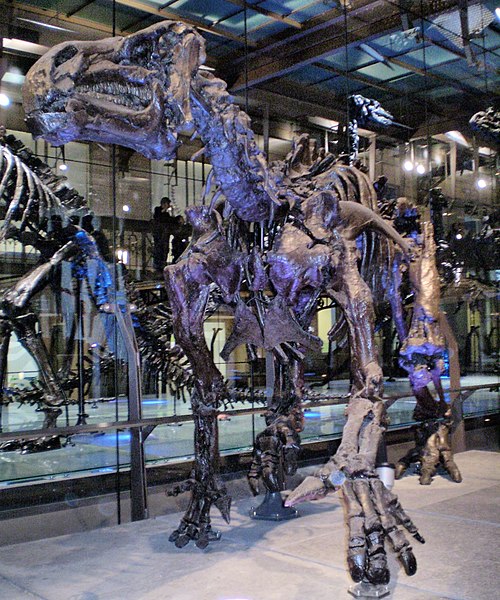
Iguanodon Described by Mantell
Gideon Mantell describes Iguanodon, the second dinosaur named. Mary Anning's fossil finds contribute to the growing understanding of extinct reptiles. #paleontology #dinosaurs
Iguanodon Described by Mantell By Ben2 - Own work, CC BY-SA 3.0, https://commons.wikimedia.org/w/index.php?curid=3166764
1826 CE
Sells Ichthyosaur to British Museum
Mary Anning sells a well-preserved ichthyosaur skeleton to the British Museum for £31. This sale helps finance her family's fossil hunting operations. #paleontology #fossils
Dec 1, 1828 CE
Discovers First Pterosaur in England
Mary Anning discovers the first pterosaur (Dimorphodon macronyx) found in England. This specimen provides crucial evidence for the existence of flying reptiles in the Jurassic period. #paleontology #fossils
Discovers First Pterosaur in England By MCDinosaurhunter - Own work, CC BY-SA 3.0, https://commons.wikimedia.org/w/index.php?curid=32897578
1829 CE
Discovers Fossil Fish Squaloraja
Mary Anning discovers Squaloraja polyspondyla, an unusual fossil fish that shows characteristics of both sharks and rays. It is later described by Louis Agassiz. #paleontology #fossils
Discovers Fossil Fish Squaloraja By SeismicShrimp - Own work, CC BY 4.0, https://commons.wikimedia.org/w/index.php?curid=158384932
1830 CE
Corresponds with Louis Agassiz
Mary Anning begins correspondence with Swiss naturalist Louis Agassiz, who studies her fossil fish collection and names several species after her. #paleontology #science
1831 CE
Discovers Belemnite Ink Sac
Mary Anning discovers a belemnite fossil with an intact ink sac. She uses the dried ink to draw illustrations, demonstrating the preservation of soft tissues. #paleontology #fossils
1832 CE
Financial Hardship and Considered Emigration
Facing severe financial hardship, Mary Anning briefly considers emigrating to America but is unable to raise the funds. She continues fossil hunting to survive. #paleontology #history
1833 CE
Discovers Ichthyosaur with Embryos
Mary Anning discovers an ichthyosaur fossil containing visible embryos, providing early evidence for viviparity in extinct reptiles. This find is scientifically significant. #paleontology #fossils
1834 CE
Helps Identify Coprolites as Fossil Feces
Mary Anning assists William Buckland in identifying coprolites (fossilized feces) as such, based on her familiarity with the fossils and their contents. This marks a milestone in paleontology. #paleontology #science
Helps Identify Coprolites as Fossil Feces By Poozeum - Own work, CC BY-SA 4.0, https://commons.wikimedia.org/w/index.php?curid=87100448
1835 CE
Louis Agassiz Visits Lyme Regis
Louis Agassiz visits Lyme Regis and works with Mary Anning on her fossil fish collection. He names several species in her honor, including Acrodus anningiae. #paleontology #science
Louis Agassiz Visits Lyme Regis By William Shaw Warren - [1], Public domain, https://commons.wikimedia.org/w/index.php?curid=16445252
Aug 1, 1836 CE
Granted Annuity by British Association
The British Association for the Advancement of Science grants Mary Anning an annuity of £25 per year in recognition of her contributions to paleontology. #paleontology #history
1837 CE
Visited by Eminent Geologists
Mary Anning is visited by Charles Lyell and Roderick Murchison, prominent geologists who seek her expertise and collect specimens. #paleontology #history
1838 CE
Granted Civil List Pension
The British government grants Mary Anning a civil list pension of £25 per year in recognition of her scientific contributions. #paleontology #history
1839 CE
Health Begins to Decline
Mary Anning's health starts to deteriorate, possibly from breast cancer, but she continues to collect fossils when possible. #paleontology #history
1840 CE
Sells Fossil to Sir Philip Egerton
Mary Anning sells a fine fossil specimen to Sir Philip Egerton, a wealthy collector. This helps support her during her illness. #paleontology #fossils
1841 CE
Visited by Publisher John Murray
Publisher John Murray visits Mary Anning to discuss her work and possibly publish her findings, though no book materializes. #paleontology #history
1842 CE
Owen Coins Term 'Dinosauria'
Richard Owen coins the term Dinosauria to describe a group of large extinct reptiles, including Megalosaurus and Iguanodon. Mary Anning's finds contribute to the study of these prehistoric animals. #paleontology #dinosaurs
Owen Coins Term 'Dinosauria' By Sam / Olai Ose / Skjaervoy from Zhangjiagang, China - Dinosaurs!, CC BY-SA 2.0, https://commons.wikimedia.org/w/index.php?curid=4209411
1843 CE
Diagnosed with Breast Cancer
Mary Anning is diagnosed with breast cancer. Despite her illness, she maintains correspondence with scientists and continues fossil hunting when able. #paleontology #history
Sep 1, 1844 CE
King of Saxony Visits Mary Anning
King Frederick Augustus II of Saxony visits Mary Anning and purchases a fossil for his collection, a testament to her fame. #paleontology #history
1845 CE
Last Major Fossil Discovery
Mary Anning makes her last recorded fossil discovery, a new species of ichthyosaur. Her health prevents her from further excavation. #paleontology #fossils
1846 CE
Bedridden and Cared for
Mary Anning becomes bedridden due to her advancing cancer, cared for by her mother and friends. She dies the following year. #paleontology #history
Mar 9, 1847 CE
Mary Anning Dies
Mary Anning dies of breast cancer at age 47 in Lyme Regis. Her contributions to paleontology are later recognized as pioneering. #paleontology #history
Mar 11, 1847 CE
Buried at St. Michael's Church
Mary Anning is buried in the churchyard of St. Michael's Church in Lyme Regis. Her grave is a pilgrimage site for paleontologists. #paleontology #history
1865 CE
Biography Published in Dickens' Magazine
A biography of Mary Anning appears in Charles Dickens' magazine 'All the Year Round', bringing her story to a wider audience. #paleontology #history
1899 CE
Plaque Erected in Memory
A plaque commemorating Mary Anning is erected on her former home in Lyme Regis, honoring her contributions to geology. #paleontology #history
May 21, 1999 CE
200th Birthday Celebrations
Celebrations for the bicentenary of Mary Anning's birth include exhibitions and talks, highlighting her legacy in paleontology. #paleontology #history
May 21, 2022 CE
Statue of Mary Anning Unveiled
A bronze statue of Mary Anning is unveiled in Lyme Regis on her birthday, honoring her as a pioneering fossil collector and scientist. #paleontology #history