Encyclopedia/3. History, Societies & Civilizations/02. South & Southeast Asian Civilizations • Curated by Admin Timeline.sg
The Maritime Silk Road was a vast network of sea routes connecting China to Southeast Asia, India, the Middle East, and Africa, flourishing from the Han dynasty onward. Quanzhou Port in Fujian emerged as a global emporium during the Song and Yuan dynasties, serving as a key node for trade and cultural exchange before its decline and recent revival under China's Belt and Road Initiative.
Chronological Storyline (43 Milestones)
200 BCE
Han dynasty establishes maritime trade routes
During the Han dynasty (206 BCE – 220 CE), Chinese silk and pottery were traded via sea routes to Southeast Asia and India, laying foundations for the Maritime Silk Road. #History #Trade
Han dynasty establishes maritime trade routes By Obsidian Soul - Own work, CC0, https://commons.wikimedia.org/w/index.php?curid=80385658
100 CE
Roman glassware found in Southeast Asia
Roman artifacts such as glass beads and vessels have been discovered at sites like Oc Eo in Vietnam, indicating early long-distance maritime trade between the Roman Empire and Southeast Asia. #History #Trade
Roman glassware found in Southeast Asia By Bùi Thụy Đào Nguyên - Own work, CC BY-SA 3.0, https://commons.wikimedia.org/w/index.php?curid=4352311
399 CE
Faxian travels by sea to India
Chinese Buddhist monk Faxian traveled overland to India and returned by sea via Sri Lanka and Java, documenting early maritime routes. #Buddhism #History
Faxian travels by sea to India By Ms Sarah Welch - Own work, CC0, https://commons.wikimedia.org/w/index.php?curid=110121875
618 CE
Tang dynasty expands maritime commerce
Under the Tang dynasty, maritime trade flourished with Guangzhou and Quanzhou becoming major ports. Arab and Persian merchants settled in these cities. #History #Trade
Tang dynasty expands maritime commerce By Windmemories - Own work, CC BY-SA 4.0, https://commons.wikimedia.org/w/index.php?curid=128390435
750 CE
Battle of Talas and shift to maritime trade
The Battle of Talas (751) hindered overland Silk Road, prompting increased maritime trade between China and the Islamic world. #History #Trade
Battle of Talas and shift to maritime trade By SY - Own work, CC BY-SA 4.0, https://commons.wikimedia.org/w/index.php?curid=61320148
800 CE
Arab geographers mention Quanzhou
Arab scholars like Suleiman al-Tajir mention Quanzhou (called 'Djanfu') as a major port in the 9th century. #History #Geography
900 CE
Quanzhou becomes major port under Min kingdom
During the Five Dynasties period, the Min kingdom (909–945) developed Quanzhou as a base for overseas trade, attracting foreign merchants. #History #Trade
1087 CE
Song dynasty establishes Maritime Trade Office in Quanzhou
The Song government set up a shibo si (maritime trade office) in Quanzhou to regulate foreign trade and collect tariffs, making it a cosmopolitan hub. #History #Trade
1100 CE
Quanzhou shipbuilding and compass use
Song-era shipbuilders in Quanzhou constructed large sea-going junks with watertight compartments and used the magnetic compass for navigation. #Technology #History
1200 CE
Quanzhou's foreign quarter flourishes
Foreign merchants from Arabia, Persia, India, and Southeast Asia lived in Quanzhou, building mosques, temples, and cemeteries. The Qingjing Mosque dates from this period. #History #Religion
Quanzhou's foreign quarter flourishes By Windmemories - Own work, CC BY-SA 4.0, https://commons.wikimedia.org/w/index.php?curid=128389960
1271 CE
Marco Polo visits Quanzhou (Zayton)
Venetian traveler Marco Polo visited Quanzhou, which he called Zayton, describing it as one of the world's greatest ports bustling with pepper and porcelain trade. #History #Exploration
Marco Polo visits Quanzhou (Zayton) By Unknown author - The Description of the World, Moule & Pelliot, 1938, dont la source est le frontispice en noir et blanc de la 1e édition allemande du Livre de Marco Polo (Nuremberg, 1477)., Public domain, https://commons.wikimedia.org/w/index.php?curid=194214365
1291 CE
Quanzhou shipwreck (ca. 1277)
A Song-era merchant ship wrecked off Quanzhou (discovered in 1973) carried ceramics, spices, and spices, providing archaeological evidence of maritime trade. #Archaeology #History
1345 CE
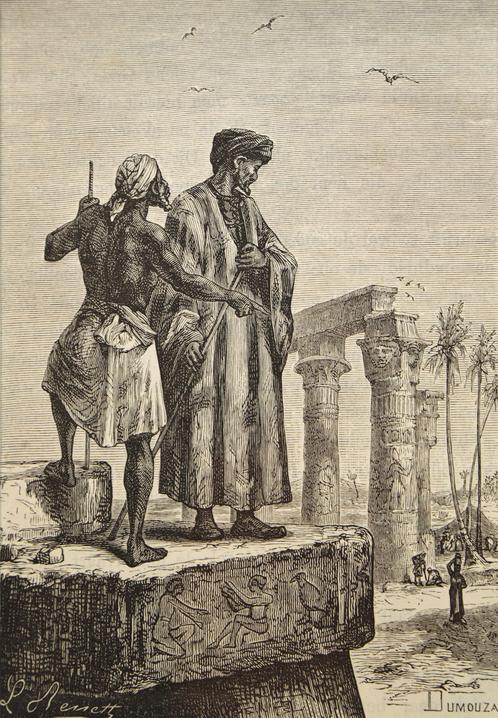
Ibn Battuta visits Quanzhou
Moroccan scholar Ibn Battuta traveled to Quanzhou and later wrote about its thriving trade and multicultural society. #History #Travel
Ibn Battuta visits Quanzhou By Léon Benett - Verne, Jules (1878). Les Grands voyages et les grands voyageurs. Découverte de la Terre. Paris: J. Hetzel. Page 81 available from Gallica.Immediate source: http://www.artfinder.com/work/ibn-battuta-in-egypt-hippolyte-leon-benett/, Public domain, https://commons.wikimedia.org/w/index.php?curid=17332982
1371 CE
Ming dynasty maritime ban (haijin) begins
The Ming dynasty imposed a strict ban on private maritime trade, forcing commerce into smuggling and tributary missions. #History #Trade
1405 CE
Zheng He's first voyage departs
Admiral Zheng He of the Ming dynasty led vast treasure fleets from Nanjing and Fujian ports, including Quanzhou, to Southeast Asia, India, the Middle East, and Africa. #History #Exploration
Zheng He's first voyage departs By Marcin Konsek - Own work, CC BY-SA 4.0, https://commons.wikimedia.org/w/index.php?curid=51927875
1413 CE
Zheng He reaches Malindi and Mombasa
On his fourth voyage, Zheng He's fleet reached East African ports, exchanging Chinese porcelain and silk for ivory, spices, and giraffes. #Exploration #History
1433 CE
Zheng He's voyages end
After seven voyages, the Ming dynasty halted maritime expeditions, leading to a decline in official maritime activity but private trade continued. #History #Exploration
1498 CE
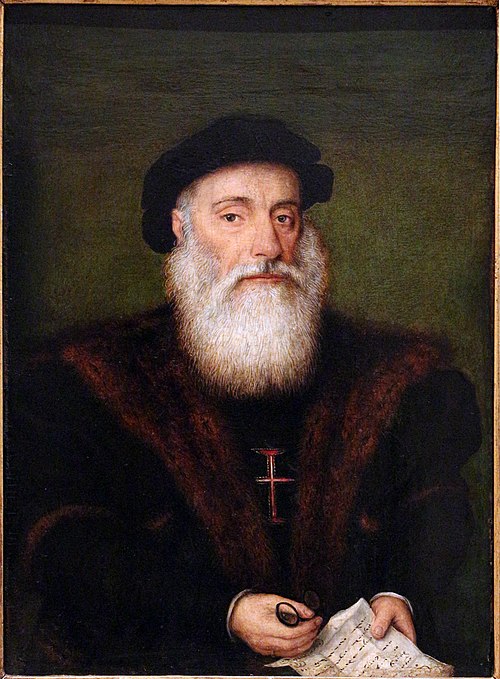
Vasco da Gama reaches India
Portuguese explorer Vasco da Gama's arrival in Calicut opened direct sea routes from Europe to Asia, disrupting traditional Maritime Silk Road networks. #History #Exploration
Vasco da Gama reaches India By Sailko - Own work, CC BY 3.0, https://commons.wikimedia.org/w/index.php?curid=61575307
1511 CE
Portuguese capture Malacca
The Portuguese conquest of Malacca, a crucial entrepôt on the Maritime Silk Road, allowed them to control the spice trade and challenge Muslim and Chinese dominance. #History #Colonialism
Portuguese capture Malacca By myself, based on ancient national symbol. - XVII century, Public domain, https://commons.wikimedia.org/w/index.php?curid=1537424
1521 CE
Battle of Tunmen
Ming forces defeated Portuguese invaders near Guangzhou, asserting Chinese control over maritime trade. #History #War
Battle of Tunmen By Cangminzho - Own work, CC BY-SA 4.0, https://commons.wikimedia.org/w/index.php?curid=68165810
1542 CE
Portuguese trade with China begins
Portuguese traders established unofficial settlements near Quanzhou and later at Macau in 1557, facilitating direct trade between Europe and China. #History #Trade
1567 CE
Ming dynasty legalizes private overseas trade
The Ming lifted the ban on private maritime commerce, allowing merchants from Quanzhou and other ports to trade legally with Southeast Asia. #History #Trade
Ming dynasty legalizes private overseas trade By Albert Herrmann Creator:Q1509115 & Georg Westermann - Historical and Commercial Atlas of China, Public domain, https://commons.wikimedia.org/w/index.php?curid=158240988
1600 CE
Wokou piracy disrupts trade
Japanese and Chinese pirates (wokou) raided coastal ports including Quanzhou, disrupting maritime commerce during the Ming dynasty. #History #Pirates
Wokou piracy disrupts trade By AnonymousUnknown author - Een zeeslag tussen Japanse zeerovers en Chinezen, anonymous, 1700 - 1800. Amsterdam: Rijksmuseum., Public domain, https://commons.wikimedia.org/w/index.php?curid=65985777
1602 CE
Dutch East India Company (VOC) founded
The VOC became a dominant force in the Maritime Silk Road, trading spices, silk, and porcelain from Batavia (Jakarta) and competing with Portuguese and Chinese traders. #History #Commerce
Dutch East India Company (VOC) founded By Himasaram - Own work, Public domain, https://commons.wikimedia.org/w/index.php?curid=2397508
1684 CE
Qing dynasty opens ports after Taiwan conquest
After conquering Taiwan, the Qing emperor relaxed maritime restrictions and opened Quanzhou's nearby port of Yuegang (Xiamen) for foreign trade. #History #Trade
Qing dynasty opens ports after Taiwan conquest By Original: zh:清朝政府 Vector: Sodacan - Own work, Public domain, https://commons.wikimedia.org/w/index.php?curid=39922650
1757 CE
Canton system restricts trade to Guangzhou
The Qing dynasty confined foreign maritime trade to Guangzhou, leading to the decline of Quanzhou as a major port. #History #Trade
Canton system restricts trade to Guangzhou By AnonymousUnknown author - http://www.bassenge.com, Public domain, https://commons.wikimedia.org/w/index.php?curid=8922882
1819 CE
Founding of Singapore
Sir Stamford Raffles established Singapore as a free port, which quickly grew into the most important hub on the Maritime Silk Road. #History #Trade
Founding of Singapore By John Michael Houghton - https://www.roots.gov.sg/Collection-Landing/listing/1254655, Public domain, https://commons.wikimedia.org/w/index.php?curid=105503424
1839 CE
Lin Zexu's anti-opium campaign in Guangzhou
Chinese official Lin Zexu confiscated opium from British traders, leading to the Opium War and the subsequent opening of treaty ports. #History #Opium
Lin Zexu's anti-opium campaign in Guangzhou By Lam Qua - Google Arts & Culture — portrait-of-lin-zexu-1885-1850/KgEU_tK2dT2yqQ, Public domain, https://commons.wikimedia.org/w/index.php?curid=49807007
1840 CE
First Opium War begins
The conflict between Britain and China highlighted the importance of maritime trade and led to the opening of more Chinese ports under the Treaty of Nanjing (1842). #History #War
First Opium War begins By Edward Duncan - http://ocw.mit.edu/ans7870/21f/21f.027/opium_wars_01/ow1_gallery/pages/1841_0792_nemesis_jm_nmm.htm, Public domain, https://commons.wikimedia.org/w/index.php?curid=5520025
1860 CE
Treaty of Tientsin opens more ports
After the Second Opium War, the Qings opened more ports including Tamsui and Hankou, further marginalizing Quanzhou. #History #Treaty
Treaty of Tientsin opens more ports By Unclear - Laurence Oliphant (1860). Narrative of the Earl of Elgin's Mission to China and Japan in the Years 1857, '58, '59. p. 279., Public domain, https://commons.wikimedia.org/w/index.php?curid=12247419
1869 CE
Suez Canal opens
The Suez Canal shortened the sea route between Europe and Asia, revolutionizing maritime trade and accelerating the decline of traditional ports like Quanzhou. #Technology #Trade
Suez Canal opens By NASA - http://spaceflight.nasa.gov/gallery/images/station/crew-16/html/iss016e019375.html, Public domain, https://commons.wikimedia.org/w/index.php?curid=3832302
1895 CE
Quanzhou affected by Taiwan cession
After the Sino-Japanese War, Taiwan was ceded to Japan, and trade between Quanzhou and Taiwan decreased. #History #War
Quanzhou affected by Taiwan cession By World Imaging - Own work, photographed at Japan Foreign Ministry Archives, CC BY-SA 3.0, https://commons.wikimedia.org/w/index.php?curid=12765295
1949 CE
People's Republic of China restricts foreign trade
After the communist victory, Quanzhou's port was closed to foreign trade as China pursued self-reliance, causing economic stagnation. #History #Politics
1978 CE
China's reform and opening-up begins
Deng Xiaoping initiated economic reforms, paving the way for Quanzhou's revival as a manufacturing and export center. #Economics #Reform
China's reform and opening-up begins By 张元柏 - https://web.archive.org/web/20161020135057/http://www.panoramio.com/photo/55033171, CC BY-SA 3.0, https://commons.wikimedia.org/w/index.php?curid=53649922
1984 CE
Quanzhou designated as open coastal city
Under Deng Xiaoping's reforms, Quanzhou was one of 14 coastal cities opened to foreign investment, leading to rapid economic growth. #Economics #History
1990 CE
Fujian's export boom
Fujian province, including Quanzhou, became a manufacturing hub for shoes, textiles, and electronics, reviving its role in global trade. #Economics
Fujian's export boom By Lennartbj - Own work, CC BY-SA 4.0, https://commons.wikimedia.org/w/index.php?curid=76154912
2000 CE
Quanzhou becomes major hub for cross-strait trade
Quanzhou developed strong economic ties with Taiwan, with many Taiwanese companies investing in local industries. #Trade #CrossStrait
2008 CE
Quanzhou thrives during global financial crisis
Quanzhou's export-oriented economy continued to grow, with stone and textile industries thriving despite global downturn. #Economics
2013 CE
Belt and Road Initiative announced
President Xi Jinping launched the BRI, with the 21st Century Maritime Silk Road as a key component, aiming to revive ancient trade routes. #Politics #Trade
Belt and Road Initiative announced By 未来智者 - Own work, CC BY-SA 4.0, https://commons.wikimedia.org/w/index.php?curid=139119606
2015 CE
Maritime Silk Road Museum opens in Quanzhou
The Quanzhou Maritime Silk Road Museum opened to preserve and display artifacts related to the port's history. #Culture #Heritage
Maritime Silk Road Museum opens in Quanzhou By Iswzo - Own work, CC BY-SA 4.0, https://commons.wikimedia.org/w/index.php?curid=130369893
2017 CE
Quanzhou nominated for UNESCO World Heritage
China nominated Quanzhou as a World Heritage site under the title 'Quanzhou: Emporium of the World in Song-Yuan China'. #Heritage
2020 CE
Quanzhou's GDP surpasses 1 trillion yuan
Quanzhou's economy reached a milestone, fueled by manufacturing and trade, reflecting its modern role in the global supply chain. #Economics
2021 CE
Quanzhou inscribed as UNESCO World Heritage
UNESCO added Quanzhou to the World Heritage list, recognizing its historical significance as a maritime trade center. #Heritage #History