Macromolecular & Polymer Chemistry: Modern Frontiers & Breakthrough Innovations
Encyclopedia/1. The Cosmos & The Natural World/2. Physics & Chemistry/03. Chemistry & Periodic Table of Elements • Curated by Admin Timeline.sg
Macromolecular & Polymer Chemistry has evolved from ancient natural polymer uses to modern synthetic materials, driving innovations in plastics, fibers, and nanotechnology. Key milestones include the discovery of vulcanization, the first synthetic plastic Bakelite, and the development of conductive polymers and bioplastics, shaping industries from medicine to electronics.
Chronological Storyline (43 Milestones)
10000 BCE
Ancient Use of Natural Polymers: Rubber
Mesoamerican civilizations harvest latex from rubber trees to produce waterproof cloth, balls, and containers. This early biopolymer use marks the first human manipulation of macromolecular materials. #chemistry #history
Ancient Use of Natural Polymers: Rubber By Gradstudentscholar - Own work, CC BY-SA 4.0, https://commons.wikimedia.org/w/index.php?curid=89532135
2000 BCE
Papermaking in Ancient China
Chinese inventor Cai Lun improves papermaking using cellulose fibers from tree bark, hemp, and rags. This process utilizes cellulose, a natural polymer, transforming communication and record-keeping globally. #chemistry #innovation
Papermaking in Ancient China By Gryffindor - Own work, CC BY-SA 4.0, https://commons.wikimedia.org/w/index.php?curid=3873686
1493 CE
Rubber Introduced to Europe
Christopher Columbus observes Mesoamericans using rubber balls. European explorers bring rubber samples back, sparking interest in this natural polymer for waterproofing and elasticity. #chemistry #exploration
1820 CE
Macintosh Patents Rubberized Fabric
Charles Macintosh patents a method using naphtha to dissolve natural rubber and sandwich it between layers of fabric to create waterproof rainwear, the first commercial rubber product. #chemistry #invention
Macintosh Patents Rubberized Fabric By John Graham Gilbert - originally uploaded to en.wikipedia by Cactus.man (talk · contribs) on 2 April 2006, 11:50 under the file name Charles Macintosh.jpg.(+/−), Public domain, https://commons.wikimedia.org/w/index.php?curid=4747870
1839 CE
Vulcanization of Rubber Discovered by Goodyear
Charles Goodyear accidentally discovers vulcanization by heating natural rubber with sulfur, creating a durable, elastic material that resists temperature changes. This breakthrough launches the modern rubber industry. #chemistry #innovation
Vulcanization of Rubber Discovered by Goodyear By Alfred T. Palmer - This image is available from the United States Library of Congress's Prints and Photographs division under the digital ID fsa.8b01460.This tag does not indicate the copyright status of the attached work. A normal copyright tag is still required. See Commons:Licensing., Public domain, https://commons.wikimedia.org/w/index.php?curid=14997650
1846 CE
Schoenbein Invents Cellulose Nitrate
Christian Friedrich Schönbein treats cellulose with nitric acid to produce cellulose nitrate, an early semi-synthetic polymer used in coatings and as an explosive (guncotton). #chemistry #invention
Schoenbein Invents Cellulose Nitrate By Unknown author, Public domain, https://commons.wikimedia.org/w/index.php?curid=955075
1869 CE
Production of Celluloid, First Thermoplastic
John Wesley Hyatt patents Celluloid, a semi-synthetic polymer made from camphor and cellulose nitrate, used for billiard balls, combs, and photographic film. It is considered the first synthetic plastic. #chemistry #history
1884 CE
Chardonnet Develops Artificial Silk (Rayon)
Hilaire de Chardonnet produces the first synthetic fiber, rayon, by regenerating cellulose from nitrocellulose. This marks the beginning of the synthetic textile industry. #chemistry #textiles
Chardonnet Develops Artificial Silk (Rayon) By User:Arnaud 25 - Own work, Public domain, https://commons.wikimedia.org/w/index.php?curid=2047415
1907 CE
Bakelite: First Fully Synthetic Plastic
Leo Baekeland invents Bakelite, a thermosetting phenol-formaldehyde resin that is heat-resistant and electrically non-conductive. It becomes a staple in electrical insulators, radios, and kitchenware, ushering in the age of plastics. #chemistry #invention
Bakelite: First Fully Synthetic Plastic By Original: MarkusZi Vector: Dirk Hünniger - Bakelit Struktur.png, CC BY-SA 3.0, https://commons.wikimedia.org/w/index.php?curid=20188781
1920 CE
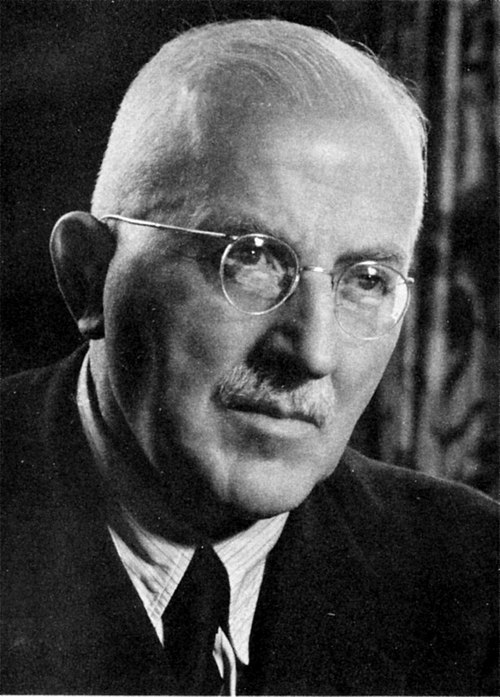
Staudinger Proposes Macromolecular Hypothesis
Hermann Staudinger publishes his theory that polymers are long chains of covalently bonded monomer units, challenging the prevailing colloid theory. This foundational work earns him the 1953 Nobel Prize in Chemistry and establishes polymer chemistry as a discipline. #chemistry #science
Staudinger Proposes Macromolecular Hypothesis By Nobel Foundation - Les Prix Nobel en 1953, Public domain, https://commons.wikimedia.org/w/index.php?curid=18542861
1928 CE
Synthetic Rubber Developed by Buna Process
German chemists develop Buna rubber (polybutadiene and styrene-butadiene) using emulsion polymerization, providing a synthetic alternative to natural rubber for tires and industrial uses. #chemistry #materials
Synthetic Rubber Developed by Buna Process By Morio - Own work, CC BY-SA 3.0, https://commons.wikimedia.org/w/index.php?curid=1561943
1935 CE
Carothers Invents Nylon
Wallace Carothers at DuPont synthesizes nylon, the first synthetic polyamide fiber, using condensation polymerization. Nylon is commercialized in 1938 for toothbrush bristles and women's stockings, revolutionizing textiles and materials. #chemistry #innovation
Carothers Invents Nylon By User:Innerstream - Own work, Public domain, https://commons.wikimedia.org/w/index.php?curid=112727156
1938 CE
Discovery of Polytetrafluoroethylene (Teflon)
Roy Plunkett accidentally discovers PTFE (Teflon) while working on refrigerants. This non-stick, heat-resistant polymer later finds widespread use in cookware, industrial coatings, and medical devices. #chemistry #discovery
Discovery of Polytetrafluoroethylene (Teflon) By Vectorization: Alhadis - Own work based on: Teflon structure.PNG by Dubaj~commonswiki, Public domain, https://commons.wikimedia.org/w/index.php?curid=84729767
1941 CE
Polyethylene Industrial Production Begins
ICI (Imperial Chemical Industries) commercializes low-density polyethylene (LDPE) using high-pressure polymerization, invented accidentally in 1933. Polyethylene becomes the world's most widely used plastic for packaging, containers, and insulation. #chemistry #manufacturing
Polyethylene Industrial Production Begins By Lluis tgn - Own work, CC BY-SA 3.0, https://commons.wikimedia.org/w/index.php?curid=12749082
Karl Ziegler and Giulio Natta develop catalysts that produce polypropylene and other polymers with controlled stereochemistry, enabling new materials with enhanced properties. They share the 1963 Nobel Prize in Chemistry. #chemistry #catalysis
1955 CE
Polypropylene Commercialized
With Ziegler-Natta catalysts, polypropylene enters mass production, becoming a versatile thermoplastic for textiles, packaging, and automotive parts due to its strength and flexibility. #chemistry #innovation
Polypropylene Commercialized By PakpongICCH444 - Own work, CC BY-SA 4.0, https://commons.wikimedia.org/w/index.php?curid=44778675
1965 CE
Kevlar: High-Strength Aramid Fiber Discovered
Stephanie Kwolek at DuPont discovers Kevlar, a para-aramid synthetic fiber with exceptional strength-to-weight ratio. Used in bulletproof vests, tires, and composites, it becomes a critical material for safety and aerospace. #chemistry #invention
Kevlar: High-Strength Aramid Fiber Discovered By Ben Mills and Jynto - Derived from File:Benzene-aromatic-3D-balls.png and File:Oxamide-3D-balls.png., Public domain, https://commons.wikimedia.org/w/index.php?curid=9854604
1970 CE
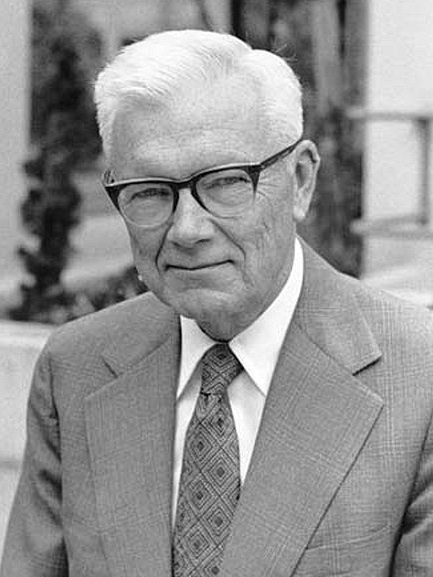
Flory Wins Nobel for Polymer Theory
Paul Flory receives the Nobel Prize in Chemistry for his contributions to theoretical polymer chemistry, including the Flory-Huggins theory of solutions and polymer chain conformations, which underlie modern understanding of macromolecules. #chemistry #science
Flory Wins Nobel for Polymer Theory By Unknown (Associated Press) - [1], Public domain, https://commons.wikimedia.org/w/index.php?curid=70925529
1971 CE
Discovery of Conductive Polymers: Polyacetylene
Hideki Shirakawa accidentally synthesizes a silvery film of polyacetylene with iodine doping, achieving high electrical conductivity. This discovery launches the field of organic electronics and earns the 2000 Nobel Prize in Chemistry. #chemistry #electronics
Discovery of Conductive Polymers: Polyacetylene By Smokefoot - Own work, Public domain, https://commons.wikimedia.org/w/index.php?curid=6893639
1973 CE
Polyvinyl Chloride (PVC) Use Expands
PVC becomes the third most-produced plastic, used in pipes, vinyl siding, cables, and flooring. Its versatility and durability drive global infrastructure and construction. #chemistry #materials
Polyvinyl Chloride (PVC) Use Expands By LHcheM - Own work, CC BY-SA 3.0, https://commons.wikimedia.org/w/index.php?curid=18658923
1980 CE
Ring-Opening Metathesis Polymerization Developed
Richard Schrock and others develop well-defined catalysts for ring-opening metathesis polymerization (ROMP), enabling precise control over polymer architecture and functionalized polymers. Schrock shares 2005 Nobel Prize in Chemistry. #chemistry #catalysis
1982 CE
First Commercial Biodegradable Plastic: Mater-Bi
Italian company Novamont introduces Mater-Bi, a starch-based biodegradable polymer for compostable films and packaging. It pioneers the bioplastics movement, addressing plastic waste concerns. #chemistry #sustainability
First Commercial Biodegradable Plastic: Mater-Bi By Scott Bauer - This image was released by the Agricultural Research Service, the research agency of the United States Department of Agriculture, with the ID k7245-1 (next)., Public domain, https://commons.wikimedia.org/w/index.php?curid=1675054
1985 CE
Liquid Crystal Polymers Commercialized
Liquid crystal polymers (LCPs) with high thermal stability and mechanical strength enter markets for electronic connectors and 5G components, leveraging their aligned molecular structure. #chemistry #materials
1991 CE
Discovery of Polymer Nanocomposites
Toyota researchers report that nylon-6 reinforced with montmorillonite clay nanoparticles shows dramatic improvements in mechanical and thermal properties, sparking the field of polymer nanocomposites for automotive and packaging. #chemistry #nanotechnology
1994 CE
Shape-Memory Polymers First Reported
Researchers describe shape-memory polymers (SMPs) that can recover their original shape from a temporary deformation when stimulated by heat or light. SMPs find applications in biomedical devices, actuators, and smart textiles. #chemistry #innovation
2000 CE
Nobel for Conductive Polymers: Shirakawa, MacDiarmid, Heeger
Hideki Shirakawa, Alan MacDiarmid, and Alan Heeger receive the Nobel Prize in Chemistry for the discovery and development of conductive polymers, laying the foundation for organic electronics, flexible displays, and solar cells. #chemistry #nobel
Kodak introduces the first OLED displays using small molecules, followed by polymer OLEDs (PLEDs) from Cambridge Display Technology. These enable thin, flexible, and energy-efficient screens for TVs and smartphones. #chemistry #technology
Polymer-Based Organic Light-Emitting Diodes (OLEDs) Commercialized By STRONGlk7 - Own work, CC BY-SA 3.0, https://commons.wikimedia.org/w/index.php?curid=22585310
2005 CE
Living Free-Radical Polymerization Advances: RAFT
Reversible addition-fragmentation chain-transfer (RAFT) polymerization is refined, allowing precise control over polymer molecular weight and architecture for tailored block copolymers in drug delivery and coatings. #chemistry #polymerization
Living Free-Radical Polymerization Advances: RAFT By WilliamsChemistry - Own work, CC BY-SA 4.0, https://commons.wikimedia.org/w/index.php?curid=59450146
2007 CE
Polymer-Based Solar Cells Reach 6% Efficiency
Bulk heterojunction polymer solar cells using P3HT and PCBM achieve over 6% power conversion efficiency, paving the way for lightweight, flexible photovoltaic devices. #chemistry #energy
Polymer-Based Solar Cells Reach 6% Efficiency By Solarmer (talk) - Own work (Original text: I created this work entirely by myself.), Public domain, https://commons.wikimedia.org/w/index.php?curid=6730117
2008 CE
Self-Healing Polymers Developed
Scott White and colleagues create a self-healing polymer composite that autonomous repairs cracks via embedded microcapsules releasing healing agents. This inspires smart materials for aerospace, coatings, and biomedical implants. #chemistry #materials
2010 CE
Polymer 3D Printing Using Fused Deposition Modeling Expands
FDM 3D printers using polylactic acid (PLA) and acrylonitrile butadiene styrene (ABS) become widely available for desktop fabrication, democratizing prototyping and custom manufacturing with polymers. #chemistry #3dprinting
Polymer 3D Printing Using Fused Deposition Modeling Expands By John Abella - https://www.flickr.com/photos/jabella/8965235630, CC BY 2.0, https://commons.wikimedia.org/w/index.php?curid=41054993
2012 CE
Polymer-Drug Conjugates in Nanomedicine: FDA Approval of Onivyde
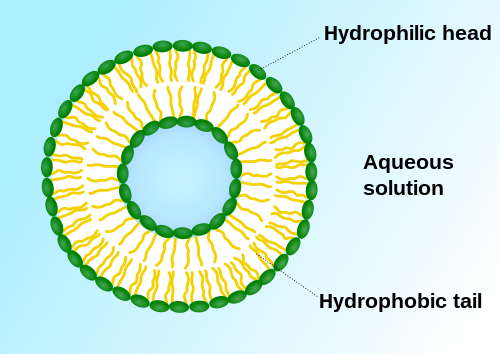
Liposomal irinotecan (Onivyde) receives FDA approval for pancreatic cancer, highlighting the role of polymer-based nanoparticles for targeted drug delivery and improved therapeutic outcomes. #chemistry #medicine
Polymer-Drug Conjugates in Nanomedicine: FDA Approval of Onivyde By SuperManu - Own work, CC BY-SA 3.0, https://commons.wikimedia.org/w/index.php?curid=2918850
2014 CE
Polymer Hydrogels for Tissue Engineering
Researchers develop biocompatible polyethylene glycol (PEG) hydrogels as scaffolds for cartilage and bone regeneration, advancing regenerative medicine and organ-on-a-chip platforms. #chemistry #biomedical
Polymer Hydrogels for Tissue Engineering By Danielle dk - Own work, CC BY-SA 3.0, https://commons.wikimedia.org/w/index.php?curid=3874663
2015 CE
Polymer Memristors for Neuromorphic Computing
Polymeric memristors based on conductive polymers mimic synaptic behavior, enabling energy-efficient brain-inspired computing and artificial neural networks. #chemistry #computing
Polymer Memristors for Neuromorphic Computing By U.S. Department of Energy from United States - 400 008 022, Public domain, https://commons.wikimedia.org/w/index.php?curid=97195025
2016 CE
Plastic Waste Crisis Prompts Biodegradable Polymer Research Boom
Growing awareness of microplastic pollution accelerates research into biodegradable polymers from renewable sources like polyhydroxyalkanoates (PHA) and polylactic acid (PLA), aiming to replace conventional plastics. #chemistry #environment
2017 CE
Polymer Composites with Graphene Enhance Properties
Incorporating graphene into polymer matrices yields composites with dramatically improved electrical conductivity, strength, and barrier properties for aerospace sensors and anti-corrosion coatings. #chemistry #nanotechnology
2018 CE
Recyclable Dynamic Polymer Networks (Vitrimers)
Ludwik Leibler introduces vitrimers, a class of polymers with dynamic covalent bonds that can be reprocessed and recycled like thermoplastics while retaining thermoset-like properties, addressing plastic recyclability challenges. #chemistry #sustainability
2019 CE
Polymer-Based Wearable Sweat Sensors
Flexible polymer sensors incorporating conductive hydrogels and ion-selective membranes are developed for real-time sweat analysis, enabling non-invasive health monitoring of metabolites and electrolytes. #chemistry #healthtech
Polymer-Based Wearable Sweat Sensors By Unsplash, CC BY-SA 4.0, https://commons.wikimedia.org/w/index.php?curid=92650141
2020 CE
Polymers for mRNA Vaccine Delivery (COVID-19)
Ionizable lipid nanoparticles composed of polymer-like lipids and polyethylene glycol (PEG) are successfully used in mRNA vaccines for COVID-19, demonstrating the critical role of polymer chemistry in modern vaccinology. #chemistry #medicine
Polymers for mRNA Vaccine Delivery (COVID-19) By Shuqin Xu, Kunpeng Yang, Rose Li, and Lu Zhang - Xu, S.; Yang, K.; Li, R.; Zhang, L. mRNA Vaccine Era—Mechanisms, Drug Platform and Clinical Prospection. Int. J. Mol. Sci. 2020, 21, 6582. https://doi.org/10.3390/ijms21186582, CC BY 4.0, https://commons.wikimedia.org/w/index.php?curid=106937729
2021 CE
Polymer Nanofiltration Membranes for Water Purification
Thin-film composite polyamide membranes with tailored nanoparticles achieve high-efficiency desalination and pollutant removal, addressing global water scarcity and environmental remediation. #chemistry #environment
2022 CE
Polymer Solar Cells Exceed 19% Efficiency
By integrating non-fullerene acceptors and new polymer donors, organic solar cells achieve record efficiencies over 19%, moving closer to commercial viability for flexible, lightweight solar panels. #chemistry #energy
2023 CE
AI-Assisted Polymer Design and Discovery
Machine learning algorithms predict polymer properties and synthesize novel polymers with targeted functions, accelerating the development of high-performance materials for batteries, coatings, and biomedical uses. #chemistry #AI
2024 CE
Deuterated Polymers for Neutron Optics and Quantum Materials
Deuterated polymers with reduced neutron scattering are synthesized for use in neutron mirrors and quantum computing components, opening new frontiers in materials science. #chemistry #quantum
Deuterated Polymers for Neutron Optics and Quantum Materials By Alchemist-hp (talk) (www.pse-mendelejew.de) - Own work, FAL, https://commons.wikimedia.org/w/index.php?curid=10942737