Macromolecular & Polymer Chemistry: Major Case Studies & Paradigm Shifts
Encyclopedia/1. The Cosmos & The Natural World/2. Physics & Chemistry/03. Chemistry & Periodic Table of Elements • Curated by Admin Timeline.sg
This timeline traces the history of macromolecular and polymer chemistry, from ancient uses of natural polymers to modern breakthroughs in synthesis, characterization, and applications. It highlights key experiments, theoretical advances, and paradigm shifts that transformed our understanding and utilization of macromolecules.
Chronological Storyline (35 Milestones)
3000 BCE
Early Silk Production in China
Evidence of silk production in China dates back to around 3000 BCE, using the natural protein fiber from silkworms. Silk represents one of the earliest known uses of a natural polymer. #history #polymers
Early Silk Production in China By Kuebi = Armin Kübelbeck - Own work, CC BY-SA 3.0, https://commons.wikimedia.org/w/index.php?curid=5929282
1600 BCE
Natural Rubber Use in Mesoamerica
Olmec, Maya, and Aztec cultures use natural rubber from the Hevea tree for balls, containers, and waterproofing. This early use highlights the importance of natural polymers in pre-Columbian societies. #history #polymers
Natural Rubber Use in Mesoamerica By Gradstudentscholar - Own work, CC BY-SA 4.0, https://commons.wikimedia.org/w/index.php?curid=89532135
105 CE
Cai Lun Improves Papermaking
Cai Lun in China improves papermaking using plant fibers (cellulose) and mulberry bark. Paper is essentially a mat of cellulose fibers, a natural polymer. #history #polymers
Cai Lun Improves Papermaking By Unknown author - Tsien Tsuen-Hsuin (1985) Needham, Joseph, ed. Science and Civilisation in China: Volume 5, Chemistry and Chemical Technology, Part 1, Paper and Printing, Taipei: Caves Books, pp. 108–109 ISBN: 978-0-521-08690-5. Etnografiska museet, Stockholm: 1935.50.3366.30, Public domain, https://commons.wikimedia.org/w/index.php?curid=3154438
1839 CE
Goodyear Discovers Vulcanization
Charles Goodyear accidentally discovers vulcanization of natural rubber with sulfur, transforming it into a durable, elastic material. This process marks the first chemical modification of a natural polymer. #chemistry #rubber
Goodyear Discovers Vulcanization By Southworth & Hawes - http://images.zeno.org/Fotografien/I/big/PHO03916.jpg, Public domain, https://commons.wikimedia.org/w/index.php?curid=93310352
1862 CE
Parkesine Exhibited: First Synthetic Plastic
Alexander Parkes exhibits Parkesine, a cellulose nitrate based material, at the Great Exhibition in London. It is considered the first synthetic plastic, though later commercialized as celluloid. #chemistry #plastics
1869 CE
Celluloid Patented by Hyatt
John Wesley Hyatt patents celluloid, a semi-synthetic plastic derived from cellulose nitrate and camphor, used for billiard balls and later film. #chemistry #plastics
1889 CE
Chardonnet Invents Rayon
Hilaire de Chardonnet invents rayon, the first commercial semisynthetic fiber, made from regenerated cellulose. It mimics silk and becomes a popular textile. #chemistry #fibers
Chardonnet Invents Rayon By Maxim Bilovitskiy - Own work, CC BY-SA 4.0, https://commons.wikimedia.org/w/index.php?curid=44965866
1907 CE
Baekeland Invents Bakelite
Leo Baekeland patents Bakelite, the first fully synthetic thermosetting plastic, made from phenol and formaldehyde. Bakelite revolutionized manufacturing and consumer goods. #chemistry #plastics #engineering
Baekeland Invents Bakelite By Original: MarkusZi Vector: Dirk Hünniger - Bakelit Struktur.png, CC BY-SA 3.0, https://commons.wikimedia.org/w/index.php?curid=20188781
1910 CE
Lebedev Synthesizes Synthetic Rubber
Sergei Lebedev in Russia polymerizes butadiene to produce the first synthetic rubber, marking a milestone in polymer synthesis. #chemistry #rubber )
Apr 1, 1920 CE
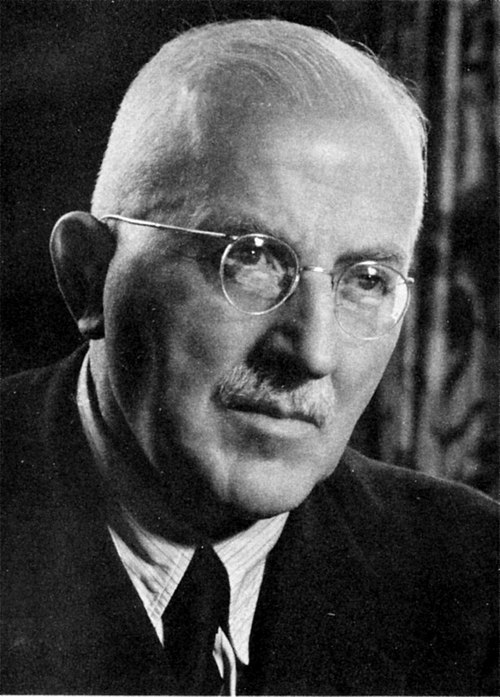
Staudinger Proposes Macromolecular Hypothesis
Hermann Staudinger publishes his seminal paper 'Über Polymerisation' where he proposes that polymers are long chains of monomer units held by covalent bonds, revolutionizing polymer chemistry. #chemistry #polymers
Staudinger Proposes Macromolecular Hypothesis By Nobel Foundation - Les Prix Nobel en 1953, Public domain, https://commons.wikimedia.org/w/index.php?curid=18542861
1926 CE
Svedberg Develops Ultracentrifuge for Polymers
Theodor Svedberg invents the analytical ultracentrifuge, enabling determination of molecular weights of macromolecules such as proteins and synthetic polymers. #chemistry #instrumentation
Svedberg Develops Ultracentrifuge for Polymers By Unknown author - http://www.nobelprize.org/nobel_prizes/chemistry/laureates/1926/svedberg.html, Public domain, https://commons.wikimedia.org/w/index.php?curid=550336
1928 CE
Carothers Joins DuPont
Wallace Carothers joins DuPont, where he will lead pioneering research on condensation polymers, eventually inventing nylon. #chemistry #polymers
Carothers Joins DuPont By Unknown photographer - http://listverse.com/2007/10/07/top-10-scientists-who-committed-suicide/, Public domain, https://commons.wikimedia.org/w/index.php?curid=13295767
1929 CE
Mark and Kuhn Develop Polymer Statistics
Herman Mark and Werner Kuhn apply statistical mechanics to explain polymer chain conformations and rubber elasticity, founding polymer physics. #physics #chemistry
Mar 27, 1933 CE
Accidental Discovery of Polyethylene
Eric Fawcett and Reginald Gibson at ICI accidentally synthesize polyethylene by polymerizing ethylene under high pressure. It becomes the most widely produced plastic. #chemistry #plastics
Accidental Discovery of Polyethylene By Lluis tgn - Own work, CC BY-SA 3.0, https://commons.wikimedia.org/w/index.php?curid=12749082
Feb 28, 1935 CE
Invention of Nylon
Wallace Carothers and team at DuPont invent nylon, the first synthetic fiber made from condensation polymerization. Nylon's strength and elasticity transform the textile industry. #chemistry #fibers #engineering
Invention of Nylon By User:Innerstream - Own work, Public domain, https://commons.wikimedia.org/w/index.php?curid=112727156
Apr 6, 1938 CE
Discovery of Teflon
Roy Plunkett at DuPont accidentally discovers polytetrafluoroethylene (PTFE), trademarked Teflon, known for its non-stick properties and chemical inertness. #chemistry #polymers
Discovery of Teflon By Vectorization: Alhadis - Own work based on: Teflon structure.PNG by Dubaj~commonswiki, Public domain, https://commons.wikimedia.org/w/index.php?curid=84729767
1941 CE
Invention of PET
John Rex Whinfield and James Tennant Dickson in Britain invent polyethylene terephthalate (PET), a polyester used in fibers and bottles. #chemistry #plastics
Invention of PET By Schippmeister - Own work, CC BY-SA 4.0, https://commons.wikimedia.org/w/index.php?curid=82979191
1950 CE
Ziegler Develops Catalysts for Polyolefins
Karl Ziegler discovers the Ziegler catalyst system for low-pressure polymerization of ethylene, leading to high-density polyethylene. #chemistry #catalysis
Ziegler Develops Catalysts for Polyolefins By Unknown author - http://www.nobelprize.org/nobel_prizes/chemistry/laureates/1963/, Public domain, https://commons.wikimedia.org/w/index.php?curid=18334634
1953 CE
Natta Discovers Isotactic Polypropylene
Giulio Natta uses Ziegler-Natta catalysts to produce isotactic polypropylene, a stereoregular polymer with superior properties. #chemistry #polymers
Natta Discovers Isotactic Polypropylene By Unknown (Mondadori Publishers) - http://www.gettyimages.co.uk/detail/news-photo/portrait-of-italian-engineer-giulio-natta-1960s-news-photo/174304752, Public domain, https://commons.wikimedia.org/w/index.php?curid=41259480
1958 CE
Flory Publishes Principles of Polymer Chemistry
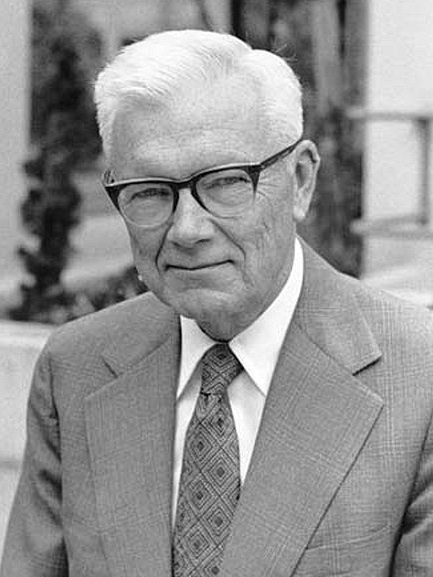
Paul Flory publishes 'Principles of Polymer Chemistry', a foundational textbook that elucidates polymer thermodynamics, kinetics, and statistics. #chemistry #literature
Flory Publishes Principles of Polymer Chemistry By Unknown (Associated Press) - [1], Public domain, https://commons.wikimedia.org/w/index.php?curid=70925529
1965 CE
Kwolek Invents Kevlar
Stephanie Kwolek at DuPont invents Kevlar, a high-strength aramid fiber derived from liquid crystal polymer solutions. Used in bulletproof vests and composites. #chemistry #materials
Kwolek Invents Kevlar By Staff photographer - Science History Institute, CC BY-SA 3.0, https://commons.wikimedia.org/w/index.php?curid=28982634
1970 CE
Polycarbonate Glazing Developed
Bayer develops polycarbonate, a tough, transparent thermoplastic used in eyewear and CDs. #chemistry #plastics
Polycarbonate Glazing Developed By Ed (Edgar181) - Own work, Public domain, https://commons.wikimedia.org/w/index.php?curid=52831270
1974 CE
De Gennes Proposes Reptation Theory
Pierre-Gilles de Gennes introduces the reptation model to describe the dynamics of entangled polymer chains, a breakthrough in polymer physics. #physics #polymers
De Gennes Proposes Reptation Theory By The original uploader was Q1w2e3 at English Wikipedia. - Transferred from en.wikipedia to Commons., CC BY-SA 3.0, https://commons.wikimedia.org/w/index.php?curid=5880337
1977 CE
Discovery of Conducting Polymers
Hideki Shirakawa, Alan Heeger, and Alan MacDiarmid discover that polyacetylene can be doped to become highly conductive, launching the field of organic electronics. #chemistry #physics #electronics
Discovery of Conducting Polymers By Smokefoot - Own work, Public domain, https://commons.wikimedia.org/w/index.php?curid=6893639
1980 CE
Polymer Blends and Alloys Commercialized
Advances in miscibility and compatibilization lead to commercial polymer blends like PPE/HIPS, improving performance and recyclability. #chemistry #materials
1987 CE
First Polymer Light-Emitting Diode (PLED)
Strong research groups invent the first polymer light-emitting diode using poly(p-phenylene vinylene) (PPV), leading to flexible displays. #chemistry #electronics
First Polymer Light-Emitting Diode (PLED) By STRONGlk7 - Own work, CC BY-SA 3.0, https://commons.wikimedia.org/w/index.php?curid=22585310
1990 CE
Commercialization of Polylactic Acid (PLA)
Polylactic acid, a biodegradable polymer from corn starch, enters the market as an eco-friendly plastic alternative. #chemistry #sustainability
Commercialization of Polylactic Acid (PLA) By Polimerek - Own work, Public domain, https://commons.wikimedia.org/w/index.php?curid=4227746
1991 CE
Polymer-Clay Nanocomposites Developed
Toyota researchers produce nylon-6/clay nanocomposites with dramatically improved mechanical and thermal properties, sparking the field of polymer nanocomposites. #chemistry #materials #nanotechnology
Oct 10, 2000 CE
Nobel Prize for Conducting Polymers
Alan Heeger, Alan MacDiarmid, and Hideki Shirakawa receive the Nobel Prize in Chemistry for the discovery and development of conductive polymers. #chemistry #physics #Nobel
2002 CE
Development of ATRP Living Polymerization
Krzysztof Matyjaszewski and colleagues develop atom transfer radical polymerization (ATRP), enabling precise control over polymer architecture. #chemistry #synthesis
Development of ATRP Living Polymerization By Ben Mills and Jynto - Derivative of File:Trans-butadiene-3D-balls.png., Public domain, https://commons.wikimedia.org/w/index.php?curid=9371622
2005 CE
Rapid Advances in Polymer Solar Cells
Bulk heterojunction organic photovoltaic cells achieve >5% efficiency, driving interest in flexible, low-cost solar energy. #chemistry #energy
Rapid Advances in Polymer Solar Cells By Solarmer (talk) - Own work (Original text: I created this work entirely by myself.), Public domain, https://commons.wikimedia.org/w/index.php?curid=6730117
2010 CE
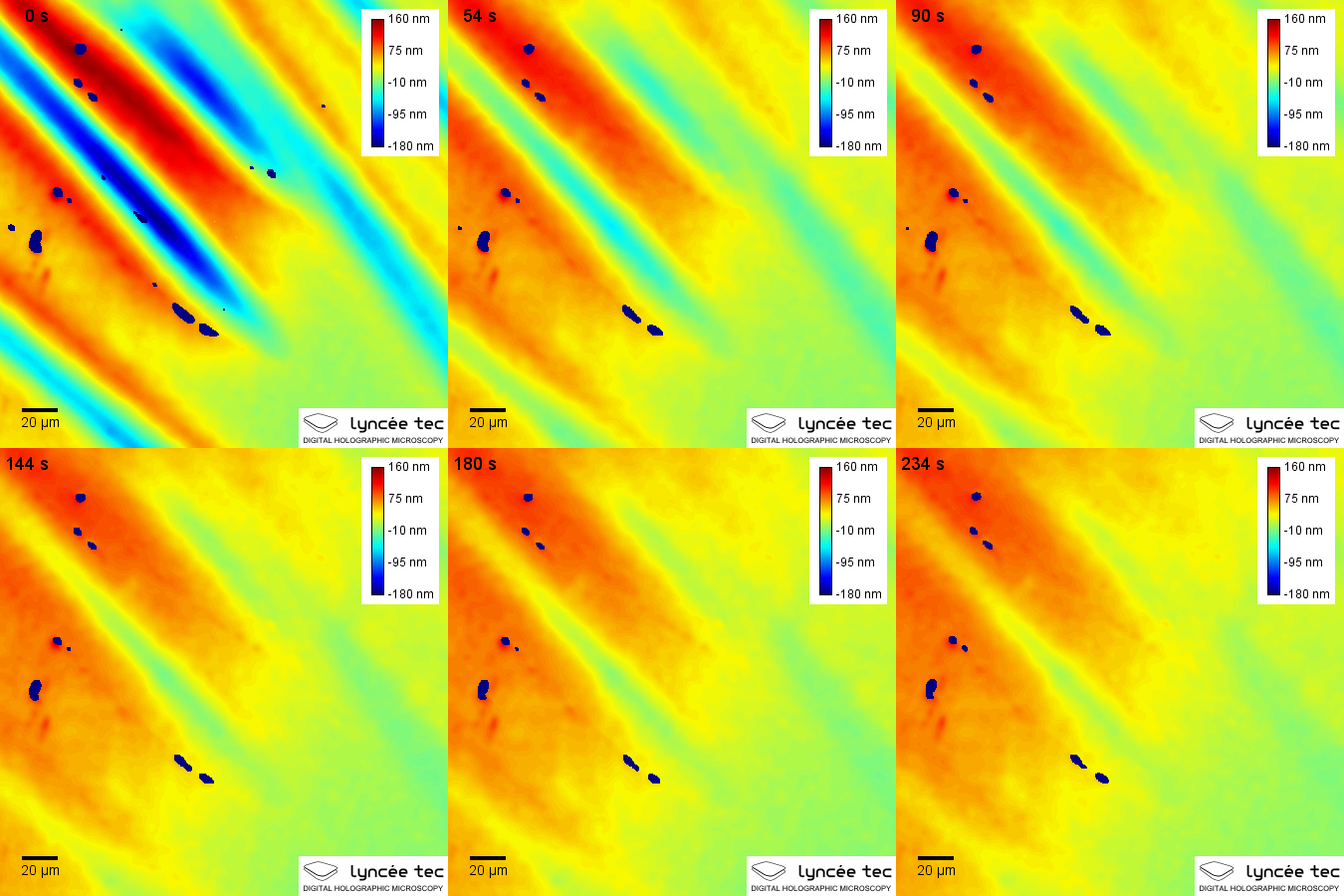
First Self-Healing Polymers Developed
Researchers create polymers that can autonomically repair cracks via embedded microcapsules or reversible bonding, mimicking biological systems. #chemistry #materials
First Self-Healing Polymers Developed By Jejmule - Own work, CC BY-SA 4.0, https://commons.wikimedia.org/w/index.php?curid=55714245
2015 CE
3D Printing with Polymers Becomes Mainstream
Fused deposition modeling (FDM) and stereolithography using polymer filaments and resins revolutionize prototyping and manufacturing. #chemistry #3dprinting
3D Printing with Polymers Becomes Mainstream By RepRapPro - YouTube: https://www.youtube.com/watch?v=r5nDrae3gJg – View/save archived versions on archive.org, CC BY 3.0, https://commons.wikimedia.org/w/index.php?curid=45334835
2019 CE
Nobel Prize for Lithium-Ion Battery Polymers
John B. Goodenough, M. Stanley Whittingham, and Akira Yoshino win the Nobel Prize in Chemistry for lithium-ion batteries, which rely on polymer electrolytes and separators. #chemistry #energy #Nobel
2020 CE
Polymer Recycling Technologies Advance
Chemical recycling methods (e.g., depolymerization, pyrolysis) gain traction to address plastic waste, promoting a circular economy. #chemistry #sustainability
Polymer Recycling Technologies Advance By USEPA Environmental-Protection-Agency - Municipal recycling facilities, Montgomery County, MD. 2007, Credit USEPA, Public domain, https://commons.wikimedia.org/w/index.php?curid=51969963