Macromolecular & Polymer Chemistry: Global Cross-Cultural Perspectives
Encyclopedia/1. The Cosmos & The Natural World/2. Physics & Chemistry/03. Chemistry & Periodic Table of Elements • Curated by Admin Timeline.sg
A global timeline of macromolecular and polymer chemistry, from ancient natural polymers like silk and rubber to modern synthetic plastics and advanced materials, highlighting contributions from diverse cultures and pioneers worldwide.
Chronological Storyline (45 Milestones)
3000 BCE
Chinese Silk Cultivation
Ancient Chinese develop sericulture, producing silk fibers—a natural protein polymer. This early biopolymer technology spreads along the Silk Road, influencing global trade and textile production. #polymer #history
Chinese Silk Cultivation By Emperor Huizong of Song / After Zhang Xuan - The Yorck Project (2002) 10.000 Meisterwerke der Malerei (DVD-ROM), distributed by DIRECTMEDIA Publishing GmbH. ISBN: 3936122202. Museum of Fine Arts, online collection, Public domain, https://commons.wikimedia.org/w/index.php?curid=153058
1600 BCE
Mesoamerican Rubber Balls
Olmec and later Mesoamerican cultures process natural rubber from Castilla elastica to create balls for the Mesoamerican ballgame. This early rubber vulcanization using sulfur from morning glory vines predates modern methods. #polymer #ancient
Mesoamerican Rubber Balls By Gradstudentscholar - Own work, CC BY-SA 4.0, https://commons.wikimedia.org/w/index.php?curid=89532135
1500 BCE
Egyptian Animal Glues
Ancient Egyptians use collagen-based animal glues from hides and bones for woodworking and papyrus binding. These natural protein adhesives are early examples of polymer technology. #polymer #history
Egyptian Animal Glues By Simon Eugster – Simon / ?! 12:57, 8 May 2008 (UTC) - Own work, CC BY-SA 3.0, https://commons.wikimedia.org/w/index.php?curid=4012429
105 CE
Chinese Papermaking by Cai Lun
Chinese eunuch Cai Lun refines papermaking using plant fibers (cellulose polymer). This invention spreads across Asia and later to the West, revolutionizing communication. #polymer #invention
Chinese Papermaking by Cai Lun By Gryffindor - Own work, CC BY-SA 4.0, https://commons.wikimedia.org/w/index.php?curid=3873686
750 CE
Korean Papermaking Innovation
Korean papermakers develop high-quality paper from mulberry fibers (cellulose polymer), known for durability. This tradition influences later Japanese washi and global paper arts. #polymer #history
Korean Papermaking Innovation By 대한민국 정부 문화체육관광부 문화재청, CC BY-SA 2.5, https://commons.wikimedia.org/w/index.php?curid=37068250
800 CE
Jabir ibn Hayyan's Distillation
Islamic alchemist Jabir ibn Hayyan develops distillation techniques for organic substances, including plant gums and resins. His methods advance the processing of natural polymers. #chemistry #polymer
Jabir ibn Hayyan's Distillation By Unknown author - https://cdn.britannica.com/10/132710-050-CECF006B/illustration-manuscript-Abu-Musa-Jabir-ibn-Hayyan.jpg, Public domain, https://commons.wikimedia.org/w/index.php?curid=166835469
1000 CE
Indigenous South American Rubber Waterproofing
Indigenous peoples in South America use natural rubber to waterproof cloth and make bags. They process latex from Hevea brasiliensis, a technique later adopted globally. #polymer #indigenous
1839 CE
Goodyear Vulcanizes Rubber
Charles Goodyear discovers vulcanization, heating natural rubber with sulfur to improve its durability and elasticity. This process is a cornerstone of polymer chemistry, enabling widespread rubber use. #polymer #chemistry
Goodyear Vulcanizes Rubber By Southworth & Hawes - http://images.zeno.org/Fotografien/I/big/PHO03916.jpg, Public domain, https://commons.wikimedia.org/w/index.php?curid=93310352
1862 CE
Parkesine: First Semi-Synthetic Plastic
Alexander Parkes introduces Parkesine, derived from cellulose nitrate, at the Great Exhibition in London. Though not commercially successful, it is the first man-made plastic. #polymer #history
1869 CE
Celluloid Invented by Hyatt
John Wesley Hyatt invents celluloid, a thermoplastic derived from cellulose nitrate and camphor, as a substitute for ivory in billiard balls. It becomes widely used in film and photography. #polymer #invention
1897 CE
Cellophane Invented
Swiss chemist Jacques E. Brandenberger invents cellophane, a transparent cellulose film. It becomes a popular packaging material, demonstrating the utility of regenerated cellulose. #polymer #invention
Cellophane Invented By Jackie - https://www.flickr.com/photos/sis/117426672/, CC BY 2.0, https://commons.wikimedia.org/w/index.php?curid=137256152
1907 CE
Bakelite: First Fully Synthetic Plastic
Leo Baekeland patents Bakelite, a phenol-formaldehyde resin that is the first fully synthetic thermosetting plastic. It revolutionizes electrical insulation and consumer goods. #polymer #chemistry
Bakelite: First Fully Synthetic Plastic By Original: MarkusZi Vector: Dirk Hünniger - Bakelit Struktur.png, CC BY-SA 3.0, https://commons.wikimedia.org/w/index.php?curid=20188781
1909 CE
African Rubber Trade Boom
Natural rubber from Landolphia vines in the Congo Basin becomes a major export, driving economic and social changes in central Africa. This highlights the global reliance on natural polymers before synthetic alternatives. #polymer #history
1920 CE
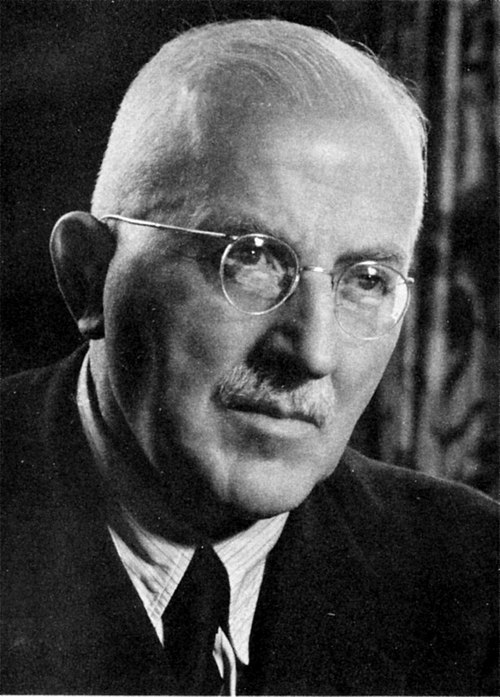
Staudinger's Macromolecular Hypothesis
Hermann Staudinger proposes that polymers are long chains of repeating units held by covalent bonds, challenging the prevailing colloid theory. This lays the foundation for polymer science. #polymer #chemistry
Staudinger's Macromolecular Hypothesis By Nobel Foundation - Les Prix Nobel en 1953, Public domain, https://commons.wikimedia.org/w/index.php?curid=18542861
1926 CE
Japanese Urushi Lacquer Traditions
Japanese artisans refine urushi lacquer, a natural polymer from the Toxicodendron vernicifluum tree, used for decorative and protective coatings. This ancient tradition influences modern polymer art. #polymer #craft
1930 CE
Carothers Invents Neoprene
Wallace Carothers at DuPont synthesizes neoprene, the first synthetic rubber. This breakthrough leads to the development of nylon and other synthetic polymers. #polymer #invention
Carothers Invents Neoprene By Mark.murphy - English Wikipedia, Public domain, https://commons.wikimedia.org/w/index.php?curid=866990
1933 CE
Polyethylene Discovered
Eric Fawcett and Reginald Gibson at ICI accidentally synthesize polyethylene while experimenting with ethylene under high pressure. This becomes the most widely produced plastic. #polymer #chemistry
Polyethylene Discovered By Lluis tgn - Own work, CC BY-SA 3.0, https://commons.wikimedia.org/w/index.php?curid=12749082
1935 CE
Nylon Invented by Carothers
Wallace Carothers patents nylon, the first synthetic polyamide fiber. Introduced as a silk replacement, it becomes iconic in textiles and engineering. #polymer #invention
Nylon Invented by Carothers By User:Innerstream - Own work, Public domain, https://commons.wikimedia.org/w/index.php?curid=112727156
1938 CE
PTFE (Teflon) Discovered
Roy Plunkett accidentally discovers polytetrafluoroethylene (PTFE) while working on refrigerants. This non-stick, chemically resistant polymer finds wide use in coatings and cookware. #polymer #chemistry
PTFE (Teflon) Discovered By Vectorization: Alhadis - Own work based on: Teflon structure.PNG by Dubaj~commonswiki, Public domain, https://commons.wikimedia.org/w/index.php?curid=84729767
1941 CE
Velcro Invented by de Mestral
George de Mestral patents Velcro, a hook-and-loop fastener made from nylon. Inspired by burdock burrs, it becomes a ubiquitous fastening system. #polymer #invention
Velcro Invented by de Mestral By Alexander Klink - Own work, CC BY 3.0, https://commons.wikimedia.org/w/index.php?curid=9677034
1947 CE
Polyurethane Diverse Applications
Polyurethane, invented by Otto Bayer in 1937, finds widespread use in foams, elastomers, and coatings after WWII. Its versatility makes it a key commodity polymer. #polymer #chemistry
Polyurethane Diverse Applications By Pieria(Uploader and Photographer), Public domain, https://commons.wikimedia.org/w/index.php?curid=888027
1953 CE
Ziegler-Natta Catalysts
Karl Ziegler and Giulio Natta develop catalysts for the stereoregular polymerization of olefins, enabling production of high-density polyethylene and isotactic polypropylene. They win the Nobel Prize in 1963. #polymer #chemistry
1953 CE
Polycarbonate Discovered
Daniel Fox at General Electric and Hermann Schnell at Bayer independently synthesize polycarbonate, a tough, transparent thermoplastic used in safety glasses and electronics. #polymer #innovation
Polycarbonate Discovered By Ed (Edgar181) - Own work, Public domain, https://commons.wikimedia.org/w/index.php?curid=52831270
1954 CE
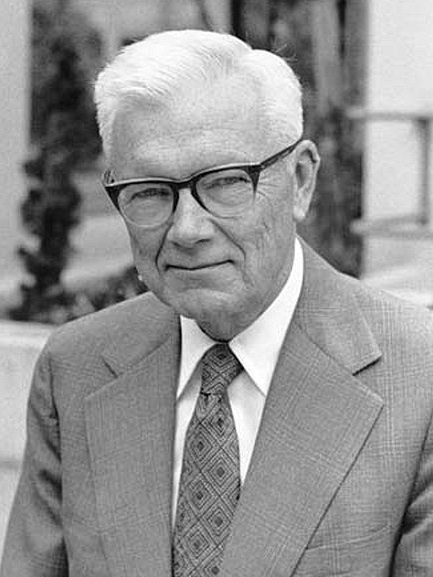
Flory's Polymer Physics
Paul Flory publishes his foundational work on polymer statistical mechanics, including the Flory-Huggins theory. He wins the Nobel Prize in 1974 for his contributions to polymer chemistry. #polymer #science
Flory's Polymer Physics By Unknown (Associated Press) - [1], Public domain, https://commons.wikimedia.org/w/index.php?curid=70925529
1955 CE
Indian Polymer Chemistry Growth
C.N.R. Rao, among others, pioneers polymer and materials chemistry research in India. Work on conducting polymers and nanocomposites advances the field globally. #polymer #India
Indian Polymer Chemistry Growth By Biswarup Ganguly - Own work, CC BY-SA 3.0, https://commons.wikimedia.org/w/index.php?curid=10045911
1960 CE
Polyimide High-Performance Polymer
Polyimide films (e.g., Kapton) are developed, offering exceptional thermal stability and insulation. They are critical in aerospace and electronics. #polymer #innovation
1960 CE
Chinese Polymer Research Advances
Chinese scientists, led by Tang Aoqing, establish polymer physics research in China. They contribute to polyolefin catalysis and polymer rheology, laying groundwork for China's modern polymer industry. #polymer #Asia
1964 CE
Ion-Exchange Polymers for Water Purification
Cross-linked polystyrene ion-exchange resins are commercialized for water softening and desalination. This application of polymer chemistry addresses global water challenges. #polymer #environment
Ion-Exchange Polymers for Water Purification By Bugman at English Wikipedia - Transferred from en.wikipedia to Commons by GcG., Public domain, https://commons.wikimedia.org/w/index.php?curid=3500663
1965 CE
Kevlar Invented by Kwolek
Stephanie Kwolek at DuPont invents Kevlar, a high-strength, heat-resistant aramid fiber. It is used in bulletproof vests, tires, and aerospace composites. #polymer #invention
Kevlar Invented by Kwolek By Ben Mills and Jynto - Derived from File:Benzene-aromatic-3D-balls.png and File:Oxamide-3D-balls.png., Public domain, https://commons.wikimedia.org/w/index.php?curid=9854604
1969 CE
Gore-Tex Developed
Bob Gore expands polytetrafluoroethylene (PTFE) to create Gore-Tex, a waterproof, breathable membrane. This material revolutionizes outdoor apparel and industrial filtration. #polymer #innovation
1970 CE
Polymer Nanocomposites Emerge
Research on polymer-clay nanocomposites begins, leading to materials with enhanced mechanical and thermal properties. These are used in automotive parts and packaging. #polymer #materials
1977 CE
Conducting Polymers Discovered
Alan MacDiarmid, Hideki Shirakawa, and Alan Heeger discover that polyacetylene can be doped to become highly conductive, earning the Nobel Prize in 2000. This opens the field of organic electronics. #polymer #technology
Conducting Polymers Discovered By Smokefoot - Own work, Public domain, https://commons.wikimedia.org/w/index.php?curid=6893639
1980 CE
Polymerase Chain Reaction (PCR)
Kary Mullis invents PCR, using DNA polymerase to amplify DNA sequences. This biological polymer technique revolutionizes molecular biology and diagnostics. #polymer #biotech
Polymerase Chain Reaction (PCR) By Madprime - Own work, CC0, https://commons.wikimedia.org/w/index.php?curid=2104468
1983 CE
First Polymer Banknotes
Costa Rica and Haiti issue the first polymer banknotes, using biaxially oriented polypropylene (BOPP). Polymer currency offers durability and security features. #polymer #innovation
First Polymer Banknotes By Martin Kingsley from Melbourne, Australia - Cashmoney, CC BY 2.0, https://commons.wikimedia.org/w/index.php?curid=3332841
1985 CE
Fullerene Discovery Inspired Polymer Design
Discovery of fullerenes (C60) by Kroto, Curl, and Smalley inspires polymer scientists to incorporate fullerene cages into polymer architectures for novel properties. #polymer #nanotechnology
Fullerene Discovery Inspired Polymer Design By 痛 - Own work, CC BY-SA 4.0, https://commons.wikimedia.org/w/index.php?curid=118428240
1987 CE
Polymer Solar Cells Developed
First polymer-based photovoltaic cell is demonstrated by Ching Tang at Kodak, using organic semiconductors. This paves the way for flexible, low-cost solar panels. #polymer #energy
Polymer Solar Cells Developed By Solarmer (talk) - Own work (Original text: I created this work entirely by myself.), Public domain, https://commons.wikimedia.org/w/index.php?curid=6730117
1990 CE
Shape-Memory Polymers
Researchers develop shape-memory polymers that can switch between temporary and permanent shapes when triggered by heat or light. These find applications in medical devices and actuators. #polymer #materials
1991 CE
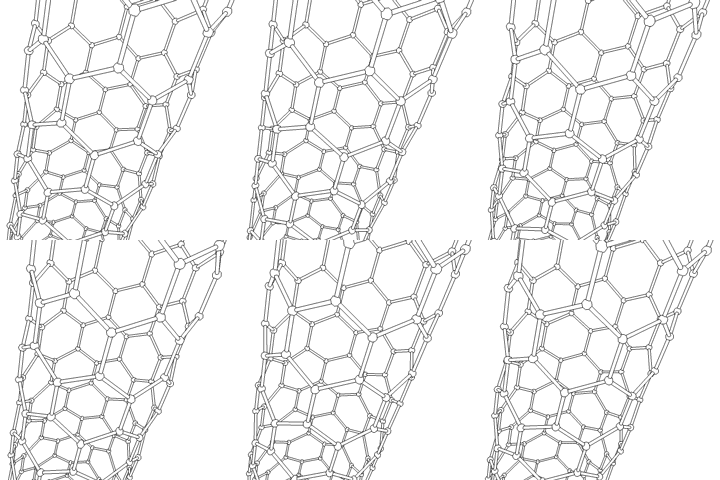
Carbon Nanotubes Rediscovered
Sumio Iijima synthesizes carbon nanotubes, which are polymer-like cylindrical carbon structures. They exhibit exceptional strength and conductivity, inspiring polymer nanocomposites. #polymer #nanotechnology
Carbon Nanotubes Rediscovered By Original hochgeladen von Schwarzm am 30. Aug 2004; Selbst gemacht mit C4D/Cartoonrenderer, GNU FDL - German Wikipedia, original upload 29. Dez 2004 by APPER, CC BY-SA 3.0, https://commons.wikimedia.org/w/index.php?curid=350208
1996 CE
Polymer OLEDs Displayed
First polymer-based organic light-emitting diode (OLED) displays are demonstrated, leading to flexible screens. This technology transforms consumer electronics. #polymer #technology
Polymer OLEDs Displayed By STRONGlk7 - Own work, CC BY-SA 3.0, https://commons.wikimedia.org/w/index.php?curid=22585310
2000 CE
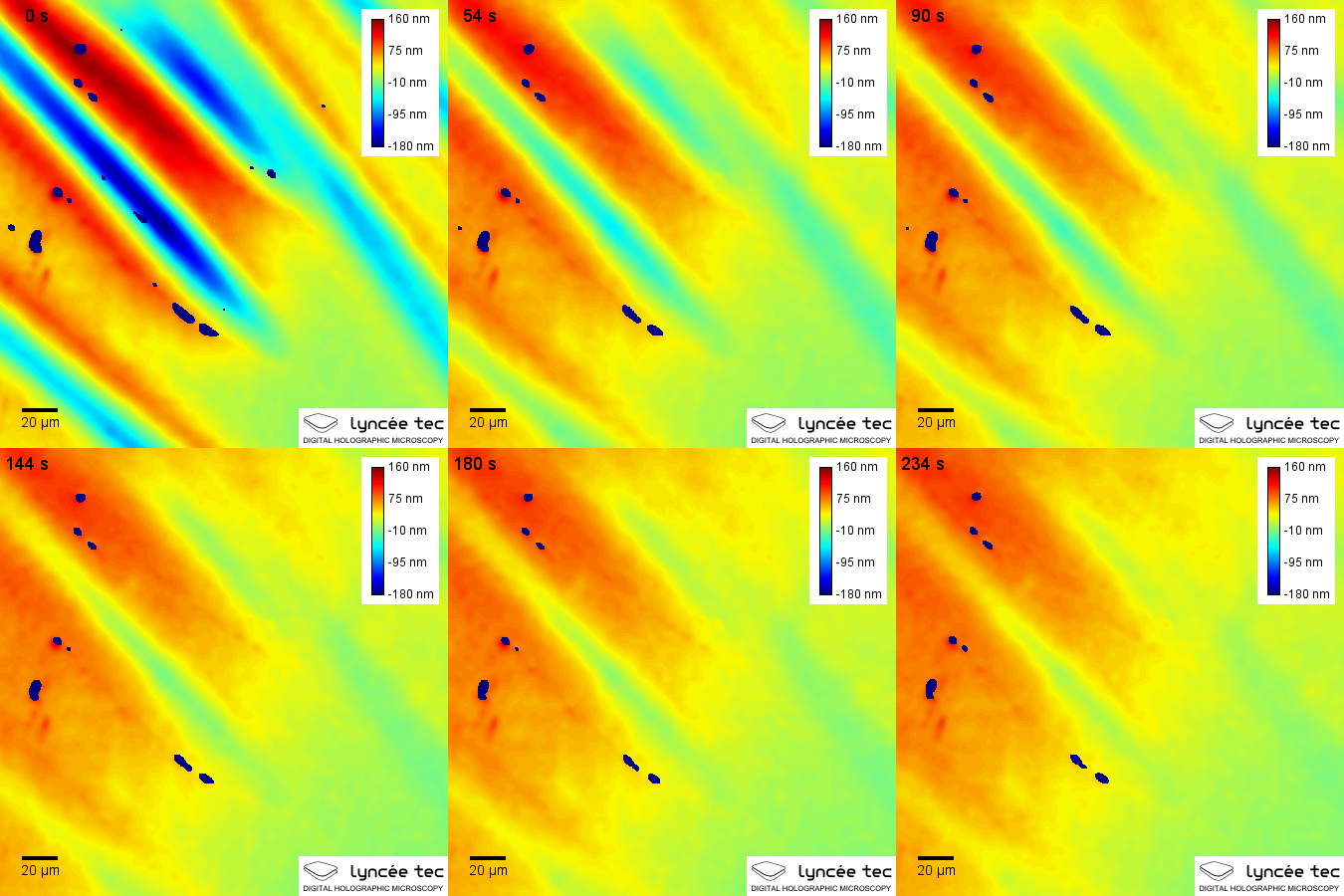
Self-Healing Polymers Introduced
First self-healing polymers are developed, able to repair cracks autonomously via embedded microcapsules or reversible bonds. These materials extend product lifetimes in coatings and electronics. #polymer #innovation
Self-Healing Polymers Introduced By Jejmule - Own work, CC BY-SA 4.0, https://commons.wikimedia.org/w/index.php?curid=55714245
Microbial production of PHA, a biodegradable polyester, reaches commercial scale. Used in packaging and medical implants, PHA reduces plastic pollution. #polymer #sustainability
Biopolymer Polyhydroxyalkanoates (PHA) Commercialized By NEUROtiker ⇌ - Own work, Public domain, https://commons.wikimedia.org/w/index.php?curid=5117590
2008 CE
Polymer Lithium-Ion Batteries
Emergence of polymer electrolytes in lithium-ion batteries improves safety and enables flexible designs. This innovation powers portable electronics and electric vehicles. #polymer #energy
Polymer Lithium-Ion Batteries By Kristoferb - Own work (enwiki), CC BY-SA 3.0, https://commons.wikimedia.org/w/index.php?curid=12279566
2010 CE
3D Printing with Polymers
Fused deposition modeling (FDM) and stereolithography using polymer filaments and resins popularize 3D printing. This revolutionizes prototyping and manufacturing across industries. #polymer #technology
3D Printing with Polymers By RepRapPro - YouTube: https://www.youtube.com/watch?v=r5nDrae3gJg – View/save archived versions on archive.org, CC BY 3.0, https://commons.wikimedia.org/w/index.php?curid=45334835
2015 CE
Bioplastics from Microorganisms
Commercial production of polylactic acid (PLA) and other bio-based polymers grows, driven by sustainability concerns. These biodegradable polymers promise to reduce environmental impact. #polymer #sustainability
Bioplastics from Microorganisms By Scott Bauer - This image was released by the Agricultural Research Service, the research agency of the United States Department of Agriculture, with the ID k7245-1 (next)., Public domain, https://commons.wikimedia.org/w/index.php?curid=1675054
2020 CE
Polymer Drug Delivery Systems
Advanced polymer conjugates and hydrogels are developed for targeted drug delivery and tissue engineering. These materials enable controlled release and biocompatibility in medicine. #polymer #medicine
Polymer Drug Delivery Systems By robin_24 - https://www.flickr.com/photos/robin24/5222119114/in/photostream, CC BY 2.0, https://commons.wikimedia.org/w/index.php?curid=16419735