Ludwig van Beethoven: Symphonies, Deafness Victory & Bridge to Romanticism
Encyclopedia/4. Arts & Literature/3. Music, Theatre & Performance/01. Classical & Traditional World Music • Curated by Admin Timeline.sg
Biographical timeline of Ludwig van Beethoven, a German composer and pianist whose revolutionary works bridged the Classical and Romantic eras, profoundly influencing music despite his progressive deafness.
Chronological Storyline (42 Milestones)
Dec 17, 1770 CE
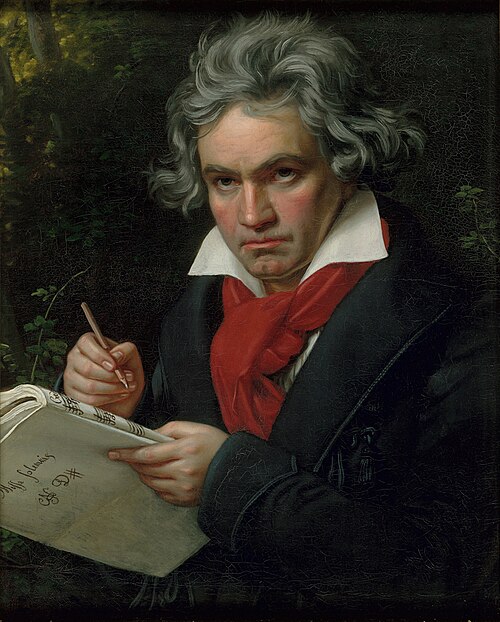
Beethoven's Birth and Baptism
Ludwig van Beethoven is baptized in Bonn, Germany. His exact birth date is unknown, but he is traditionally celebrated on December 16. #music #classical
Beethoven's Birth and Baptism By Joseph Karl Stieler - Google Arts & Culture, rotated and cropped to remove the potentially copyrighted photo of the frame., Public domain, https://commons.wikimedia.org/w/index.php?curid=133271390
Mar 26, 1778 CE
First Public Performance
Beethoven performs his first public concert at age 7 in Cologne, showcasing his early talent as a pianist. #music #classical
1787 CE
First Visit to Vienna
Beethoven travels to Vienna hoping to study with Mozart. He returns to Bonn after a short stay due to his mother's illness. #music #classical
Nov 10, 1792 CE
Permanent Move to Vienna
Beethoven moves permanently to Vienna to study with Joseph Haydn, establishing his career in the musical capital. #music #classical
Mar 29, 1795 CE
First Public Performance in Vienna
Beethoven performs his Piano Concerto No. 2 (Op. 19) at the Burgtheater, gaining recognition as a virtuoso pianist. #music #classical )
First Public Performance in Vienna By Internet Archive Book Images - https://www.flickr.com/photos/internetarchivebookimages/14780770902/ Source book page: https://archive.org/stream/beethovencritica00indy/beethovencritica00indy#page/n40/mode/1up, No restrictions, https://commons.wikimedia.org/w/index.php?curid=43735834
1796 CE
Composition of String Trios Op. 3 and Op. 8
Beethoven composes his first major chamber works, including the String Trio Op. 3, showing early mastery. #music #classical )
1798 CE
Onset of Hearing Loss
Beethoven begins to notice a buzzing and hearing loss in his left ear, the start of his progressive deafness. #music #classical
Apr 2, 1800 CE
Symphony No. 1 Premiere
Beethoven's Symphony No. 1 in C major premieres at the Burgtheater, showing his classical roots with hints of innovation. #music #classical )
1801 CE
Composition of String Quartets Op. 18
Beethoven publishes his first set of string quartets (Op. 18), six works that establish his reputation in the genre. #music #classical )
Oct 6, 1802 CE
Heiligenstadt Testament
Beethoven writes a letter to his brothers confessing his despair over his deafness and contemplating suicide, but resolves to continue creating art. #music #classical
Heiligenstadt Testament By Ludwig van Beethoven - ND VI 4281, Public domain, https://commons.wikimedia.org/w/index.php?curid=172769
1803 CE
Composition of Violin Sonata No. 9 'Kreutzer'
Beethoven completes the Violin Sonata No. 9, Op. 47, dedicated to Rodolphe Kreutzer, a virtuosic and dramatic work. #music #classical )
Composition of Violin Sonata No. 9 'Kreutzer' By Ludwig van Beethoven - Ira F. Brilliant Center for Beethoven Studies, King Library, San José State University, [1], Public domain, https://commons.wikimedia.org/w/index.php?curid=97286787
1804 CE
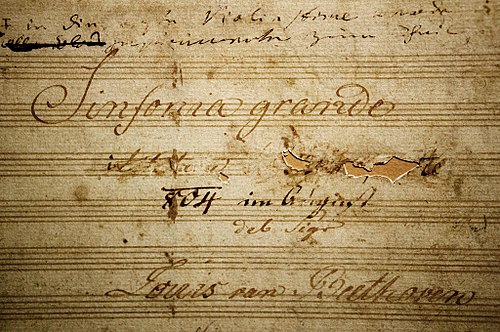
Eroica Symphony (No. 3) Completed
Beethoven completes his Symphony No. 3 'Eroica', originally dedicated to Napoleon, marking a radical expansion of symphonic form and expression. #music #classical )
Eroica Symphony (No. 3) Completed By Unknown author, Public domain, https://commons.wikimedia.org/w/index.php?curid=817721
Nov 20, 1805 CE
Eroica Premiere
The Eroica Symphony premieres at the Theater an der Wien, but receives mixed reactions due to its length and complexity. #music #classical )
Nov 20, 1805 CE
Fidelio Premiere (First Version)
Beethoven's only opera, Fidelio, premieres in its first version (titled 'Leonore') but is not well received. #music #classical
Fidelio Premiere (First Version) By Druckerei Wiener Hoftheater - Papiervorlage von 1814, Public domain, https://commons.wikimedia.org/w/index.php?curid=19287651
Mar 29, 1806 CE
Fidelio Revised Premiere
A revised version of Fidelio premieres, but Beethoven withdraws it after disputes. The opera eventually succeeds in 1814. #music #classical
1806 CE
Razumovsky Quartets Op. 59
Beethoven completes three string quartets (Op. 59) commissioned by Count Razumovsky, incorporating Russian folk themes. #music #classical )
1807 CE
Composition of Coriolan Overture
Beethoven writes the Coriolan Overture, a dramatic concert overture inspired by Heinrich von Collin's play. #music #classical
Composition of Coriolan Overture By Joseph Willibrord Mähler - Wien Museum online Sammlung, Public domain, https://commons.wikimedia.org/w/index.php?curid=108471630
Dec 22, 1808 CE
Symphony No. 5 Premiere
The iconic Symphony No. 5 with its famous four-note motif premieres, becoming one of the most recognized works in classical music. #music #classical )
Symphony No. 5 Premiere By User Boris Fernbacher on de.wikipedia - Ludwig van Beethoven, CC BY-SA 3.0, https://commons.wikimedia.org/w/index.php?curid=1322811
Dec 22, 1808 CE
Historic Four-Hour Concert
Beethoven presents a marathon concert featuring premieres of Symphonies No. 5 and No. 6, the Choral Fantasy, and Piano Concerto No. 4. #music #classical
Historic Four-Hour Concert By Joseph Willibrord Mähler - [1], Public domain, https://commons.wikimedia.org/w/index.php?curid=186245
Dec 22, 1808 CE
Symphony No. 6 'Pastoral' Premiere
Beethoven's Symphony No. 6 'Pastoral' premieres, a programmatic work depicting nature scenes. #music #classical )
Symphony No. 6 'Pastoral' Premiere By Ludwig van Beethoven, Public domain, https://commons.wikimedia.org/w/index.php?curid=1573986
1809 CE
Composition of Piano Concerto No. 5 'Emperor'
Beethoven completes his majestic Piano Concerto No. 5 in E-flat major, later dubbed the 'Emperor' Concerto. #music #classical )
Composition of Piano Concerto No. 5 'Emperor' By Joseph Willibrord Mähler - Unknown source, Public domain, https://commons.wikimedia.org/w/index.php?curid=1040058
1810 CE
Incidental Music for Egmont
Beethoven writes overture and incidental music for Goethe's play Egmont, expressing political themes. #music #classical )
Incidental Music for Egmont By Unknown artist - [1], Public domain, https://commons.wikimedia.org/w/index.php?curid=39479923
1812 CE
Symphony No. 7 and No. 8 Composed
Beethoven composes Symphonies No. 7 and No. 8. The Seventh is dubbed 'the apotheosis of the dance,' while No. 8 is lighter and humorous. #music #classical )
Symphony No. 7 and No. 8 Composed By Ludwig van Beethoven, CC BY-SA 4.0, https://commons.wikimedia.org/w/index.php?curid=132373340
Dec 8, 1813 CE
Symphony No. 7 Premiere
The Symphony No. 7 premieres at a charity concert for wounded soldiers, becoming an instant success. #music #classical )
May 23, 1814 CE
Final Version of Fidelio Premiere
The final revised version of Fidelio premieres at the Kärntnertortheater, achieving lasting success. #music #classical
1814 CE
Congress of Vienna Performances
Beethoven performs at the Congress of Vienna, gaining international acclaim and composing the cantata 'Der glorreiche Augenblick'. #music #classical
1815 CE
Custody Battle for Nephew Karl
Beethoven begins a prolonged legal battle for custody of his nephew Karl after the death of his brother Caspar. #music #classical
1816 CE
Composition of Piano Sonata No. 28 'Hammerklavier'
Beethoven completes the monumental 'Hammerklavier' Sonata, a technically demanding work foreshadowing his late style. #music #classical )
Composition of Piano Sonata No. 28 'Hammerklavier' By Ludwig van Beethoven - Internet Music Score Library Project (originally uploaded to the English language Wikipedia), Public domain, https://commons.wikimedia.org/w/index.php?curid=13282228
1817 CE
Royal Philharmonic Society Commission
The Royal Philharmonic Society of London commissions a new symphony, leading to the Ninth Symphony. #music #classical )
Royal Philharmonic Society Commission By Carl Offterdinger - Photos.com, akg-images (4524 × 5490), Public domain, https://commons.wikimedia.org/w/index.php?curid=171385372
1818 CE
Composition of Missa Solemnis Begins
Beethoven starts work on the Missa Solemnis, a grand setting of the mass intended for the installation of Archduke Rudolf. #music #classical )
Composition of Missa Solemnis Begins By Ludwig van Beethoven - [1], Public domain, https://commons.wikimedia.org/w/index.php?curid=95612806
1819 CE
Complete Deafness
Beethoven becomes totally deaf, using conversation books to communicate. He continues composing without ability to hear. #music #classical
1820 CE
Piano Sonata No. 31 in A-flat Major Op. 110
Beethoven completes one of his late piano sonatas, characterized by its fugal finale and emotional depth. #music #classical )
1822 CE
Completion of Missa Solemnis
Beethoven finishes the Missa Solemnis, dedicating it to Archduke Rudolf. The work is considered one of his greatest choral compositions. #music #classical )
1823 CE
Diabelli Variations Completed
Beethoven completes the 33 Variations on a Waltz by Diabelli, a monumental set of variations showcasing his late style. #music #classical
Diabelli Variations Completed By Romainbehar - Own work, CC0, https://commons.wikimedia.org/w/index.php?curid=18166420
May 7, 1824 CE
Symphony No. 9 'Choral' Premiere
Beethoven's Symphony No. 9 premieres in Vienna, featuring the final movement with Schiller's 'Ode to Joy' for vocal soloists and chorus. Despite his deafness, he conducts. #music #classical )
1825 CE
Late String Quartets Op. 127 and Op. 130
Beethoven composes his first late string quartets (Opp. 127 and 130), which are deeply introspective and complex. #music #classical )
1826 CE
String Quartet No. 15 Op. 132
Beethoven completes the String Quartet No. 15 in A minor, Op. 132, with its 'Heiliger Dankgesang' movement. #music #classical )
String Quartet No. 15 Op. 132 By Decker, Johann Stephan (1783 - 1844) - portrait.kaar.at, Public domain, https://commons.wikimedia.org/w/index.php?curid=279445
1826 CE
Grosse Fuge and String Quartet Op. 131
Beethoven finishes the Grosse Fuge (originally finale of Op. 130) and the String Quartet No. 14 in C-sharp minor, Op. 131, his favorite. #music #classical
Grosse Fuge and String Quartet Op. 131 By Ludwig Van Beethoven - http://imslp.org/wiki/Gro%C3%9Fe_Fuge,_Op.133_%28Beethoven,_Ludwig_van%29, Public domain, https://commons.wikimedia.org/w/index.php?curid=32934483
1826 CE
String Quartet No. 16 Op. 135
Beethoven completes his last string quartet, Op. 135, ending with a serene movement marked 'Muss es sein? Es muss sein!'. #music #classical )
String Quartet No. 16 Op. 135 By Trumpetrep - Own work, CC BY-SA 4.0, https://commons.wikimedia.org/w/index.php?curid=158287822
Mar 26, 1827 CE
Death of Beethoven
Ludwig van Beethoven dies in Vienna at age 56 after a prolonged illness. Thousands attend his funeral, marking the end of an era. #music #classical
Mar 29, 1827 CE
Funeral and Burial
Beethoven's funeral procession is attended by an estimated 20,000 people. He is buried in the Währing cemetery. #music #classical
1827 CE
Posthumous Discovery of Conversation Books
Beethoven's conversation books, used to communicate after his deafness, are discovered, providing insight into his later years. #music #classical )