Lu Xun: Pioneer of Modern Chinese Literature & Social Critique
Encyclopedia/4. Arts & Literature/1. Literature, Mythology & Folklore/05. Literary Biographies • Curated by Admin Timeline.sg
Lu Xun (1881–1936) was a leading figure of modern Chinese literature, known for his sharp social critique and pioneering use of vernacular Chinese. His works, such as 'Diary of a Madman' and 'The True Story of Ah Q,' exposed the flaws of traditional Chinese society and inspired generations.
Chronological Storyline (31 Milestones)
Sep 25, 1881 CE
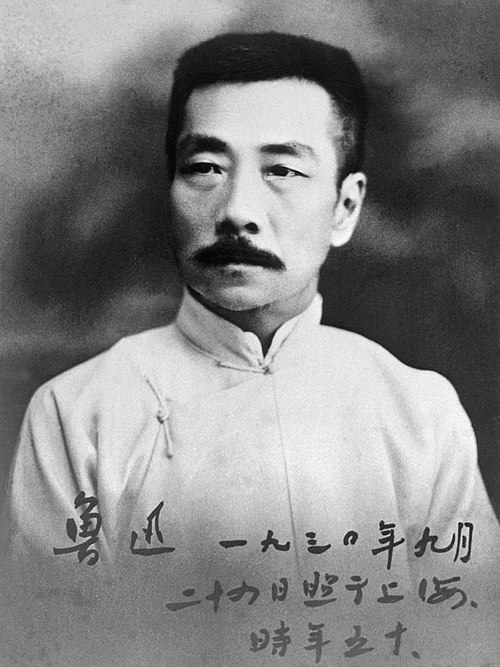
Birth of Lu Xun
Lu Xun was born Zhou Shuren in Shaoxing, Zhejiang, into a scholarly family. His early experiences with family decline and traditional education shaped his later critical views. #literature #China #biography
Birth of Lu Xun By Unknown author - The Legacy and Works of Lu Xun via Getty Images 515420792, Public domain, https://commons.wikimedia.org/w/index.php?curid=936330
1893 CE
Grandfather Imprisoned
Lu Xun's grandfather was arrested for bribery, causing the family's financial decline. This event exposed Lu Xun to the hypocrisy of the gentry class. #history #China
1898 CE
Enters Jiangnan Naval Academy
Lu Xun left Shaoxing to study at the Jiangnan Naval Academy in Nanjing, seeking modern education. He later transferred to the School of Mines and Railways. #education #China
1902 CE
Studies in Japan
Lu Xun received a government scholarship to study in Japan, first at Kobun Institute and later at Sendai Medical Academy. He aimed to learn Western medicine to improve China. #Japan #education
1906 CE
Abandons Medicine for Literature
After seeing a slide of Chinese spectators apathetic to an execution, Lu Xun decided that curing the Chinese spirit through literature was more important than curing their bodies. #literature #China
1909 CE
Returns to China
Lu Xun returned from Japan and took teaching positions in Hangzhou and Shaoxing. He began translating foreign literature and writing essays. #China #education
1912 CE
Works for Ministry of Education
After the Xinhai Revolution, Lu Xun moved to Beijing and worked in the Ministry of Education. He also researched ancient Chinese texts and inscriptions. #history #China
May 15, 1918 CE
Publishes 'Diary of a Madman'
Lu Xun's first short story, 'Diary of a Madman,' was published in New Youth magazine. It is considered China's first modern short story, using a madman's perspective to critique Confucian cannibalism. #literature #China #shortstory
1919 CE
May Fourth Movement
Lu Xun actively supported the May Fourth Movement, writing essays and stories that promoted cultural reform. His works became central to the New Culture Movement. #history #China #reform
May Fourth Movement By Unknown author - Hong Kong Central Library (zh:香港中央圖書館) exhibition in April 2019 for the celebration of the 100th anniversary of May Fourth Movement. Taken from April 2019 SSG 17.jpg., Public domain, https://commons.wikimedia.org/w/index.php?curid=437318
Dec 1, 1921 CE
Publishes 'The True Story of Ah Q'
This serialized novella became Lu Xun's most famous work, satirizing Chinese national character through the tragicomic figure Ah Q. It was later translated into many languages. #literature #China #satire
Publishes 'The True Story of Ah Q' By 魯迅 著 - National Library of China, Public domain, https://commons.wikimedia.org/w/index.php?curid=133566453
1923 CE
Publishes 'Call to Arms'
Lu Xun's first collection of short stories, 'Call to Arms,' was published. It included 'Diary of a Madman,' 'The True Story of Ah Q,' and 'Kong Yiji,' cementing his literary reputation. #literature #China #shortstories
1924 CE
Founds the Unnamed Society
Lu Xun helped establish the Unnamed Society (Weiming She), a literary group that promoted translated works and original writing. He also taught at Peking University. #literature #China
1925 CE
Supports Student Protests
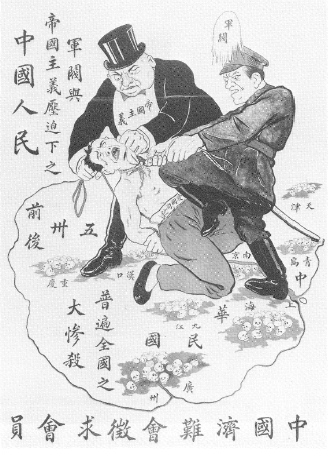
During the May Thirtieth Movement, Lu Xun supported student protests against imperialism. He wrote essays criticizing the government's suppression. #history #China #protest
Supports Student Protests By Unknown author - Scanned from In Search for Modern China 1st. Ed. Hardcover, 1990, Spence, Jonathan D. (ISBN 0091744725), Public domain, https://commons.wikimedia.org/w/index.php?curid=18004628
1926 CE
Leaves Beijing for Xiamen
Due to political pressure, Lu Xun left Beijing to teach at Xiamen University. He continued writing essays and stories, including 'Old Tales Retold.' #China #education
Jan 1, 1927 CE
Moves to Guangzhou
Lu Xun took a position at Sun Yat-sen University in Guangzhou. He witnessed the violent suppression of communists by the Kuomintang, which deeply affected him. #history #China
Oct 1, 1927 CE
Settles in Shanghai
Lu Xun moved to Shanghai, where he spent his remaining years. He focused on writing essays, translating Marxist literary theory, and supporting leftist writers. #China #literature
1928 CE
Debate on Revolutionary Literature
Lu Xun engaged in a heated debate with the Creation Society and Sun Society over revolutionary literature. He argued for artistic quality over propaganda. #literature #China #debate
Mar 2, 1930 CE
Founds League of Left-Wing Writers
Lu Xun was a founding member of the League of Left-Wing Writers in Shanghai. He became a spiritual leader of the leftist literary movement despite ideological tensions. #literature #China #politics
1931 CE
Mourns Execution of Rou Shi
Lu Xun's friend and fellow writer Rou Shi was executed by the Kuomintang. Lu Xun wrote 'In Memory of the Forgotten' to honor him and criticize the regime. #history #China #execution
Mourns Execution of Rou Shi By Unknown author - http://blog.163.com/yy_wc/blog/static/11578379920137274139870/, Public domain, https://commons.wikimedia.org/w/index.php?curid=5330370
1932 CE
Publishes 'Wandering'
Lu Xun's second collection of short stories, 'Wandering,' was published. It included stories like 'The Misanthrope' and 'New Year's Sacrifice,' exploring social decay. #literature #China #shortstories
1933 CE
Writes 'Jottings under Lamplight'
Lu Xun published a series of essays under the title 'Jottings under Lamplight,' criticizing the government's cultural policies and promoting social critique. #essays #China #critique
1934 CE
Publishes 'A Brief History of Chinese Fiction'
Lu Xun's scholarly work 'A Brief History of Chinese Fiction' was published, based on his lectures. It remains a foundational text in Chinese literary studies. #literature #China #history
1935 CE
Translates Russian Literature
Lu Xun translated works by Gogol, Chekhov, and others, introducing Russian critical realism to Chinese readers. He also translated Marxist literary theory. #translation #literature #Russia
Oct 19, 1936 CE
Death of Lu Xun
Lu Xun died of tuberculosis in Shanghai at age 55. His funeral was a major public event, with thousands mourning. He left a lasting legacy as China's greatest modern writer. #death #China #literature
1936 CE
Posthumous Publication of 'Old Tales Retold'
Lu Xun's collection of historical stories, 'Old Tales Retold,' was published posthumously. It reimagines ancient myths with modern satire. #literature #China #mythology
1938 CE
Complete Works Published
The first edition of 'The Complete Works of Lu Xun' was published in 20 volumes, preserving his writings for future generations. #literature #China #collection
1940 CE
Mao Zedong Praises Lu Xun
Mao Zedong declared Lu Xun the 'chief commander of China's cultural revolution' in his essay 'On New Democracy,' elevating him as a revolutionary icon. #politics #China #revolution
1956 CE
Lu Xun Museum Opens in Shanghai
The Lu Xun Museum in Shanghai was established to preserve his legacy. It houses manuscripts, personal effects, and exhibits on his life. #museum #China #heritage
1981 CE
Centenary of Lu Xun's Birth
China celebrated the 100th anniversary of Lu Xun's birth with conferences, publications, and commemorative stamps. His works were re-evaluated during the post-Mao era. #anniversary #China #literature
2005 CE
New Edition of Complete Works
A revised and expanded edition of 'The Complete Works of Lu Xun' was published, incorporating newly discovered letters and essays. #literature #China #publication
2016 CE
Lu Xun's Works Enter Public Domain
Copyright on Lu Xun's works expired 80 years after his death, allowing wider dissemination and adaptation of his writings. #copyright #China #literature